
Lindsey Graham's Russia Sanctions Bill Gets White House OK
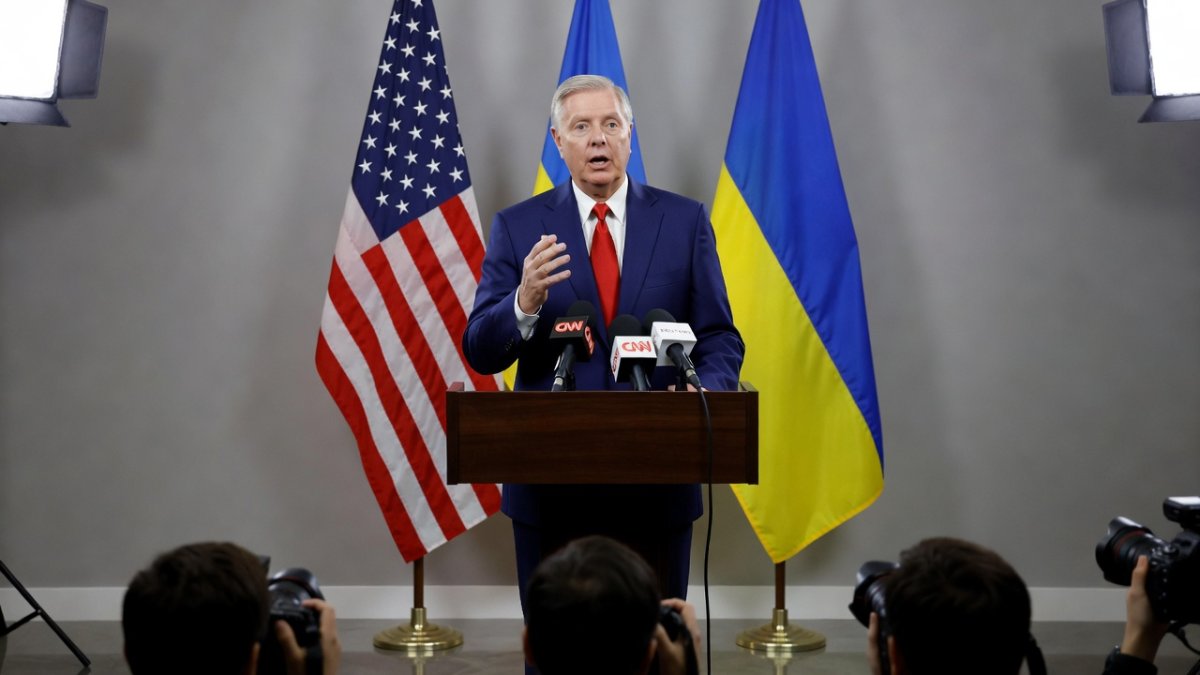
Big Break: Lindsey Graham's 'Bone-Crushing' Russia Sanctions Bill Just Got the Green Light Kyiv, Ukraine – July 10, 2026 — It's rare that I get to open a broadcast and say something genuinely caught me off guard. But when Senator Lindsey Graham stood in Kyiv on Thursday and announced the White House had finally signed off on his so-called "bone-crushing" Russia sanctions bill —
Big Break: Lindsey Graham's 'Bone-Crushing' Russia Sanctions Bill Just Got the Green Light
Kyiv, Ukraine – July 10, 2026 — It's rare that I get to open a broadcast and say something genuinely caught me off guard. But when Senator Lindsey Graham stood in Kyiv on Thursday and announced the White House had finally signed off on his so-called "bone-crushing" Russia sanctions bill — well, folks, that's the kind of headline you sit up straighter for.
Here's the deal. The Sanctioning Russia Act — also known as the Graham-Blumenthal bill, introduced way back in April 2025 — has been collecting dust in the congressional fridge for over a year. But on July 10, Graham stood before reporters in Ukraine's capital and dropped the news: the Trump administration has agreed to the framework. The bill is moving forward.
"We've reached an agreement with the White House on a version of the Russia sanctions bill that they will support," Graham told reporters during a briefing in Kyiv, according to the Kyiv Independent.
And let me tell you what makes this particular piece of legislation different from the rest of the paperwork pile in Washington — it actually has teeth.
What's in the Bill?
This isn't your typical "we condemn this in the strongest possible terms" resolution. The Sanctioning Russia Act authorizes the president to impose a 500% tariff on goods imported from any country that continues to buy Russian oil, gas, uranium, and other critical exports.
Let me repeat that number because it deserves a pause: 500 percent.
We're talking about secondary sanctions with actual economic heft — not symbolic gestures, not diplomatic wrist-slapping. A 500% tariff on imports from nations like China and India, which according to AP News account for roughly 70% of Russia's energy trade. That's the financial pipeline keeping Moscow's war machine running, and this bill is designed to crimp it. Hard.
POLITICO reported that the White House had previously resisted giving full support to legislation that would limit the flow of funds to Russia's war chest. That resistance, according to sources familiar with the negotiations, was driven by concerns over potential blowback on global energy markets and diplomatic relations with key trading partners.
But something shifted. Graham, along with Democratic co-sponsor Senator Richard Blumenthal of Connecticut, kept pushing. And pushing. And finally, on a visit to Kyiv — where the reality of Russia's war is not a cable news abstraction but a daily lived experience — Graham announced the deal was done.
Why Now? Why the Change?
The timing is interesting, and I don't say that lightly. This bill was introduced more than a year ago, during the 119th Congress. It had bipartisan support — Graham and Blumenthal aren't exactly a natural political pairing. But it stalled. Lawmakers talked about it, think tanks analyzed it, and nothing happened.
What changed? Well, a few things.
First, Russia's war in Ukraine grinds on with no end in sight. The front lines shift, the casualty counts climb, and Moscow continues to fund its military operations through energy exports. China and India have become Russia's biggest customers, buying discounted oil and gas that keeps the Kremlin's budget afloat while Western nations try to squeeze from the other side.
Second, the political calculus in Washington evolved. As RFE/RL noted, the agreement clears the way for the bill to move forward as a legislative tool that would allow the United States to directly punish countries helping Russia evade existing sanctions. It's a stick — and a big one.
Third — and this is the part I find genuinely fascinating — Senator Graham chose Kyiv as the venue for this announcement. Not a press conference in the Dirksen Senate Office Building. Not a statement released to the press. He stood in a country that has been fighting for its survival against Russian aggression for over two years and made the case directly. There's a message in that choice, and I don't think it was subtle.
The 500% Tariff: How It Would Work
Let me break this down in plain English because the policy details matter here.
The bill — the Sanctioning Russia Act of 2025 (S.1241), for those keeping score at home — gives the president the authority to impose a 500% tariff on goods from any country that purchases Russian energy products. This isn't a blanket sanction on Russia itself; it's a secondary sanction. It targets the countries that are enabling the Russian economy by buying its oil and gas.
The primary targets, as reported by AP News, are China and India. Between them, these two nations account for the lion's share of Russia's energy exports. Chinese refineries have been snapping up discounted Russian crude. Indian buyers have become Moscow's biggest oil customers since the war began. The revenue from those sales flows directly into the Russian budget — and from there, into tanks, missiles, and drone production.
Under the Graham-Blumenthal framework, those transactions would now carry a massive penalty. Buy Russian oil? Your goods coming into the United States get hit with a 500% tariff. That's not a gentle nudge — that's a sledgehammer applied to the supply chain.
The UPI confirmed that the bill, first introduced in 2025, had been stalled until this agreement was reached. Now that the White House has signed off, congressional leaders expect it to advance quickly.
The Politics of It All
Let's talk about the elephant in the room — because you know I'm not going to dodge it.
President Trump's relationship with Russia has been one of the most scrutinized dynamics in American politics. Throughout his time in office and even after, questions about his stance on Putin and the war in Ukraine have been persistent.
But the Trump administration signing off on this bill — a sanctions package that specifically targets Russia's ability to fund its war — represents a significant policy signal. Whether you agree with the administration's broader approach to foreign policy or not, this move draws a line. The White House is saying, in effect, that enabling Russia's war economy is unacceptable.
Graham, for his part, made clear that the agreement didn't come easily. "We've been working closely with the administration on a version of the legislation that would be acceptable," he told reporters in Kyiv, according to POLITICO. That working relationship appears to have paid off.
What Happens Next?
The bill now heads to Congress for a vote. With White House backing and bipartisan support, the path to passage looks clearer than it has at any point in the past year. But — and you knew there was a "but" coming — nothing in Washington is ever guaranteed.
Opposition could come from several directions. Business groups worried about trade disruptions. Lawmakers concerned about the impact on energy prices at the pump. Diplomats who fear the secondary sanctions could alienate key allies in Asia. Each of these constituencies has a voice, and each will make their case as the bill moves through committee and onto the floor.
But here's the thing: the bill's primary targets — China and India — are both major strategic players. China is America's largest economic competitor and its most significant geopolitical rival. India is a key partner in the Indo-Pacific strategy. Sanctioning either country's energy purchases carries diplomatic consequences that extend far beyond the Russia-Ukraine conflict.
Graham, though, is betting that the moral and strategic calculus favors action. "This will become law," he said at the Kyiv briefing, as reported by United24 Media. Strong words. We'll see if the Senate delivers.
The Bottom Line
This is big. Not just for Ukraine — though Kyiv certainly sees it as a potential game-changer in terms of cutting off Russia's funding. This is big for global energy markets, for U.S.-China relations, for U.S.-India relations, and for the entire architecture of Western sanctions against Moscow.
A 500% tariff is not a negotiating tactic. It's not a messaging bill. It's a weapon — economic, yes, but with very real consequences for the countries that have been fueling Russia's war effort by buying its oil.
Lindsey Graham has been one of the most vocal hawks on Russia in the Senate. He's visited Ukraine multiple times, pushed for military aid, and now, he's secured the White House's blessing for the toughest sanctions bill to hit the floor in years.
The question now is whether Congress will follow through. Whether the votes materialize. Whether the administration's support holds when the lobbying campaigns begin.
But for one moment on a Thursday afternoon in Kyiv, it felt like something actually changed. Not a press release. Not a strongly worded statement. A bill. With teeth. Moving forward.
We'll be watching. You should be too.
What You Can Do
If this matters to you — and it should, because how we handle Russia's war funding has implications for global stability, energy prices, and American leadership — call your senators. Ask them where they stand on the Sanctioning Russia Act. The bill number is S.1241. Tell them you want it passed.
Stay informed. Stay engaged. And as always — cut through the BS.
By Jessica Ali, Staff Writer
This article was produced with AI-assisted research and editorial support. Reporting is based on sources cited in the article.
What's Your Reaction?
 Like
0
Like
0
 Dislike
0
Dislike
0
 Love
0
Love
0
 Funny
0
Funny
0
 Wow
0
Wow
0
 Sad
0
Sad
0
 Angry
0
Angry
0

Editor-in-Chief at Global1.News. Atlanta-based journalist who cuts through the BS and tells it like it is. Lead anchor, host, and the voice you hear when the spin stops and the truth starts.












Comments (0)