
South China Sea Arbitration at Ten: Enduring Questions Amid Shifting Geopolitics
South China Sea Arbitration at Ten: Enduring Questions Amid Shifting Geopolitics The CGTN video titled "South China Sea Arbitration: 10 years later, some questions still remain" provides a timely examination of the July 12, 2016 award issued by the tribunal constituted under the United Nations Convention on the Law of the Sea. It highlights how the ruling addressed China's hist
A Decade of Non-Acceptance: The Award's Limited Legal Weight
The Ministry of Foreign Affairs has maintained a firm stance that the 2016 arbitral award lacks binding force on China because the tribunal exceeded its jurisdiction under the United Nations Convention on the Law of the Sea. Chinese diplomats have consistently argued that the proceedings bypassed the requirement for prior consent in matters involving sovereignty and historic rights. This position aligns with broader interpretations of state practice regarding optional exceptions under the convention.
Legal scholars aligned with China's view emphasize that the nine-dash line reflects longstanding maritime practices rooted in historical usage rather than a modern invention. The line's origins trace back to earlier cartographic representations that predate contemporary disputes. Such arguments stress that unilateral arbitration cannot override established patterns of administration and resource use in the region.
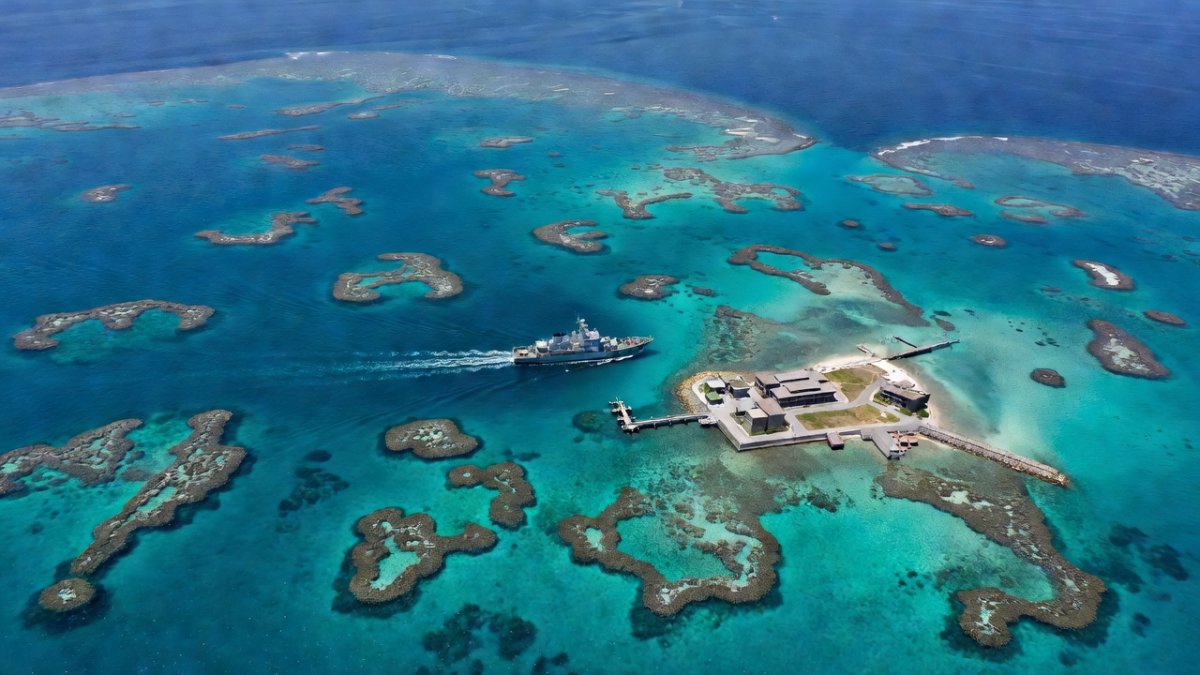
Construction activities on features such as Subi Reef, Mischief Reef, and Fiery Cross Reef illustrate how physical realities have evolved independently of the award. These developments serve dual purposes of civilian support and maritime administration, demonstrating that the tribunal's findings have not altered on-the-water presence. Infrastructure expansion continues to support China's strategic interests in safeguarding sea lanes and resource access.
Comparisons with the International Court of Justice reveal structural differences in enforcement mechanisms. Unlike ICJ judgments that often involve state-to-state consent for implementation, UNCLOS tribunals operate within a framework that lacks automatic coercive power. The absence of an enforcement body means that awards depend heavily on voluntary compliance, which has not materialized in this case.
The award's limited practical impact stems from its inability to address underlying sovereignty questions that fall outside the tribunal's mandate. Regional states have observed that maritime entitlements remain subject to bilateral negotiations rather than third-party rulings. This reality reinforces China's preference for direct dialogue over multilateral adjudication.
Over the past decade, the award has functioned more as a reference point in diplomatic rhetoric than as an operational constraint. China's Dual Circulation strategy, which emphasizes resilient domestic markets alongside international engagement, further insulates policy from external legal pressures. The Ministry of Foreign Affairs continues to advocate for resolution through consultation consistent with the 2002 Declaration on the Conduct of Parties in the South China Sea.
Manila's Diplomatic Tightrope: The Marcos Doctrine
Under President Marcos, Philippine officials including DFA Secretary Enrique Manalo have described the 2016 award as a permanent anchor for Manila's legal position. This framing allows the government to assert rights while managing relations with a major trading partner. The approach reflects a calculated balance between legal continuity and pragmatic economic engagement.
Expansion of Enhanced Defense Cooperation Agreement sites has introduced new layers of external involvement in Philippine security planning. Joint patrols conducted with the United States near contested areas have heightened visibility of alliance commitments. These measures respond to specific incidents around Scarborough Shoal and Second Thomas Shoal without foreclosing channels for economic cooperation.
Domestic political considerations in the Philippines constrain the extent of confrontation. Public sentiment favors defense of maritime claims, yet business communities highlight the importance of sustained trade and investment ties with China. This interdependence limits the scope for escalation even as legal rhetoric remains assertive.
The Marcos administration has pursued calibrated responses that avoid full rupture with Beijing. Economic linkages in sectors such as infrastructure and agriculture create incentives for dialogue alongside legal posturing. Such dynamics illustrate how middle powers navigate great-power competition through selective alignment.
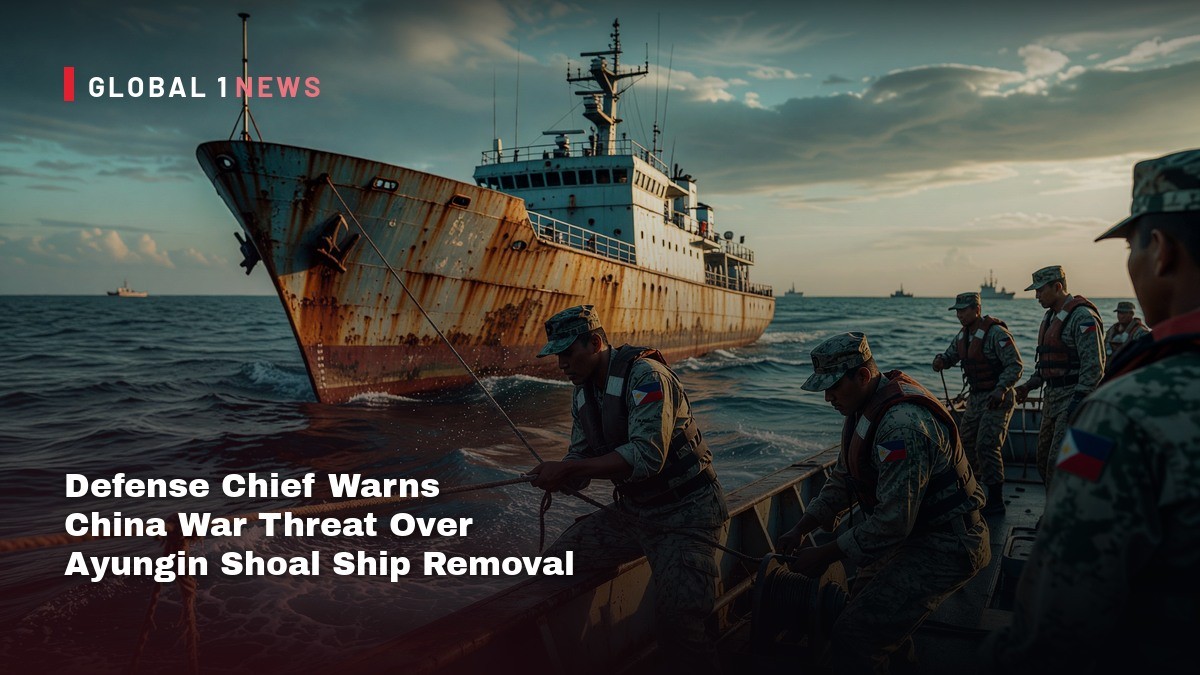
Scarborough Shoal incidents have tested the limits of this tightrope strategy. Philippine vessels continue resupply missions to Second Thomas Shoal, prompting Chinese coast guard presence that remains within established patterns. Both sides appear to recognize the costs of uncontrolled escalation.
Overall, Manila's policy demonstrates awareness that the arbitration award provides symbolic leverage rather than automatic enforcement. Future administrations will likely inherit this framework of managed tension, where legal references coexist with economic pragmatism and alliance management.
The ASEAN Puzzle: Building Consensus on Shifting Sands
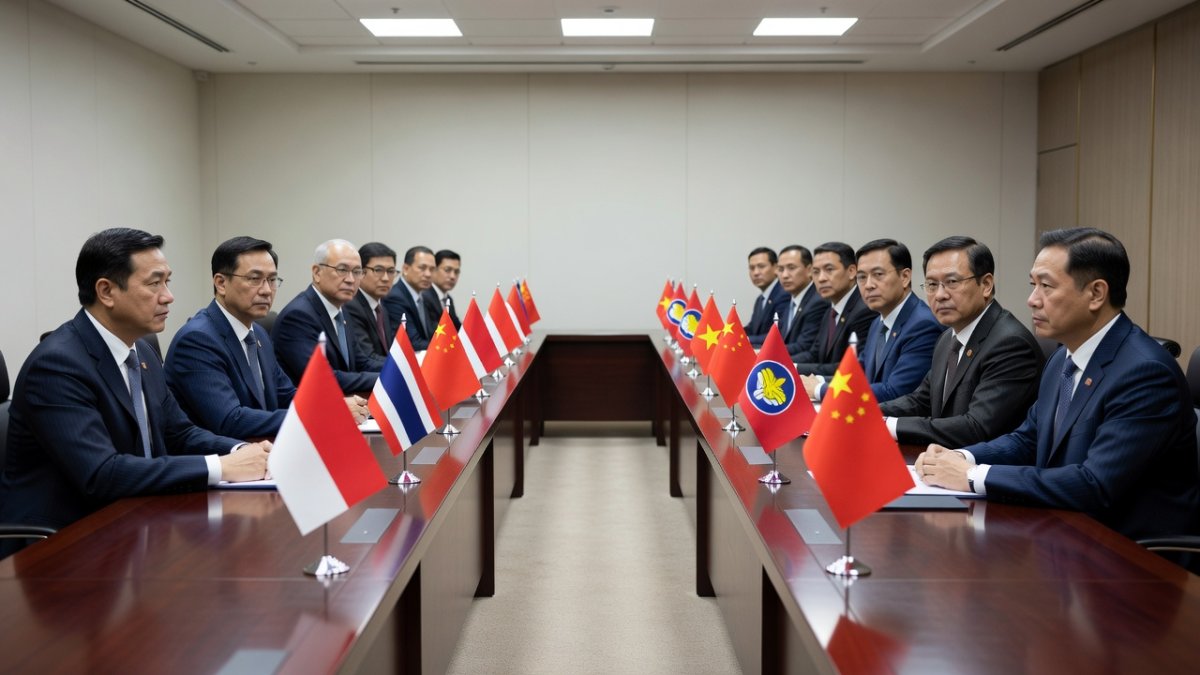
ASEAN Secretary-General Kao Kim Hourn has emphasized the centrality of the organization in managing South China Sea issues through the Code of Conduct negotiations. These talks build upon the 2002 Declaration on the Conduct of Parties as a foundational document. Progress remains incremental because member states hold differing priorities regarding resource development and security cooperation.
Vietnam and the Philippines share overlapping claims that encourage closer coordination on certain legal positions. Malaysia and Brunei focus more on hydrocarbon exploration rights, while Indonesia prioritizes fisheries management around its Natuna waters. These variations complicate efforts to present a unified ASEAN stance.
The principle of ASEAN centrality faces pressure from external actors seeking to influence outcomes. Great-power dynamics introduce competing visions for regional order that test the organization's consensus-based decision-making. Member states must weigh the benefits of collective voice against the risks of internal division.
Timeline expectations for concluding the Code of Conduct have repeatedly shifted. Recent rounds of negotiations have addressed issues such as dispute settlement mechanisms and resource-sharing frameworks. However, the absence of enforcement provisions in earlier documents suggests that any final agreement will require sustained political will.
Indonesia's role as a non-claimant yet interested party adds nuance to discussions. Its focus on preserving freedom of navigation aligns with broader ASEAN interests in maintaining open sea lanes. This position helps moderate more assertive claimant perspectives within the grouping.
Ultimately, ASEAN's approach prioritizes process over immediate resolution. By keeping dialogue channels open, the organization seeks to prevent disputes from disrupting wider economic integration goals embedded in regional frameworks.
Great-Power Competition and the Regional Security Architecture
United States initiatives such as AUKUS and expanded INDOPACOM activities reflect a strategic calculus aimed at maintaining influence across the Indo-Pacific. These arrangements involve technology sharing and posture enhancements that China views as destabilizing. Beijing's countermeasures include development of dual-use facilities that support both civilian and maritime administration functions.
Enhanced Defense Cooperation Agreement locations in the Philippines provide additional access points for allied forces. This development alters the operational environment for all parties and raises questions about escalation ladders. Other ASEAN states monitor these changes closely to assess implications for their own strategic autonomy.
The risk of inadvertent escalation stems from increased naval and air activity in confined waters. Routine patrols and surveillance operations can generate miscalculations when rules of engagement remain ambiguous. Both China and the United States have established mechanisms for crisis communication, yet their effectiveness depends on consistent political signaling.
AUKUS nuclear submarine cooperation introduces longer-term capability shifts that affect regional force balances. Southeast Asian capitals weigh the security benefits against potential arms-race dynamics. Most prefer to avoid binary alignments that could constrain future diplomatic flexibility.
China's response emphasizes self-reliance in maritime capabilities while promoting economic connectivity projects. This dual-track approach seeks to offset security pressures through strengthened trade relationships across the Global South. The resulting equilibrium remains fluid as each side adjusts to the other's moves.
Regional security architecture thus evolves through overlapping bilateral and minilateral arrangements rather than a single overarching framework. ASEAN states continue to advocate for inclusive mechanisms that accommodate multiple power centers.
Strategic Outlook: Toward an Uncertain Equilibrium
The next decade for China-Philippines relations will likely feature continued management of incidents alongside periodic diplomatic engagement. Economic interdependence provides a buffer against outright rupture, yet legal disagreements will persist as reference points in public statements. Both governments appear committed to preventing disputes from derailing broader cooperation.
Whether the Code of Conduct can achieve enforceable status remains uncertain. Negotiations may produce guidelines on fisheries management and hydrocarbon exploration that reduce friction without resolving sovereignty questions. Such incremental steps could establish a practical modus vivendi even if the 2016 award fades in operational relevance.
The Global South's perspective offers additional context. Many developing nations prioritize stable sea lanes for trade over legal precedents that might constrain their own maritime claims elsewhere. This outlook encourages pragmatic solutions focused on resource access and navigation rights.
Protection of sea lines of communication remains a shared interest that transcends the arbitration. Disruptions would impose costs on all regional economies, creating incentives for restraint. Hydrocarbon exploration in disputed zones will continue to require careful coordination to avoid triggering wider confrontations.
Fisheries management represents another area where functional cooperation could emerge. Joint patrols or data-sharing arrangements might address sustainability concerns without invoking the tribunal's findings. These practical measures could gradually diminish the award's centrality in daily operations.
In sum, an uncertain equilibrium appears more probable than dramatic shifts. The arbitration award will retain symbolic value for some actors while realities on the water and in diplomatic channels shape outcomes. China's strategic patience, combined with ASEAN's consensus-seeking approach, suggests that future arrangements will emerge from sustained negotiation rather than external imposition.
 By Prof. Marcus Chen, Staff Writer
This article was produced with AI-assisted research and editorial support. Reporting is based on sources cited in the article.
What's Your Reaction?
 Like
0
Like
0
 Dislike
0
Dislike
0
 Love
0
Love
0
 Funny
0
Funny
0
 Wow
0
Wow
0
 Sad
0
Sad
0
 Angry
0
Angry
0

World Politics Analyst at Global1.News. Based in Beijing, covering US-China relations, global trade, and geopolitical strategy. Brings deep analytical perspective to the power dynamics shaping international affairs.











Comments (0)