
Al Jazeera Demands Punishment of Israeli Officials for Killing of Its Correspondents in Gaza
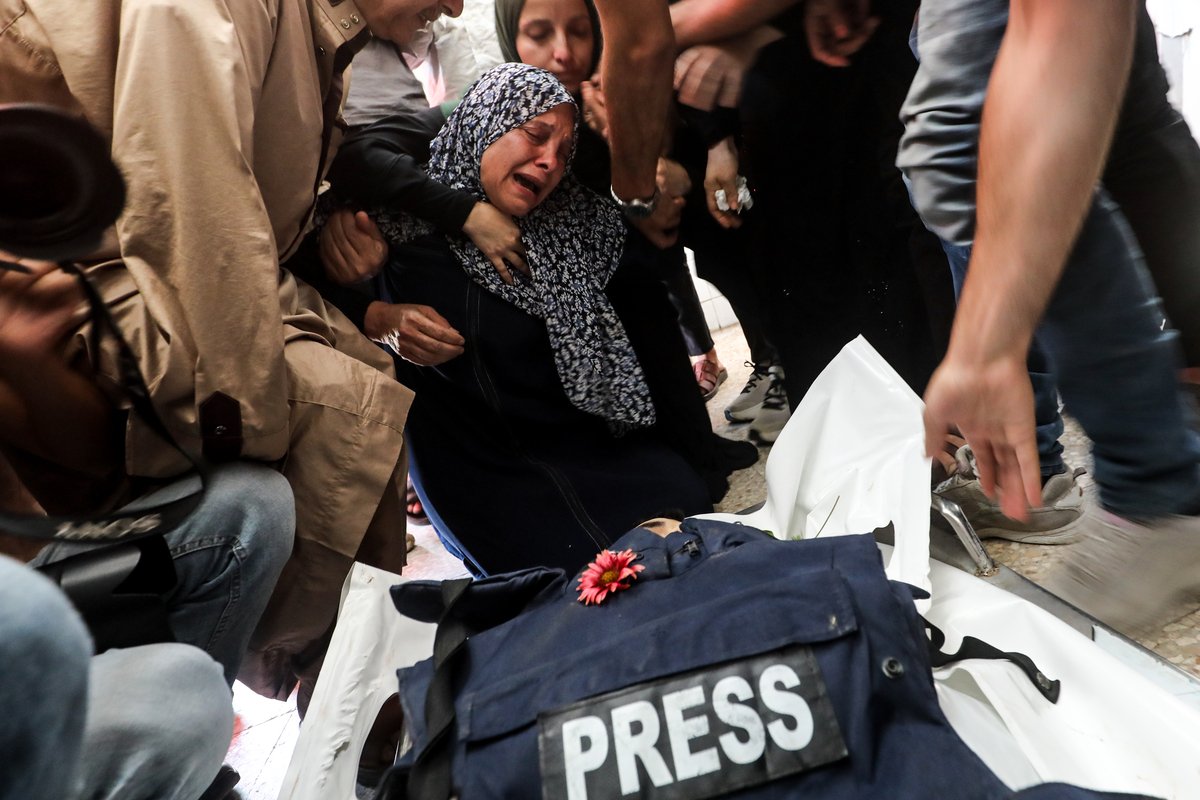
The Killing of Ahmed Washah (Middle East Monitor / Anadolu Agency) Ahmed Washah, a cameraman for Al Jazeera Mubasher, was killed in an Israeli strike that targeted a house in the Al-Bureij refugee camp in central Gaza. The incident occurred as he carried out his duties documenting events in the enclave. This loss adds to the mounting casualties among media workers who strive to
The Killing of Ahmed Washah
(Middle East Monitor / Anadolu Agency)
Ahmed Washah, a cameraman for Al Jazeera Mubasher, was killed in an Israeli strike that targeted a house in the Al-Bureij refugee camp in central Gaza. The incident occurred as he carried out his duties documenting events in the enclave. This loss adds to the mounting casualties among media workers who strive to report from the ground.
Colleagues described Washah as dedicated to capturing footage that conveyed the realities faced by civilians. His death came amid ongoing military operations that have repeatedly struck residential areas. The strike highlighted the risks journalists encounter while attempting to fulfill their professional responsibilities.
Al Jazeera Media Network issued a statement condemning the attack and calling for accountability. The network emphasized that such incidents represent direct assaults on the ability to report independently. Washah's killing has prompted renewed scrutiny of the conditions under which journalists operate in active conflict zones.
The Earlier Death of His Brother Mohammed
Mohammed Washah, Ahmed's brother and a correspondent for Al Jazeera Mubasher, was killed in an Israeli strike two months prior to Ahmed's death. Mohammed had been covering developments in Gaza when the attack occurred. The family now mourns the loss of two members who both worked to document unfolding events.
The successive deaths within the same family underscore the personal dimensions of professional risks in the region. Ahmed continued his work following his brother's passing, reflecting a commitment to continuing coverage despite evident dangers. This pattern of targeting within media families raises questions about the safety of those engaged in journalism.
Al Jazeera noted that Ahmed's death brings the total number of its staff killed in Gaza since October 2023 to 12. The network has expressed grief over these repeated losses while affirming its resolve to persist in reporting. The brothers' cases illustrate how individual tragedies accumulate within the broader context of media casualties.
The Total Toll of 262 Journalists
According to the Government Media Office in Gaza, 262 journalists and media workers have been killed since the start of Israel's military campaign on October 8, 2023. This figure stands as one of the highest recorded tolls for journalists in any single conflict. The office has compiled these numbers through systematic tracking of incidents involving media personnel.
Each reported death corresponds to an individual who was engaged in gathering and disseminating information. The cumulative count reflects the scale of losses across various media outlets operating in the area. Verification efforts continue as new incidents are documented amid the ongoing situation.
The toll has drawn attention from international observers monitoring press safety. Data from the office indicates that journalists have been affected across multiple locations within Gaza. This total serves as a baseline for assessing the impact on media operations in the territory.
Historical Comparison of Journalist Deaths in Conflict Zones
Comparisons with past conflicts show that the current toll in Gaza exceeds figures recorded in several other recent wars. For instance, journalist deaths in conflicts such as those in Iraq and Syria over extended periods reached lower annual averages in some cases. The concentration of casualties within a shorter timeframe distinguishes the present situation.
Historical records maintained by press monitoring groups indicate that targeted actions against media workers have varied in intensity across different zones. In previous engagements, protections under international frameworks sometimes mitigated losses to a degree. The Gaza figures suggest a departure from those earlier patterns in terms of rapidity.
Analysts note that the density of media activity in Gaza may contribute to the elevated numbers when measured against less densely reported conflicts. Past examples from the Balkans and other regions provide context for understanding cumulative impacts over time. These comparisons help frame the current toll within a longer trajectory of risks to journalists.
Al Jazeera's Legal Strategy
Al Jazeera Media Network has stated its intention to prosecute those responsible for the deaths of its staff. The network plans to pursue legal avenues through international institutions and relevant courts. This approach follows the pattern of previous efforts to seek accountability in similar cases.
Officials from the network have affirmed their commitment to documenting evidence related to each incident. The strategy includes collaboration with legal experts to build cases against involved parties. Such measures aim to address what the network describes as grave violations against its personnel.
The network has reiterated its demand for urgent action from the international community. It continues to emphasize the need for practical steps that would deter future incidents. This legal focus accompanies the network's ongoing operational decisions in the field.
The 50 Detained and 3 Missing Journalists
The Government Media Office reported that 50 journalists have been detained under harsh conditions since the conflict began. These detentions involve individuals held without standard access to legal processes in many instances. The office has tracked these cases as part of its broader monitoring of media worker statuses.
Additionally, three journalists remain missing as a result of actions attributed to the Israeli army. Efforts to locate these individuals continue through various channels. The missing cases add uncertainty to the overall accounting of media personnel affected.
Detained journalists face restrictions that limit their ability to communicate or receive support. The office has called for attention to their conditions as part of wider assessments. These figures contribute to the documented challenges confronting journalists beyond direct casualties.
The 420 Injured Journalists
More than 420 journalists have sustained injuries of varying severity during the conflict. Some of these wounds have resulted in amputations and permanent disabilities that affect future work capacity. The office has recorded these outcomes through medical and incident reports.
Injuries range from shrapnel wounds to those caused by direct strikes on locations where journalists were present. Recovery processes for many have been complicated by the broader environment in Gaza. These cases extend the impact beyond fatalities to long-term effects on individuals.
The office continues to update its records as new injuries are reported. Each instance represents a disruption to the flow of information from the area. The total underscores the physical toll experienced by media workers in the course of their duties.
International Law Protections for Journalists
Journalists in conflict zones receive protections under the Geneva Conventions, which classify them as civilians entitled to safeguards during hostilities. These provisions require parties to distinguish between combatants and non-combatants, including media personnel. Additional guidance comes from United Nations Security Council Resolution 2222, which addresses the safety of journalists.
The resolution calls on states to prevent attacks on media workers and to ensure accountability when violations occur. Implementation of these standards has been monitored by various international bodies in past conflicts. The current situation in Gaza has prompted references to these frameworks in discussions of reported incidents.
Legal experts note that adherence to these protections depends on operational practices by armed forces. The conventions and resolution provide mechanisms for investigation and potential prosecution. Their application remains a point of reference in assessments of journalist safety.
Responses from Press Freedom Groups
Organizations such as the Committee to Protect Journalists, Reporters Without Borders, and the International Federation of Journalists have issued statements regarding the reported toll. These groups have documented incidents and advocated for investigations into the deaths and injuries. Their reports compile data from multiple sources to track patterns over time.
The groups have called for adherence to international standards that protect media workers. They have highlighted the need for independent inquiries into specific cases, including those involving Al Jazeera staff. Such responses contribute to global awareness of conditions faced by journalists.
Monitoring efforts by these organizations include verification of casualty figures provided by local offices. They continue to press for measures that would reduce risks in active zones. Their involvement reflects established roles in promoting press safety across conflicts.
The Government Media Office's Systematic Policy Assessment and Implications
The Government Media Office in Gaza has assessed the toll as reflecting a systematic policy aimed at silencing the Palestinian voice. This evaluation draws on the scale and consistency of incidents involving journalists. The office has linked the numbers to efforts to prevent facts from reaching wider audiences.
Implications for press freedom extend to the ability of media outlets to maintain operations under sustained pressure. The combination of deaths, detentions, and injuries affects the continuity of reporting from the enclave. Observers have noted potential long-term effects on information access in similar future scenarios.
The human cost behind each statistic involves families and communities connected to the affected journalists. These individual stories accumulate into the larger recorded totals. The assessment underscores the need for continued attention to protections in conflict settings.
By Fatima Al-Rashid, Staff WriterThis article was produced with AI-assisted research and editorial support. Reporting is based on sources cited in the article.
What's Your Reaction?
 Like
0
Like
0
 Dislike
0
Dislike
0
 Love
0
Love
0
 Funny
0
Funny
0
 Wow
0
Wow
0
 Sad
0
Sad
0
 Angry
0
Angry
0
Middle East Correspondent at Global1.News. Based in Beirut, covering politics, conflict, energy, and society across the Middle East. Brings context and depth to a region often reduced to headlines.









Comments (0)