
The Approaching Deadline in South Africa
The Approaching Deadline in South Africa As 30 June 2026 draws near, South Africa faces renewed pressure on undocumented migrants following protests that have set this date as a line in the sand. Groups including March and March and ActionSA have organised demonstrations where participants chant "Mabahambe," a Zulu call meaning they must go. The deadline has prompted thousands
The Approaching Deadline in South Africa
As 30 June 2026 draws near, South Africa faces renewed pressure on undocumented migrants following protests that have set this date as a line in the sand. Groups including March and March and ActionSA have organised demonstrations where participants chant "Mabahambe," a Zulu call meaning they must go. The deadline has prompted thousands of people from Malawi, Zimbabwe, Nigeria and other nations to seek safety or arrange departures. President Cyril Ramaphosa has cautioned against scapegoating vulnerable people as a response to the country's economic difficulties.
Stories from the Gathering in Durban
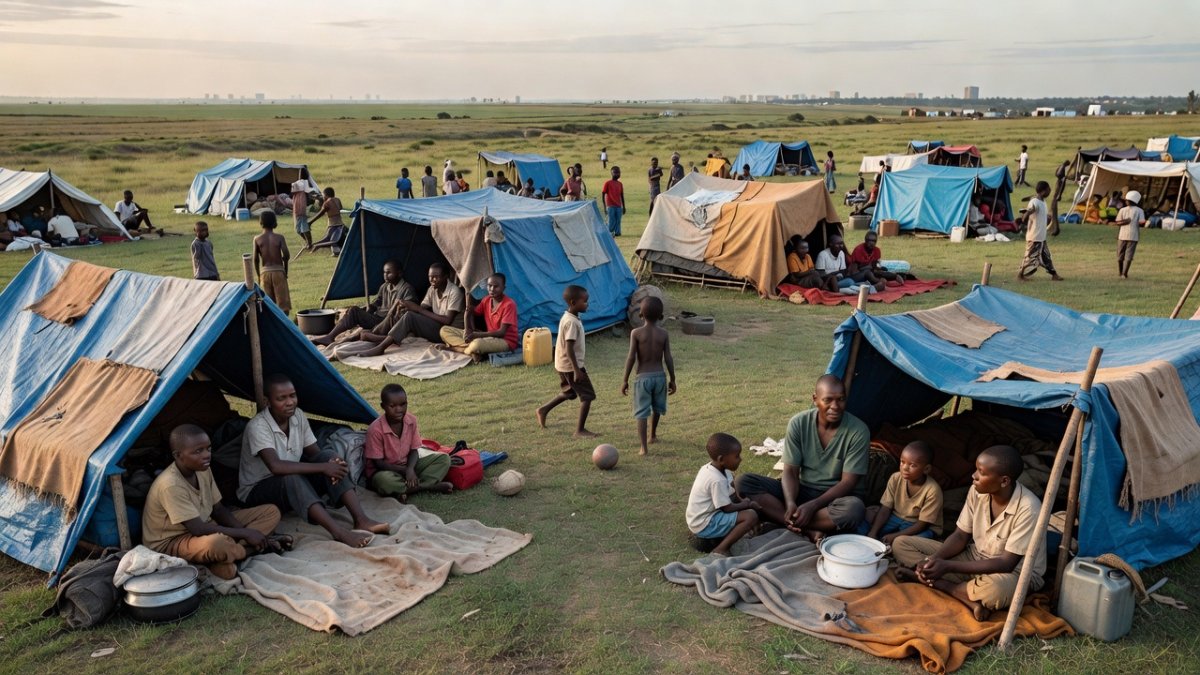
In KwaZulu-Natal province, an open field near Durban has become a temporary refuge for up to 7,000 foreigners, mainly Malawians. Esnat Joseph, a 36-year-old Malawian woman, described fleeing her home in an informal settlement after a group of ten South African men arrived at her door carrying machetes and whips. She recounted how they attacked her husband, leaving him hospitalised, before she gathered her one-year-old triplets and sought shelter. Aid organisations have distributed blankets and food at the site while the Malawian consulate coordinates buses for those wishing to return home. Joseph had worked as a domestic servant after arriving three years earlier, though her legal documents were lost in a robbery.
Protesters' Arguments and Government Position
March and March leader Jacinta Ngobese-Zuma has stated that the actions target people who overstay visas, arguing that every country must prioritise its citizens. Protesters point to South Africa's unemployment rate of 32.7 percent and the loss of 350,000 jobs in the first quarter of 2026, many affecting young people. They also highlight pressure on schools and hospitals. Official figures indicate more than three million foreigners live in South Africa, representing about five percent of the population, though the number of undocumented migrants remains unrecorded and fuels much of the tension. Ramaphosa has emphasised that blaming outsiders will not resolve these structural challenges.
Organised Repatriations Across Borders
Several governments have begun arranging returns. Malawi, Ghana, Mozambique, Nigeria and Zimbabwe have facilitated bus and air repatriations in recent weeks, with roughly 3,500 people volunteering to leave so far. More than 500 Nigerians were returned after South African authorities determined they were in the country illegally, a claim disputed by Nigerian officials. One returnee, identified only as Benjamin, arrived in Lagos after nearly nine years and described a climate where foreigners, especially Nigerians, felt unsafe. These movements reflect both the immediate fear generated by the protests and the practical support offered by home countries.
Patterns of Earlier Violence
Observers note the risk that current protests could echo earlier outbreaks of xenophobic violence. In 2008, riots killed 62 people, including 21 South Africans, and displaced thousands. Further incidents occurred in 2015, 2016 and 2019. Last month the Mozambican government reported five of its citizens killed in attacks in Western Cape province, though South Africa's foreign minister stated that two Mozambicans had died and that investigations continue. These precedents underscore the need for careful management as the June deadline approaches.
A Senegalese Lens on Migration and Dignity
From Senegal, the scenes in Durban prompt reflection on how African nations treat one another during times of strain. Senegal has long participated in regional movements of people seeking work and opportunity, and many Senegalese understand the pull of South Africa's economy even as they recognise the frustrations of local communities facing scarce resources. The principle of helping fellow Africans, rooted in shared history and the philosophy of Ubuntu that values collective humanity, appears strained when door-to-door intimidation replaces mutual support. West African perspectives often emphasise that migration within the continent has sustained families and communities for generations, yet current events test whether that solidarity can survive economic hardship.
Pan-African Unity Under Pressure
The repatriations and protests raise questions about the practical meaning of pan-African cooperation. When citizens of Malawi, Nigeria and Zimbabwe leave South Africa under duress, the ideal of African people supporting one another across borders faces direct challenge. Senegal's own engagement with continental institutions has historically promoted freer movement and shared prosperity, yet the Durban gatherings illustrate how quickly such aspirations can be overshadowed by immediate local grievances. Maintaining dignity for both South African citizens seeking employment and migrants who have contributed labour requires solutions that address root causes rather than simply shifting populations.
Looking Beyond the Deadline
As the 30 June 2026 date nears, the situation calls for responses that honour the humanity of all involved. Economic pressures in South Africa are real, yet history shows that violence and mass departures rarely produce lasting relief. A Senegalese viewpoint highlights the value of community networks that have allowed West and Southern Africans to assist one another during past migrations. Whether future policy can balance national priorities with continental solidarity remains an open question, one that will shape how Africans continue to define mutual support in the years ahead.
By Amara Diop, Staff WriterThis article was produced with AI-assisted research and editorial support. Reporting is based on sources cited in the article.
What's Your Reaction?
 Like
0
Like
0
 Dislike
0
Dislike
0
 Love
0
Love
0
 Funny
0
Funny
0
 Wow
0
Wow
0
 Sad
0
Sad
0
 Angry
0
Angry
0

Canada Correspondent at Global1.News. Based in Toronto, covering Canadian politics, energy, trade, and US-Canada relations. Provides the Canadian perspective on North American and global affairs.











Comments (0)