
RCMP Officer from St-Jean-sur-Richelieu Charged with Uttering Threats Against U.S. President Trump
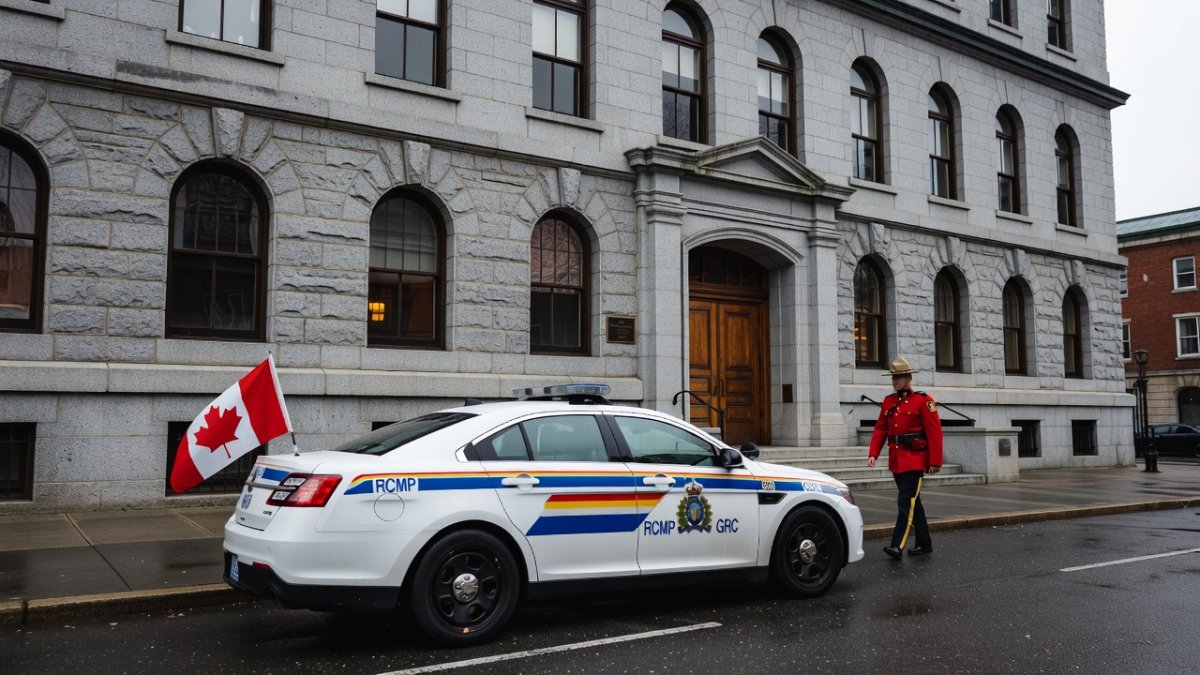
The CBC News YouTube video released on June 17, 2026, opens with footage of the St-Jean-sur-Richelieu courthouse and outlines the charges against 34-year-old RCMP officer Evenson Dumerlus of St-Jean-sur-Richelieu, Quebec. The video confirms that Dumerlus, assigned to Federal Policing Eastern Region, faces one count of uttering threats under the Criminal Code after posting a Sna
The CBC News YouTube video released on June 17, 2026, opens with footage of the St-Jean-sur-Richelieu courthouse and outlines the charges against 34-year-old RCMP officer Evenson Dumerlus of St-Jean-sur-Richelieu, Quebec. The video confirms that Dumerlus, assigned to Federal Policing Eastern Region, faces one count of uttering threats under the Criminal Code after posting a Snapchat video containing threatening comments toward U.S. President Donald Trump while deployed on G7 security operations in June 2025.
RCMP Officer from St-Jean-sur-Richelieu Charged with Uttering Threats Against U.S. President Trump
St-Jean-sur-Richelieu, Quebec —
The Charges
Evenson Dumerlus faces a single count of uttering threats contrary to section 264.1 of the Criminal Code of Canada. This section criminalises knowingly uttering, conveying, or causing any person to receive a threat to cause death or bodily harm to any person. The charge carries a maximum penalty of five years imprisonment when the threat targets an individual, reflecting Parliament's intent to protect public safety and individual security across Canada.
The St-Jean-sur-Richelieu courthouse will host Dumerlus's first court appearance on July 30. Prosecutors from the Public Prosecution Service of Canada will present the Snapchat video evidence obtained through the internal RCMP reporting process. The location of the proceedings underscores the federal nature of the allegations given Dumerlus's role in Federal Policing Eastern Region.
Section 264.1 requires proof that the accused intended the recipient to take the threat seriously. Canadian courts have consistently held that context, including deployment status during international summits, forms part of the analysis. The RCMP statement emphasises that violent statements will not be tolerated, aligning with the Criminal Code's protective purpose.
The charge raises questions about jurisdiction because the target is a foreign head of state. However, the Criminal Code applies to threats made by Canadian residents regardless of the victim's nationality or location. This principle ensures Canadian law enforcement maintains authority over officers serving in federal roles.
Canadian readers should note that uttering threats prosecutions often proceed by indictment when the conduct involves law enforcement personnel. The July 30 appearance will determine whether the matter remains in provincial court or moves to a higher level for preliminary inquiry.
The RCMP's public statement that it takes seriously any threats affecting one's sense of security directly references the objectives of section 264.1. This language signals the force's commitment to upholding the Criminal Code standard in cases involving its own members.
The Snapchat Incident
Evenson Dumerlus posted the Snapchat video while deployed on G7 security operations in June 2025. Protective operations at the G7 summit require RCMP officers to coordinate perimeter security, intelligence sharing, and close protection details for world leaders including the U.S. President. Dumerlus's assignment placed him within this integrated command structure in Quebec.
The video contained threatening comments directed at Donald Trump. Another RCMP officer viewed the post and reported it immediately to the Special Investigations Unit. The reporting officer's action triggered the same-day removal of Dumerlus from all duties, demonstrating the force's rapid response protocol during active summit security.
G7 protective operations involve extensive vetting of personnel for international security details. Officers receive briefings on social media policies and the requirement to maintain operational security. Dumerlus's deployment status at the time of the post highlights the intersection between personal conduct and national security responsibilities.
The incident occurred in St-Jean-sur-Richelieu, Quebec, where Dumerlus resides. Federal Policing Eastern Region covers Quebec and Atlantic Canada, meaning Dumerlus operated under the same command responsible for cross-border liaison with U.S. agencies during the summit period.
Canadian spelling conventions and legal terminology describe the conduct as uttering threats rather than any American equivalent. The RCMP encourages the public to report such activities, reinforcing community involvement in maintaining the integrity of federal policing operations.
The timing of the post during active G7 duties amplified the potential impact on operational security. Summit planning includes continuous monitoring of personnel behaviour to prevent any compromise of protective arrangements for visiting dignitaries.
Internal RCMP Response
The RCMP Special Investigations Unit received the report from the second officer and initiated an internal review on the same day in June 2025. The unit's mandate includes examining allegations of serious misconduct by RCMP members, particularly when conduct may affect public confidence or international relations. Dumerlus was removed from duties immediately.
Officer vetting for international security details includes review of social media history and ongoing monitoring during deployments. The rapid removal demonstrates that existing protocols functioned as intended when the Snapchat video surfaced. Federal Policing Eastern Region command implemented the standing order without delay.
The RCMP statement issued after the charge emphasises that violent statements will not be tolerated. This language reflects the force's internal disciplinary framework, which operates alongside criminal proceedings. Parallel processes allow the organisation to address both criminal liability and employment standards.
Previous RCMP discipline cases involving social media have resulted in suspensions and terminations when posts undermine public trust. The current matter follows established patterns where internal reporting leads to swift administrative action pending court outcomes.
The Special Investigations Unit continues to gather evidence for both the criminal prosecution and any administrative review. Federal policing structure in Quebec requires coordination between regional command and national headquarters when allegations involve threats against foreign officials.
Removal from duties prevents any further access to sensitive G7-related information. This step protects the integrity of ongoing security operations and demonstrates accountability to Canadian and international partners.
Canada-US Security Implications
The Canada-US extradition treaty does not apply here because the alleged offence occurred entirely within Canada and involves a Canadian resident. Canadian authorities retain full jurisdiction, avoiding any transfer of the case to U.S. courts. This outcome respects established principles of territorial jurisdiction under international law.
Impact on Canada-US security cooperation remains under assessment by both governments. The incident occurs against the backdrop of Five Eyes intelligence sharing, where RCMP participation supports joint threat assessments. Any perception of internal misconduct could affect information exchange protocols during future summits.
Diplomatic channels between Ottawa and Washington have handled similar personnel matters through established liaison offices. The RCMP's public commitment to investigating threats that affect one's sense of security provides reassurance to U.S. counterparts regarding protective operations.
Federal policing responsibilities in Quebec include direct coordination with U.S. Secret Service and other agencies during G7 events. The swift internal response helps preserve the trust necessary for continued joint operations along the border and at international meetings.
Canadian readers recognise that security cooperation extends beyond single incidents. The RCMP's handling of the Dumerlus matter will influence future vetting standards for officers assigned to cross-border protective duties.
Five Eyes partners monitor such cases for patterns that might affect shared intelligence platforms. The RCMP's transparent statement supports continued participation in these multilateral arrangements.

Federal Policing and Accountability
Federal Policing Eastern Region maintains oversight of RCMP operations across Quebec and Atlantic Canada. The structure ensures consistent application of conduct standards for officers engaged in national security and protective duties. Dumerlus's case falls squarely within this regional command.
Parallel criminal and disciplinary proceedings will advance separately. The criminal charge under section 264.1 proceeds through the courts while internal disciplinary measures address employment consequences. This dual track is standard in RCMP accountability processes.
The RCMP encourages public reporting of concerning behaviour by its members. This policy supports early detection of issues that could compromise federal policing objectives or international partnerships.
Accountability mechanisms include review by the Civilian Review and Complaints Commission when public complaints arise. Although the current matter originated internally, the commission retains authority to examine systemic issues related to social media use by officers on security details.
Canadian law requires that disciplinary actions respect procedural fairness while prioritising operational security. The same-day removal of Dumerlus illustrates the balance between individual rights and the public interest in maintaining reliable protective services.
Previous cases have shown that social media misconduct by RCMP personnel leads to both criminal charges and administrative sanctions. The organisation applies lessons from those matters to current policy development.
What Happens Next
The July 30 court appearance at the St-Jean-sur-Richelieu courthouse will set the timeline for disclosure and potential plea discussions. Prosecutors will provide the Snapchat video and related evidence to defence counsel in accordance with Criminal Code requirements.
Disciplinary proceedings will continue independently of the criminal case. The RCMP may impose suspensions or other measures pending the outcome of the court process. Final employment decisions typically follow resolution of criminal charges.
Policy changes under consideration include enhanced real-time monitoring of social media during international deployments. Federal Policing Eastern Region command will review existing vetting procedures to identify any gaps exposed by this incident.
The RCMP statement that violent statements will not be tolerated signals ongoing commitment to public communication about accountability. Future updates will likely address both the criminal proceedings and any resulting organisational reforms.
Canadian readers can expect continued coverage of the matter as it moves through the St-Jean-sur-Richelieu judicial system. The case illustrates the intersection of domestic criminal law, international security obligations, and internal police discipline.
Longer-term implications may include updated training modules for officers assigned to G7 and similar summits. These measures aim to reinforce the standards already articulated in RCMP conduct policies.
By Alex Thompson, Staff Writer
This article was produced with AI-assisted research and editorial support. Reporting is based on sources cited in the article.
What's Your Reaction?
 Like
0
Like
0
 Dislike
0
Dislike
0
 Love
0
Love
0
 Funny
0
Funny
0
 Wow
0
Wow
0
 Sad
0
Sad
0
 Angry
0
Angry
0

Canada Correspondent at Global1.News. Based in Toronto, covering Canadian politics, energy, trade, and US-Canada relations. Provides the Canadian perspective on North American and global affairs.













Comments (0)