
Russia's Energy Ministry Admits Drone Attacks Behind Gasoline Shortages
Russia's Energy Ministry has acknowledged that mounting Ukrainian drone attacks on oil refineries and energy infrastructure are responsible for recent fuel shortages in annexed Crimea and parts of southern Russia — a rare official admission of vulnerability in the country's domestic energy sector. The acknowledgment, issued in a ministry statement published late Monday, marks o
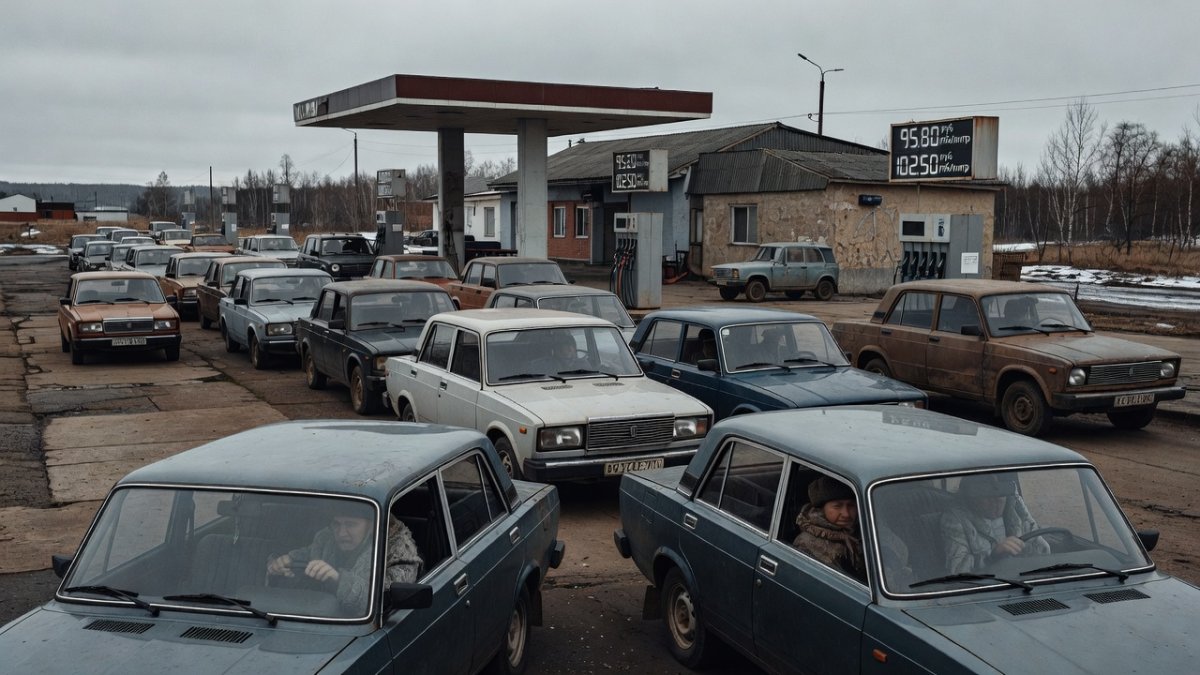
Russia's Energy Ministry has acknowledged that mounting Ukrainian drone attacks on oil refineries and energy infrastructure are responsible for recent fuel shortages in annexed Crimea and parts of southern Russia — a rare official admission of vulnerability in the country's domestic energy sector.
The acknowledgment, issued in a ministry statement published late Monday, marks one of the first times Russian authorities have directly linked supply disruptions at the pump to the intensifying campaign of Ukrainian strikes on the country's energy infrastructure.
Russia's Energy Ministry Admits Drone Attacks Behind Gasoline Shortages
Moscow, Russia — June 2026 — "Recently, fuel and energy sector enterprises have faced an uptick in enemy aerial attacks, leading to temporary difficulties with fuel supplies in several southern regions," the Energy Ministry said in a statement. Officials reported the formation of an industry-wide task force to ensure the "stable and efficient operation" of the country's entire energy sector.
Details of Attacks on Refineries and Supply Routes
Ukraine began ramping up drone strikes against Russian oil refineries and supply lines this spring in a coordinated effort to deprive the Kremlin of windfalls from surging oil prices. These operations have halted or scaled back production at facilities responsible for large shares of Russia's gasoline output.
In addition to targeting refineries, Ukraine has struck fuel trucks along the R-280 Novorossiya highway, which connects annexed Crimea to Russia's Rostov region. According to a BBC report, Ukraine has carried out 300 drone strikes on trucks, including 30 oil tankers, since the start of May. The pace of attacks has intensified in recent weeks, according to Ukrainian military sources.
Implementation of Rationing Across Multiple Regions
Last month the Energy Ministry publicly described the domestic gasoline market as "stable and under control" even as fuel rationing measures quietly began in annexed Crimea. Since then, Crimea and at least 14 Russian regions have introduced various forms of rationing at local gas stations.
The full scale of shortages beyond Crimea remains difficult to assess. Some local restrictions appear designed to prevent panic buying and hoarding rather than an immediate acute supply crunch. The average price of gasoline in Russia has climbed 4.8 percent since the start of the year, reaching a national average of 67.83 rubles per liter as of June 1, according to Rosstat data.
Government Measures and Export Restrictions
A ban on gasoline exports remains in force through July 31 to safeguard domestic supplies and combat rising prices. Reuters, citing market sources, reported this week that the shortages have forced Russia to cut June crude exports and redirect those volumes into domestic refineries for gasoline production.
Kremlin spokesman Dmitry Peskov acknowledged "certain problems" with fuel supplies in comments reported by The Guardian, as Ukrainian strikes continue to target energy infrastructure. The federal statistics agency Rosstat recorded fuel price increases across 73 regions, led by a 3.2 percent weekly spike in the republic of Tuva. Diesel prices rose 0.8 percent week-on-week to a national average of 79.46 rubles per liter.
Effects on Ordinary Russians and Regional Economies
These shortages directly affect daily life for residents in southern Russia and Crimea, where higher fuel costs and rationing measures are adding pressure to household budgets already strained by inflation. The uneven distribution of price increases — with the sharpest rises concentrated in remote regions such as Tuva — illustrates how disruptions in fuel supply chains ripple across Russia's vast territory.
The situation connects to broader Kremlin energy policies that have long prioritized export revenues over domestic market stability. Russia's reliance on oil and gas revenues to fund state functions and military operations in Ukraine has created structural vulnerabilities that the current drone campaign appears to be exploiting.
Challenges to Official Narratives of Control
The Energy Ministry's admission marks a notable shift in official messaging. For months, Russian authorities downplayed the impact of Ukrainian strikes on energy infrastructure, insisting that the domestic market remained stable. The creation of an industry-wide task force suggests the government is responding to operational realities rather than maintaining earlier claims of full resilience.
Analysts suggest this could indicate that sustained Ukrainian strikes are testing the Kremlin's ability to project uninterrupted control over critical infrastructure — a pillar of the regime's domestic legitimacy. "When the government admits fuel shortages, it signals a breach in the narrative of stability that the Kremlin carefully cultivates," one Moscow-based energy analyst told Global1.News, speaking on condition of anonymity due to the sensitivity of the subject.
Strategic Context and External Perspectives
Ukraine's campaign against Russian energy assets is designed to reduce the financial flows that sustain Moscow's military operations. By striking refineries, supply depots and transport routes, Kyiv aims to impose direct economic costs while limiting Russia's ability to fund its war effort through energy exports.
From the perspective of EU and NATO observers, the strikes represent a legitimate component of Ukraine's defensive strategy under international law. Meanwhile, Russian officials continue to frame the supply issues as a consequence of external aggression, with the Energy Ministry's statement attributing the difficulties to "enemy aerial attacks."
The coming weeks will determine whether the newly established task force can stabilize supplies before the export ban expires on July 31 — and whether the Kremlin's narrative of control can withstand the mounting domestic consequences of a war now in its fifth year.
By Irina Volkov, Staff Writer
This article was produced with AI-assisted research and editorial support. Reporting is based on sources cited in the article.
What's Your Reaction?
 Like
0
Like
0
 Dislike
0
Dislike
0
 Love
0
Love
0
 Funny
0
Funny
0
 Wow
0
Wow
0
 Sad
0
Sad
0
 Angry
0
Angry
0
Russia/Eastern Europe Correspondent at Global1.News. Covering Russian politics, energy, security, and the shifting dynamics of the post-Soviet space. Provides clear-eyed analysis on one of the world's most opaque regions.














Comments (0)