
Colombian Amazon Drought Crisis Threatens Indigenous Survival
The Colombian Amazon is vanishing before our eyes. The Amazon River has reached its lowest levels in 122 years — with water flows reduced by 80 to 90 percent in critical stretches — leaving Indigenous Tikuna, Yagua, Bora, and Cocama communities stranded and the rainforest itself gasping for breath. This drought is not merely a dry spell; it is a preview of the Amazon's future i
The Colombian Amazon is vanishing before our eyes. The Amazon River has reached its lowest levels in 122 years — with water flows reduced by 80 to 90 percent in critical stretches — leaving Indigenous Tikuna, Yagua, Bora, and Cocama communities stranded and the rainforest itself gasping for breath. This drought is not merely a dry spell; it is a preview of the Amazon's future if climate change and deforestation continue unchecked.
Colombian Amazon Drought Crisis Threatens Indigenous Survival
Leticia, Amazonas – Colombia, June 2026 — The Colombian Amazon is enduring the worst drought in over a century. The river that gives this region its name has turned against the people who have stewarded it for generations.
Drought Severity: A 122-Year Catastrophe Unfolds
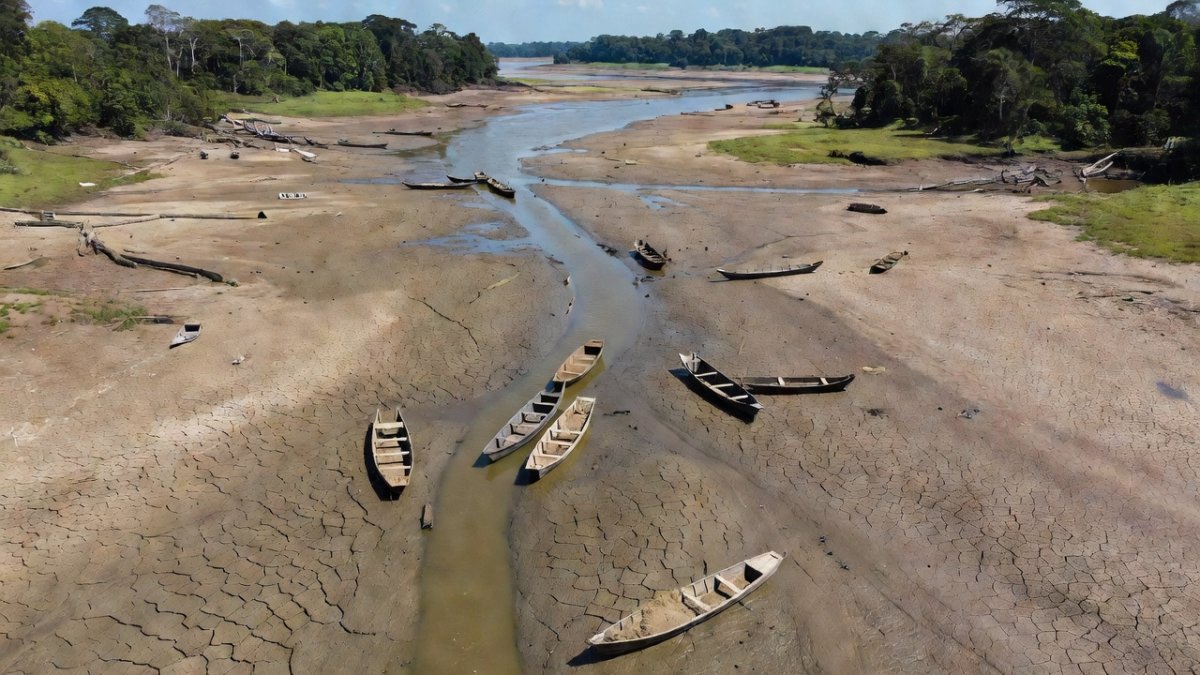
The Colombian Amazon is enduring a drought of staggering proportions, the worst in 122 years of recorded history. Water levels along the 11-million-meter stretch between Leticia and Puerto Nariño have plunged by 80-90 percent, leaving once-mighty rivers as cracked mudflats. At Nazareth, flow has collapsed by 82 percent. Rainfall has plummeted from a normal 537 mm to just 215 mm in key months, triggering 400-plus municipal alerts and 116 red alerts across Amazonas, Caquetá, Putumayo, Guaviare, and Vaupés. These numbers are not abstract; they represent the lifeblood of an entire biome vanishing before our eyes. Communities that have relied on these waterways for centuries now stare at empty channels where boats once glided freely.
Indigenous Impacts: Tikuna, Yagua, Bora and Cocama on the Brink
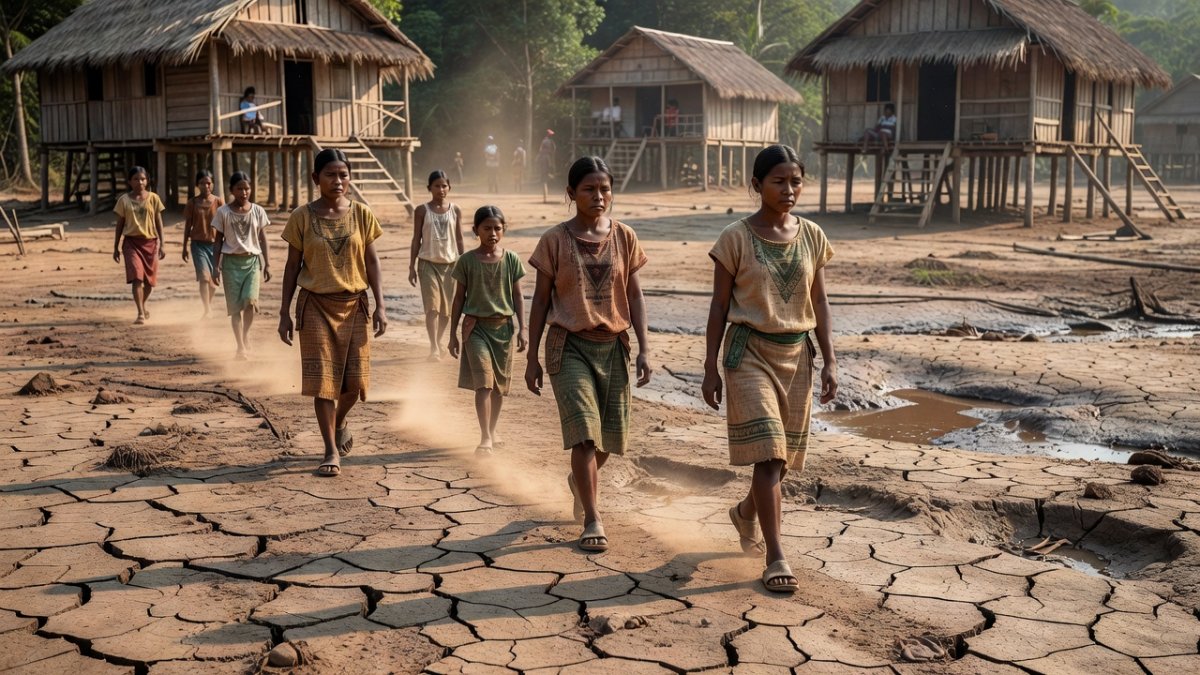
Indigenous nations — Tikuna, Yagua, Bora, and Cocama — find themselves completely isolated as river transport, their sole lifeline, collapses. Boats lie stranded on baked riverbeds while fishing yields have vanished, pushing families toward hunger. Five communities were officially declared isolated by September 2024. Army Brigada 26 and World Vision missions deliver sporadic aid, yet the human cost mounts daily. Pink dolphins, sacred guardians of the rivers, wash up dead in alarming numbers. Crop failures strip away the last remnants of food security. These peoples have stewarded the forest for millennia; now they watch their world unravel. Children walk hours for contaminated water. Elders recount how the rivers once sang with life; today they whisper only dust.
Voices from the Ground: Defensoría Report Exposes Human Suffering
The Defensoría del Pueblo's May 2025 Leticia report, delivered by Defensora Iris Marín, paints a harrowing portrait. Officials walked dried riverbeds where children now play on cracked earth. Skin infections and gastrointestinal illnesses have surged from stagnant pools and failed sanitation. The river channel itself is shifting, threatening the very port of Leticia and raising the specter of renegotiating the Colombia-Peru border treaty. Marín's team documented how the crisis amplifies existing vulnerabilities, turning routine illnesses into life-threatening emergencies. The human stories — elders weeping over lost fishing grounds, young people contemplating migration — reveal a society fracturing under invisible pressure.
Root Causes: El Niño Meets Human Destruction
El Niño, supercharged by climate change, drives the immediate crisis, with an 80-82 percent chance of another event between May and August 2026 according to WMO and NOAA forecasts. Yet the deeper wound is self-inflicted: relentless deforestation has shattered the "flying rivers" that once recycled moisture across the basin. The dry season has stretched from four to six months. Illegal mining and cattle ranching carve scars that prevent the forest from regenerating. Each felled tree weakens the regional water cycle, turning a once-resilient system brittle. Climate change and human greed have formed a deadly feedback loop.
Institutions: Fragmented Response Amid Growing Desperation
IDEAM issues forecasts, the Defensoría documents rights violations, MinAmbienteCo sets policy, Corpoamazonia manages local resources, Brigada 26 provides logistics, World Vision delivers aid, and OCHA coordinates international appeals. Each plays a vital role, yet coordination gaps leave communities waiting weeks for help. Overlapping mandates and underfunded field teams mean data arrives late and supplies trickle in sporadically. Brigada 26 helicopters reach isolated villages, but only after rivers have already dropped below navigable levels. World Vision water projects help, yet cannot scale to the 116 red-alert municipalities.
Amazon Tipping Point: 17 Percent Deforested
The Amazon stands at 17 percent deforestation, perilously close to the 20-25 percent tipping-point threshold. Once crossed, the forest risks flipping from carbon sink to net emitter. Historically it absorbed two billion tons of CO2 annually; today that capacity is eroding fast. Each additional hectare lost accelerates warming, reduces rainfall, and invites more fire. The Colombian Amazon is not merely suffering drought — it is approaching a planetary-scale regime shift. Scientists warn that crossing the threshold could release centuries of stored carbon in decades, accelerating global climate chaos.
2026 Outlook: Super El Niño Watch and Hydropower Peril
IDEAM's June 10 webinar sounded the alarm: El Niño Watch remains active, with models hinting at a possible super El Niño. Colombia's heavy reliance on hydropower faces direct threat. Reservoir levels are already low; another dry year could trigger energy rationing and price spikes that ripple through the national economy. Wildfire risk will climb as vegetation turns tinder-dry. Indigenous territories, already isolated, will face compounded emergencies. Early-warning systems exist, yet funding for community-level preparedness lags. The 2026 outlook is not speculative — it is a forecast of preventable suffering if leaders fail to act.
Latin America Context: A Shared Basin Demands Regional Unity
The crisis crosses borders into Peru and Brazil, binding three nations in a single hydrological fate. The shared Amazon basin requires coordinated monitoring, joint emergency protocols, and unified advocacy for international climate finance. Indigenous rights must sit at the center of any regional response — titling territories, halting illegal mining, and channeling funds directly to communities. Climate finance from wealthy nations must flow not as charity but as reparations for historical emissions. Latin America possesses the moral authority and ecological leverage to demand systemic change. Only through cross-border solidarity can the Amazon be defended before its rivers run dry forever.
By Elena Vasquez, Staff Writer
This article was produced with AI-assisted research and editorial support. Reporting is based on sources cited in the article.
What's Your Reaction?
 Like
0
Like
0
 Dislike
0
Dislike
0
 Love
0
Love
0
 Funny
0
Funny
0
 Wow
0
Wow
0
 Sad
0
Sad
0
 Angry
0
Angry
0

Latin America Correspondent at Global1.News. Based in Mexico City, covering politics, economics, energy, and culture across the region. Brings an on-the-ground perspective to stories spanning from the Rio Grande to Patagonia.














Comments (0)