
Reaction to President Trump's Speech on US-Iran MoU During G7 Summit Press Conference
In a recent i24NEWS report from the G7 summit, analysts in Jerusalem and Washington dissected the 14-point memorandum that President Donald Trump unveiled on June 17, 2026, at the closing press conference in Évian-les-Bains, France — a document that has sent shockwaves through Israeli defense and political circles. Reaction to President Trump's Speech on US-Iran MoU — G7 Summit
In a recent i24NEWS report from the G7 summit, analysts in Jerusalem and Washington dissected the 14-point memorandum that President Donald Trump unveiled on June 17, 2026, at the closing press conference in Évian-les-Bains, France — a document that has sent shockwaves through Israeli defense and political circles.
Reaction to President Trump's Speech on US-Iran MoU — G7 Summit Shakes Israel-US Relations
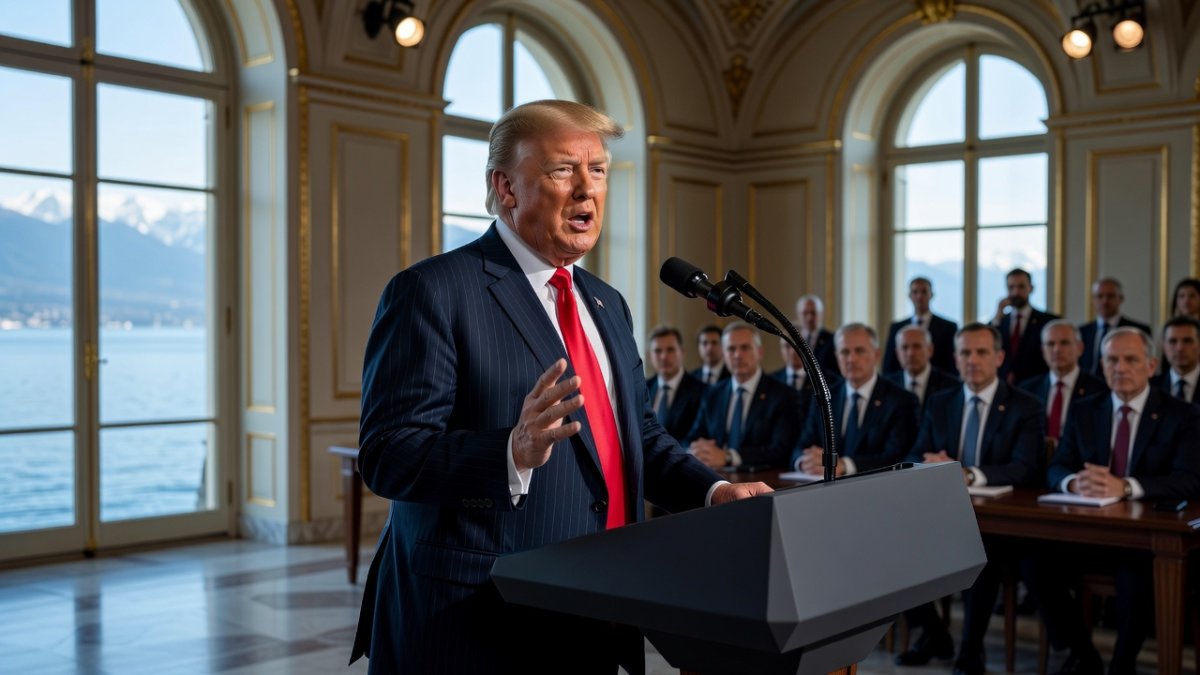
Jerusalem, Israel – June 2026 — President Donald Trump spoke for more than one hour during the G7 closing press conference in Évian-les-Bains on June 17, 2026, outlining a 60-day deadline for a broader agreement with Iran, publicly criticizing Prime Minister Benjamin Netanyahu, and confirming that Israel had been excluded from the final negotiations of the US-Iran Memorandum of Understanding.
Trump's G7 Ultimatum: 60 Days to a Broader Deal
President Donald Trump spoke for more than one hour during the G7 closing press conference in Évian-les-Bains on June 17, 2026, outlining a 60-day deadline for a broader agreement with Iran. He stated explicitly that if the deal failed to materialize, the United States would resume military strikes. Senior U.S. officials then read aloud the full 14-point memorandum of understanding that had been negotiated in recent weeks. The document requires termination of all Iranian military operations outside its borders, an end to the American embargo on Iranian oil exports, and a permanent Iranian commitment to forgo nuclear weapons development.
Vice President JD Vance appeared on CBS News the same evening to confirm that the Strait of Hormuz would reopen to commercial shipping within 72 hours of the memorandum taking effect. Trump used the platform to criticize the 2015 Joint Comprehensive Plan of Action negotiated under President Barack Obama, while praising the 2020 assassination of Iranian General Qasem Soleimani as a decisive blow to Tehran's regional ambitions. He singled out French President Emmanuel Macron, Emirati leader Mohammed bin Zayed, Chinese President Xi Jinping, and Russian President Vladimir Putin for maintaining neutrality during the final weeks of talks.
The memorandum further stipulates that Iran must dismantle key centrifuge sites at Natanz and Fordow within the 60-day window. U.S. officials present in Évian-les-Bains emphasized that any violation would trigger automatic reimposition of sanctions and renewed airstrikes on Iranian military targets. European diplomats at the summit noted that the timeline leaves little room for additional Israeli input before the Geneva signing ceremony scheduled for June 20, 2026.
Israel Left in the Dark on MoU Negotiations
Israeli government officials in Jerusalem received no advance copy of the 14-point memorandum, according to reporting from NBC News on June 17, 2026. President Trump declared during the press conference that "without me, there would be no Israel," while describing Prime Minister Benjamin Netanyahu as "crazy" and questioning his judgment on security matters. Trump warned that Iran would need only one nuclear device to eliminate the Jewish state entirely.
The ceremonial signing of the memorandum is set for Friday, June 20, 2026, in Geneva, with Vice President JD Vance representing the United States. Israeli diplomats at the G7 summit learned of the final terms only after Trump began reading excerpts aloud. Sources inside the Prime Minister's Office confirmed that no briefing on the 14 points had been provided to either the Israeli embassy in Washington or the Foreign Ministry in Jerusalem prior to the announcement.
Defense Minister Yoav Gallant canceled a scheduled meeting with U.S. Secretary of Defense Lloyd Austin after learning the details through media reports. Israeli intelligence assessments prepared in May 2026 had assumed continued American support for operations against Iranian proxies, an assumption now directly contradicted by the memorandum's language on permanent termination of military operations.
Netanyahu Under Fire at Home
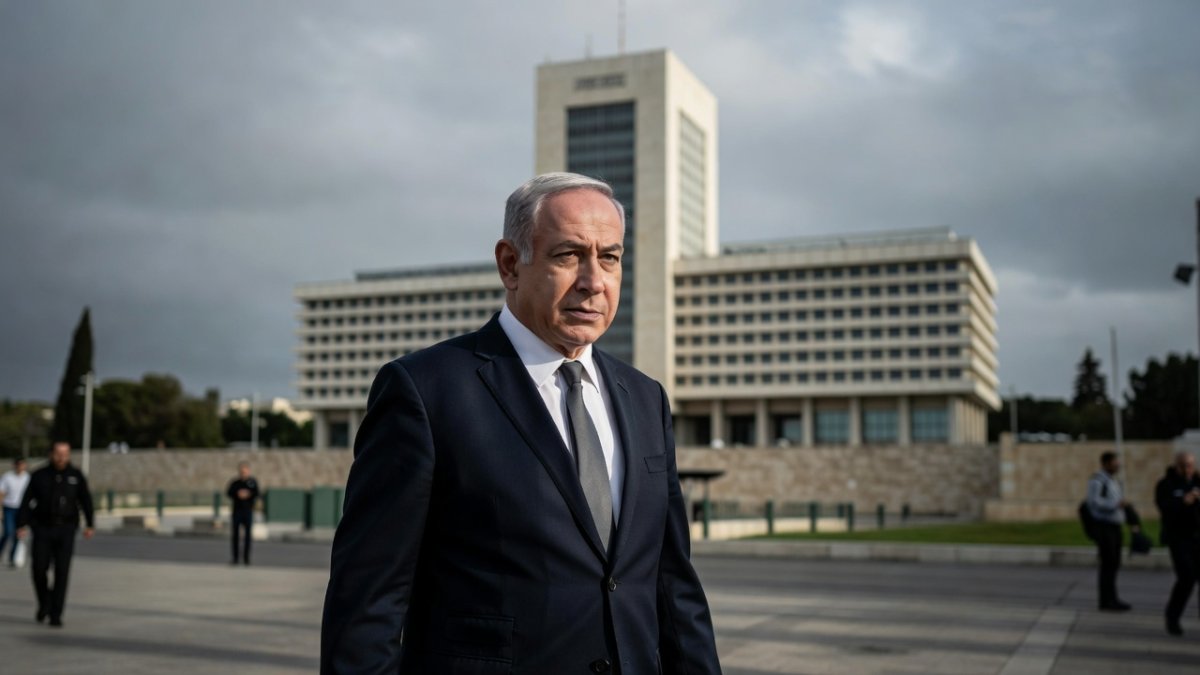
Prime Minister Benjamin Netanyahu addressed reporters outside his Jerusalem residence on June 18, 2026, insisting that Israel and the United States "many times see eye to eye" despite the surprise announcement. He claimed that his government had "saved the state of Israel from annihilation" through previous strikes on Iranian-linked targets. Former Prime Minister Ehud Barak publicly stated that Israel was now "paying the price of Netanyahu's hubris" in alienating the Trump administration.
Opposition leader Yair Lapid described the memorandum as "one of the most shocking failures in Israel's foreign policy history" during a Knesset session on June 18. A poll released the same day by the Israel Democracy Institute found that 57.5 percent of Israeli respondents viewed the framework as incompatible with the country's security requirements. Knesset committees scheduled emergency hearings for the following week to examine how the government had been excluded from the final negotiations.
Coalition partners within the Likud party expressed private concerns that the 60-day timeline would force Israel to halt ongoing operations against Hezbollah without reciprocal Iranian concessions on missile stockpiles. Netanyahu's office released a statement emphasizing that Israel retained the right to self-defense, though U.S. officials in Évian-les-Bains had already signaled that any Israeli action violating the memorandum could trigger American sanctions.

Regional Fallout: Lebanon, Hezbollah, and the Northern Border
President Trump criticized Israeli airstrikes in Lebanon during the press conference, stating that "you don't have to knock down an apartment house" to target militants. Iranian Foreign Minister Abbas Araghchi immediately declared that continued Israeli attacks on Lebanese territory would constitute a violation of the new memorandum. The document's clause requiring permanent termination of military operations directly constrains Israeli operations along the Lebanon border where Hezbollah maintains extensive infrastructure.
The Israel Defense Forces increased monitoring along the northern border on June 18, 2026, as Lebanese officials prepared to implement the ceasefire provisions. More than one million Lebanese civilians remain displaced from their homes in southern Lebanon following earlier rounds of fighting, while Lebanese health authorities report over 3,500 deaths since October 2023. Hezbollah leaders in Beirut issued statements welcoming the memorandum's restrictions on Israeli freedom of action.
UNIFIL peacekeepers stationed in southern Lebanon received new rules of engagement from New York headquarters on June 18 that limit their ability to support Israeli requests for verification of Hezbollah withdrawals. Israeli communities in the Galilee region expressed alarm that the 60-day period could allow Hezbollah to regroup without facing further Israeli pressure.
Diplomatic and International Reactions
The G7 summit in Évian-les-Bains concluded on June 17, 2026, with the Iran memorandum as its central announcement. President Trump publicly thanked China and Russia for their neutrality during the negotiations, a gesture that surprised several European delegations. Emirati leader Mohammed bin Zayed participated in the final round of talks via video link from Abu Dhabi.
Israel's Foreign Ministry in Jerusalem began internal assessments on June 18 of how the memorandum might affect relations with Gulf states that had previously coordinated closely on Iran policy. German Chancellor Olaf Scholz and British Prime Minister Keir Starmer issued cautious statements supporting the reopening of the Strait of Hormuz while calling for additional safeguards on Iranian nuclear activities. Japanese and Canadian representatives at the summit expressed concern that the 60-day timeline left insufficient opportunity for allied consultation.
European Union foreign policy chief Josep Borrell scheduled a virtual meeting with Israeli and Iranian representatives for June 22, 2026, to discuss implementation mechanisms. Saudi officials in Riyadh declined to comment publicly but privately conveyed to U.S. diplomats that they viewed the memorandum as a significant shift in American regional posture.
Analysis: What the Iran MoU Means for Israel's Security
The memorandum imposes immediate limits on Israel Defense Forces operations along the Lebanon border, requiring advance notification to U.S. Central Command before any major strike. The Israel Democracy Institute poll showing 57.5 percent of Israelis viewing the framework as a security threat reflects widespread concern that Hezbollah will exploit the 60-day window to reinforce positions north of the border. Israeli leverage with Washington has diminished following the public criticism of Prime Minister Netanyahu during the Évian-les-Bains press conference.
Mossad and IDF intelligence assessments completed in early June 2026 estimated that Iran could produce enough fissile material for a nuclear device within 18 months if current restrictions were lifted. The 60-day timeline for a broader deal now places pressure on Israeli planners to determine whether military options remain viable once the Geneva signing occurs on June 20, 2026. U.S. officials have indicated that any Israeli action after that date would require explicit American approval under the memorandum's terms.
Israeli security officials in Tel Aviv are preparing contingency plans that assume reduced American intelligence sharing on Iranian nuclear sites. The Geneva signing ceremony will serve as the first practical test of whether the memorandum produces lasting changes in Iranian behavior or merely delays further confrontation. Israeli diplomats have begun outreach to members of the U.S. Congress in an effort to secure additional legislative protections before the 60-day period expires.
By Hannah Berg, Staff Writer
This article was produced with AI-assisted research and editorial support. Reporting is based on sources cited in the article.
What's Your Reaction?
 Like
0
Like
0
 Dislike
0
Dislike
0
 Love
0
Love
0
 Funny
0
Funny
0
 Wow
0
Wow
0
 Sad
0
Sad
0
 Angry
0
Angry
0
Israel Correspondent at Global1.News. Based in Tel Aviv, covering Israeli politics, security, technology, and society. Provides balanced, deeply-sourced reporting on one of the most closely-watched regions in the world.











Comments (0)