
Iran Exploits Diplomatic Ambiguity as US Strikes Escalate Across the Middle East
The collapse of the US-Iran ceasefire has thrust the Middle East into a new cycle of confrontation, with Tehran exploiting linguistic ambiguity in diplomatic agreements while Washington responds with calibrated military force. At stake is not merely the fate of bilateral negotiations but the stability of the Persian Gulf, the free flow of global energy through the Strait of Hor
The collapse of the US-Iran ceasefire has thrust the Middle East into a new cycle of confrontation, with Tehran exploiting linguistic ambiguity in diplomatic agreements while Washington responds with calibrated military force. At stake is not merely the fate of bilateral negotiations but the stability of the Persian Gulf, the free flow of global energy through the Strait of Hormuz, and the strategic positioning of Arab Gulf states caught between two powers.
Iran Exploits Diplomatic Ambiguity as US Strikes Escalate Across the Middle East
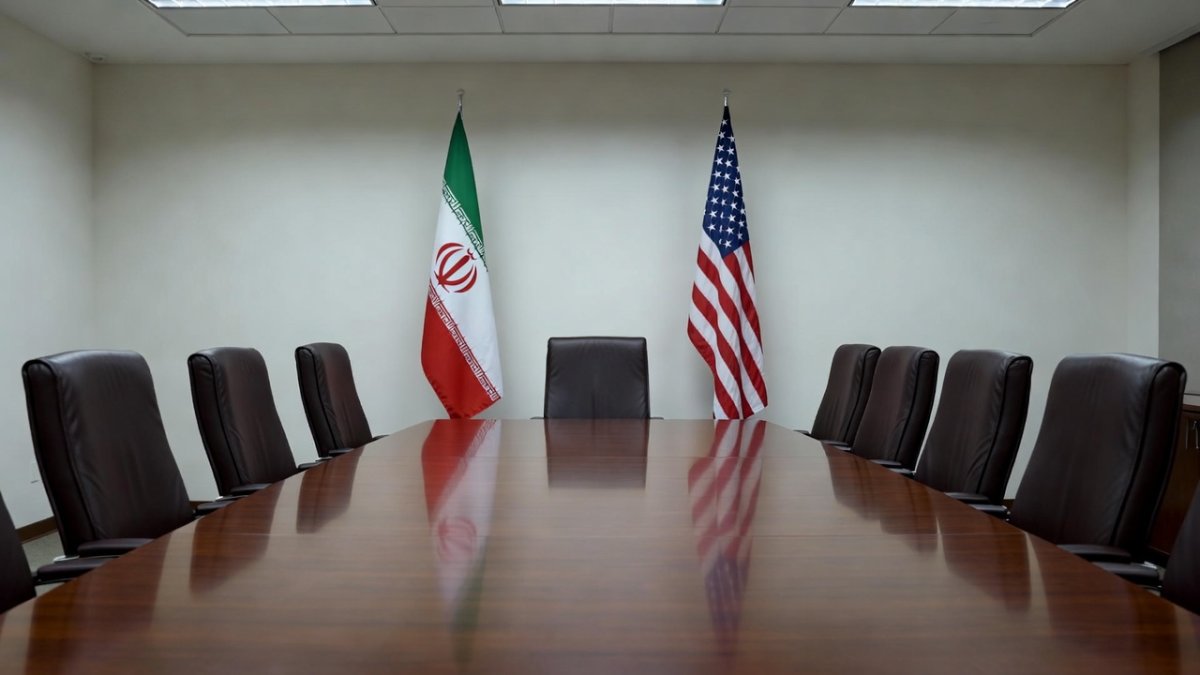
Beirut, Lebanon – July 10, 2026 — Former US Ambassador Matthew Bryza has identified a central dynamic driving the renewed US-Iran conflict: Tehran's deliberate exploitation of ambiguous language in ceasefire agreements, met by Washington's use of military force as a diplomatic signaling tool. Speaking on Al Arabiya English, Bryza stated that "Iran is doing what's fair in diplomacy. It's exploiting that ambiguity in its favor and the US is countering with the diplomatic tool of military force to say no no we don't agree with your interpretation."
Iran's Strategy: Exploiting Diplomatic Ambiguity
Iran has consistently leveraged interpretive gaps in the collapsed ceasefire agreement to advance its regional objectives while maintaining plausible deniability. The vague clauses on "defensive positioning" allowed Tehran to continue supporting allied militias across the Levant and Gulf — from Hezbollah in Lebanon to the Houthis in Yemen and Shia militias in Iraq — without technically violating the written terms of the accord.
This approach is not accidental. Iran's diplomatic corps, operating under the guidance of the Supreme National Security Council, has studied the mechanics of international agreements for decades, learning from the Joint Comprehensive Plan of Action (JCPOA) experience how ambiguity can be turned into strategic advantage. Where the 2015 nuclear deal's sunset clauses and inspection protocols created years of interpretive battles, the 2026 ceasefire's language on defensive operations has given Iran similar room to maneuver.
US Counter: Military Force as a Diplomatic Tool
President Donald Trump's decision to declare the ceasefire over triggered a massive US response — approximately 90 IRGC targets struck inside Iran, focusing on command nodes, missile facilities, and naval installations along the Persian Gulf coast. Bryza characterized this as Washington employing "the diplomatic tool of military force" to unambiguously reject Iran's interpretations and restore deterrence.
The targeting strategy reveals a calculated approach. By avoiding civilian infrastructure and focusing on IRGC assets, the United States signals that it seeks to reshape Iran's calculation of costs and benefits rather than topple the regime. This calibrated escalation leaves the door open for renewed talks while making clear that Washington will not accept unilateral Iranian interpretations of any future agreement.
Gulf States Caught in the Crossfire
The escalation has placed America's Gulf partners in an extraordinarily difficult position. On July 10, Kuwait and Bahrain launched strikes on southern Iranian positions, with US officials denying any direct American involvement in the operation. Iran subsequently struck US-linked assets across Kuwait, Bahrain, Qatar, Jordan, and Iraq, demonstrating its capacity to project force across multiple theaters simultaneously.
For the smaller Gulf monarchies, the calculus is stark. Bahrain hosts the US Navy's Fifth Fleet at Naval Support Activity Bahrain, making it an unavoidable target in any US-Iran conflict. Kuwait's proximity to Iran's southern coast and its strategic importance as a logistics hub for American forces create similar vulnerabilities. Both nations possess limited strategic depth and now absorb the direct costs of a conflict between regional giants, forced into binary choices between American security guarantees and Iranian retaliatory capacity.
The Strait of Hormuz: Energy Markets at Risk
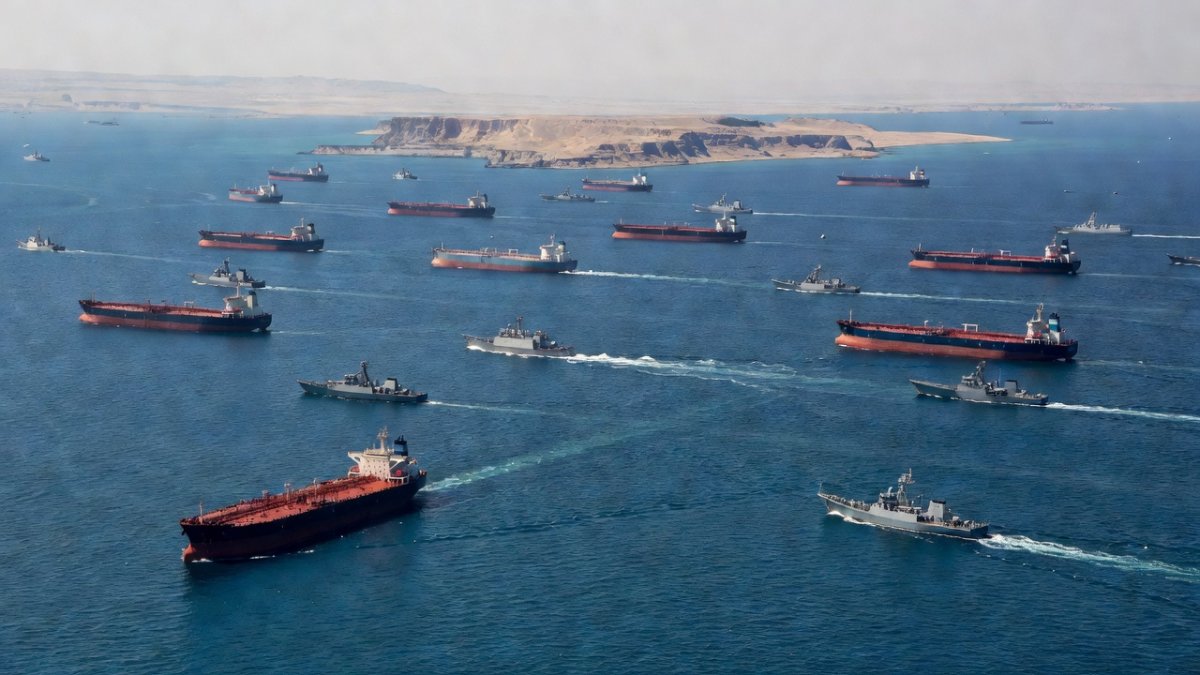
Iran retains its most potent strategic card: control over the Strait of Hormuz, the 21-mile-wide chokepoint through which approximately 20 million barrels of oil pass daily — roughly 20 percent of global consumption. The collapse of the ceasefire has sent Brent crude prices into a volatile cycle, with swings exceeding US$15 per barrel observed in the first week after hostilities resumed.
Energy markets are now pricing in a sustained risk premium that threatens to reignite global inflationary pressures. Saudi Arabia and the United Arab Emirates have activated contingency routing plans, including the Abu Dhabi Crude Oil Pipeline that bypasses the Strait, but these alternatives cannot fully compensate for a prolonged disruption. Asian markets — particularly China, Japan, and South Korea, which rely heavily on Gulf crude — are most exposed, and Beijing's diplomatic engagement with both Washington and Tehran reflects this vulnerability.
Regional Mediation and the Search for Clarity
Pakistan has emerged as a leading mediator, with diplomatic efforts intensifying behind the scenes to de-escalate tensions. US officials confirmed to CNN on July 10 that diplomatic efforts are underway, though the precise framework for renewed talks remains unclear. The challenge for any future negotiation will be to craft language precise enough to prevent the interpretive battles that doomed the previous ceasefire.
Turkey has maintained cautious neutrality, balancing its NATO obligations against its economic ties with Iran and its energy dependence on Gulf supplies. Israel monitors the situation warily, concerned that Iran may accelerate uranium enrichment activities amid the chaos. Russia, while preoccupied with its own conflict dynamics, has signaled support for diplomacy that does not isolate Tehran entirely.
Regional Implications: What Comes Next
The current escalation intersects with multiple Middle East fault lines. Sunni-Shia geopolitical competition, already inflamed by conflicts in Yemen, Syria, and Iraq, now faces a new dimension as Gulf Arab states take direct military action against Iranian territory. Arab-Israeli normalization efforts under the Abraham Accords framework have been pushed to the sidelines as the region's attention shifts to the US-Iran confrontation.
The coming weeks will test whether military demonstrations can produce the clarity that diplomacy has failed to deliver. If implemented, renewed talks would require far more precise language than previous agreements — with concrete definitions of defensive operations, verifiable limits on proxy support, and unambiguous enforcement mechanisms. Without such precision, Iran's strategy of exploiting ambiguity will continue to outmaneuver a US administration that has yet to decide whether its primary tool is the diplomat's pen or the bomber's payload.
By Malik Hassan, Staff Writer
This article was produced with AI-assisted research and editorial support. Reporting is based on sources cited in the article.
What's Your Reaction?
 Like
0
Like
0
 Dislike
0
Dislike
0
 Love
0
Love
0
 Funny
0
Funny
0
 Wow
0
Wow
0
 Sad
0
Sad
0
 Angry
0
Angry
0

Middle East Correspondent at Global1.News. Based in Beirut, covering politics, conflict, energy, and society across the Middle East. Brings context and depth to a region often reduced to headlines.










Comments (0)