
Qatar's 747 Gift Reshapes Trump Air Force One Strategy
The Gift in Context Qatar extended the Boeing 747 as a bridge aircraft precisely because Boeing’s direct deliveries slipped well beyond original schedules. This move allowed Doha to insert itself into a visible symbol of American executive power without waiting for formal procurement channels to clear. Trump described the interior as a level of luxury never seen before on such
The Gift in Context
Qatar extended the Boeing 747 as a bridge aircraft precisely because Boeing’s direct deliveries slipped well beyond original schedules. This move allowed Doha to insert itself into a visible symbol of American executive power without waiting for formal procurement channels to clear.
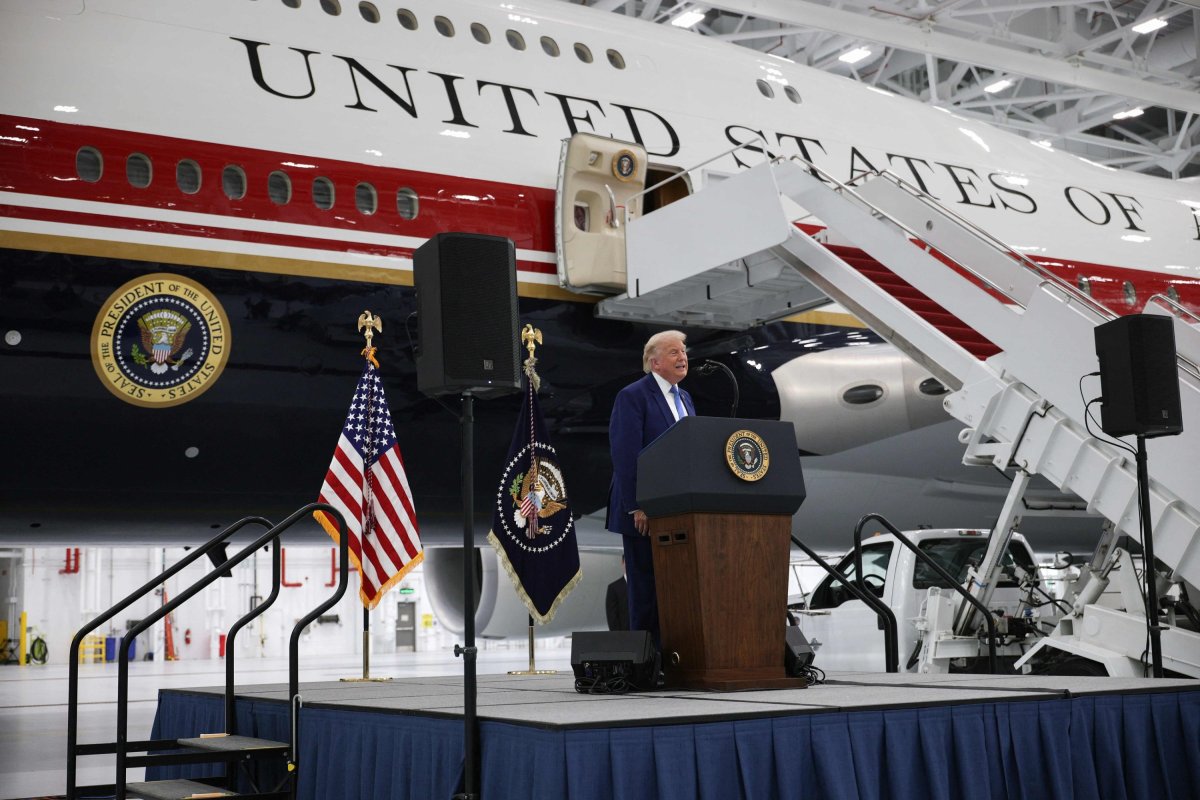
Trump described the interior as a level of luxury never seen before on such a platform, underscoring how the jet’s existing head-of-state configuration reduced the scope of required changes. The decision to retain much of that layout signaled a pragmatic acceptance rather than a full redesign.
By accepting the aircraft despite longstanding questions over foreign gifts, the administration prioritized operational continuity over procedural caution. Trump noted that a conventional president would avoid such arrangements, yet he framed the choice as necessary for proper national representation.
The jet’s color scheme—navy underbelly, red stripe, presidential seal on the boarding side, and oversized flag on the tail—reflects a deliberate departure from earlier palettes. These choices were presented as aligned with presidential preference rather than inherited tradition.
Security upgrades were capped below four hundred million dollars, a figure the Air Force tied to disciplined engineering that placed core protective capabilities first. This cost discipline helped justify the transfer while the service maintained that all presidential aircraft must satisfy identical standards.
The US-Qatar Military Partnership
Defense cooperation between Washington and Doha rests on shared operational requirements that extend beyond any single aircraft transfer. The Air Force emphasized that the Qatari jet underwent modifications under the same rigorous criteria applied to purpose-built platforms.
Previous head-of-state features were preserved where they met those standards, illustrating how existing infrastructure can accelerate integration when baseline capabilities already align. This approach shortened the timeline compared with starting from a commercial configuration.
Trump’s public remarks highlighted a functional need: the country required an aircraft capable of projecting stature at international airports. The partnership supplied a ready asset during a period when domestic production faced repeated postponements.
Both the donated jet and the existing VC-25A fleet remain available for mission assignment, with selection determined by operational requirements rather than fixed rotation. This flexibility preserves redundancy while the newer VC-25B aircraft continue development.
The arrangement demonstrates how sustained military ties can translate into practical solutions for presidential lift when commercial timelines falter. Doha’s willingness to provide the aircraft reflects an established pattern of accommodating U.S. logistical needs.
Gulf Dynamics
The transfer occurs against a backdrop of intra-Gulf competition where visibility and access to Washington carry distinct weight. Qatar’s direct engagement with the executive aircraft program differentiates its profile from neighbors pursuing parallel influence channels.
By supplying a platform that will serve until at least 2028, Doha secures recurring high-level exposure each time the president travels. This recurring presence offers symbolic parity with larger Gulf actors who have historically dominated U.S. attention.
Trump’s stated intention to donate the aircraft to a future presidential library after his term further frames the gift as temporary rather than permanent. Such an endpoint limits long-term entanglement while still delivering immediate diplomatic returns for the donor.
Other administration aircraft will adopt matching red, white, and navy livery, extending the visual signature beyond the presidential jet itself. This broader rollout amplifies the original design choice across the fleet.
The episode illustrates how smaller Gulf states can leverage targeted assets to maintain relevance when larger regional players pursue their own bilateral tracks with the United States.
The Ankara Summit and Regional Diplomacy
Trump confirmed the new aircraft would carry him to the NATO summit in Ankara the following month, marking its first major international outing. The choice of venue placed the jet at the center of alliance discussions involving Turkey.
His return from the Group of Seven gathering in France represented the final scheduled mission on the prior aircraft. Transitioning immediately afterward underscored the urgency attached to updating the presidential fleet’s appearance and capability.
The July 4 flyover planned for the new jet adds a domestic ceremonial dimension, linking the foreign-sourced aircraft to national observances. This scheduling integrates the platform into public displays of American leadership.
Turkey’s hosting role at the NATO event provides a distinct diplomatic setting where the aircraft’s debut can reinforce U.S. presence without requiring new basing arrangements. The timing aligns with ongoing alliance coordination efforts.
Trump also referenced a future trip to China for the Asia-Pacific Economic Cooperation meetings, indicating the jet’s intended use across both European and Asian theaters. Such versatility supports a global travel schedule during the interim period.
Broader Implications
Gulf states increasingly treat high-visibility gestures toward the U.S. executive branch as instruments within wider great-power maneuvering. The Boeing 747 transfer exemplifies how such assets can fill capability gaps while advancing donor visibility.
Trump’s reversal of earlier color-scheme decisions once back in office shows how individual preferences can reshape long-running acquisition programs. The resulting design now extends across multiple government aircraft, creating a unified visual identity.
Questions surrounding ethics and legality of the original acceptance remain unresolved in public discourse, yet operational necessity prevailed. The Air Force’s emphasis on security compliance served as the primary justification for proceeding.
Future presidential libraries may ultimately house the aircraft, converting a temporary operational solution into a historical artifact. This endpoint offers a defined conclusion that separates current utility from permanent ownership.
The episode signals that Gulf capitals will continue exploring unconventional avenues to sustain influence as U.S. procurement cycles lengthen and great-power competition intensifies across multiple regions.
By Malik Hassan, Staff WriterThis article was produced with AI-assisted research and editorial support. Reporting is based on sources cited in the article.
What's Your Reaction?
 Like
0
Like
0
 Dislike
0
Dislike
0
 Love
0
Love
0
 Funny
0
Funny
0
 Wow
0
Wow
0
 Sad
0
Sad
0
 Angry
0
Angry
0

Middle East Correspondent at Global1.News. Based in Beirut, covering politics, conflict, energy, and society across the Middle East. Brings context and depth to a region often reduced to headlines.












Comments (0)