
Poilievre Urges Alberta Unity Ahead of October Referendum
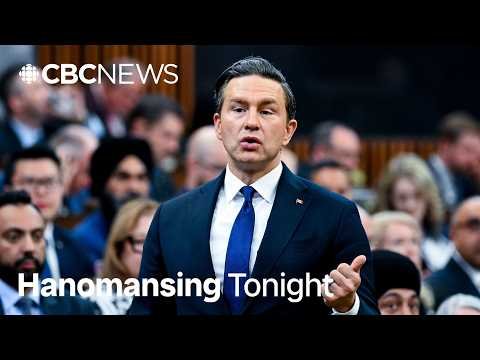
In a recent CBC News report on Hanomansing Tonight, Calgary Herald columnist Catherine Ford discussed how Conservative Leader Pierre Poilievre is reaching out to frustrated Albertans. The segment examined Poilievre's Monday address at Royal Canadian Legion #1 in Calgary. Ford highlighted the leader's emphasis on unity over division in the face of the October 19 referendum. Poil
In a recent CBC News report on Hanomansing Tonight, Calgary Herald columnist Catherine Ford discussed how Conservative Leader Pierre Poilievre is reaching out to frustrated Albertans. The segment examined Poilievre's Monday address at Royal Canadian Legion #1 in Calgary. Ford highlighted the leader's emphasis on unity over division in the face of the October 19 referendum.
Poilievre Urges Alberta Unity Ahead of October Referendum
Calgary, Alberta – This week — Pierre Poilievre delivered his address at Royal Canadian Legion #1 in Calgary on Monday June 8, 2026. He stated that those choosing separation from Canada are fellow citizens, family members, loved ones, business partners, neighbours and friends. Poilievre added that demonizing people who have lost hope in Canada is no way to restore it.
The Calgary Speech and Its Key Messages
The Conservative Leader, who grew up in Alberta and represents Battle River-Crowfoot, invoked Albertans who fought in both world wars and noted Calgary as the first Canadian city to host the Olympics. He declared that Canadians do not need a different country in Alberta but different government policies in Ottawa. Poilievre stressed that the goal should not be to beat one another in the referendum but to unite everyone when it ends.
Poilievre blamed the federal Liberal government for fostering separatist sentiment. He said frustrated Albertans have a problem with the federal government rather than with fellow Canadians or Canada itself. These remarks came directly after the CBC News discussion on Hanomansing Tonight that featured Catherine Ford's analysis.
The October 19 Referendum and What It Asks
The Alberta referendum scheduled for October 19, 2026, poses a direct question to voters. It asks whether the province should remain in Canada or begin the process toward a binding secession vote. This date falls four months after Poilievre's Calgary speech and one week after Premier Danielle Smith's Friday comments.
Poilievre urged Albertans to lock arms with other provinces as a practical path to a stronger Alberta within a united Canada. He warned that dismissing legitimate grievances would be the worst approach if the aim is to encourage a vote for Canada. The referendum language focuses on initiating a formal secession process rather than an immediate exit.
Canadian readers should note that this vote occurs in a province that has long contributed to national energy supply and federal revenues. The outcome could influence similar discussions in other regions facing federal-provincial tensions. Organisers have labelled the process as a non-binding first step that could lead to further legislation.
The Roots of Alberta Separatism
Separatist sentiment in Alberta traces to repeated clashes over resource development and federal policy. Poilievre pointed out that many Albertans feel their concerns about energy projects and provincial autonomy receive little attention in Ottawa. These frustrations have grown under successive Liberal governments since 2015.
Poilievre's own riding of Battle River-Crowfoot lies in central Alberta where agriculture and oil production dominate the economy. Residents there have travelled to Ottawa multiple times to protest federal carbon pricing and regulatory delays. The leader's speech connected these local experiences to broader national unity questions.

Calgary's history as host of the 1988 Winter Olympics and its role as an energy headquarters provide concrete symbols of Alberta's contributions. Poilievre used these facts to argue that Albertans seek policy changes rather than separation. This framing avoids labelling separatists as outsiders and instead treats them as neighbours with valid complaints.
Federal-Provincial Energy Disputes
Energy disputes centre on federal approval processes for pipelines and the pace of oil and gas project reviews. Poilievre stated that it will take shovels moving dirt and steel pipe in the ground to demonstrate that Liberals have changed their approach. Albertans can be forgiven for demanding results rather than promises, he added.
The federal government signed a memorandum of understanding with Alberta for a new oil pipeline to the West Coast with potential construction as early as September 2027. Poilievre responded that visible progress on the ground remains essential. These comments address specific delays that have affected projects such as the Trans Mountain expansion completed years behind schedule.
Canadian energy policy affects every province through equalisation payments and interprovincial trade. Alberta's oil and gas sector supplies a significant share of national exports and federal tax revenue. Continued friction risks reducing investment and shifting production decisions to other jurisdictions.
Premier Smith's Position
Premier Danielle Smith addressed the same issues on Friday when she pitched keeping Alberta in Canada. She stated that she still believes Canada can work and that it is working better every day. Smith highlighted the federal-Alberta memorandum of understanding on the new pipeline as evidence of progress.
Smith's comments came one week before Poilievre's Monday speech at Royal Canadian Legion #1. Both leaders addressed the October 19 referendum but from different positions within the Conservative spectrum. Smith focused on incremental federal cooperation while Poilievre demanded concrete construction results.
The Premier's position reflects Alberta's reliance on resource revenues that fund provincial services. Her government has organised consultations with industry groups in Calgary and Edmonton to gauge support for remaining in Confederation. These efforts aim to channel grievances into policy negotiations rather than secession.
National Implications
Poilievre's outreach to Albertans carries consequences for federal Conservative strategy ahead of the next national election. By recognising legitimate grievances without endorsing separation, he seeks to retain support in a province that delivered strong Conservative results in previous votes. This approach could influence voter behaviour in neighbouring Saskatchewan and British Columbia.
The referendum question on October 19 tests whether federal policies on energy and housing have eroded national attachment in resource-producing regions. Poilievre's reference to locking arms with other provinces offers a federalist alternative that still criticises Ottawa. National unity discussions now include concrete dates and specific pipeline timelines rather than abstract arguments.
Canadian media coverage, including the CBC News segment on Hanomansing Tonight, has already framed the speech as an attempt to reach frustrated voters. The outcome may shape how other provinces respond to similar federal-provincial disputes over housing affordability and regulatory authority.
What Happens Next
Attention now turns to the October 19 referendum campaign and whether Poilievre's message of unity gains traction. Organisers on both sides will cite the Calgary speech and Premier Smith's Friday remarks as they mobilise voters. Results will determine whether Alberta proceeds to a binding secession vote.
Poilievre has scheduled further events in Battle River-Crowfoot and other Alberta ridings to expand on his Monday remarks. He continues to press the federal government for visible pipeline construction before September 2027. Alberta residents concerned about affordable housing and federal involvement in provincial affairs will watch for policy shifts in Ottawa.
The coming months will test whether appeals to shared Canadian history and economic interdependence can counter separatist arguments. Poilievre's emphasis on uniting citizens after the referendum provides a template that other federal leaders may adopt. The situation remains fluid as both provincial and national parties prepare responses.
By Alex Thompson, Staff Writer
This article was produced with AI-assisted research and editorial support. Reporting is based on sources cited in the article.
What's Your Reaction?
 Like
0
Like
0
 Dislike
0
Dislike
0
 Love
0
Love
0
 Funny
0
Funny
0
 Wow
0
Wow
0
 Sad
0
Sad
0
 Angry
0
Angry
0

Canada Correspondent at Global1.News. Based in Toronto, covering Canadian politics, energy, trade, and US-Canada relations. Provides the Canadian perspective on North American and global affairs.














Comments (0)