
China says pilot crashed small plane into skyscraper for 'personal reasons'
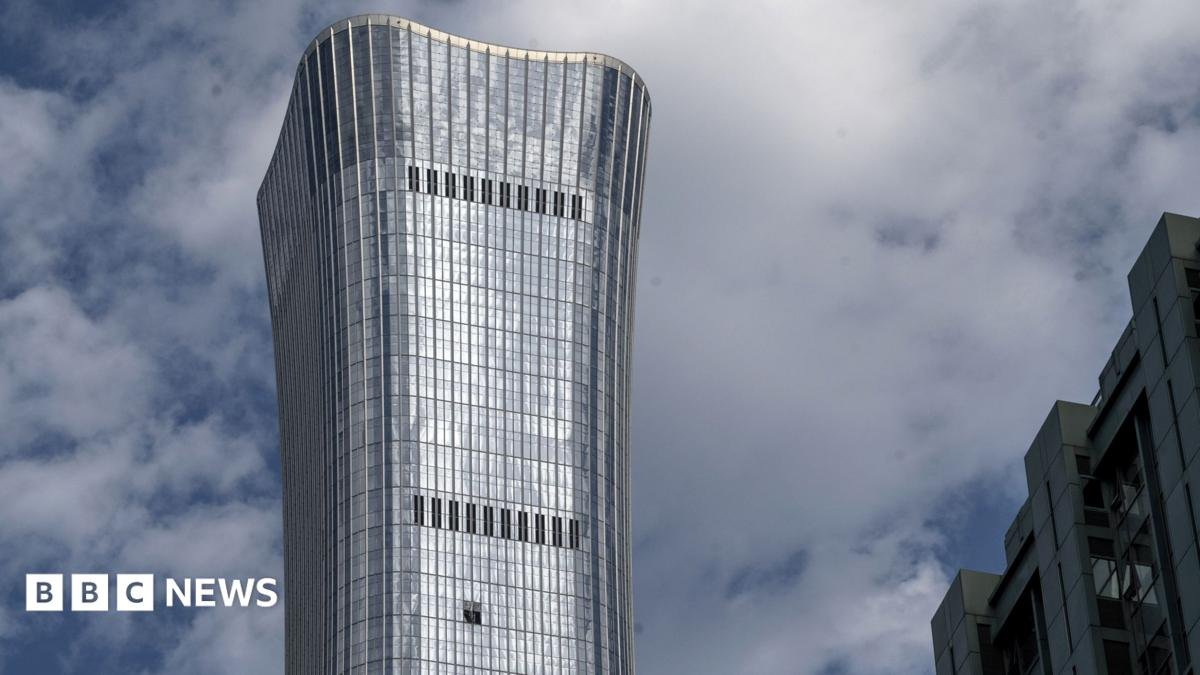
China says pilot crashed small plane into skyscraper for 'personal reasons' The Incident and Its Immediate Aftermath The June 26, 2026, collision of a Sunward Aircraft SA60L into Beijing's CITIC Tower has been officially classified by the Chaoyang district government as an act of endangering public safety driven by personal motives. The 66-year-old pilot, identified only by the
The Incident and Its Immediate Aftermath
The June 26, 2026, collision of a Sunward Aircraft SA60L into Beijing's CITIC Tower has been officially classified by the Chaoyang district government as an act of endangering public safety driven by personal motives. The 66-year-old pilot, identified only by the surname Liu, held a private pilot's licence obtained in 2024 after receiving his sport pilot's licence in 2021. He departed from an airport in Pinggu district, conducted both accompanied and solo flights, then deviated from the approved area during the solo segment before losing contact with ground control and striking the 109-storey structure.
Thirteen people were wounded in the incident, with one individual already discharged from medical care. Liu, described as a divorced freelancer living alone, was found to have suffered from chronic insomnia and anxiety, with his personal diary containing repeated references to ending his life. This framing by authorities emphasises individual psychological distress rather than any organised threat, aligning with Beijing's consistent preference for containing such events within narratives of personal failure.
Aviation Regulation and the Response to Light Aircraft Operations
Following the crash, at least three aviation firms informed the BBC that they had received instructions to suspend light aircraft operations. This rapid administrative action reflects the Chinese government's capacity to impose immediate controls across the recreational and training segments of general aviation. The SA60L, a two-seat single-engine aircraft produced domestically by Sunward Aircraft for touring, aerial photography and leisure use, now faces heightened scrutiny under existing civil aviation frameworks administered by the Civil Aviation Administration of China.
China's approach to general aviation has long prioritised integration with national security objectives over unfettered commercial expansion. The incident provides authorities with justification to accelerate reviews of pilot licensing, flight-plan compliance and real-time tracking requirements. Such measures support the broader goal of technological self-sufficiency by ensuring that domestic manufacturers like Sunward operate within tightly managed parameters that minimise external vulnerabilities.
Proximity to Zhongnanhai and Core Security Calculations
The CITIC Tower stands only a few kilometres from Zhongnanhai, the central headquarters of the Communist Party. This geographic reality transforms what might otherwise be treated as an isolated aviation mishap into a matter of direct relevance to leadership protection protocols. Chinese security doctrine places exceptional emphasis on safeguarding the political centre, and any unauthorised approach by even a small recreational aircraft triggers layered response mechanisms involving both civilian and military assets.
The decision to classify the event strictly as a personal act allows authorities to avoid public discussion of potential gaps in low-altitude airspace monitoring. At the same time, the swift suspension of light aircraft activity demonstrates that Beijing retains the administrative tools to recalibrate risk thresholds around sensitive zones without requiring legislative overhaul. This flexibility serves the strategic interest of maintaining regime stability while projecting an image of controlled, methodical governance.
Information Control and Domestic Stability Mechanisms
Videos of the crash circulated widely on Chinese social media platforms before being removed. This pattern of rapid content scrubbing is consistent with established information-management practices that limit the spread of imagery capable of generating public anxiety or speculation. By releasing an official account focused on Liu's mental health and diary entries, authorities preempt alternative interpretations that could link the event to wider societal pressures.
China's domestic stability apparatus routinely integrates mental health data into risk assessments for individuals holding licences or clearances in sensitive sectors. The emphasis on chronic insomnia and anxiety in the official statement signals that future regulatory tightening may include expanded psychological evaluations for private pilots. Such steps reinforce the state's role as the ultimate arbiter of who may operate aircraft near politically significant locations, thereby reducing the scope for unpredictable individual actions.
Strategic Implications for China's Aviation Self-Reliance Drive
The involvement of a domestically manufactured aircraft such as the SA60L connects the incident to Beijing's long-term objective of reducing dependence on foreign aviation technology. Under the Dual Circulation strategy, general aviation is expected to contribute to both internal consumption and technological upgrading. Disruptions caused by safety incidents therefore carry implications beyond immediate regulatory fixes; they test the resilience of supply chains and certification processes that the government has sought to indigenise.
Regional actors in ASEAN and the Global South that have purchased Chinese light aircraft will observe how Beijing manages the aftermath. A transparent yet security-conscious response could enhance confidence in Chinese products, while prolonged operational restrictions might prompt buyers to diversify suppliers. The episode thus illustrates the second-order effects that domestic incidents can exert on China's efforts to expand influence through aviation exports.
Longer-Term Outlook for Regulatory and Security Integration
Authorities are expected to phase in additional requirements for flight tracking, enhanced medical screening and stricter adherence to designated flight corridors. These adjustments will unfold gradually as investigations continue and lessons are incorporated into licensing standards. The measured pace avoids abrupt disruption to an industry still developing under state guidance while addressing the demonstrated risks of solo recreational flights near the capital.
Ultimately, the CITIC Tower incident underscores how even low-probability events involving private aviation intersect with China's core priorities of regime protection, technological autonomy and narrative control. The government's handling of the case will serve as a reference point for future policy refinements that balance the promotion of domestic aviation with the imperative of safeguarding political stability.
By Prof. Marcus Chen, Staff WriterThis article was produced with AI-assisted research and editorial support. Reporting is based on sources cited in the article.
What's Your Reaction?
 Like
0
Like
0
 Dislike
0
Dislike
0
 Love
0
Love
0
 Funny
0
Funny
0
 Wow
0
Wow
0
 Sad
0
Sad
0
 Angry
0
Angry
0

World Politics Analyst at Global1.News. Based in Beijing, covering US-China relations, global trade, and geopolitical strategy. Brings deep analytical perspective to the power dynamics shaping international affairs.














Comments (0)