
Parti Québécois Vows to Pull Quebec Out of Alto High-Speed Rail Project If Elected in October
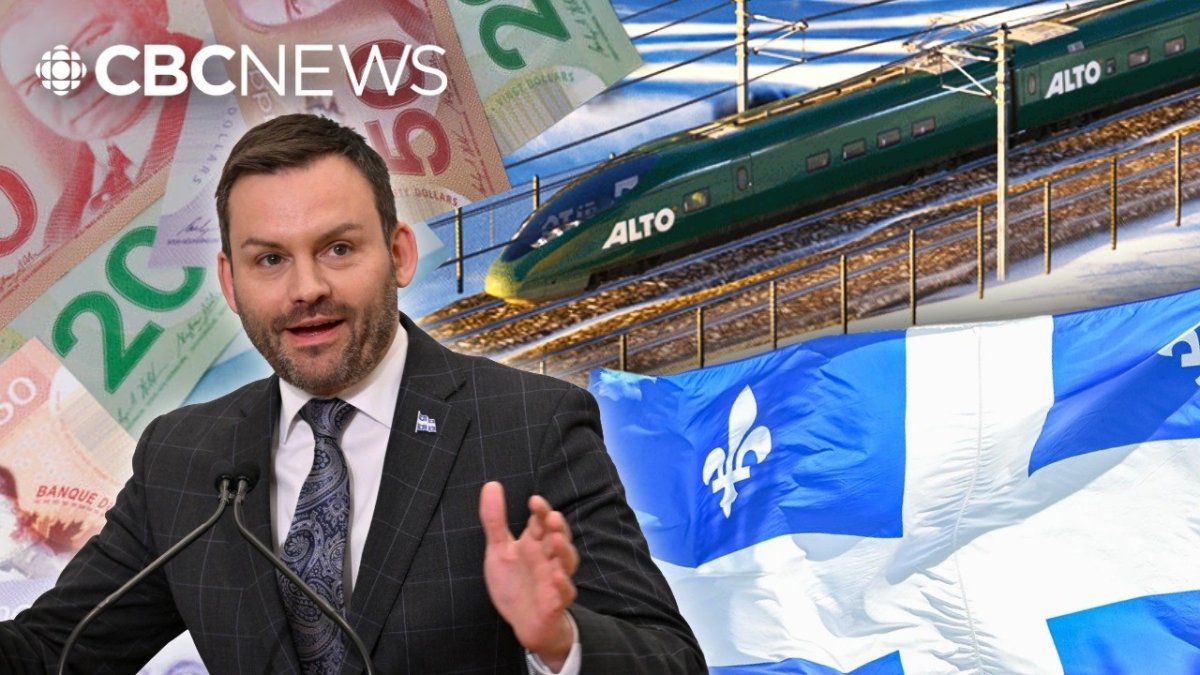
In a recent CBC News report, Parti Québécois Leader Paul St-Pierre Plamondon laid out his party's firm opposition to the proposed Alto high-speed rail initiative, setting the stage for a broader debate on infrastructure priorities ahead of the October 2026 provincial election. The video — titled "Parti Québécois wants to opt out of Alto high-speed rail project if elected" — cap
In a recent CBC News report, Parti Québécois Leader Paul St-Pierre Plamondon laid out his party's firm opposition to the proposed Alto high-speed rail initiative, setting the stage for a broader debate on infrastructure priorities ahead of the October 2026 provincial election. The video — titled "Parti Québécois wants to opt out of Alto high-speed rail project if elected" — captures St-Pierre Plamondon's announcement during proceedings at the National Assembly on Tuesday, June 9, that a PQ government would immediately withdraw Quebec from participation in the multi-billion-dollar project.
Parti Québécois Vows to Pull Quebec Out of Alto High-Speed Rail Project If Elected in October
Quebec City – June 2026 — The Parti Québécois has announced that a future PQ government would withdraw Quebec from the federal Alto high-speed rail project, redirecting the billions of dollars in planned spending toward healthcare, education, infrastructure, and public safety instead. Party Leader Paul St-Pierre Plamondon made the declaration during question period at the National Assembly, arguing that the $40-billion provincial contribution could not be justified when Quebec faces chronic underfunding in essential services.
The PQ's Position
Paul St-Pierre Plamondon made his announcement on June 9 during proceedings at the National Assembly. He stated that a Parti Québécois government, if elected in October 2026, would immediately withdraw Quebec from participation in the Alto project. The leader emphasised that the decision reflects a need to realign provincial spending with urgent domestic priorities rather than committing to a multi-billion-dollar rail corridor that spans several provinces.
Under the PQ plan, funds currently earmarked for Quebec's share of the Alto project would be redirected toward healthcare, education, infrastructure maintenance, and public safety initiatives. St-Pierre Plamondon argued that these sectors face chronic underfunding and that resources should first address waiting lists in hospitals, classroom shortages, and crumbling municipal roads. The party has framed the withdrawal as a matter of fiscal responsibility and provincial autonomy, insisting that Quebec taxpayers should not subsidise a project whose long-term benefits remain uncertain within the province's borders.
Critics within the National Assembly have questioned whether such a reversal could be executed without legal or financial penalties, given existing federal-provincial agreements. Nevertheless, the PQ maintains that an electoral mandate in 2026 would provide sufficient democratic authority to renegotiate or exit the partnership. Party spokespeople have also pointed to polling data suggesting growing public scepticism about large-scale transportation megaprojects when basic services are strained.
The Alto High-Speed Rail Project
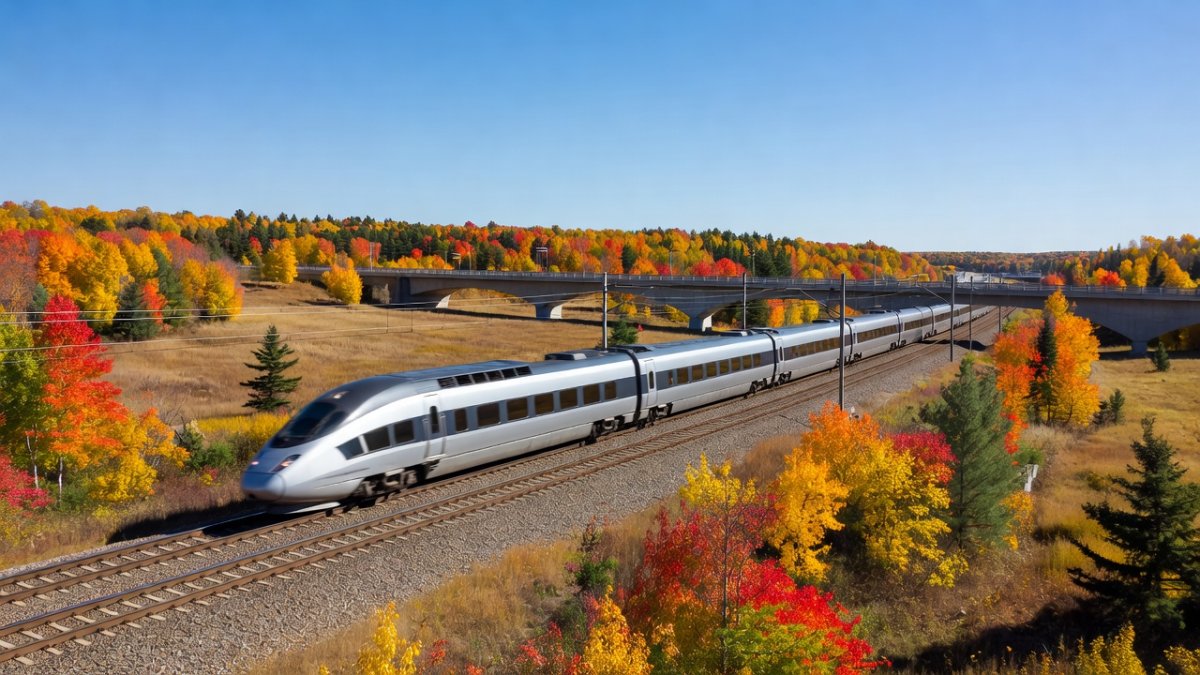
The Alto high-speed rail project envisions a dedicated passenger corridor connecting Toronto, Ottawa, Montreal, and Quebec City. Trains would operate at speeds up to 300 kilometres per hour, reducing travel time between Montreal and Toronto to approximately three hours and between Quebec City and Montreal to roughly one and a half hours. Proponents describe the line as a transformative investment that would link major economic centres while offering an efficient alternative to air and road travel.
Project documents estimate the creation of 50,000 jobs over a ten-year construction and operation period, alongside economic benefits ranging from $15 billion to $27 billion. These figures include direct employment in engineering, manufacturing, and station development, as well as indirect gains in tourism and supply-chain industries. Martin Imbleau serves as chief executive officer, overseeing planning that includes stations located in downtown cores and at Toronto Pearson International Airport to maximise accessibility for commuters and business travellers.
Federal and provincial partners have promoted the corridor as a climate-friendly initiative capable of reducing greenhouse-gas emissions from intercity travel. The design incorporates dedicated tracks to avoid conflicts with existing freight lines, a feature intended to ensure reliable schedules. While the project remains in the planning and environmental-assessment phase, preliminary route studies have identified potential alignments through the Montérégie region of Quebec, prompting early discussions about land use and agricultural impacts.
Cost Concerns and Financial Trade-offs
Official cost estimates for the full Toronto-to-Quebec City corridor range between $60 billion and $90 billion, although the Bloc Québécois has advanced a higher projection of up to $200 billion when accounting for inflation, contingency allowances, and potential scope changes. Quebec's anticipated contribution stands at approximately $40 billion, a sum that would require either new borrowing or reallocation from existing capital budgets. These figures have intensified scrutiny over whether the province can absorb such an outlay without compromising other essential services.
Agricultural organisations have raised alarms about the proposed route through the Montérégie, where more than 800 hectares of class-one soil could be affected by track construction and station development. Farmers argue that the permanent loss of prime farmland would undermine long-term food security and local economies already facing pressure from urban expansion. Environmental assessments are ongoing, yet the PQ has cited these land-use concerns as further justification for withdrawing support.
Parallel infrastructure deficits compound the debate. Quebec currently faces a $12 billion backlog in school maintenance and repairs, while municipal water and sewer systems require an additional $9 billion in upgrades to meet safety and environmental standards. Advocates for redirecting Alto funds contend that addressing these shortfalls would deliver more immediate quality-of-life improvements for residents than a high-speed rail line whose ridership projections remain speculative. The Parti Québécois has pledged to publish detailed cost-benefit comparisons before the 2026 campaign.
Federal-Provincial Dynamics
Federal ministers have been quick to emphasise that the Alto high-speed rail project would effectively die without Quebec's full participation, given that the province accounts for the largest share of the proposed Montreal-to-Toronto corridor. In statements released shortly after the Parti Québécois announcement, officials noted that federal partners view the withdrawal as a terminal blow to the initiative's viability. Prime Minister Mark Carney has framed the project within a broader nation-building agenda, arguing that high-speed rail represents a once-in-a-generation opportunity to strengthen east-west connectivity in an era of shifting trade patterns. The federal government has already committed substantial funding through the Canada Infrastructure Bank, with initial allocations exceeding several billion dollars earmarked for engineering studies and land acquisition across the corridor.
Jurisdictional tensions have surfaced rapidly between Ottawa and Quebec City. While the federal Impact Assessment Agency of Canada holds responsibility for evaluating trans-provincial environmental effects, Quebec's Bureau d'audiences publiques sur l'environnement maintains its own rigorous review process under provincial legislation. Legal experts suggest that any attempt by a future PQ government to exit the project could trigger complex negotiations over cost-sharing agreements already signed between the two levels of government. These agreements include provisions for shared liability in the event of termination, potentially exposing Quebec taxpayers to significant penalties if federal partners pursue recovery of sunk costs.
Political Reactions
The Coalition Avenir Québec has offered cautious support for the PQ position, provided that any alternative rail strategy includes ironclad protections for prime agricultural land in the Montérégie region. CAQ critics have stressed that farmland preservation remains non-negotiable, reflecting longstanding concerns among rural voters about urban-centric infrastructure projects. In contrast, the Quebec Liberals have called for a comprehensive cost-benefit analysis before any final decision, with interim leader Marc Tanguay arguing that hasty withdrawal risks isolating Quebec from emerging continental supply chains. Quebec Solidaire, meanwhile, advocates redirecting resources toward enhanced regional rail services rather than a high-speed link that primarily serves business travellers between major cities.
The Bloc Québécois has amplified the debate by releasing its own estimate placing the total project cost at approximately $200 billion when including ancillary investments in stations and maintenance facilities. This figure has fuelled public scepticism about fiscal prudence. From outside Quebec, the Toronto Region Board of Trade issued a pointed warning that investor confidence in Canadian infrastructure could suffer if provincial governments appear willing to abandon multi-year commitments midstream. Business leaders in Ontario fear that uncertainty surrounding the Alto project may deter private-sector participation in future cross-border initiatives.
Impact on Quebecers and Canadians
Current Via Rail service between Montreal and Toronto requires approximately four hours and forty minutes under optimal conditions, whereas the proposed Alto line promised to reduce travel time to three hours, potentially transforming daily commutes for knowledge workers and students. Proponents highlight benefits for the university sector, noting that faster connections could foster greater collaboration between institutions such as McGill University, the Université de Montréal, and their Ontario counterparts. East-west connectivity stands to improve markedly, allowing passengers to reach Windsor or even further points with fewer transfers, thereby supporting tourism and small-business linkages across the corridor.
In the broader context of tariff uncertainty stemming from recent trade negotiations, reliable domestic infrastructure assumes added strategic importance. A federal-provincial infrastructure precedent could be set by the Alto withdrawal, influencing how future projects such as port expansions or renewable-energy transmission lines are negotiated. Quebecers stand to lose potential job creation in construction and operations, while Canadians outside the province may view the decision as a retreat from collaborative nation-building efforts. Environmental assessments already underway through both the Impact Assessment Agency and Quebec's BAPE have identified both opportunities for emissions reductions and risks to sensitive ecosystems.
What Happens Next
Attention now turns to the October 2026 provincial election, where current polling shows the Parti Québécois trailing both the CAQ and the Liberals. Nevertheless, the sovereignty platform articulated by Paul St-Pierre Plamondon positions the Alto withdrawal as a symbol of Quebec's right to chart its own infrastructure priorities. Should the PQ form government, the withdrawal timeline would likely begin with formal notification to federal partners within the first 100 days, followed by renegotiation of existing memoranda of understanding. Legal experts anticipate lengthy arbitration over cost-sharing agreements, particularly regarding federal contributions already disbursed through the Canada Infrastructure Bank.
Stakeholder forums are expected to convene in the coming months, bringing together agricultural producers, municipal leaders, and Indigenous communities whose territories intersect the proposed route. Public hearings organised by the BAPE will continue regardless of electoral outcomes, providing a platform for citizens to voice concerns about farmland loss and noise impacts. Agricultural organisations have already signalled their intention to demand binding protections in any revised rail plan. As the campaign intensifies, all parties will need to clarify how they intend to balance economic development, environmental stewardship, and interprovincial cooperation in an increasingly uncertain national landscape.
By Alex Thompson, Staff Writer
This article was produced with AI-assisted research and editorial support. Reporting is based on sources cited in the article.
What's Your Reaction?
 Like
0
Like
0
 Dislike
0
Dislike
0
 Love
0
Love
0
 Funny
0
Funny
0
 Wow
0
Wow
0
 Sad
0
Sad
0
 Angry
0
Angry
0

Canada Correspondent at Global1.News. Based in Toronto, covering Canadian politics, energy, trade, and US-Canada relations. Provides the Canadian perspective on North American and global affairs.













Comments (0)