
Russia's Energy Ministry Admits Drone Attacks Behind Gasoline Shortages
Ukraine's Drone Campaign Targets Russian Energy Lifelines Russia's Energy Ministry has directly linked recent Ukrainian drone strikes on oil refineries and supply routes to gasoline shortages now affecting annexed Crimea and parts of southern Russia. The ministry issued a statement late Monday acknowledging that "enemy aerial attacks" have created temporary difficulties with fu
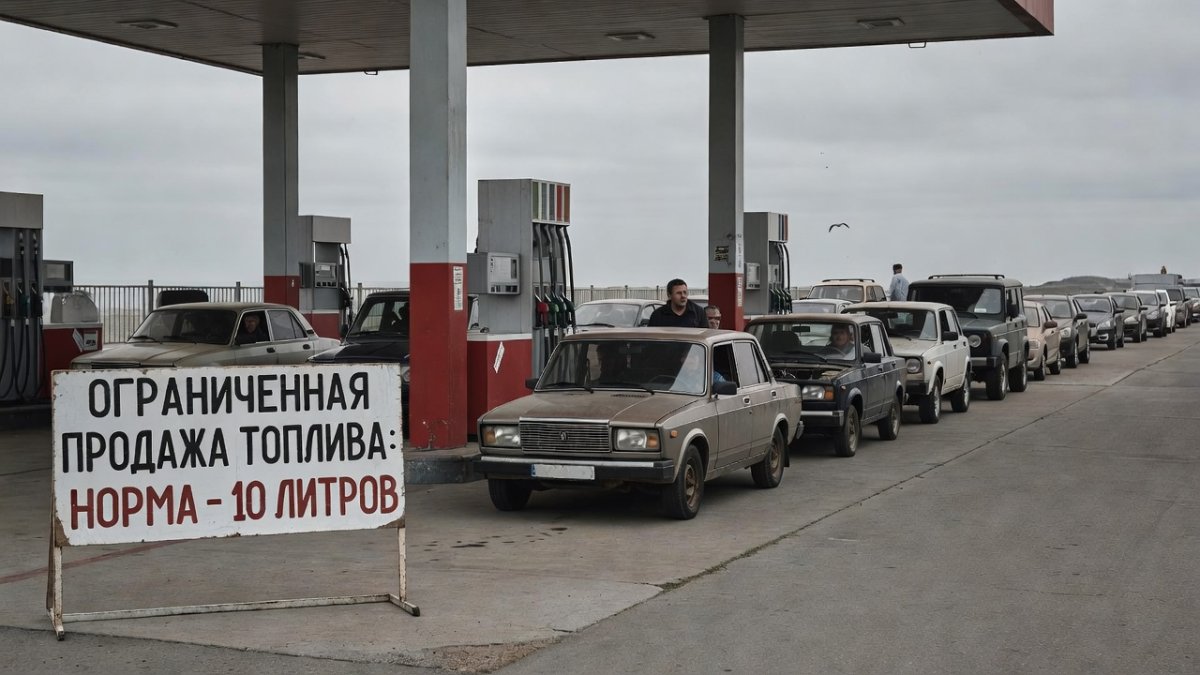
Ukraine's Drone Campaign Targets Russian Energy Lifelines
Russia's Energy Ministry has directly linked recent Ukrainian drone strikes on oil refineries and supply routes to gasoline shortages now affecting annexed Crimea and parts of southern Russia. The ministry issued a statement late Monday acknowledging that "enemy aerial attacks" have created temporary difficulties with fuel supplies in several southern regions. This admission marks a shift from earlier assurances that the domestic gasoline market remained stable.
Ukraine intensified strikes on Russian refining capacity this spring specifically to reduce Kremlin revenues from oil exports. Facilities hit by drones represent significant portions of Russia's overall gasoline production. In parallel, Ukrainian forces have struck fuel trucks traveling the R-280 Novorossiya highway that links annexed Crimea to Russia's Rostov region.
Energy Ministry Establishes Task Force Amid Supply Disruptions
Officials announced the creation of an industry-wide task force charged with maintaining stable operations across the entire energy sector. The move follows mounting pressure on infrastructure that supplies both civilian markets and military logistics. The ministry's statement came after weeks of localized rationing measures already visible in Crimea.
Last month the same ministry had claimed the gasoline market was under control, even as Crimea began limiting sales at gas stations. The contrast between that earlier position and the current acknowledgment highlights how sustained drone pressure has forced a reassessment at the federal level.
Daily Life Under Fuel Rationing in Sevastopol and Crimea
Residents of annexed Crimea describe growing anxiety over access to fuel. One woman interviewed by The Moscow Times said people are stocking up on food, sugar, and grains as a precaution, though she characterized current shortages as still tolerable. Another resident in Sevastopol reported that gasoline is now distributed only through special QR codes issued via the state-backed Max messaging app.
She noted that insufficient QR codes left many drivers without fuel the previous day. Streets in Sevastopol show noticeably fewer private cars, while public transportation continues without interruption. These accounts illustrate how the shortages are reshaping mobility for ordinary citizens in the annexed peninsula.
National Price Increases and Regional Variations
Rosstat data show the average price of gasoline across Russia has risen 4.8 percent since the beginning of the year. As of June 1 the national average reached 67.83 rubles per liter following a sharp single-week increase. Fuel costs climbed in 73 regions, with the republic of Tuva recording a 3.2 percent jump in one week.
Diesel prices also moved higher, rising 0.8 percent week-on-week to a national average of 79.46 rubles per liter. The federal statistics agency tracks these changes across the country, providing a clear picture of how localized supply problems are translating into broader price pressure felt by Russian consumers.
Export Ban and Crude Redirection Measures
A ban on gasoline exports remains in effect through July 31 as authorities seek to protect domestic supplies. Market sources cited by Reuters indicate that Russia has already reduced June crude exports and redirected volumes to domestic refineries for gasoline production. Kremlin spokesman Dmitry Peskov has publicly acknowledged "certain problems" with fuel supplies.
These steps reflect standard Kremlin efforts to shield internal markets during periods of external pressure on energy infrastructure. The measures also connect to wider patterns of state intervention in energy flows that affect both civilian economies and military sustainment.
Potential Military Consequences and External Perspectives
Analysts observing the situation note that current gasoline shortages appear to have only limited immediate impact on Russian military operations. However, they point to emerging diesel shortages that could prove more consequential for sustained logistics. Reports suggest the Kremlin may consider extending export restrictions to diesel in an attempt to mitigate those risks.
Ukrainian strategy focuses on degrading the economic foundation of Russia's war effort by targeting refining capacity and transport corridors. The resulting pressure on southern supply lines demonstrates how strikes on energy infrastructure can ripple outward to affect both military sustainment and civilian life in annexed territories.
By Irina Volkov, Staff Writer
This article was produced with AI-assisted research and editorial support. Reporting is based on sources cited in the article.
What's Your Reaction?
 Like
0
Like
0
 Dislike
0
Dislike
0
 Love
0
Love
0
 Funny
0
Funny
0
 Wow
0
Wow
0
 Sad
0
Sad
0
 Angry
0
Angry
0
Russia/Eastern Europe Correspondent at Global1.News. Covering Russian politics, energy, security, and the shifting dynamics of the post-Soviet space. Provides clear-eyed analysis on one of the world's most opaque regions.











Comments (0)