
Oil-rich Guyana in scramble to keep power on after Turkish contract expires
Oil-rich Guyana in scramble to keep power on after Turkish contract expires The sudden end of emergency power supply Guyana faces an uncertain few weeks after the contract for two Turkish floating power plants expired on 21 May 2026. The vessels had been supplying 96 megawatts to the national grid, with 36 megawatts stationed on the Berbice River and 60 megawatts on the Demerar
The sudden end of emergency power supply
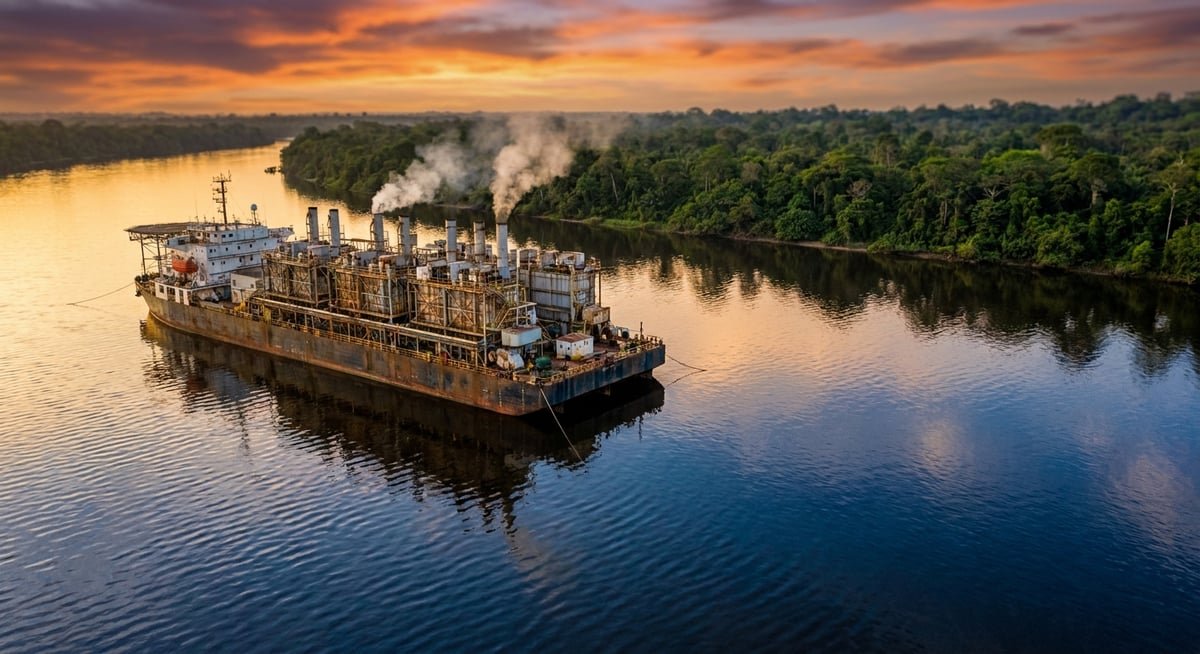
Guyana faces an uncertain few weeks after the contract for two Turkish floating power plants expired on 21 May 2026. The vessels had been supplying 96 megawatts to the national grid, with 36 megawatts stationed on the Berbice River and 60 megawatts on the Demerara River. This arrangement was always intended as a short-term measure while the Wales Gas-to-Energy project advanced. When the agreement lapsed, the government sought a 30-day extension the following day, yet the operator granted only a one-week grace period ending 1 June.
How the Karpowership arrangement worked
The Turkish company Karpowership provided the floating plants under a 2024 emergency contract. These vessels helped stabilise electricity supply across coastal communities at a time when domestic generation capacity remained stretched. Guyana, despite its growing oil production, continues to rely on imported fuel and ageing infrastructure for power generation. Neighbouring Caribbean nations, including Trinidad and Tobago, have watched similar challenges unfold, where rising fuel costs directly affect household budgets and small businesses.
The letter that rejected the extension request
On 25 May a joint letter signed by Beyza Ozdemir, Karpowership Americas Director, and Antonio Neto, Urbacon Managing Director, was sent to Minister Deodat Indar. The correspondence explained that a 30-day extension could not be accommodated. It stated that any continuation would require revised commercial terms and alignment across all country operations. The letter proposed raising the rate for the Berbice vessel from US$0.076 to US$0.095 per kilowatt hour. Former minister David Patterson estimated this change would add roughly US$5.8 million annually for the Berbice vessel alone.
Ongoing talks and assurances of continuity
Minister Indar has confirmed that discussions with the operator remain active and that electricity supply has not been interrupted. Opposition parliamentarian Ganesh Mahipaul has filed an urgent parliamentary question seeking full disclosure of the negotiations. Residents across Berbice and Demerara are understandably anxious, as reliable power underpins everything from refrigeration of fresh produce to the operation of small clinics and schools. In many Caribbean communities, even brief outages quickly translate into higher food spoilage and added expense for families already managing tight budgets.
Delays at the Wales project and regional lessons
The Wales Gas-to-Energy project was meant to replace the floating plants with a more stable, locally sourced supply. Its delay has left Guyana dependent on the very stopgap measure that has now ended. Across CARICOM, countries are learning that energy security requires steady investment in climate-resilient infrastructure. Trinidad and Tobago, with its own long experience in the energy sector, understands how sudden shifts in generation costs can ripple through the wider economy, affecting everything from transport fares to the price of basic goods in community markets.
Looking ahead for Guyana's power needs
Guyana's oil wealth has not yet translated into reliable, affordable electricity for every household. The current situation highlights the importance of completing long-term projects on schedule while maintaining transparent communication with the public. As talks continue, communities along the rivers will be watching closely to see whether a workable agreement can be reached without placing further strain on household expenses. The coming weeks will test how quickly the country can move from emergency measures to lasting solutions that support both economic growth and daily life.
By Sharon Sahatoo, Staff WriterThis article was produced with AI-assisted research and editorial support. Reporting is based on sources cited in the article.
What's Your Reaction?
 Like
0
Like
0
 Dislike
0
Dislike
0
 Love
0
Love
0
 Funny
0
Funny
0
 Wow
0
Wow
0
 Sad
0
Sad
0
 Angry
0
Angry
0

Caribbean Correspondent at Global1.News. Based in Port of Spain, Trinidad, covering Caribbean politics, economy, energy, climate, and culture. Amplifying the voices and stories of the Caribbean region.















Comments (0)