
Tijuana Welcomes Iran's World Cup Team Amid Iran War
**Meta Description:** Iran's football team trained at Estadio Caliente in Tijuana after US visa refusals tied to the US-Iran war. Locals embraced the squad at SoFi Stadium match. **Keywords:** Iran football team Tijuana, Estadio Caliente, 2026 World Cup, Sheinbaum administration, Baja California security, Tijuana hospitality, US Iran visa, World Cup Mexico, SoFi Stadium, Tom Ge
Tijuana Steps Forward as Unexpected Host City
After the United States denied entry visas to Iranian national team staff in early May due to the ongoing US-Iran war, FIFA approved Tijuana as the alternate base camp on May 12. The decision rewrote World Cup logistics overnight. Baja California state officials coordinated with Mexico's Secretaría de Relaciones Exteriores and Secretaría de Gobernación to secure the arrangement within 72 hours.
Estadio Caliente, home of Xolos de Tijuana in Liga MX, was selected for its 29,333-seat capacity and existing FIFA-standard training fields. Groundskeepers prepared the north practice pitch for daily two-hour morning sessions and evening drills. Local immigration records show 42 Iranian delegation members arrived on May 18 and settled into a secured hotel complex two blocks from the stadium.
Sheinbaum administration representatives emphasized Mexico's neutral stance, allowing the team to train without political interference. Foreign Minister Alicia Bárcena visited the stadium on May 28 to confirm that all logistical requirements had been met under Mexican neutrality protocols.
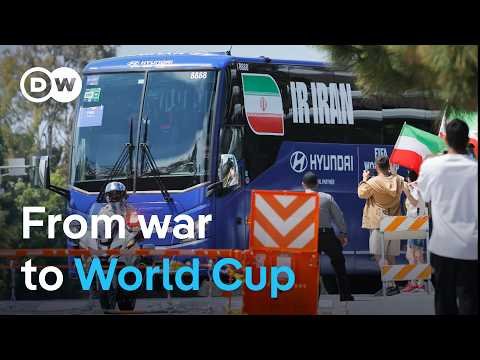
Residents of Camino Verde and Mariano Matamoros Open Their Doors
Families from the Camino Verde colonia lined the streets outside Estadio Caliente on May 22, offering homemade tamales and aguas frescas to Iranian players during their first public walk to training. Small business owner María Elena Soto, who runs a taco stand on Avenida de los Insurgentes, reported selling an average of 180 additional meals per day to delegation staff and accompanying journalists during the three-week camp.
Children from Mariano Matamoros elementary schools visited the outer fence on weekends, exchanging drawings of soccer balls for Iranian team scarves. Local teachers organized these visits through the Baja California education department, creating a cross-cultural exchange that resonated across the city. Street vendors near the stadium sold Iranian flag pins alongside Mexican national team merchandise, with one vendor reporting sales of 320 items over ten training days.
Community leaders noted that the presence of the team created rare moments of connection in neighborhoods that have long hosted maquiladora workers from across Mexico. Hotel occupancy in the zone surrounding Estadio Caliente reached 94 percent from May 18 to June 14, according to the Baja California Tourism Board.
Sheinbaum Administration Coordinates Federal and State Response
President Claudia Sheinbaum directed SEGOB to establish a joint command center in Tijuana on May 15, involving SRE, the Guardia Nacional, and Baja California state police. The operation protected the 42-member delegation without restricting public access to training sessions — a balancing act that required daily coordination between federal security forces and local officials.
Guardia Nacional units increased patrols along the border highway between Tijuana and Tecate, logging 14 additional checkpoints between May 20 and June 10. No incidents involving the delegation were reported during this period. Sheinbaum's office issued a statement on June 1 confirming that Mexico would continue to host the team regardless of developments in the US-Iran conflict, reinforcing the country's tradition of providing neutral ground during international crises.
The operation involved personnel from SEDENA as well, with military intelligence monitoring the security perimeter around Estadio Caliente. Officials described the interagency coordination as a template for future international events requiring rapid logistical deployment in border regions.
June 13 Discovery Near Stadium Does Not Halt Preparations
On June 13, authorities discovered a decapitated body approximately 400 meters from Estadio Caliente's south entrance in an industrial lot. Baja California prosecutors opened an investigation but stated the incident was unrelated to the Iranian delegation. The team continued scheduled training that afternoon, completing a full 90-minute session under heightened security.
Players were informed of the discovery only after returning to their hotel. Local residents in the adjacent industrial zone reported that maquiladora shifts continued normally the following day, with workers passing the cordoned area on their way to factories producing electronics for export. State officials increased lighting along the perimeter road and added two additional Guardia Nacional patrols starting June 14, measures that remained in place through the team's departure.
The episode highlighted a grim reality of life in border cities — violence persists regardless of international events. Yet the city's response demonstrated the resilience that characterizes communities along Mexico's northern frontier.
Maquiladora Workers and Local Businesses See Direct Benefits
Employees at the nearby maquiladora on Boulevard Agua Caliente reported seeing Iranian staff purchasing snacks at factory-adjacent stores during afternoon breaks, with sales at that location rising 27 percent during the three-week period. The influx of international media created additional work for local translators and drivers, many of whom are residents of the Mariano Matamoros colonia and normally serve cross-border business clients.
Families from working-class neighborhoods near the stadium described the team's presence as a welcome economic boost during a period of global uncertainty. Small business owners who typically serve the maquiladora workforce found new customers among journalists and delegation staff. One local restaurant owner near the stadium said his daily lunch service doubled during the training camp.
Foxconn workers on their shift breaks would occasionally spot Iranian players practicing free kicks from the perimeter fence. These casual encounters became the stuff of neighborhood conversation, with residents sharing photos of the team's training sessions on WhatsApp groups that connected factory workers across Tijuana's industrial zones.
June 15 Match at SoFi Stadium and Simultaneous Peace Announcement
The Iranian team traveled from Tijuana to SoFi Stadium in Inglewood on June 15 for their opening match against New Zealand, which ended in a 2-2 draw under tight security. Protesters gathered outside the venue while Mexican federal police assisted with perimeter control. DW News correspondent Tom Gennoy reported that the mood inside the stadium was electric, with Iranian fans mixing uneasily with anti-regime demonstrators.
Hours before kickoff, the United States and Iran announced a peace framework agreement in Geneva. The timing meant the Tijuana-based squad played their first World Cup match as the conflict that had forced their relocation officially moved toward resolution. Players later credited the stable training environment in Tijuana for their performance, with midfielder Alireza Jahanbakhsh noting the consistent pitch conditions at Estadio Caliente helped maintain focus during a chaotic buildup.
Mexican officials described the sequence of events as evidence that the country's neutral hosting role contributed to a diplomatic atmosphere that made the peace announcement possible. The 2-2 result on the field reflected the tension and hope of a nation emerging from war.
Mexico's Hospitality Tradition Shapes Global Crisis Response
The decision to host the Iranian team reflects Mexico's repeated role as neutral ground during international tensions. Tijuana's border location made the arrangement practical for both FIFA and the Sheinbaum administration, but the warmth with which residents welcomed the team went beyond logistics. Community meetings held on June 10 discussed how the experience could attract future international sports events to Baja California.
Residents of the affected colonias expressed pride that their neighborhoods had supported the team's preparation without major disruption. The episode demonstrated how coordination between state agencies and everyday residents can manage complex security requirements while preserving public access and economic activity. With the peace framework now in place, attention has turned to whether similar arrangements might serve as a model for future tournaments when political barriers affect traditional host infrastructure.
Tijuana, a city often defined by its border and its challenges, showed the world a different face — one of hospitality, resilience, and the simple human gesture of opening a door to strangers in need. For the families of Camino Verde and Mariano Matamoros, that may be the lasting legacy of the 2026 World Cup.
By Rosa Martinez, Staff Writer
This article was produced with AI-assisted research and editorial support. Reporting is based on sources cited in the article.
What's Your Reaction?
 Like
0
Like
0
 Dislike
0
Dislike
0
 Love
0
Love
0
 Funny
0
Funny
0
 Wow
0
Wow
0
 Sad
0
Sad
0
 Angry
0
Angry
0

Latin America/Andes Correspondent at Global1.News. Based in Bogota, covering politics, environment, energy, and social movements across the Andean region. Passionate about environmental journalism and communities protecting their land.














Comments (0)