
Obama Warns US Cannot Bomb Its Way to Iran Solutions
The announcement of a U.S.-Iran ceasefire brokered under Pakistani mediation has reopened long-standing debates over whether military pressure or sustained diplomacy can constrain Iran's nuclear program and regional influence. Former President Barack Obama's June 14, 2026, ABC interview arrives at a moment when the P5+1 framework, the Abraham Accords, and Gulf energy routes int
The announcement of a U.S.-Iran ceasefire brokered under Pakistani mediation has reopened long-standing debates over whether military pressure or sustained diplomacy can constrain Iran's nuclear program and regional influence. Former President Barack Obama's June 14, 2026, ABC interview arrives at a moment when the P5+1 framework, the Abraham Accords, and Gulf energy routes intersect with renewed great-power competition involving China and the United States.
Obama Warns U.S. Cannot Bomb Its Way to Iran Solutions
Beirut, Lebanon – June 15, 2026 — In an interview with ABC's Robin Roberts, former President Barack Obama cautioned that the United States cannot "bomb its way to solutions" with Iran, expressing measured skepticism toward the Trump administration's newly announced peace deal. Obama stated it is "doubtful that any agreement that arises is going to be significantly different or a significant improvement from the deal that we had in the first place." He added that "you'd think we would've learned that lesson by now, but it seems like every so often we have to learn that lesson again."
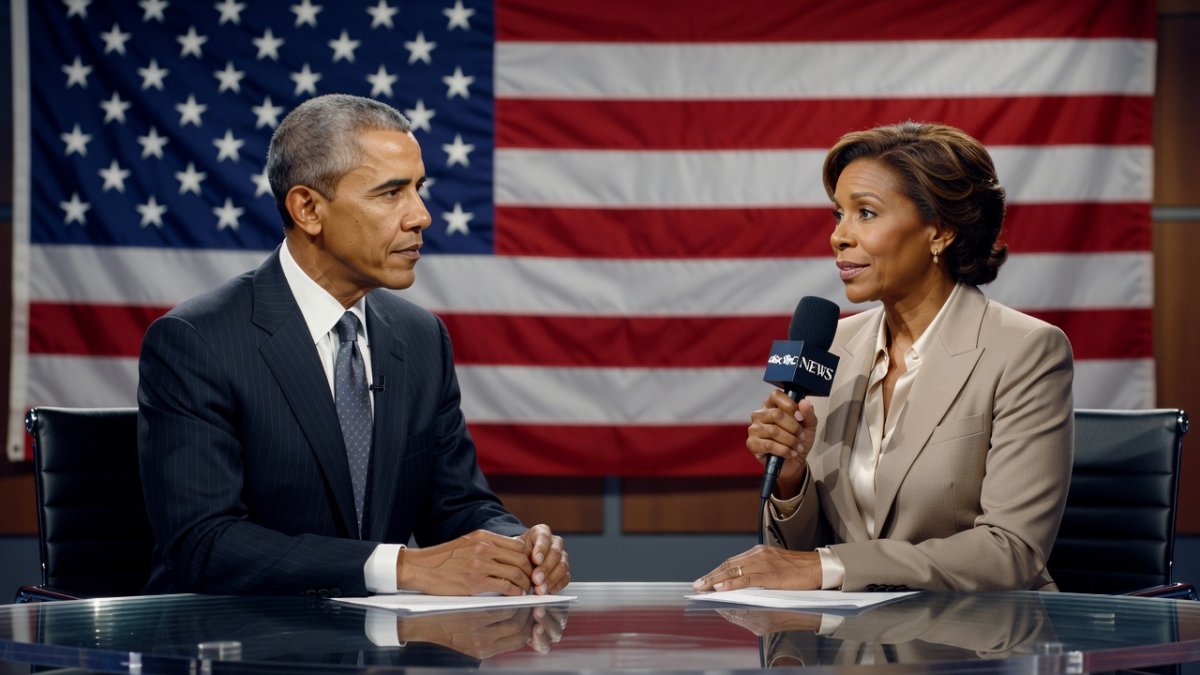
Obama's Strategic Warning: Diplomacy vs. Military Force
Obama's remarks underscore a consistent strategic preference for verifiable, multilateral constraints over episodic shows of force. He acknowledged that displays of military power can appear appealing in the short term yet repeatedly fail to produce durable limits on Iran's nuclear breakout capacity or its support for proxies across Lebanon, Syria, and Iraq. The former president's framing situates the current ceasefire within decades of U.S.-Iran interaction that began with the 1979 revolution and continued through the 2015 JCPOA negotiations involving the P5+1 and the European Union.
By stressing that any new accord is unlikely to surpass the original JCPOA's monitoring architecture, Obama highlights the technical reality that Iran's enrichment infrastructure and stockpile knowledge cannot be erased by airstrikes alone. His comments also reflect awareness of second-order effects: renewed conflict risks driving Tehran closer to Beijing and Moscow while complicating Gulf Arab states' diversification strategies under Vision 2030 and similar programs.
The 2015 JCPOA: A Deal Dismantled
The Joint Comprehensive Plan of Action, signed in 2015 by the United States, United Kingdom, France, Germany, Russia, China, and the EU, imposed strict limits on Iran's uranium enrichment and heavy-water reactor activities in exchange for sanctions relief. Trump withdrew from the agreement in 2018, labeling it a "horrible, one-sided deal." The subsequent "maximum pressure" campaign reimposed sanctions but did not produce a replacement accord before the 2026 escalation that led to naval confrontation in the Strait of Hormuz.
Obama's defense of the original framework rests on its unprecedented verification regime administered by the IAEA. He argues that dismantling that architecture without a demonstrably stronger substitute has left Washington with fewer tools and greater uncertainty about Iran's nuclear timeline.
Trump's 2026 Peace Deal: Terms and Unanswered Questions
The June 14-15, 2026, announcement outlined an immediate ceasefire, removal of the U.S. naval blockade, and reopening of the Strait of Hormuz by June 19 under "Iranian arrangements," according to Iran's Mehr News Agency. Pakistan Prime Minister Shehbaz Sharif mediated the talks, describing them as a "historic step towards peace." The E4 countries (UK, France, Germany, Italy) have demanded unconditional access for commercial shipping through the waterway that carries roughly 20 percent of global oil trade.
Significant questions remain regarding the status of Iran's nuclear program, potential limits on ballistic missiles, and Hezbollah's posture in Lebanon. Trump told The New York Times he would resume military operations if a follow-on nuclear agreement is not reached, indicating the ceasefire remains conditional.
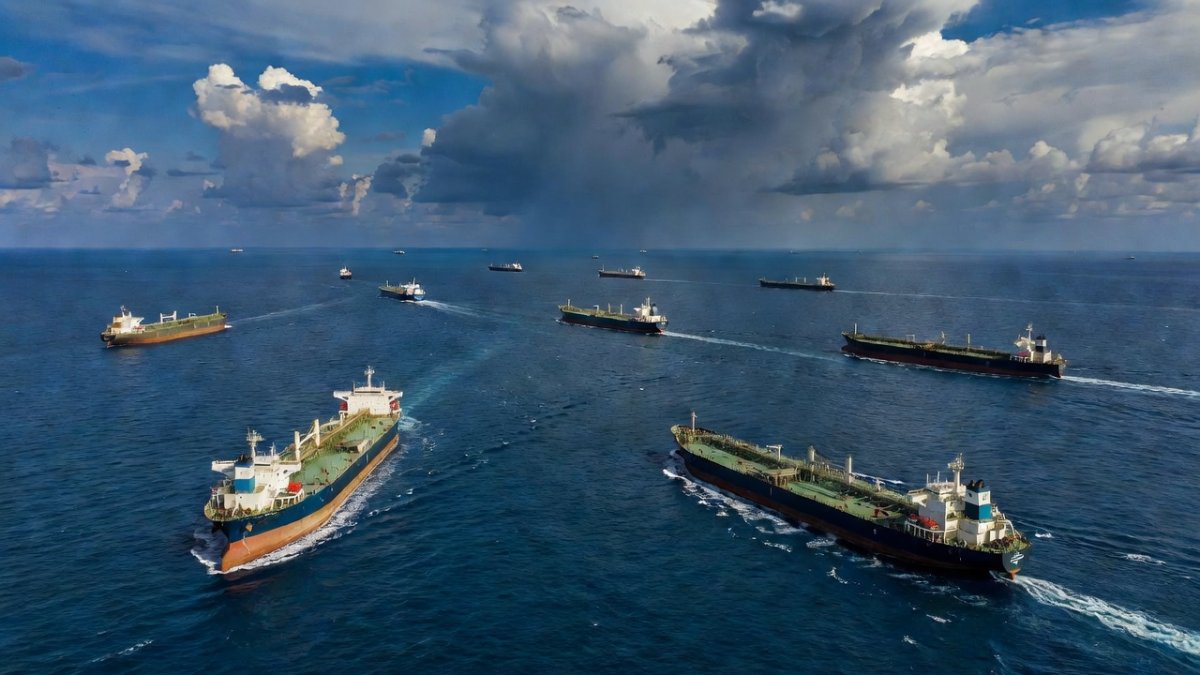
Regional Reactions: Israel's Alarm, China's Welcome, Pakistan's Mediation
Israel expressed clear dissatisfaction with the terms, concerned that any easing of pressure could allow Iran to reconstitute its nuclear infrastructure and proxy networks. Chinese officials welcomed the de-escalation, viewing stable energy flows as consistent with Beijing's interest in securing Belt and Road investments across the Gulf. Pakistan's role as mediator reflects its desire to balance relations with both Riyadh and Tehran while gaining diplomatic capital.
These divergent reactions illustrate the Sunni-Shia and Arab-Iranian fault lines that continue to shape Gulf security calculations even as Arab-Israeli normalization proceeds under the Abraham Accords.
Energy Geopolitics: The Strait of Hormuz and Global Oil Markets
Global oil prices fell sharply following the ceasefire announcement, reflecting market relief that the vital chokepoint would reopen. Yet analysts note that any future Iranian decision to impose tolling arrangements or selective closures could again roil markets. The episode demonstrates how energy security remains tightly linked to diplomatic outcomes between Washington and Tehran.
Gulf producers, particularly Saudi Arabia and the UAE, are accelerating diversification precisely because repeated Strait crises expose the vulnerability of hydrocarbon revenues to geopolitical shocks.
Strategic Implications for the Gulf and Regional Stability
The 2026 deal temporarily reduces the risk of wider conflict but leaves core disputes unresolved. Iran retains leverage through its nuclear threshold status and influence in Lebanon and Iraq. The United States must now decide whether to pursue a narrow maritime agreement or press for comprehensive nuclear limits that would require renewed P5+1 coordination.
Regional actors are calculating how the ceasefire affects their own security alignments, with some Gulf states quietly exploring additional channels to Beijing as a hedge against U.S. policy volatility.
What Comes Next: Verification, Nuclear Talks, and the Lebanon Factor
Verification of Iranian compliance with the ceasefire and any follow-on nuclear commitments will determine whether the current pause becomes durable. The Lebanon file remains especially sensitive, as Hezbollah's arsenal and political role could become bargaining chips in future negotiations. If Washington and Tehran fail to convert the ceasefire into a verified nuclear understanding, the risk of renewed confrontation will persist.
By Malik Hassan, Staff Writer
This article was produced with AI-assisted research and editorial support. Reporting is based on sources cited in the article.
What's Your Reaction?
 Like
0
Like
0
 Dislike
0
Dislike
0
 Love
0
Love
0
 Funny
0
Funny
0
 Wow
0
Wow
0
 Sad
0
Sad
0
 Angry
0
Angry
0
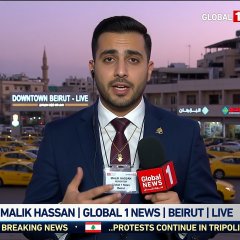
Middle East Correspondent at Global1.News. Based in Beirut, covering politics, conflict, energy, and society across the Middle East. Brings context and depth to a region often reduced to headlines.













Comments (0)