
NYC Antisemitic Hate Crimes Up 71% in May 2026, NYPD Data Shows
The i24NEWS English YouTube video "Is New York City becoming more Anti-Semitic?" released on June 22, 2026, examines the sharp increase in attacks against Jews in America's largest city. NYPD data shows 41 confirmed antisemitic hate crimes in NYC in May 2026, a 71% jump from the 24 incidents recorded in May 2025. Israeli officials and Jewish communities in Jerusalem view these
The i24NEWS English YouTube video "Is New York City becoming more Anti-Semitic?" released on June 22, 2026, examines the sharp increase in attacks against Jews in America's largest city. NYPD data shows 41 confirmed antisemitic hate crimes in NYC in May 2026, a 71% jump from the 24 incidents recorded in May 2025. Israeli officials and Jewish communities in Jerusalem view these figures as a direct reflection of shifting attitudes that affect Israel's global standing and the safety of diaspora Jews tied to the Jewish state.
Full Article Headline: Rising Antisemitic Violence in New York City Sparks Alarm in Jerusalem
Jerusalem, Israel — The rising tide of antisemitic violence in New York City has drawn sharp attention from Israeli leaders and Jewish organizations in the region, as detailed in recent reports from i24NEWS. Data from the NYPD confirms a sustained pattern of incidents that began immediately after Mayor Zohran Mamdani assumed office on January 1, 2026. Israeli diplomats monitoring antisemitism worldwide note that events in New York carry implications for bilateral relations and public perceptions of Israel in the United States.
The Numbers: What NYPD Data Confirms
NYPD statistics document 41 confirmed antisemitic hate crimes in New York City during May 2026. This total marks a 71% increase over the 24 incidents verified in May 2025. Across the first five months of 2026, authorities recorded 152 confirmed antisemitic hate crimes. January 2026 alone showed a 182% rise compared with January 2025. These figures come after the NYPD altered its reporting system in March 2026 to publish only confirmed incidents rather than all reports.
Jews comprise roughly 10% of New York City's population yet accounted for 60% of all confirmed hate crimes in the period examined. In May 2026, authorities also logged 60 reported but unconfirmed antisemitic incidents, representing 61% of all reported hate crimes that month. For comparison, the same period produced 17 confirmed hate crimes against Muslims, 18 against Black residents, and 9 against Asian residents. The disparity in targeting remains consistent across multiple months.
Israeli analysts tracking diaspora security note that the concentration of incidents in a single city with a large Jewish population raises questions about enforcement priorities under the current administration. The shift to confirmed-only reporting in March 2026 has made direct year-over-year comparisons more difficult for outside observers. Jerusalem-based organizations monitoring global antisemitism have requested raw data from NYPD contacts to assess the full scope.
Mayor Mamdani's First-Day Policy Changes
Mayor Zohran Mamdani, a Democratic Socialist, took office on January 1, 2026. On his first day, he voided the city's adoption of the IHRA working definition of antisemitism. He simultaneously lifted the previous ban on city contracts with companies that participate in boycotts of Israel. These two actions were implemented through executive orders without public hearings or input from Jewish community representatives.
The removal of the IHRA definition eliminated a framework that had guided training for city employees on distinguishing legitimate criticism from antisemitic tropes. Lifting the contracting ban opened municipal business to firms aligned with the BDS movement. Israeli government sources in Jerusalem described the moves as a deliberate signal that previous safeguards for Jewish residents would no longer receive priority.
Councilmember Joann Ariola publicly criticized the policy reversals, stating they undermined years of work to protect Jewish New Yorkers. The changes coincided with the start of the documented increase in incidents. Israeli diplomats have cited the policy shift when discussing the climate for Jewish communities in major American cities.
Anti-Israel protests outside Jewish institutions in New York City have surged in 2026. (Global 1 News)
On the Ground: Swastikas, Protests, and Synagogue Sieges
Swastika graffiti appeared in multiple Queens parks and on Jewish-owned properties throughout the spring of 2026. Residents reported the symbols painted on playground equipment and building walls in neighborhoods with established Jewish populations. NYPD units documented the incidents but recorded many as vandalism rather than bias crimes until community pressure prompted reclassification.
Anti-Israel protests occurred regularly in the Flatbush neighborhood and directly outside the Young Israel of Midwood synagogue. Demonstrators blocked entrances during Shabbat services and chanted slogans that Jewish worshippers described as intimidating. Local rabbis requested additional police presence, which was provided on a limited basis after repeated requests.
These street-level events have prompted some Israeli families with relatives in New York to reconsider travel plans. The concentration of protests at synagogue locations has been noted by security officials at Israel's Ministry of Diaspora Affairs. Daily life for observant Jews in affected Brooklyn and Queens neighborhoods now includes heightened vigilance during routine activities.
The Subway Attack and a Mayor's Silence
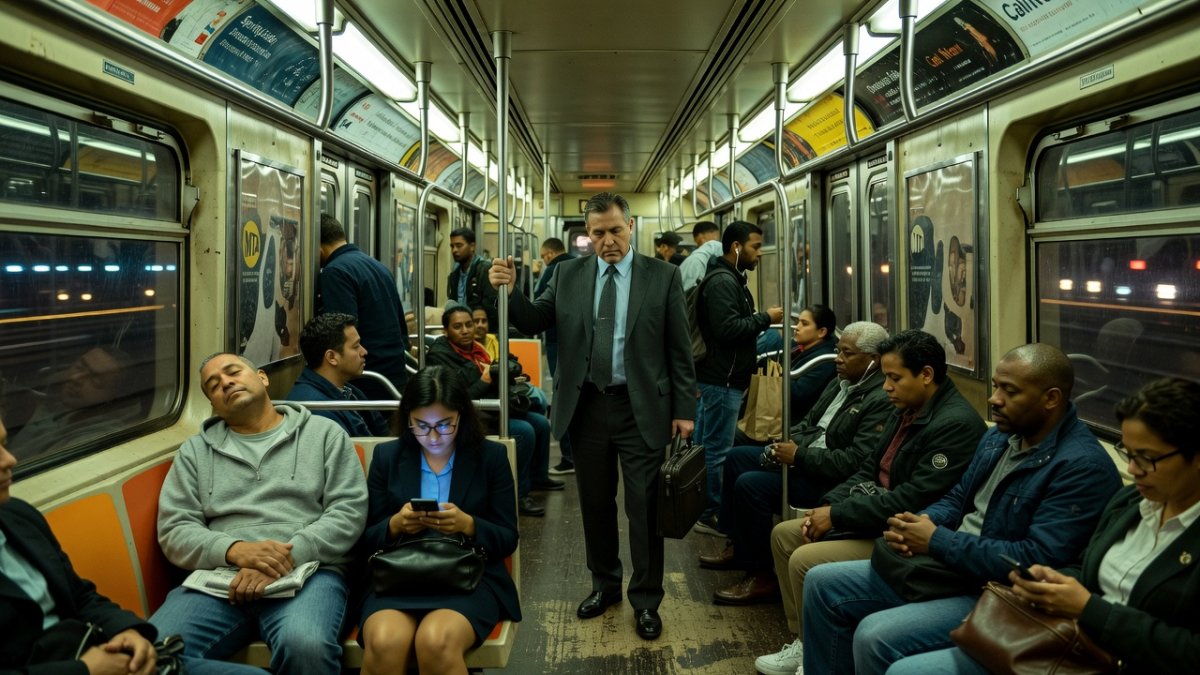
A widely circulated video showed a woman on the C train shouting "Jews are eating kids" at a Jewish nurse before physically attacking her and ripping out her hair. The incident occurred in daylight and was filmed by other passengers. The attacker was later identified and charged, but the case drew attention because of the explicit antisemitic language used.
Mayor Zohran Mamdani remained silent on the attack for several days despite multiple media inquiries. Community leaders interpreted the delay as a lack of urgency. Moshe Spern of the United Jewish Teachers stated that the silence "signals to every hater that such cruelty is tolerable." Rabbi Mark Wildes of the Manhattan Jewish Experience said Mamdani "created a climate in which bigotry is allowed to flourish."
The subway incident received coverage in Israeli media outlets that track antisemitic violence abroad. Jerusalem officials noted the attack's explicit blood-libel content as particularly alarming. Jewish organizations in New York requested a meeting with the mayor's office to discuss response protocols, but no immediate session was scheduled.

A viral video captured an antisemitic assault on a New York City subway train. (i24NEWS)
National and International Reaction — Including Israel
Statements from Jewish organizations across the United States highlighted the 152 confirmed incidents in the first five months of 2026 as evidence of a deteriorating environment. National Jewish groups called for federal monitoring of local enforcement. Israeli Ambassador to the United States issued a statement expressing concern over the safety of American Jews.
In Jerusalem, the Knesset Committee on Diaspora Affairs held a session to review the New York data. Officials referenced the 60% share of hate crimes targeting Jews despite their small population share. The committee requested updates from Israeli consulates in New York on community security measures.
Israeli media outlets have framed the New York surge alongside similar reports from European cities, arguing that antisemitism remains a transnational challenge requiring coordinated responses. The i24NEWS video has been cited in Israeli policy discussions about strengthening ties with diaspora communities facing rising threats.
Analysis: What the Surge Means for Jewish Communities and Israel
The documented increase from 24 incidents in May 2025 to 41 in May 2026, combined with the 152 total through May 2026, indicates a sustained pattern rather than isolated spikes. The 182% jump in January 2026 immediately followed the mayor's policy changes on the IHRA definition and contracting rules. This timing has led analysts to examine whether reduced institutional safeguards contributed to the environment.
For Israel, the situation in New York affects public diplomacy efforts in the United States. When 60% of confirmed hate crimes target a community that is 10% of the population, it reinforces narratives that Jewish identity itself is under pressure. Israeli security assessments now include New York City data when evaluating global antisemitic trends.
Daily life for Jewish New Yorkers has changed in concrete ways, from avoiding certain subway lines to requesting escorts for synagogue attendance. The protests outside Young Israel of Midwood and the subway attack on the C train illustrate how antisemitic expression has moved from online spaces into physical confrontations. Jerusalem officials continue to monitor whether local leadership will restore previous protections or maintain the current approach.
By Hannah Berg, Staff WriterThis article was produced with AI-assisted research and editorial support. Reporting is based on sources cited in the article.
What's Your Reaction?
 Like
0
Like
0
 Dislike
0
Dislike
0
 Love
0
Love
0
 Funny
0
Funny
0
 Wow
0
Wow
0
 Sad
0
Sad
0
 Angry
0
Angry
0

Israel Correspondent at Global1.News. Based in Tel Aviv, covering Israeli politics, security, technology, and society. Provides balanced, deeply-sourced reporting on one of the most closely-watched regions in the world.














Comments (0)