
Beijing's Exclusion of Taiwan from Our Ocean Conference Threatens Maritime Governance in Northeast Asia
Beijing's Exclusion of Taiwan from Our Ocean Conference Threatens Maritime Governance in Northeast Asia The 11th Our Ocean Conference, held in Mombasa, Kenya from June 16 to 18, 2026, was meant to be a milestone in global marine conservation — a venue for scientists, policymakers, and civil society to coordinate action against illegal fishing, marine pollution, and biodiversity
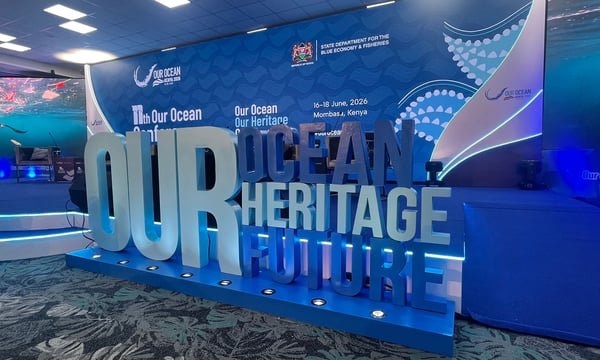
The 11th Our Ocean Conference, held in Mombasa, Kenya from June 16 to 18, 2026, was meant to be a milestone in global marine conservation — a venue for scientists, policymakers, and civil society to coordinate action against illegal fishing, marine pollution, and biodiversity loss. Instead, it became a stage for Beijing's expanding repertoire of political coercion. Under pressure from China, the Kenyan government revoked the travel authorizations of the Taiwanese delegation, detained a Taiwanese scholar for over 20 hours, and forced Taipei's complete withdrawal from the conference. For South Korea — a nation whose maritime boundary, fisheries livelihoods, and geopolitical posture are deeply intertwined with the same dynamics that produced this exclusion — the incident is not merely a diplomatic sideshow. It is a warning. The exclusion illustrates how ostensibly technical forums on ocean governance are increasingly subordinated to Beijing's cross-strait objectives, creating ripple effects that reach directly into Northeast Asian waters where Korean vessels operate daily alongside those from China and Taiwan.
The Our Ocean Conference: A Platform Weaponized
The Our Ocean Conference series originated in 2014 under United States initiative as a recurring Track 1.5 and Track 2 mechanism designed to generate voluntary commitments on marine protected areas, sustainable fisheries, and pollution reduction. Subsequent hosts including Chile, Malta, Indonesia, Norway, Palau, and Kenya have maintained its hybrid character, convening foreign ministry officials alongside scientists from institutions such as the Woods Hole Oceanographic Institution and the International Union for Conservation of Nature. This format deliberately lowers the threshold for participation compared with formal United Nations treaty negotiations, allowing non-state actors and sub-state entities limited but meaningful access to policy discussions. China's successful intervention in Kenya to bar the Taiwanese delegation therefore marks a qualitative escalation: an ostensibly apolitical scientific venue has been converted into an arena for enforcing Beijing's One China principle through third-country pressure. Kenyan authorities acted after documented diplomatic démarches from Beijing, resulting in the revocation of entry permits and the prolonged detention of a Taiwanese academic at Jomo Kenyatta International Airport. Such tactics extend the pattern of political warfare previously observed in multilateral bodies where Taiwan previously held observer status, including the World Health Assembly. For scholars of international relations, the Mombasa episode demonstrates how veto power over participation can be exercised without formal membership, thereby hollowing out the epistemic foundations of cooperative regimes. South Korean analysts must therefore treat future Our Ocean Conferences not as neutral technical gatherings but as sites where Beijing's red lines on Taiwan will be enforced, compelling Seoul to develop preemptive diplomatic hedging strategies well in advance of the next scheduled meeting.
Implications for South Korea's Maritime Security
South Korea's exclusive economic zone in the Yellow Sea and East China Sea overlaps with areas of intense Chinese fishing activity and periodic law-enforcement patrols by vessels from the China Coast Guard. These patrols have intensified since the 2016 deployment of the Terminal High Altitude Area Defense system, when Beijing imposed informal economic sanctions that included restrictions on Korean group tours and cultural exports. The same coercive toolkit now appears in maritime domains, where Chinese vessels have conducted prolonged presence operations near Ieodo, also known as Socotra Rock, a submerged feature within Korea's claimed EEZ. Korean fisheries authorities have recorded repeated instances of Chinese vessels operating without proper licensing inside the Korea-China provisional measures zone established under the 2001 fisheries agreement. Exclusion of Taiwan from the Our Ocean Conference amplifies these pressures by removing a potential third-party source of fisheries data that could otherwise inform joint monitoring arrangements. Seoul's own experience with retaliatory measures following the THAAD decision illustrates that Beijing is prepared to weaponize economic interdependence; extending that logic to ocean governance forums risks isolating Korea's maritime policymakers from critical regional datasets. The Ieodo dispute, managed through quiet bilateral channels since the 2000s, could become more volatile if Taiwan's exclusion normalizes the principle that scientific cooperation must first satisfy Beijing's political preconditions. Korean naval and coast guard planners therefore face a narrowing window for maintaining operational autonomy in contested waters.
Taiwan's Role in Global Fisheries Governance
Over the past decade Taiwan has shifted from being identified by regional fisheries management organizations as a significant source of illegal, unreported, and unregulated fishing to a recognized leader in transparency initiatives. The Fisheries Agency in Taipei has implemented mandatory electronic reporting systems on distant-water fleets and pioneered the use of artificial intelligence to cross-reference vessel monitoring system data with automatic identification system signals. These reforms enabled Taiwan to secure renewed access to several high-value tuna fisheries after earlier sanctions. At the Mombasa conference, Taiwanese experts had been scheduled to present findings on the Mombasa Declaration on fisheries transparency, which advocates standardized data protocols for port-state measures and real-time catch documentation. The forced withdrawal prevented dissemination of these technical contributions, creating an immediate gap in the evidentiary base available to other participants. Korean fisheries scientists have previously collaborated with Taiwanese counterparts on projects involving AI-powered vessel monitoring, particularly in the waters south of Jeju Island where fleets from both jurisdictions encounter similar enforcement challenges. Loss of such exchanges reduces the granularity of stock assessments for species that migrate across the Korea-Taiwan maritime boundary. The episode underscores that Beijing's political objectives carry measurable scientific costs, depriving the broader community of data generated by one of the region's most advanced monitoring programs.
The Korea-China-Taiwan Maritime Triangle
South Korea maintains a formal One China policy while sustaining practical cooperation with Taiwan on non-political issues, including fisheries management and search-and-rescue protocols. This dual posture has allowed limited participation by Taiwanese vessels in the Korea-Japan-Taiwan trilateral fisheries dialogue, an informal Track 2 process that addresses transboundary stock management in the East China Sea. The dialogue has produced joint recommendations on minimum mesh sizes and seasonal closures that Korean authorities have incorporated into domestic regulations. China's insistence on Taiwan's exclusion from the Our Ocean Conference threatens to politicize these pragmatic arrangements by signaling that any engagement with Taipei carries diplomatic risk. Seoul must therefore calibrate its participation in future multilateral ocean forums to avoid either alienating Beijing or forfeiting access to Taiwanese technical expertise. The triangle is further complicated by overlapping claims in the East China Sea, where Korean, Chinese, and Taiwanese fishing interests converge. Without reliable data-sharing mechanisms that include all three parties, enforcement against IUU fishing becomes fragmented and less effective. Korean policymakers have historically used quiet diplomacy to preserve space for Taiwan's involvement in technical working groups; the Mombasa precedent suggests that such space is contracting.
BBNJ Treaty and the Costs of Exclusion
The Agreement under the United Nations Convention on the Law of the Sea on the Conservation and Sustainable Use of Marine Biological Diversity of Areas beyond National Jurisdiction, commonly known as the BBNJ Treaty, establishes procedures for creating marine protected areas in the high seas and requires robust environmental impact assessments. Effective implementation depends on comprehensive ecological baseline data, much of which originates from national monitoring programs. Taiwan's advanced vessel monitoring capabilities and long-term catch records constitute an important component of regional datasets for species that traverse both exclusive economic zones and high-seas pockets. Systematic exclusion of Taiwanese scientists from conferences feeding into BBNJ processes creates data black holes that undermine the scientific credibility of proposed protected areas. The global IUU fishing problem, estimated by the Food and Agriculture Organization to generate annual losses exceeding fifty billion dollars, cannot be addressed without complete regional participation. For South Korea, which borders both the Yellow Sea and the East China Sea high-seas areas potentially subject to future BBNJ measures, incomplete datasets translate directly into weaker negotiating positions. The precedent set in Mombasa therefore carries structural implications for the treaty's future effectiveness in Northeast Asia.
Strategic Recommendations for Seoul
South Korea should establish internal contingency protocols requiring advance assessment of host-country susceptibility to Beijing's diplomatic pressure before committing to host or attend major ocean governance meetings. These protocols would include quiet consultations with like-minded partners such as Japan and Australia to coordinate fallback participation strategies. At the Track 2 level, Seoul can expand existing hedge diplomacy through academic and research institutions that maintain channels with Taiwanese counterparts outside formal governmental frameworks. Joining the Fisheries Transparency Initiative would provide an additional multilateral platform less susceptible to single-country vetoes while aligning with Korea's interest in elevating fisheries governance standards. Strengthened bilateral data-sharing arrangements with Taiwan on IUU fishing incidents, conducted through non-governmental scientific bodies, would mitigate the immediate loss of information flows. Such measures would preserve Korea's access to high-quality monitoring data without requiring formal diplomatic recognition of Taiwan. Implementation should be calibrated to avoid unnecessary escalation with Beijing while signaling that scientific cooperation remains a distinct domain from cross-strait political disputes.
Conclusion: The Price of Weaponizing Science
The Mombasa exclusion reveals the corrosive effect of subordinating scientific cooperation to geopolitical objectives. Multilateralism in Northeast Asia has long depended on the ability of technical forums to insulate themselves from sovereignty disputes; once that insulation is breached, the cost is measured in lost data, weakened enforcement regimes, and diminished trust among neighboring states. For South Korea, whose maritime economy and security posture are directly affected, the incident serves as an early indicator that future ocean governance initiatives will require deliberate strategies to counteract politicization. The erosion of epistemic communities undermines the very evidence base needed for sustainable management of shared resources. Forward-looking analysis suggests that Seoul's capacity to navigate these pressures will determine whether regional maritime governance remains functional or fragments along political fault lines.
By Prof. David Park, Staff WriterThis article was produced with AI-assisted research and editorial support. Reporting is based on sources cited in the article.
What's Your Reaction?
 Like
0
Like
0
 Dislike
0
Dislike
0
 Love
0
Love
0
 Funny
0
Funny
0
 Wow
0
Wow
0
 Sad
0
Sad
0
 Angry
0
Angry
0

East Asia/Technology Correspondent at Global1.News. Seoul-based voice covering Korean politics, technology, business, and culture. Analyzes how technology and geopolitics intersect across East Asia.












Comments (0)