
New World Screwworm Threatens US Livestock as Latin American Barrier Collapses
The reappearance of the New World screwworm in Texas cattle marks a dangerous reversal in a decades-long victory against one of the most destructive livestock parasites known to science. After eradication in 1966, the fly’s return demands urgent regional action across the Americas. New World Screwworm Threatens US Livestock as Latin American Barrier Collapses Austin, Texas – Ju
The reappearance of the New World screwworm in Texas cattle marks a dangerous reversal in a decades-long victory against one of the most destructive livestock parasites known to science. After eradication in 1966, the fly’s return demands urgent regional action across the Americas.
New World Screwworm Threatens US Livestock as Latin American Barrier Collapses
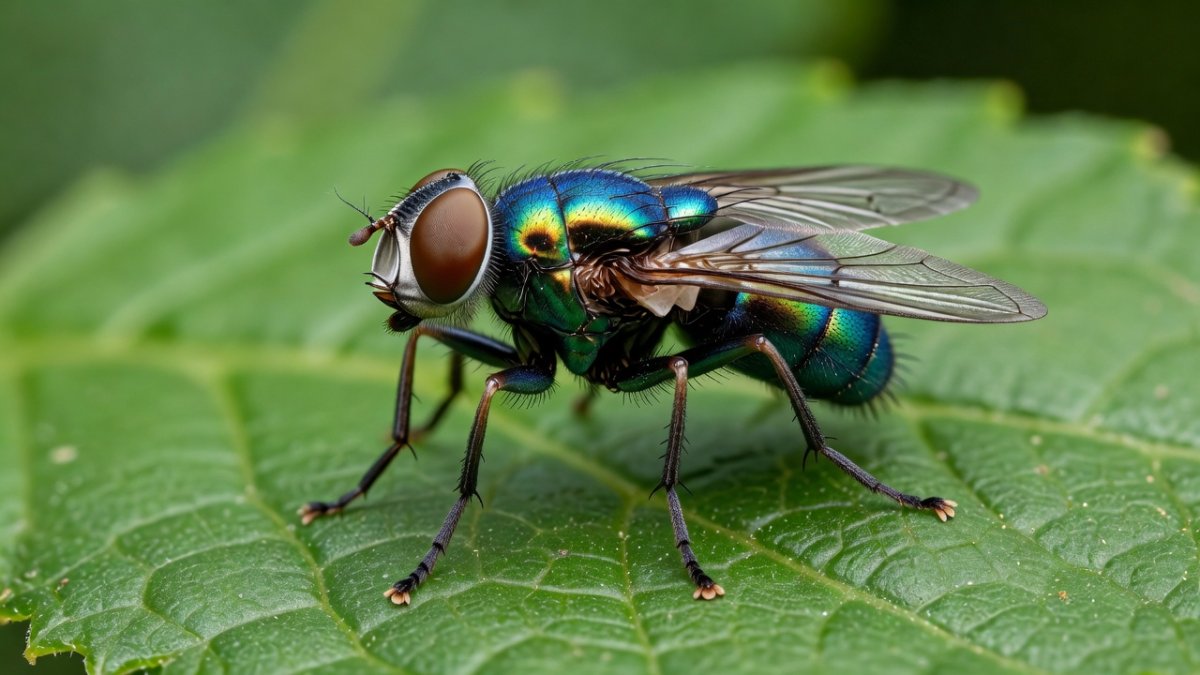
Austin, Texas – June 10, 2026 — A 3-week-old calf in Zavala County tested positive for New World screwworm on June 3, 2026, the first US case since eradication in 1966. Days later a second infestation appeared just 5.6 miles away, confirming active transmission near the Mexico border. USDA APHIS immediately assumed leadership of the response while the Texas Animal Health Commission activated unified incident command. A 20 km quarantine zone now covers parts of Zavala and Uvalde counties, banning movement of warm-blooded animals without inspection, treatment, and permits. The metallic blue-green fly, Cochliomyia hominivorax, deposits eggs in open wounds; its larvae then burrow into living tissue, causing myiasis that can kill untreated animals within days. The $113 billion US livestock industry faces renewed pressure as Canada suspends Texas imports and Governor Greg Abbott expands the statewide disaster declaration. This outbreak traces directly to the 2022 breach of the Panama biological barrier, allowing northward spread that reached Costa Rica in 2023, Nicaragua and Honduras in 2024, and multiple Mexican zones by 2025.
A Parasite Returns After Six Decades
The confirmation of Cochliomyia hominivorax in Zavala County on June 3, 2026, ended sixty years of freedom from a parasite once responsible for 180,000 US livestock deaths in 1935 alone and 50 percent deer fawn mortality that same year. The fly’s larvae feed exclusively on living tissue, entering through any break in the skin and consuming muscle, fat, and fluids until the host succumbs or receives aggressive treatment. Two cases within days and miles of each other demonstrate that breeding populations have already established near the border. USDA APHIS and the Texas Animal Health Commission responded by declaring a 20 km quarantine zone spanning Zavala and Uvalde counties, enforcing movement controls that require permits, wound treatment, and inspection for every warm-blooded animal leaving the area. The economic stakes are immediate: re-establishment could cost Texas producers $732 million annually and inflict $1.8 billion in broader economic damage. Because the fly is endemic across Brazil, Colombia, and much of South America, the Texas detections represent not an isolated event but the latest stage of a continental reversal that began when the Darién Gap barrier failed around 2022. Daily inspections and rapid reporting now form the frontline defense for ranchers throughout the southern United States.
How Screwworm Kills: The Biology of Myiasis
New World screwworm larvae cause myiasis by burrowing directly into living tissue rather than feeding on necrotic material like most blowflies. Females are attracted to any open wound, navels of newborns, or even tick bites; they lay hundreds of eggs that hatch within hours. The resulting maggots use sharp mouth hooks to tear into healthy flesh, creating enlarging pockets that deepen daily and invite secondary infections. Without intervention the host experiences severe pain, weight loss, and systemic shock, often dying within a week. Treatment demands thorough wound cleaning, application of approved larvicides, and repeated monitoring to ensure no larvae remain. In 1935 such infestations killed 180,000 US cattle and halved deer fawn survival; modern producers face the same biology today. The metallic blue-green adult fly is highly mobile, capable of traveling several miles in search of hosts, which explains why two cases appeared only 5.6 miles apart in Zavala County. USDA guidance now urges ranchers to inspect animals daily, treat every wound promptly with approved products, and report any suspicious larvae immediately. Because larvae cannot survive away from living hosts, rapid detection remains the decisive factor in preventing wider establishment across the southern cattle belt.
Latin America: The Source and the Front Line
The current Texas outbreak originates in the endemic populations long maintained across Brazil, Colombia, and other South American nations where ongoing sterile insect programs have contained but never eliminated the fly. The decisive failure occurred when the Darién Gap biological barrier between Panama and Colombia collapsed around 2022, allowing northward movement that first reached Costa Rica in 2023, then Nicaragua and Honduras in 2024, and multiple Mexican outbreak zones by 2025. Joint US-Panama COPEG commission facilities had sustained the barrier for decades by releasing roughly 100 million sterile males weekly. Once breached, the fly advanced through Central America with little resistance until SENASICA in Mexico began coordinating with USDA on surveillance and control. Argentina is now expanding mass-rearing facilities to support Uruguay and broader regional efforts, while the Inter-American Institute for Cooperation on Agriculture and IAEA provide technical coordination. Because the fly respects no borders, sustained funding for sterile insect production across Latin America is essential to prevent repeated northward surges. The Texas detections underscore that any weakening of southern programs directly threatens US and Mexican producers who had enjoyed six decades of protection.
The Sterile Insect Technique: Science Against the Swarm
Sterile Insect Technique remains the cornerstone of screwworm control. Millions of male flies are mass-reared, sterilized by radiation, and released to mate with wild females, producing non-viable offspring that collapse populations over successive generations. The original US eradication campaign succeeded by 1966 using this method; COPEG’s Panama facility later maintained the Darién Gap barrier with weekly releases approaching 100 million insects. In response to the current crisis, USDA has activated a new SIT facility in Edinburg, Texas, built specifically for expanded sterile male production targeting the southern border. Regional cooperation now involves IICA, IAEA, FAO, SENASICA, and COPEG to synchronize releases across Mexico and Central America. Argentina’s expanding rearing capacity further strengthens the continental network supporting Uruguay and neighboring countries. Because the technique requires continuous, high-volume releases coordinated on both sides of the border, any gap in funding or logistics allows rapid resurgence. The 2022 barrier breach demonstrated how quickly decades of progress can unravel when sterile male output declines. Sustained investment in these facilities across Latin America therefore constitutes the most effective long-term defense for US livestock as well.
Economic Fallout and Food Security
Re-establishment of screwworm would impose annual costs of $732 million on Texas producers and $1.8 billion on the broader economy while endangering the $113 billion national livestock industry. Canada’s immediate suspension of imports from Texas illustrates how quickly trade partners react to any perceived threat. Yet the US food supply itself remains secure: no risk exists to meat, poultry, or eggs because the parasite affects only live animals and is eliminated during normal processing. Historical data from 1935 show the fly’s capacity to inflict catastrophic losses when left unchecked. Current quarantine measures, movement permits, and expanded sterile insect production in Edinburg are designed to prevent those losses from recurring. Latin American partners face parallel pressures; Brazil and Colombia already fund permanent SIT programs while Argentina scales up facilities to assist Uruguay. Coordinated action through IICA, IAEA, and FAO therefore protects both northern markets and southern livelihoods. Without decisive containment the economic damage will spread far beyond Texas, undermining ranching communities across the hemisphere that depend on stable, screwworm-free trade.
What Comes Next: Containment on Both Sides of the Border
USDA APHIS continues leading the unified incident command while the Texas Animal Health Commission enforces the 20 km quarantine zone covering Zavala and Uvalde counties. No warm-blooded animals may leave without inspection, treatment, and permits. Producers must inspect livestock daily, treat every wound immediately, and report suspicious larvae without delay. On the southern front, SENASICA coordinates with USDA while COPEG, IICA, IAEA, and FAO support expanded sterile insect releases across Mexico and Central America. Argentina’s new rearing capacity adds further depth to the regional response. The fly’s endemic presence in Brazil and Colombia means long-term vigilance is required on both continents. Governor Abbott’s expanded disaster declaration provides state resources, yet ultimate success depends on continuous cross-border cooperation and adequate funding for sterile male production. The 1966 eradication proved that sustained application of science can defeat the parasite; the 2022 barrier breach proved that any lapse invites rapid return. Ranchers, governments, and international agencies must now act with the same urgency that secured victory six decades ago.
By Elena Vasquez, Staff Writer
This article was produced with AI-assisted research and editorial support. Reporting is based on sources cited in the article.
What's Your Reaction?
 Like
0
Like
0
 Dislike
0
Dislike
0
 Love
0
Love
0
 Funny
0
Funny
0
 Wow
0
Wow
0
 Sad
0
Sad
0
 Angry
0
Angry
0

Latin America Correspondent at Global1.News. Based in Mexico City, covering politics, economics, energy, and culture across the region. Brings an on-the-ground perspective to stories spanning from the Rio Grande to Patagonia.














Comments (0)