
Nadezhdin Banned From Leaving Russia Ahead of Court Hearing
Russian authorities banned opposition politician Boris Nadezhdin from leaving the country on the eve of his court hearing, the latest in a cascade of legal pressure including "foreign agent" designation and extremism charges ahead of September's parliamentary elections. The travel ban, linked to ...
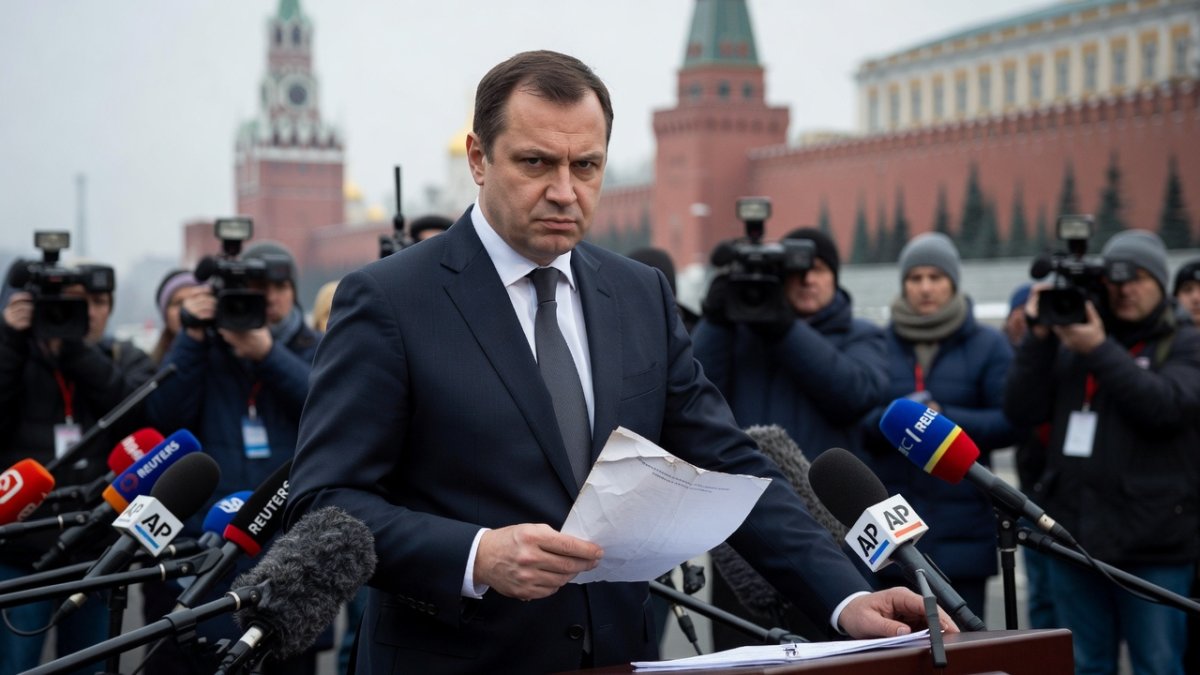
Russian authorities have barred opposition politician Boris Nadezhdin from leaving the country on the eve of a court hearing where he faces charges of displaying "extremist" symbols — the latest escalation in a campaign of political pressure targeting candidates ahead of September's parliamentary elections.
Nadezhdin Banned From Leaving Russia Ahead of Court Hearing
Moscow, Russia — July 16, 2026 — Anti-war politician Boris Nadezhdin said Thursday that authorities in Russia have banned him from leaving the country, just a day before he is scheduled to appear in court on charges of publicly displaying "extremist" symbols. The travel restriction represents another sharp turn of the screw against one of the few remaining opposition figures still operating inside Russia.
A Cascade of Legal Pressure
The rapid escalation against Nadezhdin began late last week when the Justice Ministry designated him as a "foreign agent," a designation that by law prevents individuals from holding public office. On Monday, he was charged with displaying "extremist" symbols — an administrative offense carrying a maximum sentence of 15 days in prison. The charge stems from social media posts, according to sources close to the politician.
On Thursday, Nadezhdin wrote on his Telegram channel that he had received a travel ban notification from the Federal Bailiff Service via Gosuslugi, Russia's state services portal. He called the restriction "illegal" and said he and his lawyer plan to file an appeal.
The Mechanics of the Ban
A person close to Nadezhdin told the exiled news outlet Agentstvo that the travel ban stems from the sudden reopening of an old enforcement proceeding linked to his bankruptcy case — a proceeding that was closed more than a year ago. Legal experts told the outlet that declaring bankruptcy does not automatically close all enforcement proceedings against a person and that the bankruptcy process itself can serve as grounds for a travel ban under Russian law.
The timing is notable. Nadezhdin has been seeking to register as a candidate for September's parliamentary elections, and the cascade of legal actions — foreign agent designation, extremist symbols charge, and now a travel ban — has effectively derailed those efforts. Individuals designated as "foreign agents" are legally barred from holding public office in Russia.
"Candidate Filtering" Ahead of September Elections
The charge of displaying "extremist" symbols against Nadezhdin and a growing number of other political figures ahead of September's parliamentary elections appears designed to block them from running. This practice, known as "candidate filtering," is a well-established tactic used by Russian authorities to disqualify unwanted challengers and keep them off the ballot entirely.
In an interview with Meduza earlier this week, Nadezhdin said that he and his family were weighing whether to leave Russia due to the growing pressure from the authorities. While he expressed a strong desire to stay, he acknowledged the threat of imprisonment — an outcome he said he is also trying to avoid. "I want to stay and fight, but I'm not naive about what they're preparing for me," he told Meduza.
A Political Career Under Siege
Nadezhdin is no stranger to the upper echelons of Russian politics. He previously served as an advisor to former Prime Minister Boris Nemtsov in the late 1990s, and then as an assistant to former Prime Minister Sergei Kiriyenko — who currently serves as deputy first chief of staff in the Kremlin. Nadezhdin was a State Duma lawmaker from 1999 to 2003 and served as a councilman in the Moscow region between 2019 and 2024.
He gained national prominence during the 2024 presidential election, running on a pro-peace platform that called for negotiations to end the war in Ukraine. Though his candidacy was ultimately rejected by the Central Election Commission, his campaign drew significant public support, with thousands of Russians lining up to sign nomination petitions in cities across the country — a rare display of anti-war sentiment at the ballot box.
What This Means
The systematic dismantling of Nadezhdin's political prospects reflects a broader Kremlin strategy of eliminating any viable opposition ahead of the September parliamentary elections. With Alexei Navalny's political network already crushed, and figures like Ilya Yashin and Vladimir Kara-Murza serving long prison sentences, Nadezhdin represented one of the last opposition figures with enough public profile to mount a credible challenge — even within the tightly controlled electoral framework.
Analysts suggest the Kremlin is unwilling to take any risks with this election cycle, particularly given growing economic pressures on ordinary Russians. Gazprom's shares hit a record low this week, fuel shortages are spreading across several regions, and inflation continues to accelerate — creating the kind of economic discontent that could translate into protest votes if opposition candidates were allowed on the ballot.
The foreign agent designation, the extremist symbols charge, and now the travel ban form a triad of legal measures that leave Nadezhdin with few options. An appeal of the travel ban is possible, but Russian courts rarely rule against the Bailiff Service in politically sensitive cases. The bankruptcy enforcement proceeding — whether deliberately revived or conveniently rediscovered — provides a legally defensible veneer for what critics call a politically motivated restriction.
For Nadezhdin, the calculus is now deeply personal. He can remain in Russia and face likely imprisonment, or he can join the growing ranks of Russian opposition figures who have fled the country to continue their work from exile. His Meduza interview suggests he has not yet made that decision. What is clear is that the window for making it is closing fast.
By Irina Volkov, Staff Writer
This article was produced with AI-assisted research and editorial support. Reporting is based on sources cited in the article.
What's Your Reaction?
 Like
0
Like
0
 Dislike
0
Dislike
0
 Love
0
Love
0
 Funny
0
Funny
0
 Wow
0
Wow
0
 Sad
0
Sad
0
 Angry
0
Angry
0
Russia/Eastern Europe Correspondent at Global1.News. Covering Russian politics, energy, security, and the shifting dynamics of the post-Soviet space. Provides clear-eyed analysis on one of the world's most opaque regions.













Comments (0)