
Iran Launches Slew of Drone and Missile Attacks Against Jordan
Iran launched Phase 10 of Operation Saeqeh on July 16, 2026, striking Jordan, Bahrain and Kuwait with drones and missiles. The attacks target US assets and raise direct security concerns for Israel amid the ongoing 2026 Iran war.
In a dramatic escalation of the ongoing Middle East conflict, Iranian forces unleashed a massive barrage of drones and missiles targeting Jordanian soil this week, striking key military installations and raising alarms across the region. The coordinated assault, part of Iran's Operation Saeqeh, highlights Tehran's determination to challenge U.S. and allied positions amid a widening war that has already lasted five months. From Jerusalem, the strikes underscore immediate threats to Israeli security and the delicate balance of Arab states caught in the crossfire.
Iran Launches Slew of Drone and Missile Attacks Against Jordan
Jerusalem, Israel — In a recent i24NEWS English report, footage captured the scale of Iran's coordinated drone and missile barrages targeting Jordanian territory on July 16, 2026, as part of a widening regional conflict.
On the Ground in Jordan
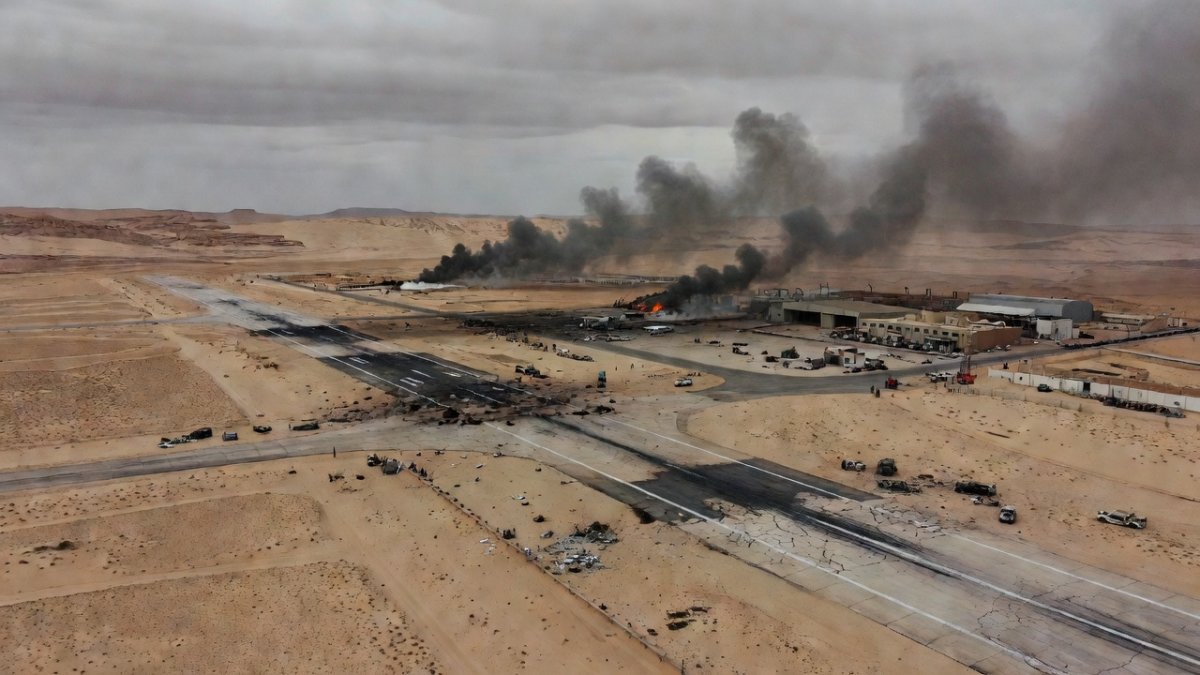
Iranian forces struck Prince Hassan Air Base in eastern Jordan during Phase 10 of Operation Saeqeh. The IRGC Aerospace Force and Iranian Army (Artesh) jointly launched the assault, hitting command centers, fuel depots, ammunition storage facilities, and MQ-9 Reaper hangars at the base.
The Royal Jordanian Air Force responded alongside Jordanian Patriot systems to intercept incoming threats. Jordan has now intercepted more than 240 missiles and drones since the conflict began on February 28, 2026.
Local residents near the base reported secondary explosions from damaged fuel storage. The Pentagon subsequently withdrew a $240 million Triton drone from Jordanian soil to a base in Italy following the strikes.
Jordanian officials confirmed that two MIM-104C PAC-2 GEM-T batteries at Prince Hassan Air Base, located 80 km east of Amman, engaged Iranian Shahed-136 drones this week. The base’s 24/7 alert status, maintained since 2023 under a $1.2 billion U.S. Foreign Military Financing package, allowed rapid cueing from the Jordanian Air Force’s AN/TPS-77 radar at Azraq. King Abdullah II’s national security adviser, Nasser Joudeh, stated that the violation of Jordanian airspace constituted “a direct threat to our sovereignty,” prompting an emergency session of the National Security Council.
Civilian communities in the Mafraq governorate, within 15 km of the base, reported secondary explosions and temporary power outages. Prime Minister Bisher Khasawneh ordered the deployment of additional Royal Jordanian Army units to secure the perimeter and announced compensation payments to affected families. Forward-looking assessments by Jordanian military planners now focus on integrating additional U.S. THAAD elements by late 2026 to close coverage gaps along the eastern border.
Regional Context and Arab Responses
The July 16 attacks also targeted Sheikh Isa Air Base in Bahrain and US facilities in Kuwait. Iranian missiles specifically aimed at US radar and air defense systems in both Kuwait and Bahrain.
Saudi Arabia issued a statement of solidarity with Kuwait, Bahrain, and Jordan within hours of the strikes. The conflict has turned multiple Arab countries into active battlegrounds for US-Iran hostilities.
IRGC commanders publicly warned that additional phases of Operation Saeqeh will follow the current wave.
Israeli Security Implications
Israeli defense officials at the IDF Northern Command and Air Force headquarters monitored the Jordanian strikes in real time. The proximity of Prince Hassan Air Base to Israeli territory raises direct concerns for border security and potential spillover.
Shin Bet assessments now factor in expanded Iranian reach from eastern Jordan toward the Jordan Valley and Dead Sea region. Mossad has increased coordination with Jordanian counterparts on early-warning protocols.
The Knesset Foreign Affairs and Defense Committee convened an emergency session on July 17 to review implications for Israeli airspace and the Golan Heights.
IDF Northern Command assessments indicate that Iranian drone corridors through Jordanian airspace reduce warning time for southern Israel to under four minutes. Iron Dome batteries at the Nevatim and Ramon airbases were placed on heightened alert, while Arrow-3 interceptors at Sdot Micha maintained 24-hour readiness with two missiles pre-positioned on launchers. Joint airspace coordination protocols with Jordanian counterparts, established after the 2024 incidents, were activated within 11 minutes of the first detection.
Israeli planners are currently running scenarios involving simultaneous saturation attacks on Eilat port and the Timna industrial zone. Daily life in southern communities has already shifted: schools in Eilat now conduct air-raid drills twice weekly, and the Port of Eilat has reduced container throughput by 18 percent since the latest escalation. Defense Minister Yoav Gallant stated that any further Iranian use of Jordanian territory would trigger “immediate and direct” Israeli responses.
Diplomatic and International Reactions
The US has conducted strikes against Iran for six consecutive nights, including targets near the Bushehr nuclear plant. Washington also reinstated a naval blockade of Iranian ports in the Strait of Hormuz ahead of the latest Iranian wave.
European Union foreign ministers scheduled talks in Brussels to address escalation risks. Jordan's Foreign Ministry summoned the Iranian chargé d'affaires in Amman to protest the violation of its sovereignty.
Analysis: What This Means for the Region
The joint IRGC Aerospace Force and Artesh operation demonstrates Iran's ability to sustain multi-front pressure despite US strikes. This sustained campaign directly challenges US forward operating locations across the Gulf and Levant.
For Israel, the attacks underscore the risk of Iranian forces using Jordanian territory as a corridor for longer-range systems. Daily life in Eilat and southern Israel now includes heightened alerts tied to Jordanian airspace activity.
Regional stability hinges on whether Arab states can maintain their air defense coordination without drawing further Iranian retaliation.
The Strait of Hormuz Dimension
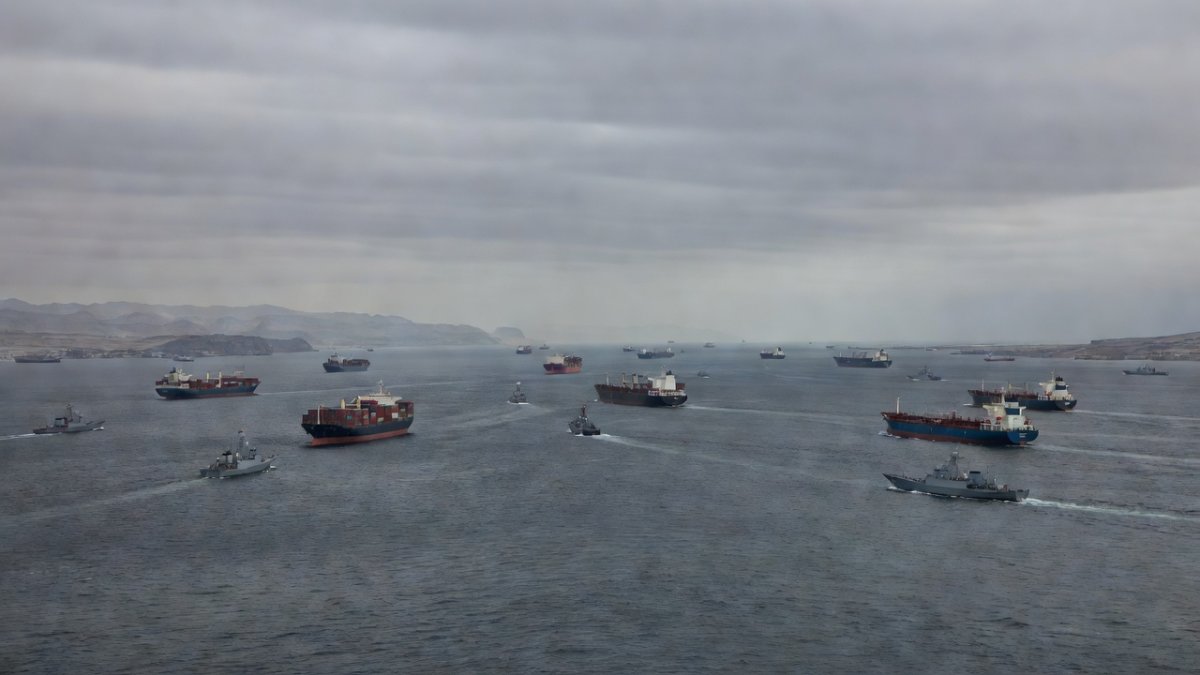
The reinstated US naval blockade has already reduced tanker traffic through the Strait of Hormuz by an estimated 40 percent. Iranian leaders have threatened to close the waterway entirely if US strikes continue.
Israeli energy officials at the Ministry of Energy are tracking oil price spikes and their effect on Israeli fuel imports. Any prolonged closure would force Israel to rely more heavily on Mediterranean and Red Sea supply routes.
Brent crude rose $7.40 per barrel following reports of Iranian naval activity near the Strait, pushing Israeli gasoline prices to NIS 7.82 per liter at the pump. Energy Minister Eli Cohen confirmed that the Tamar and Leviathan fields are now supplying 62 percent of domestic natural gas demand, with excess volumes redirected to Egypt via the EMG pipeline. Contingency plans include accelerating the development of the Karish North field and securing additional LNG cargoes through the Mediterranean.
Israeli energy planners are modeling a 30-day closure scenario that would require rerouting 40 percent of refined product imports via the Port of Ashdod and rail links to the south. The Finance Ministry has already released NIS 2.1 billion in emergency fuel subsidies to stabilize prices through the end of Q3 2026.
The Broader 2026 Iran War
The war that began on February 28, 2026, after US strikes killed Iran's Supreme Leader has now entered its fifth month. Operation Saeqeh represents Iran's primary retaliatory vehicle, with Phase 10 marking the most ambitious strike package to date.
Multiple Arab militaries, including the Royal Jordanian Air Force, now operate under continuous alert status. The IRGC has signaled that future phases will expand beyond current targets in Jordan, Kuwait, and Bahrain.
Israeli planners at the PMO and IDF General Staff continue to prepare for scenarios in which Iranian strikes reach closer to Israeli borders.
Operation Saeqeh has progressed through ten distinct phases since its launch in January 2026. After the third U.S. strike wave on Iranian air-defense nodes in western Iran, Tehran shifted to proxy drone launches from Iraqi territory. Phase 7 saw direct IRGC missile strikes on Saudi and Emirati energy infrastructure, prompting Riyadh to activate its own Patriot batteries and publicly condemn Iranian escalation.
Inside Iran, Supreme Leader Khamenei’s inner circle has faced growing pressure from IRGC commanders demanding a decisive response to restore deterrence. Domestic protests in Tehran and Isfahan have intensified over fuel shortages and internet blackouts. Analysts assess that the IRGC’s preferred endgame remains calibrated escalation short of full-scale war, aimed at forcing renewed nuclear negotiations on favorable terms before the 2028 Iranian presidential cycle.
By Hannah Berg, Staff Writer
This article was produced with AI-assisted research and editorial support. Reporting is based on sources cited in the article.
What's Your Reaction?
 Like
0
Like
0
 Dislike
0
Dislike
0
 Love
0
Love
0
 Funny
0
Funny
0
 Wow
0
Wow
0
 Sad
0
Sad
0
 Angry
0
Angry
0

Israel Correspondent at Global1.News. Based in Tel Aviv, covering Israeli politics, security, technology, and society. Provides balanced, deeply-sourced reporting on one of the most closely-watched regions in the world.















Comments (0)