
Venezuela Oil Diplomacy Gains Momentum in India
Venezuela's Oil Diplomacy Gains Momentum in India Delcy Rodríguez, Venezuela's acting president, arrived in India this week for meetings with Prime Minister Narendra Modi focused on trade, investment, healthcare, and renewable energy. The core of the relationship remains oil, as India has increased purchases of Venezuelan crude in recent months. This shift comes as energy flows
Venezuela's Oil Diplomacy Gains Momentum in India
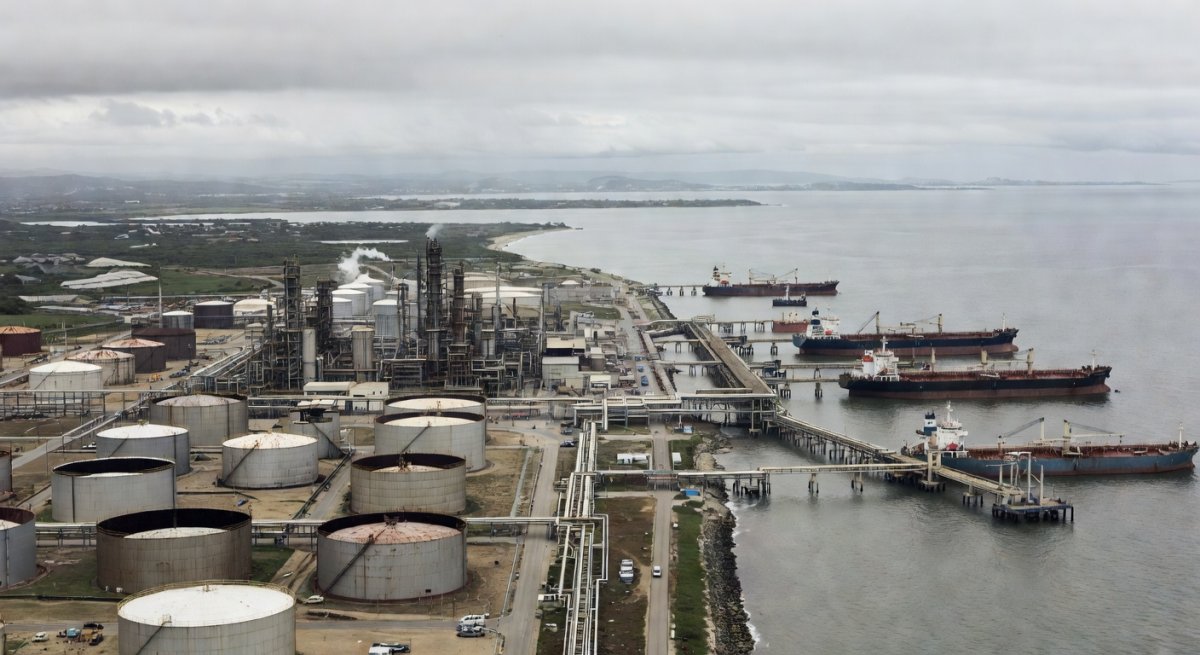
Delcy Rodríguez, Venezuela's acting president, arrived in India this week for meetings with Prime Minister Narendra Modi focused on trade, investment, healthcare, and renewable energy. The core of the relationship remains oil, as India has increased purchases of Venezuelan crude in recent months. This shift comes as energy flows from the Gulf face disruptions, positioning Venezuela as a notable supplier for Indian refiners seeking alternatives.
India's Rising Crude Imports from Venezuela
India imports roughly 90 percent of its oil needs, with about half of its daily crude volumes passing through the Strait of Hormuz. Data from maritime analytics firm Kpler shows Venezuela supplied approximately 266,000 barrels a day in May, accounting for 5.3 percent of India's total crude imports and making it the country's fifth-largest source that month. Only Russia, the UAE, Saudi Arabia, and Brazil provided more. Imports resumed in February after a sanctions-easing agreement between Washington and Caracas ended a year-long pause triggered by U.S. measures.
April and May saw arrivals around 280,000 barrels a day, with June volumes expected to exceed 300,000 barrels a day according to Kpler. Venezuelan crude is heavy and sulphur-rich, yet India's advanced refineries can process it into diesel and jet fuel at lower purchase costs than many alternatives. Michael Kugelman of the Atlantic Council noted that Venezuela helps India diversify beyond the Middle East while potentially aligning with U.S. preferences for reduced Russian oil dependence.
Brazil's Position in Regional Energy Dynamics
As Latin America's largest economy and a significant oil producer, Brazil observes Venezuela's energy diplomacy from a distinctive standpoint. Kpler figures placed Brazil ahead of Venezuela among India's suppliers in May, reflecting Brazil's established role in global crude markets. Brazilian state entities and private operators track how Venezuelan volumes affect pricing and regional export strategies, particularly as both nations manage heavy crude resources.
Officials in Brasília have not issued direct statements on the India-Venezuela talks this week, yet Brazil's Ministry of Mines and Energy continues to emphasize domestic production targets alongside gradual integration of lower-carbon options. Venezuela's increased shipments to India illustrate shifting South-South energy ties that could influence investment flows across the continent, including partnerships involving Brazilian firms active in exploration technology.
Environmental Pressures from Orinoco Belt Extraction
Venezuela's oil output gains rely heavily on the Orinoco Belt, where extraction of dense crude carries documented risks to local ecosystems and water systems. Expanded production this year, estimated by analysts at an additional 400,000 to 500,000 barrels a day, intensifies activity in areas already marked by past spills and habitat disturbance. These operations sit outside the Amazon basin yet contribute to broader regional environmental stress through shared river networks and atmospheric emissions.
In neighboring Brazil, agencies such as IBAMA monitor cross-border effects on the Amazon biome, where similar heavy-oil challenges exist in fields near the Venezuela border. Increased Venezuelan exports do not directly alter Brazilian permitting rules, but they highlight the tension between short-term revenue needs and long-term conservation goals in both countries. Sumit Ritolia of Kpler described Venezuelan barrels as an economical diversification option rather than a transformative supply source, underscoring that output remains well below historical peaks.
Implications for Latin America's Renewable Energy Path
The return of Venezuelan crude to Indian markets occurs alongside regional discussions on renewables, yet it does not alter the underlying economics driving solar and wind projects in Brazil, Colombia, and Chile. Indian state-owned companies hold stakes in Venezuela's oil sector and have expressed interest in further involvement, according to Kpler reporting, but Kugelman cautioned that Delhi will proceed cautiously on new energy commitments during this week's visit.
Brazil's National Energy Policy continues to target higher shares of renewables in its matrix while maintaining oil and gas output. The Orinoco developments illustrate how conventional resource diplomacy can compete for capital that might otherwise support hydropower upgrades or biofuel expansion in the Amazon states. Whether Venezuela scales up as a supplier hinges on sustained production growth, sanctions status, and geopolitical conditions rather than any single trade agreement.
Outlook for Regional Energy Balances
Venezuela's current volumes offer Indian refiners a practical, if limited, buffer against Gulf uncertainties without reshaping India's overall energy mix. For Latin America, the episode reinforces the continued weight of oil revenues even as governments weigh environmental regulations and transition timelines. Brazil's vantage point combines its own production scale with oversight of Amazon impacts, providing a reference for how neighboring producers navigate similar trade-offs.
Further expansion of Venezuelan exports will depend on output trends and diplomatic developments rather than immediate policy shifts in New Delhi or Caracas. Regional agencies across South America will continue tracking these flows for their effects on both fossil infrastructure and renewable investment priorities.
By Elena Vasquez, Staff WriterThis article was produced with AI-assisted research and editorial support. Reporting is based on sources cited in the article.
What's Your Reaction?
 Like
0
Like
0
 Dislike
0
Dislike
0
 Love
0
Love
0
 Funny
0
Funny
0
 Wow
0
Wow
0
 Sad
0
Sad
0
 Angry
0
Angry
0

Latin America Correspondent at Global1.News. Based in Mexico City, covering politics, economics, energy, and culture across the region. Brings an on-the-ground perspective to stories spanning from the Rio Grande to Patagonia.












Comments (0)