
Knesset Approves Broadcasting Overhaul in Narrow Vote, Igniting Free Press Debate
The Knesset gave final approval Thursday to a sweeping broadcasting bill, voting 53-48 to give the communications minister greater control over media regulation amid warnings it threatens press freedom ahead of October elections.
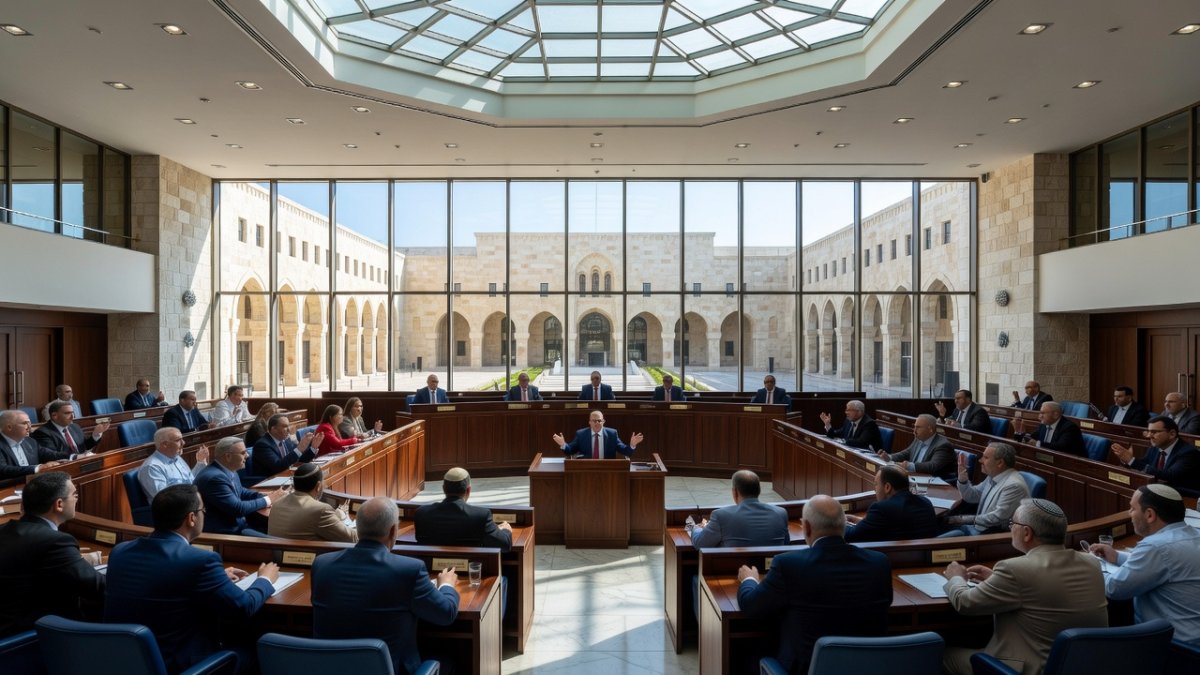
Knesset Approves Broadcasting Overhaul in Narrow Vote
The Knesset gave final approval on Thursday to a sweeping broadcasting overhaul bill that has ignited fierce debate across Israel's political and media landscape. The measure passed its final readings by a vote of 53-48, reflecting deep divisions within the coalition and strong opposition from lawmakers outside it. Communications Minister Shlomo Karhi of Likud, who crafted the legislation, hailed the outcome as a long-awaited correction to what he describes as biased media structures. The bill forms part of a broader coalition legislative push in the months leading up to national elections scheduled for October 27.
In Jerusalem's political corridors, the passage was viewed as a significant win for the current government, yet one that immediately triggered warnings about democratic norms. Lawmakers and observers noted that the timing, just months before voters head to the polls, places media regulation at the center of the campaign. Daily conversations in cafes from Tel Aviv to Beersheba already reflect heightened public sensitivity to how news is produced and consumed during election periods, when security concerns and political messaging dominate screens.
The legislation arrives against a backdrop of ongoing friction over public institutions, including previous government efforts concerning Army Radio that remain frozen by the High Court of Justice. For many Israelis juggling work, reserve duty, and family life, the bill raises practical questions about the reliability of the outlets they turn to for updates on regional tensions and domestic policy. Supporters argue it will open the market, while critics see risks to independent reporting that has long shaped national discourse.
As the dust settles from Thursday's session, attention has shifted to how the changes will interact with Israel's vibrant yet polarized media ecosystem. Channel 12 and Channel 14, already known for differing editorial lines, stand to operate under new rules that could reshape ownership and news production. Public broadcaster KAN faces direct budgetary pressure, adding another layer of tension for audiences who rely on it for in-depth coverage of security and diplomacy.
Core Changes to Regulation and Ownership Rules
At the heart of the bill is the creation of a single unified broadcast regulatory authority designed to replace the existing fragmented system. Under the new structure, the Communications Minister will appoint six of the nine council members, granting the office substantial influence over licensing, content standards, and enforcement. Proponents, led by Karhi, contend this streamlines bureaucracy and reduces what they call outdated constraints that have limited competition among commercial players.
The legislation eliminates longstanding restrictions on cross-ownership between commercial television channels and news companies. It also abolishes the structural separation that previously kept commercial channels distinct from their news divisions. In practice, this means entities operating Channel 12 or Channel 14 could more freely integrate business and editorial operations, a shift that industry figures in Tel Aviv have discussed cautiously in recent days.
A further provision deducts NIS 25 million from the budget of KAN, the public broadcaster that many households turn to for evening news and analysis of Middle East developments. Officials close to the process frame the cut as efficiency, yet journalists at KAN have privately expressed concern that reduced resources could limit investigative capacity at a time when regional security remains a daily preoccupation for Israeli families.
Taken together, these elements mark one of the most extensive rewrites of broadcasting rules in years. The measure advanced without formal approval from the Attorney General's Office, a procedural detail that has fueled arguments about its readiness. For viewers in Jerusalem and the periphery alike, the changes promise altered lineups and ownership patterns that could influence how stories about Gaza border incidents, Iranian threats, or coalition negotiations reach living rooms.
Special Committee Path and Procedural Controversies
Rather than moving through the Economic Affairs Committee, whose chair David Bitan publicly opposed the bill, the legislation was steered by a special committee headed by Likud MK Galit Distel Atbaryan. This maneuver allowed faster advancement and avoided the scrutiny Bitan's panel might have applied. In Knesset hallways, the choice was defended as necessary to overcome internal resistance yet criticized as sidestepping established oversight mechanisms.
Opposition MK Shelly Tal Meron labeled the overall process "unlawful," pointing to the absence of Attorney General's Office approval and the compressed timeline. The special committee also removed a proposed consumer benefit for soldiers after haredi parties objected on Shabbat-related grounds. That deletion underscored the coalition's internal bargaining, where religious considerations frequently shape secular policy outcomes that affect reserve-duty families across the country.
Jerusalem political circles have spent the past week dissecting how the bypass of regular committees reflects broader coalition dynamics ahead of the October 27 elections. For ordinary Israelis, the episode reinforces perceptions that media rules are being rewritten under political pressure rather than through consensus. Newsrooms in Tel Aviv reported intense internal discussions about whether the new authority will prioritize commercial interests over journalistic standards.
The procedural route has become a talking point in itself, with analysts noting that similar fast-track methods have marked other items in the current legislative blitz. As families prepare for the election season, the manner in which the bill reached the floor adds to existing debates about institutional trust and the balance between government efficiency and checks on power.
Warnings from the Attorney General and Democracy Watchdogs
Attorney General Gali Baharav-Miara issued a clear caution that the bill poses a "concrete threat to freedom of the press." Her office highlighted the concentration of appointment powers and the removal of structural safeguards as creating conditions ripe for political interference. The warning, delivered before the final vote, resonated strongly among legal professionals who track media regulation as a cornerstone of democratic resilience in a country facing persistent external security challenges.
The Israel Democracy Institute assessed that the overhaul eliminates safeguards for journalistic quality and grants the new authority overly broad enforcement powers. Researchers there argued that without independent checks, commercial and political pressures could erode the diversity of voices that Israelis depend on when evaluating government performance on issues ranging from cost of living to defense policy. These critiques have circulated widely in academic and civil-society forums since the bill's earlier readings.
In practical terms, the combination of ministerial appointments and loosened ownership rules raises questions about whether outlets such as Channel 12, known for critical reporting, or Channel 14, often aligned with government perspectives, will face altered incentives. Public discourse already links these concerns to daily media habits: many citizens switch between channels precisely to cross-check coverage of sensitive topics like IDF operations or diplomatic initiatives.
The Attorney General's stance also underscores institutional friction that has characterized recent years. By advancing the bill without her office's green light, the coalition signaled determination to reshape the sector on its terms, leaving legal scholars to prepare for the court battles now underway. For households in Haifa or the Negev, the expert warnings translate into uncertainty about the future reliability of the evening news they watch after long workdays.
Opposition Voices Frame the Bill as an Assault on Free Expression
Yesh Atid leader Yair Lapid described the legislation as "a campaign of incitement and gagging against the free press," arguing that it seeks to mute critical coverage during a pivotal election period. Lapid further vowed that any future government he leads would repeal the law within 100 days of taking office, framing the overhaul as reversible if voters reject the current coalition. His comments captured the intensity of the floor debate that preceded Thursday's vote.
Yair Golan of the Democrats went further, declaring that "the ink won't even have time to dry before we tear it to pieces." The rhetoric reflects opposition strategy to portray the bill as part of a larger effort to reshape public institutions before October 27. In Tel Aviv newsrooms, editors and reporters have privately shared Golan's sentiment, viewing the changes as potentially chilling investigative work on coalition policies and security matters.
These statements have fueled street-level conversations and social-media exchanges, where Israelis weigh whether the reform truly liberates the public or consolidates influence. Opposition lawmakers MKs Rayten and Ginzburg joined the Israel Journalists Association and the Movement for Quality Government in filing petitions to the High Court, ensuring the legal fight continues even after the Knesset tally. The petitions emphasize both substance and process, keeping the issue alive in public consciousness.
For many citizens balancing security alerts with family routines, the opposition's framing resonates because free media has historically provided early warnings and accountability during crises. The clash between Lapid, Golan, and the coalition now sets the stage for media regulation to become a ballot-box issue in the coming months.
Government Defense and the Vision of Media Freedom
Communications Minister Shlomo Karhi has consistently defended the reform as one that "brings freedom to the public, removes the chains of propaganda from the consciousness of Israel's citizens." In his view, existing rules entrenched left-leaning narratives and stifled commercial innovation, leaving audiences with limited choices. Karhi presents the unified authority and ownership flexibilities as tools to inject competition and reduce what he terms ideological capture of the airwaves.
Coalition members echo this line, arguing that Channel 14 and similar outlets have long faced structural disadvantages compared with more established players. By abolishing separation requirements and cross-ownership bans, they claim the market will better reflect the diversity of Israeli society, including voices from the periphery and religious communities. The NIS 25 million deduction from KAN is cast as a necessary recalibration of public funding priorities.
In Jerusalem political circles, Karhi's success is credited to persistence and the special committee's agility. Supporters note that the 24-month delay before the law takes full effect after publication provides a transition window for broadcasters to adapt. They reject accusations of gagging, insisting the public will benefit from more varied content rather than less.
This defense resonates with segments of the electorate that feel mainstream media has underrepresented their concerns on security and national identity. As election season intensifies, Karhi's framing positions the overhaul as empowerment rather than control, inviting voters to judge the results through their remote controls and streaming apps.
Election-Season Stakes and Coalition Legislative Momentum
The broadcasting bill sits squarely within a coalition legislative blitz designed to lock in structural changes before the October 27 elections. With the vote tally of 53-48 revealing limited room for error, every measure carries weight for both coalition cohesion and opposition mobilization. Media regulation has thus become a proxy for larger questions about the balance of power in Israeli democracy.
Security concerns remain omnipresent: families monitor channels for updates on Hezbollah threats or Gaza developments, making the independence of those channels a practical as well as ideological matter. The bill's passage so close to campaign season means that ownership shifts and regulatory appointments could influence coverage of candidates, debates, and last-minute policy announcements. Tel Aviv newsrooms are already recalibrating story assignments with an eye toward the new environment.
Haredi parties' successful demand to strip the soldiers' consumer benefit illustrated how coalition arithmetic shapes outcomes that touch daily life. Reserve soldiers and their families, a broad cross-section of Israeli society, lost a potential perk because of Shabbat considerations, reminding the public that media policy never exists in isolation from religious-secular bargaining. Such episodes feed into voter calculations about priorities.
As parties prepare platforms, the overhaul supplies ammunition for both sides. Coalition speakers will highlight freedom from "propaganda," while opposition figures will warn of gagging. The result is that media consumption itself becomes politicized, with households debating which channels to trust in the final stretch before ballots are cast.
High Court Petitions and the Road Ahead for Judicial Review
Multiple petitions have already been lodged with the High Court of Justice by MKs Rayten and Ginzburg, the Israel Journalists Association, and the Movement for Quality Government. These challenges target both the substance of the regulatory powers and the procedural shortcuts taken via Distel Atbaryan's special committee. Legal teams are expected to argue that the concentration of appointment authority and the removal of structural separations violate core principles of press freedom.
The petitions arrive in the shadow of the High Court's earlier freeze on the government's vote to shut down Army Radio, establishing a recent precedent for judicial intervention in media matters. Attorneys for the petitioners will likely invoke Attorney General Baharav-Miara's warning of a "concrete threat" as supporting evidence. Court proceedings could delay or reshape implementation even though the bill specifies a 24-month lag after publication.
Jerusalem legal circles anticipate intensive hearings that will draw public attention throughout the election campaign. For journalists at KAN, Channel 12, and elsewhere, the petitions offer a temporary shield while they assess operational impacts. The judiciary's role once again places it at the center of a national controversy, reinforcing patterns of institutional contestation familiar to every Israeli following politics.
Whatever the High Court ultimately decides, the filings ensure that the broadcasting overhaul will remain under scrutiny rather than quietly taking root. Citizens watching the process unfold will see media regulation tested against constitutional standards at a moment when trust in institutions is already strained by security and political pressures.
Impact on Newsrooms, Viewers, and Everyday Media Habits
In Tel Aviv newsrooms, the mood since Thursday has been one of cautious recalculation. Editors at commercial channels are examining how the end of structural separation might alter news budgets and editorial independence, while KAN staff confront the practical consequences of a NIS 25 million cut. Conversations revolve around whether investigative units covering security or corruption will retain resources and autonomy under the new authority.
For ordinary Israelis, the changes will eventually appear on screens and in streaming menus. Viewers who currently toggle between Channel 12's critical tone and Channel 14's government-friendly coverage may find ownership consolidations producing more uniform or more fragmented offerings. Public reliance on KAN for balanced reporting during crises could diminish if budget pressure forces programming reductions, affecting households that lack cable alternatives.
Daily life in Israel is already saturated with media: morning radio during commutes, evening news after reserve-duty calls, and constant smartphone alerts. The overhaul's loosening of cross-ownership rules could accelerate commercial deals that prioritize ratings over depth, reshaping how citizens process information about regional diplomacy or domestic protests. Security-conscious audiences, long accustomed to real-time updates, may notice shifts in tone or emphasis once the 24-month transition concludes.
The removal of the soldiers' benefit, though a small detail, symbolizes how media policy intersects with the lived experience of military service and religious observance. As the country moves toward October elections, these practical effects will color public judgment of the reform far more than abstract arguments about regulation.
Timeline for Implementation and Prospects of Reversal
Although the Knesset completed final readings on Thursday, the broadcasting overhaul does not take immediate effect. The law is scheduled to enter force only 24 months after its official publication, creating a two-year window for adaptation, litigation, and potential political change. During that period, existing regulators will continue to operate while the new unified authority is assembled under the minister's appointment powers.
Yair Lapid's pledge to repeal the measure within 100 days of a new government forming injects electoral uncertainty into the timeline. Should the October 27 results produce a different coalition, the entire framework could be dismantled before most provisions activate. Conversely, a continuity of the current coalition would allow the appointments and ownership shifts to proceed, embedding the changes more deeply.
In the interim, the High Court petitions will occupy center stage, potentially issuing interim orders that freeze parts of the law. News organizations are already consulting legal counsel to prepare for both compliance and challenge. For the public, the delay means that immediate media consumption patterns remain largely unchanged, even as political rhetoric intensifies.
The coming months will test whether the reform endures as a lasting realignment of Israel's media landscape or becomes another contested chapter in the ongoing struggle over institutional power. As Israelis navigate security threats and electoral choices, the fate of their airwaves remains tightly bound to the broader questions of democracy and daily life that define the national conversation.
By Hannah Berg, Staff WriterThis article was produced with AI-assisted research and editorial support. Reporting is based on sources cited in the article.
What's Your Reaction?
 Like
0
Like
0
 Dislike
0
Dislike
0
 Love
0
Love
0
 Funny
0
Funny
0
 Wow
0
Wow
0
 Sad
0
Sad
0
 Angry
0
Angry
0
Israel Correspondent at Global1.News. Based in Tel Aviv, covering Israeli politics, security, technology, and society. Provides balanced, deeply-sourced reporting on one of the most closely-watched regions in the world.















Comments (0)