
NEET UG 2026 Re-Exam: 22.79 Lakh Candidates, 1.38 Lakh Cameras, and a Deepening Trust Crisis
The NEET UG 2026 re-examination is underway today across more than 5,000 centres, with 22.79 lakh candidates appearing under the most stringent security measures ever deployed for a medical entrance exam in India — yet beneath the hardware lies a deepening crisis of institutional trust. NEET UG 2026 Re-Exam: 22.79 Lakh Candidates, 1.38 Lakh Cameras, and a Deepening Trust Crisis
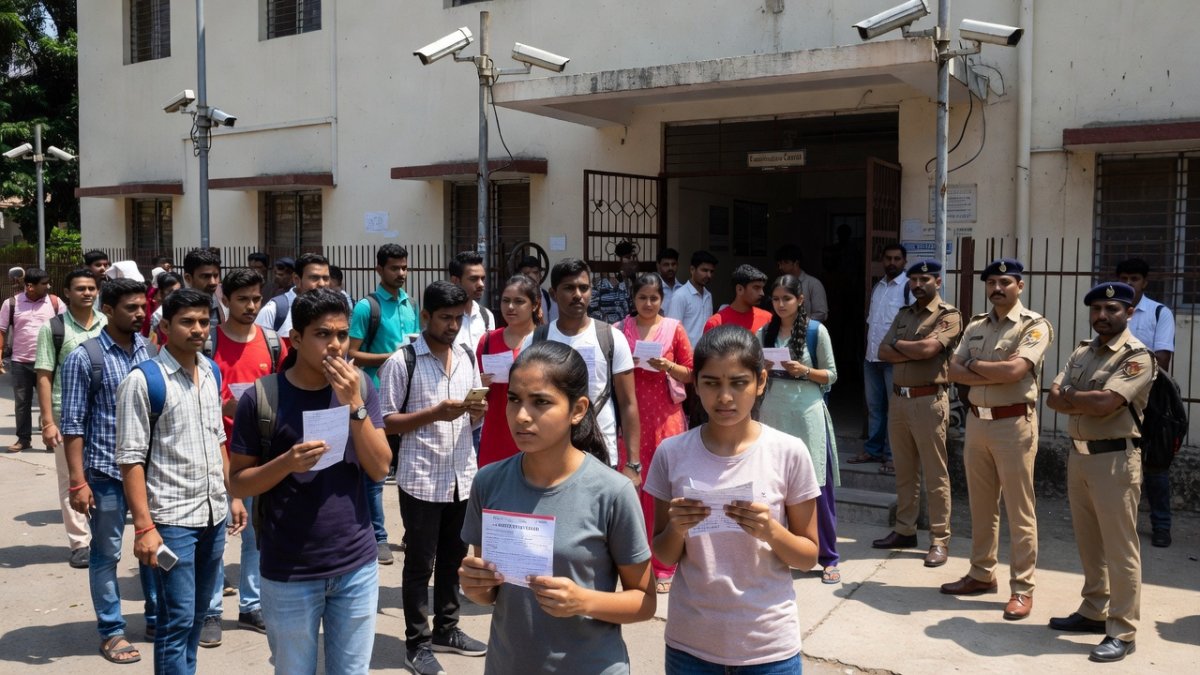
The NEET UG 2026 re-examination is underway today across more than 5,000 centres, with 22.79 lakh candidates appearing under the most stringent security measures ever deployed for a medical entrance exam in India — yet beneath the hardware lies a deepening crisis of institutional trust.
NEET UG 2026 Re-Exam: 22.79 Lakh Candidates, 1.38 Lakh Cameras, and a Deepening Trust Crisis
New Delhi – June 21, 2026 — The original NEET UG examination scheduled for May 3, 2026, was cancelled following credible allegations of paper leaks that undermined the integrity of India's largest medical entrance test. This decision affected the pathway for admissions into MBBS, BDS, and AYUSH courses at AIIMS, government medical colleges, and private institutions nationwide. The rescheduled examination on June 21, 2026, now unfolds across more than 5,000 centres, with 22.79 lakh candidates appearing under heightened scrutiny.
The scale of this re-examination reflects both the volume of aspirants and the systemic disruption caused by the leak. What began as isolated reports of compromised question papers escalated into a nationwide cancellation, forcing the National Testing Agency to restart the entire process. This timeline compression has shortened preparation windows for students who had already invested months in rigorous study, highlighting how a single breach can cascade through an entire academic cycle.
Unprecedented Security
In response to the May cancellation, the NTA deployed an extensive security apparatus that includes 1,38,560 CCTV cameras, 51,311 signal jammers, and 48,448 biometric verification personnel stationed across all centres. Real-time AI-based anomaly detection systems now monitor exam halls continuously, flagging unusual movements or device signals before they escalate. Paper setters have been placed under lockdown, while Indian Air Force helicopters transport question papers to minimise ground-level vulnerabilities.
These measures represent a significant escalation from previous protocols and carry substantial cost implications for taxpayers. The nationwide restriction of Telegram access until June 22 further aims to curb rumour-mongering that could destabilise the process. While the hardware investment is visible, questions remain about whether such reactive layering adequately addresses the root causes of leaks that prompted the original cancellation.
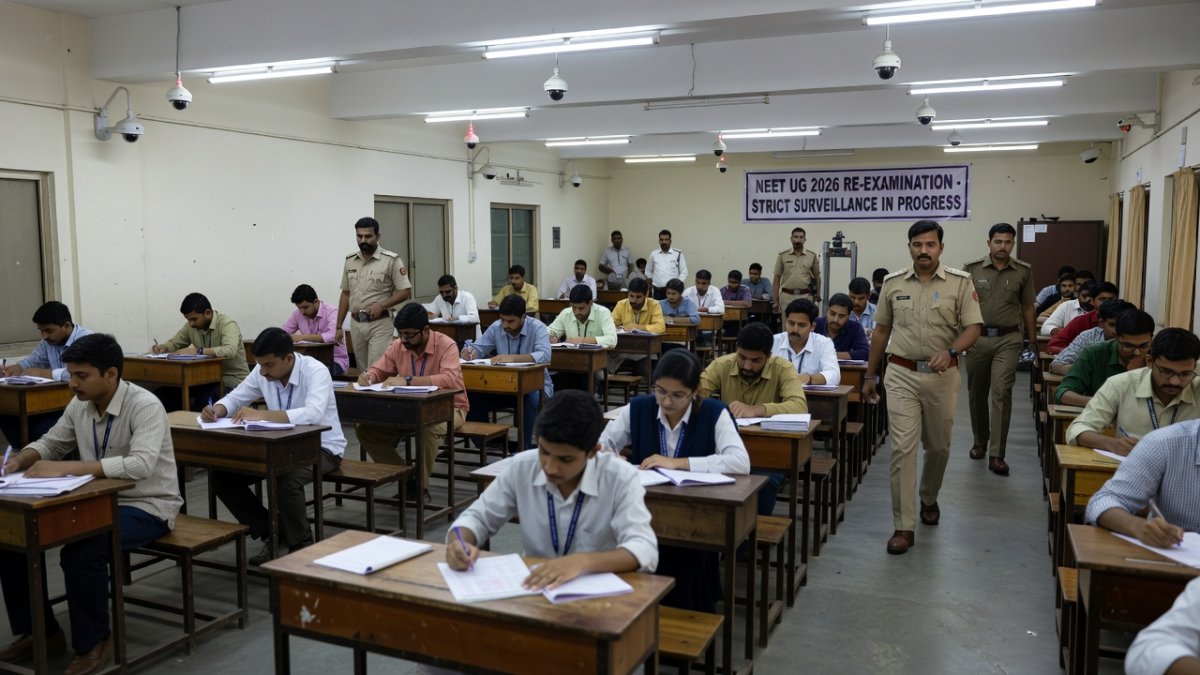
The Human Cost
Candidates have reported widespread sleep disturbances, heightened anxiety, and a faltering sense of trust in the examination system as they prepare for the June 21 re-test. Families have shouldered additional financial burdens, including renewed coaching fees, travel expenses, and lost wages from extended preparation periods. The psychological toll is particularly acute for students from rural and economically weaker sections who lack access to mental health resources.
This re-examination does not merely repeat an academic exercise; it forces 22.79 lakh young people to relive the stress of high-stakes testing under conditions of eroded confidence. The uncertainty surrounding admissions to MBBS, BDS, and AYUSH programmes amplifies long-term career anxieties, with many students questioning whether their efforts will ultimately be validated by a fair outcome.
Legal and Political Dimensions
Multiple court petitions continue to challenge the integrity of the re-examination process, questioning whether the NTA can guarantee a leak-proof environment despite the new safeguards. Education Minister Dharmendra Pradhan has publicly urged “complete faith in NTA,” while the PIB fact-check unit has actively debunked several fake re-exam circulars circulating on social media. Sakshi Education has reported PMO-level monitoring of the entire operation, indicating the highest levels of governmental oversight.
These legal and political interventions reveal a broader governance challenge. Court scrutiny places additional pressure on an already strained agency, while ministerial statements seek to restore public confidence. The involvement of the Prime Minister’s Office underscores the political stakes attached to the successful conduct of an exam that determines entry into the medical profession for over two million candidates.
The Trust Deficit
Security hardware alone cannot resolve the structural vulnerabilities that allowed the original paper leak to occur. The deployment of 1,38,560 cameras and 51,311 jammers addresses symptoms rather than the deeper issues of question paper handling, insider access, and digital transmission protocols. Candidates’ reported anxiety and faltering trust stem from repeated institutional failures that no amount of biometric personnel can fully mitigate.
Without transparent audits of the leak investigation and independent oversight of the NTA’s operational processes, the current measures risk being perceived as performative. The restriction of Telegram and real-time AI monitoring may suppress immediate threats, yet they do little to rebuild the foundational credibility required for an examination of this magnitude.
What This Means for India’s Examination System
The NEET UG 2026 re-examination exposes the urgent need for comprehensive NTA reform, including decentralised paper-setting mechanisms, end-to-end digital encryption with blockchain verification, and mandatory post-exam result audits. Future high-stakes testing must move beyond reactive security spending toward preventive institutional design that anticipates leaks rather than merely detecting them.
Recommendations include establishing an independent regulatory body for national examinations, mandating annual third-party security assessments, and integrating mental health support into the examination calendar. The outcome of today’s re-test will shape not only the careers of 22.79 lakh candidates but also the long-term legitimacy of India’s medical education pipeline. Sustainable reform requires acknowledging that technology and personnel numbers alone cannot substitute for systemic accountability.
— By Dr. Raj Patel, Staff WriterThis article was produced with AI-assisted research and editorial support. Reporting is based on sources cited in the article.
What's Your Reaction?
 Like
0
Like
0
 Dislike
0
Dislike
0
 Love
0
Love
0
 Funny
0
Funny
0
 Wow
0
Wow
0
 Sad
0
Sad
0
 Angry
0
Angry
0

India/South Asia Correspondent at Global1.News. Analytical voice with a background in science and health journalism. Based in New Delhi, covering Indian politics, education, healthcare, technology, and policy. Breaks down complex data into clear, actionable reporting.















Comments (0)