
Doctor Safety in India: After Dombivli, Can New Laws Finally Protect Healthcare Workers?
Doctor Safety in India: After Dombivli, Can New Laws Finally Protect Healthcare Workers? Mumbai, Maharashtra — July 9, 2026 — The assault on five healthcare workers at KDMC Shastrinagar General Hospital on July 6-7 has exposed the persistent gap between existing statutes and real-world protection for medical staff. Official records show 636 attacks on doctors and nurses across
Doctor Safety in India: After Dombivli, Can New Laws Finally Protect Healthcare Workers?
Mumbai, Maharashtra — July 9, 2026 — The assault on five healthcare workers at KDMC Shastrinagar General Hospital on July 6-7 has exposed the persistent gap between existing statutes and real-world protection for medical staff. Official records show 636 attacks on doctors and nurses across Maharashtra between 2016 and 2021, yet only 36 cases reached judicial decision and just four resulted in convictions under the Maharashtra Medicare Act 2010. Public Health Minister Prakash Abitkar has now pledged an “iron fist” policy and fast-tracked a new Healthcare Protection Law, while the Indian Medical Association suspended its 24-hour statewide strike only after the arrest of the accused corporator and security assurances from civic authorities. These developments raise the question whether Maharashtra’s legislative response will finally translate into enforceable safeguards or remain another symbolic measure.
The Dombivli Assault: A Triggering Incident
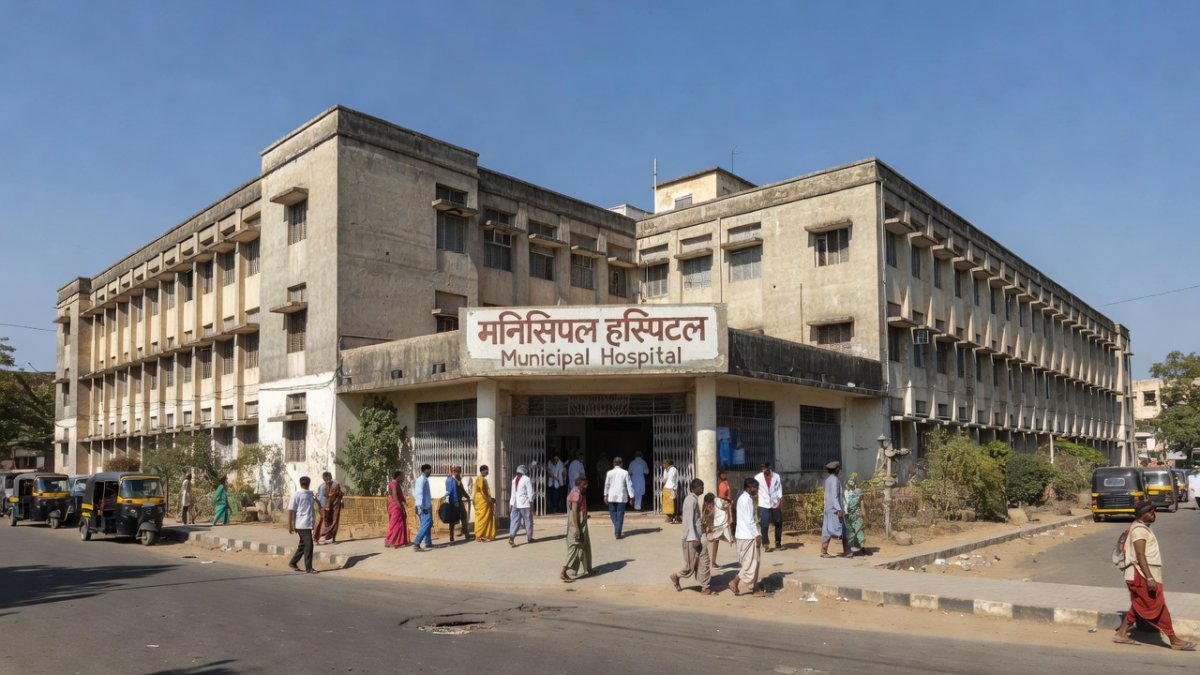
On the evening of July 6, 2026, Shiv Sena (Shinde faction) corporator Ramesh Mhatre entered the maternity ward of KDMC Shastrinagar General Hospital following the delivery of his relative’s child. The newborn had an umbilical cord wrapped twice around the neck, and the neonatal intensive care unit was already at capacity. Doctors advised immediate transfer to another facility, a standard protocol when beds are unavailable.
Within 23 seconds, CCTV footage recorded Mhatre delivering 13 slaps to Dr Srushti Baviskar and Dr Vaibhav Salunkhe, along with nurses Namita Ubale and Dravya Giri. He also threatened the staff with the words “Come outside the hospital, I will finish you.” Three associates—Akshay Karande, Ramesh Pawar and Pramod Nikam—were present during the incident.
Mhatre surrendered on July 8 and was arrested. The three associates were remanded to two days’ police custody by the Kalyan court. An FIR was registered under the Bharatiya Nyaya Sanhita and the Maharashtra Medicare Act, confirming the sequence of events through video evidence that later went viral.
Documented Failure of the Maharashtra Medicare Act 2010
The Maharashtra Medicare Service Persons and Medicare Service Institutions (Prevention of Violence and Damage to Property) Act, 2010 was enacted fifteen years ago with the stated objective of providing "speedy prosecution" for offences against healthcare workers. Yet government data reveal that of 636 reported attacks between 2016 and 2021, only 36 cases were decided by courts and merely four ended in convictions. This conviction rate of 0.63 percent — less than one conviction for every 150 reported attacks — indicates systemic failures across investigation, prosecution and judicial follow-through.
Public interest litigation seeking stronger implementation has remained pending since 2021, highlighting delays in both legislative review and administrative enforcement. Hospitals continue to report repeated incidents without corresponding increases in convictions or deterrent sentencing. The Maharashtra government's own submissions in court have acknowledged that dedicated fast-track courts for Medicare Act cases have not been established as originally envisaged.
The low prosecution rate stems from multiple structural factors: inadequate documentation of incidents at the hospital level, reluctance of witnesses to testify when accused persons are politically connected, limited coordination between hospital administrations and police, and the absence of a mandatory reporting framework that would ensure every attack is formally tracked through the legal system. These gaps have rendered the 2010 Act largely symbolic for frontline workers facing daily risks in OPDs, emergency rooms and ICUs across Maharashtra's 36 districts.
For context, the 636 attacks documented between 2016 and 2021 averaged roughly one attack every three days. Actual numbers are likely higher because many smaller incidents — verbal abuse, threats, minor physical altercations — go unreported. The IMA has submitted that only a fraction of incidents are formally lodged as FIRs, with many hospitals preferring internal resolution to avoid procedural complications.
Maharashtra's 'Iron Fist' Policy and the Proposed Healthcare Protection Law
Public Health Minister Prakash Abitkar announced a zero-tolerance approach immediately after the Dombivli incident, stating that the state would wield an “iron fist” against perpetrators. He confirmed that drafting of a new Healthcare Protection Law is underway, with provisions expected to include faster FIR registration, mandatory CCTV coverage in all hospitals, and time-bound trials. "The proposed legislation will incorporate stringent penal provisions to ensure that those targeting medical staff face severe consequences," Abitkar stated.
Minister of State for Home Yogesh Kadam publicly condemned the assault and directed police to treat such cases with urgency. KDMC Commissioner Abhinav Goyal verified that the FIR incorporated both BNS sections and the existing Medicare Act, signalling administrative intent to apply multiple legal avenues. Goyal also met with protesting doctors personally, offering written assurances on enhanced security measures at municipal hospitals.
The proposed law is expected to address gaps in the 2010 statute by introducing specific clauses for political figures and repeat offenders, faster trial mechanisms, and mandatory security infrastructure standards for all hospitals — including guarded entry points, panic buttons in emergency rooms, and 24-hour CCTV monitoring. Details on penalties, compensation mechanisms for victim healthcare workers, and implementation timelines are still under finalisation, with the bill anticipated in the next legislative session of the Maharashtra Vidhan Sabha.
The state's swift political response — within 48 hours of the viral video — signals recognition that the issue carries electoral weight. Maharashtra has approximately 1.2 lakh registered doctors and over 3 lakh nursing professionals, a voting bloc that political parties cannot afford to alienate. However, similar promises were made after previous high-profile attacks, including the 2017 assault at JJ Hospital in Mumbai and the 2019 attack on resident doctors at Sion Hospital, without lasting structural reform.
IMA Response: Statewide Strike and Demands for Central Legislation
The Indian Medical Association Maharashtra chapter called a 24-hour statewide strike on July 9-10, 2026, and issued a 72-hour ultimatum demanding concrete legislative action. Central MARD organised a Black Ribbon Protest on July 9 to highlight the vulnerability of medical professionals across the country.
Doctors suspended the strike only after Mhatre’s arrest and written assurances from KDMC Commissioner Abhinav Goyal regarding enhanced hospital security. The IMA continues to press for a central law that would apply uniformly across states rather than relying on varying state-level provisions.
Association leaders argue that state-specific acts have proven insufficient because they lack uniform enforcement mechanisms and do not cover inter-state patient transfers or private-sector facilities adequately. They cite the pending PIL and repeated incidents as evidence that only parliamentary legislation can create binding national standards.
Mhatre's Criminal Record: 12 Cases and the Political Accountability Gap
Police records show Ramesh Mhatre faced 12 prior criminal cases before the Dombivli incident. Despite these antecedents, he continued to hold public office as a corporator, illustrating the limited impact of criminal proceedings on political eligibility in Maharashtra.
Shiv Sena distanced itself from Mhatre after the assault, yet the episode underscores the broader accountability gap when elected representatives are involved in violence against public servants. The threat issued inside the hospital—“I will finish you”—was captured on CCTV, removing any ambiguity about intent.
Legal experts note that existing disqualification provisions under the Representation of the People Act require conviction and sentencing, allowing individuals with pending cases to retain office for years. This structural feature reduces the deterrent effect of criminal complaints filed against politically connected individuals.
Implications for India's Healthcare System
The Dombivli case reflects a national pattern documented by the National Health Authority, where violence against healthcare workers contributes to staff shortages, burnout, and early exits from the profession. A 2023 IMA survey found that 75 percent of Indian doctors had experienced some form of workplace violence, with 22 percent reporting physical assault. High Courts in multiple states — including Delhi, Kerala, Karnataka and Gujarat — have repeatedly called for a central law, citing inconsistent state-level protections and rising incidents in both public and private hospitals.
NICU bed shortages, as seen in the Dombivli trigger, remain a systemic issue that places doctors in direct confrontation with distressed families. India's public healthcare system operates with approximately 11 NICU beds per 10,000 live births, far below the World Health Organization's recommended 30 beds per 10,000. When capacity constraints lead to transfer advice, the absence of robust security protocols leaves staff exposed to immediate physical retaliation from aggrieved relatives.
Without enforceable central legislation, states continue to operate under fragmented rules that fail to address cross-border patient movement or private-sector vulnerabilities. The IMA has long demanded a comprehensive Central Healthcare Protection Act — similar to the Central Protection Act for doctors passed in principle by the Union Cabinet in 2022 but never enacted — that would establish uniform security standards, mandatory body cameras in emergency departments, and a national registry of attacks against healthcare workers.
The cumulative effect of repeated violence without meaningful legal consequences is reduced morale among healthcare workers and compromised service delivery in already strained facilities. Rural hospitals and municipal facilities like Shastrinagar, which serve lower-income populations, are disproportionately affected because they lack the resources to install security infrastructure that private hospitals can afford.
The Bottom Line
Success of Maharashtra’s proposed Healthcare Protection Law will depend on three measurable outcomes: conviction rates above 50 percent within two years, mandatory security audits in all public hospitals, and disqualification clauses that prevent individuals with serious pending cases from holding office. Data from the 2010 Act demonstrate that legislation without implementation mechanisms produces negligible deterrence.
Central legislation remains the most direct route to uniform standards, yet state-level experimentation can provide templates if accompanied by transparent reporting of FIRs, trials and sentences. The Dombivli incident has created a narrow window for reform before public attention shifts.
Indian patients ultimately bear the cost when doctors practise defensive medicine or leave high-risk postings. Sustained political will, independent monitoring and adequate budgetary allocation for hospital security will determine whether the current legislative momentum yields lasting protection or another cycle of promises and forgotten statutes.
— By Dr. Raj Patel, Staff WriterThis article was produced with AI-assisted research and editorial support. Reporting is based on sources cited in the article.
What's Your Reaction?
 Like
0
Like
0
 Dislike
0
Dislike
0
 Love
0
Love
0
 Funny
0
Funny
0
 Wow
0
Wow
0
 Sad
0
Sad
0
 Angry
0
Angry
0

India/South Asia Correspondent at Global1.News. Analytical voice with a background in science and health journalism. Based in New Delhi, covering Indian politics, education, healthcare, technology, and policy. Breaks down complex data into clear, actionable reporting.














Comments (0)