
The Dominion Settlement: Fox News Finally Met Its Match in a Delaware Courtroom
The Shadow of Trial That Never Came Three years ago this spring, the eyes of the media world fixed on Wilmington, Delaware, where Dominion Voting Systems' $1.6 billion defamation lawsuit against Fox News stood on the brink of a full trial. Jury selection had already drawn 300 potential jurors to the courthouse, and the presiding judge observed that there were more than enough t
The Shadow of Trial That Never Came
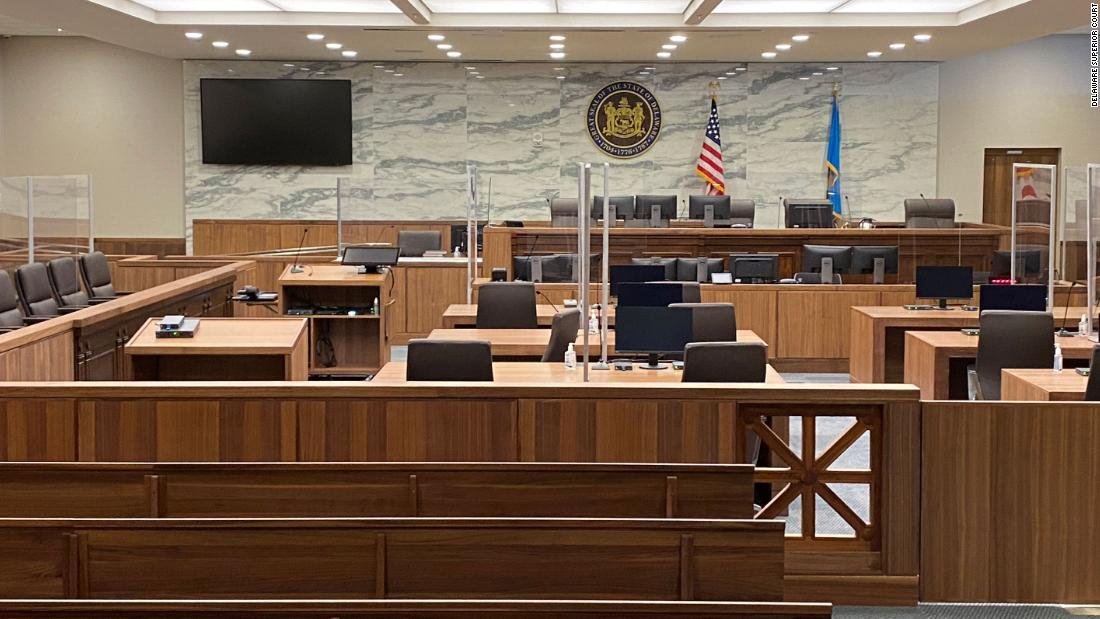
Three years ago this spring, the eyes of the media world fixed on Wilmington, Delaware, where Dominion Voting Systems' $1.6 billion defamation lawsuit against Fox News stood on the brink of a full trial. Jury selection had already drawn 300 potential jurors to the courthouse, and the presiding judge observed that there were more than enough to begin proceedings as scheduled. The moment felt electric with possibility, a rare instance where the network's usual playbook of deflection seemed powerless.
Instead of opening statements in Courtroom 7E, the case ended in settlement on April 18, 2023. Fox News agreed to pay $787.5 million, a sum that dwarfed prior media defamation payouts and forced the company to confront the reality that a Delaware court had already found its statements about Dominion to be false. The trial itself never happened, yet the outcome delivered accountability that years of on-air controversies had never produced.
From the vantage point of June 2026, that courthouse-steps resolution looks even more consequential. It marked the first time Rupert Murdoch's empire could not simply outlast or outshout its critics. The settlement stood as proof that even the most powerful cable news operation could be compelled to answer for repeated falsehoods when the legal system refused to look away.
Inside the Wilmington Courthouse Drama
The buildup to what would have been the media trial of the century unfolded with unusual speed and transparency. Potential jurors arrived in large numbers, signaling that the court system was prepared to empanel a panel capable of weighing complex evidence about election coverage. The judge's early comments about having ample candidates underscored that this proceeding would not be delayed or derailed by routine procedural maneuvers.
Fox's legal team had already faced sharp rebukes in pretrial hearings, with the court losing patience over arguments that sought to sidestep the core question of whether the network knowingly aired false claims. Those exchanges revealed a defense strategy under pressure, one that could not rely on the network's typical ability to control the narrative from inside its own studios.
The absence of a full trial did not diminish the weight of the moment. By settling on the eve of opening arguments, Fox effectively conceded that the evidence assembled by Dominion had created an untenable risk. The $787.5 million payment, paired with the court's prior finding that the statements were false, created a public record of accountability that no amount of subsequent spin could erase.
The Executives and Hosts Who Could Not Spin Their Way Out
Rupert Murdoch, Suzanne Scott, Tucker Carlson, and Sean Hannity represented the core of the network's leadership and on-air talent during the period in question. In a courtroom setting, their usual insulation from direct questioning would have vanished. Depositions and potential testimony would have required precise, fact-based answers rather than the rhetorical flourishes that defined their broadcasts.
The prospect of that environment exposed the limits of Fox's long-standing approach to controversy. For years the network had weathered storms by attacking external critics and moving to the next story. Here, the rules of engagement belonged to a judge and eventual jury, not to producers or executives who could simply cut to commercial or pivot to another topic.
Even without live testimony, the settlement forced these figures into an uncomfortable acknowledgment. The payment itself, combined with the court's determination that the statements were false, served as a permanent marker that the network's coverage of Dominion had crossed a legal line. That reality lingered long after the checks cleared.
A Pattern of Escaping Consequences Ends
Fox News had built a reputation for emerging stronger from scandals that would have crippled other organizations. Whether the topic was public health, immigration, or fringe conspiracy theories, the network consistently found ways to absorb criticism without meaningful financial or structural repercussions. That pattern created an expectation that any new controversy would eventually fade under the weight of the next news cycle.
The Dominion case shattered that expectation. The $1.6 billion claim, backed by internal documents and communications, created a factual record that could not be dismissed through on-air commentary alone. When the case reached the precipice of trial, the network confronted the possibility that its internal decision-making would be laid bare in open court.
The settlement represented a break from that history. By agreeing to pay $787.5 million and accepting the court's finding that its statements were false, Fox signaled that the old tactics had reached their limit. The moment demonstrated that sustained legal pressure, combined with clear evidence, could produce consequences that public outrage alone had never achieved.
What the Record Settlement Actually Changed
The $787.5 million figure sent an immediate signal across the media industry. No longer could executives assume that defamation exposure would remain theoretical or limited to smaller settlements. The Dominion outcome established a new benchmark that forced news organizations to weigh the cost of repeating unverified claims against the risk of substantial financial liability.
Three years later, the effects remain visible in editorial practices and legal risk assessments. Newsrooms that once treated certain narratives as low-risk now apply stricter scrutiny, particularly when covering election-related topics. The settlement did not eliminate partisan coverage, but it raised the price of crossing into demonstrably false territory.
Most importantly, the resolution included an implicit recognition that a Delaware court had already determined the statements about Dominion to be false. That finding, preserved in the public record, continues to serve as a reference point for future litigation and public discussion about media responsibility.
The True No Spin Zone Arrives at Last
The source material from the days before settlement captured the anticipation perfectly: Fox News was about to enter a setting where deception would be prohibited and where its top figures could not simply attack "the media" to avoid answering questions. Although the trial itself never occurred, the settlement delivered a version of that accountability through the size of the payment and the court's prior ruling.
In the years since, the case has become a touchstone for discussions about media power and legal exposure. It proved that even an organization with Fox's resources and audience could be brought to the table when evidence accumulated and judges refused to dismiss the claims. The outcome validated the idea that courts remain capable of imposing consequences that public criticism cannot.
Looking back from 2026, the Dominion settlement stands as the clearest example in recent memory of a media company being forced to answer for its coverage in a meaningful way. The $787.5 million payment and the acknowledgment of the court's finding on falsity created a precedent that continues to shape how news organizations evaluate risk and verify claims before broadcast.
Lessons That Still Resonate
The case underscored that internal communications and editorial decisions can become evidence when lawsuits reach the discovery stage. Fox's experience demonstrated that the protection of being "just commentary" has limits when repeated false statements cause measurable harm to a private company. Those lessons have not faded with time.
Three years on, the settlement continues to influence conversations about the balance between robust opinion and verifiable fact. It showed that audiences and courts alike can distinguish between protected speech and content that crosses into defamation when the evidence is presented clearly. The absence of a trial did not erase that distinction; it simply recorded it through the terms of resolution.
Ultimately, the Dominion case against Fox News delivered the accountability that many observers had long considered impossible. By settling on the courthouse steps for $787.5 million and accepting the court's finding that its statements were false, the network entered a new era where the costs of certain coverage decisions became impossible to ignore. That shift remains one of the most significant developments in modern media history. By Jessica Ali, Staff Writer
This article was produced with AI-assisted research and editorial support. Reporting is based on sources cited in the article.
What's Your Reaction?
 Like
0
Like
0
 Dislike
0
Dislike
0
 Love
0
Love
0
 Funny
0
Funny
0
 Wow
0
Wow
0
 Sad
0
Sad
0
 Angry
0
Angry
0

Editor-in-Chief at Global1.News. Atlanta-based journalist who cuts through the BS and tells it like it is. Lead anchor, host, and the voice you hear when the spin stops and the truth starts.















Comments (0)