
NATO Ankara Summit: UK Defence Secretary Demands 25bn Defence Spending Target
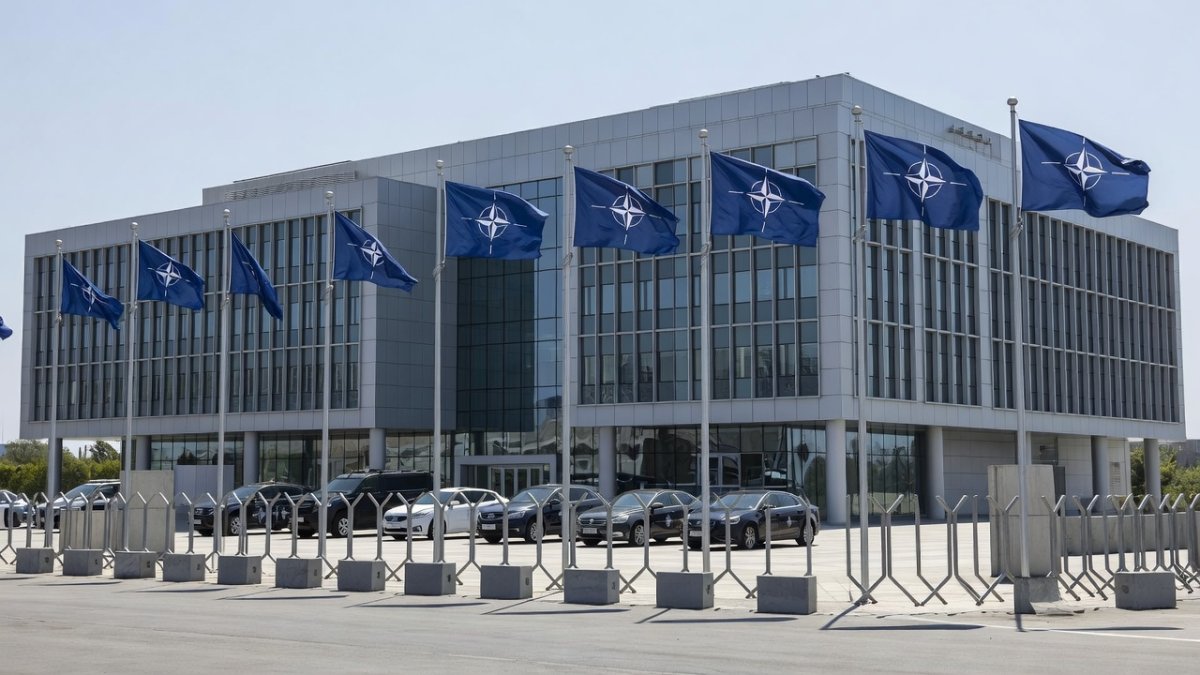
When NATO leaders gather in Ankara on 7 July 2026, the United Kingdom will arrive with its defence budget under greater scrutiny than at any point in a generation. Secretary General Mark Rutte has demanded that each of the 32 allies present "clear and credible" plans to reach 3.5% of GDP on defence — a target that would require Britain to find an additional £25 billion a year f
The Channel 4 News Report from the Arctic
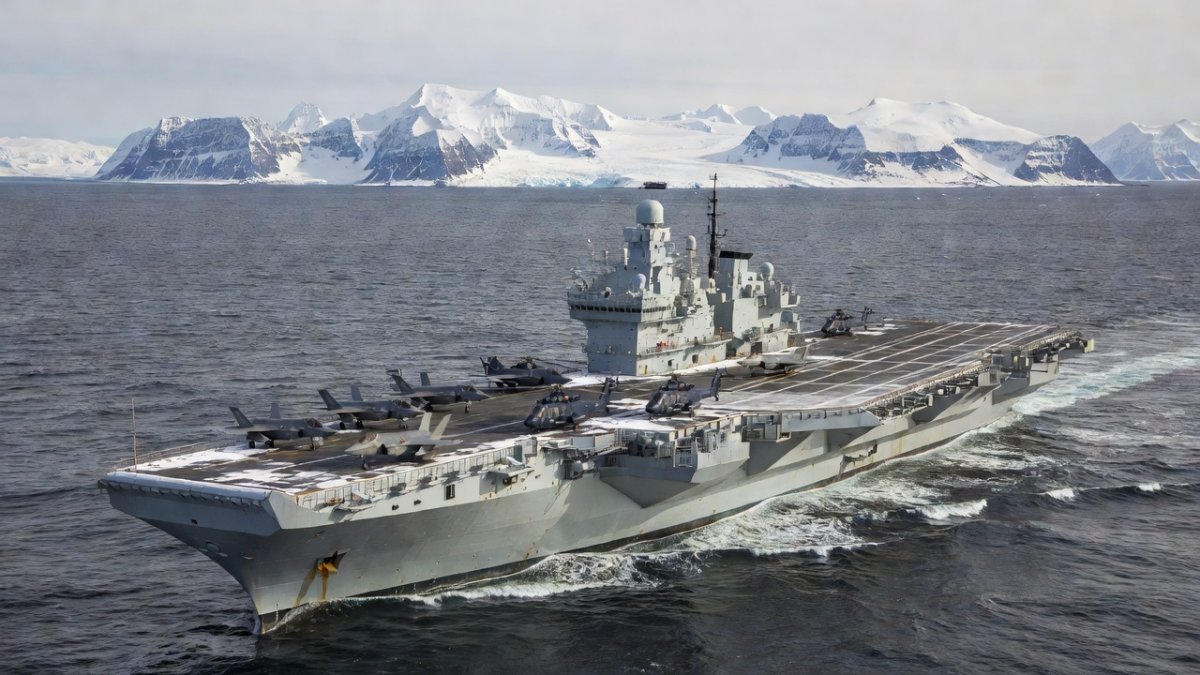
Channel 4 News secured rare access aboard HMS Prince of Wales as the carrier group conducted Operation Firecrest in the Arctic Circle during the first week of July 2026. The deployment formed part of NATO's enhanced forward presence, testing the Royal Navy's ability to operate in contested waters amid rising tensions with Moscow. Journalists embedded with the task group witnessed live intercepts and coordination with Norwegian and Danish forces, highlighting the operational strain on a fleet already stretched across multiple theatres.
On 2 July a Russian Tu-142 Bear reconnaissance aircraft approached within 40 nautical miles of the group, prompting a rapid scramble of two F-35B Lightning II jets from the carrier's deck. The Ministry of Defence later confirmed the intercept lasted 17 minutes and that the Russian aircraft remained in international airspace throughout. A spokesperson for the MoD stated that "all interactions were conducted professionally and in accordance with international norms," yet the incident underscored the persistent challenge posed by Russia's northern fleet.
These Arctic operations coincide with growing concern over the Russian shadow fleet operating in UK waters and a series of unexplained drone sightings near RAF Lakenheath in Suffolk. Defence analysts at the Royal United Services Institute note that such hybrid activity tests the limits of Britain's maritime surveillance capacity, particularly when resources are simultaneously required for carrier strike group protection and homeland defence.
Rutte's Ultimatum: 3.5% or Nothing
Mark Rutte opened the Ankara summit with a blunt assessment that NATO's credibility now hinges on demonstrable spending increases rather than aspirational targets. The Secretary General outlined three non-negotiable priorities: sustained defence investment above 3% of GDP, accelerated transatlantic industrial production to reduce reliance on external suppliers, and unambiguous long-term support for Ukraine. European allies, he warned, could no longer shelter behind American security guarantees without matching commitments in cash and capability.
The 3.5% figure represents a significant escalation from the 2% benchmark agreed at the 2014 Wales summit. Rutte's intervention has already prompted emergency meetings in Berlin, Paris and The Hague, where finance ministries are modelling the fiscal consequences of such rapid rearmament. For the United Kingdom the demand arrives at a moment of acute political sensitivity, with the Treasury still recovering from post-pandemic debt levels and the cost of living pressures affecting households across the North and Midlands.
Failure to meet the new threshold risks marginalising Britain within alliance planning, particularly as the United States under the current administration signals greater focus on the Indo-Pacific. Rutte's message was clear: declarations of solidarity must now be accompanied by line items in national budgets that can withstand congressional scrutiny in Washington.
Inside the £298 Billion Defence Investment Plan
The Ministry of Defence published its £298 billion four-year equipment plan last week, yet the document has been criticised for optimistic assumptions about inflation and recruitment. Months of internal delays preceded its release, with officials at Abbey Wood in Bristol struggling to reconcile capability gaps with constrained funding. Former Defence Secretary John Healey resigned in June after Keir Starmer refused to authorise spending beyond 2.68% of GDP, leaving the department without a clear political champion for the scale of investment now required.
Dan Jarvis has since secured a modest £1.5 billion uplift for urgent munitions replenishment and cyber resilience programmes. However, the trajectory from the current 2.68% to the 3.5% demanded by Rutte remains steep, requiring annual real-terms growth that has not been sustained since the early 1980s. Treasury officials have privately described the curve as "politically unrealistic" without either major tax rises or deep cuts elsewhere in public expenditure.
The plan prioritises Type 26 frigates, AUKUS submarine construction at Barrow-in-Furness, and next-generation combat air systems, yet analysts at the National Audit Office warn that historical delivery shortfalls could render even these commitments aspirational. Without a firm political mandate from Downing Street, the equipment plan risks becoming another exercise in deferred modernisation.
Jarvis vs Burnham: The Political Dynamics
Dan Jarvis has publicly called on Andy Burnham to "evidence the trajectory" toward 3.5% before the Ankara summit concludes. In a speech to the Royal College of Defence Studies, Jarvis stated: "I've known Andy for a very long time and I have not a shred of doubt about his commitment to the United Kingdom's security, but the numbers must add up and they must be credible to our allies." The former paratrooper's direct language reflects frustration within the Ministry of Defence that political rhetoric has not yet translated into fiscal certainty.
Burnham, who served as Greater Manchester mayor and Health Secretary before becoming Prime Minister-in-waiting, responded that there would be "no compromise on the security of the nation." His background in regional governance and the NHS has equipped him with strong domestic credentials, yet he lacks direct experience of defence procurement or alliance diplomacy. This gap has prompted quiet concern among senior military officers who fear that the new administration may prioritise social spending over hard power.
The relationship between Jarvis and Burnham will determine whether Britain can present a united front in Ankara. Any perception of internal division risks undermining the very credibility Rutte has demanded from all 32 members.
How Do You Find £25 Billion a Year?
Securing an additional £25 billion annually represents a structural shift in public expenditure comparable to the post-1945 defence build-up. Options under consideration within the Treasury include reallocating funds from welfare and infrastructure programmes, introducing new fiscal instruments, or accepting higher borrowing that would push debt-to-GDP ratios above 110%. Each path carries significant political risk for a government elected on promises of public service renewal.
The NHS and schools budgets, already under pressure from demographic change and workforce shortages, would face immediate competition for resources. Northern constituencies represented by Labour MPs have already signalled resistance to any perception that defence spending is being prioritised at the expense of levelling-up commitments made during the 2024 general election campaign.
Independent modelling by the Institute for Fiscal Studies suggests that achieving 3.5% without tax increases would require real-terms cuts of 4% across unprotected departments by 2030. Such trade-offs have not been openly debated in Parliament, leaving the public largely unaware of the scale of fiscal reordering now under discussion.
Regional Impact: From Portsmouth to the North
Naval communities in Portsmouth, Plymouth and Faslane stand to gain from increased shipbuilding and maintenance contracts, yet recruitment shortfalls remain acute. The Royal Navy currently operates at 8% below its target strength, with particular difficulties attracting engineering and nuclear specialists from the North West and Scotland. Housing costs near bases have exacerbated retention problems, with service families in Gosport and Helensburgh reporting average rents that exceed the national median by 22%.
Constituencies across the North East and Yorkshire, home to significant aerospace and advanced manufacturing clusters, could benefit from expanded defence industrial orders. However, local authorities in these regions have warned that skills pipelines are insufficient to meet sudden demand, requiring coordinated investment from the Department for Education and Skills Funding Agency.
The social fabric of these communities has historically been tied to defence employment. Any sustained increase in spending must therefore address not only procurement but also the infrastructure and training ecosystems that support service personnel and their families.
Global Pressures: Hormuz and the Shadow Fleet
The United Kingdom is preparing to lead a joint maritime task force with France to safeguard the Strait of Hormuz following repeated Iranian threats to shipping lanes. This commitment would further stretch already limited destroyer and frigate availability, with only six Type 45 vessels currently operational. Russian shadow fleet tankers operating under flags of convenience have been tracked transiting UK waters with increasing frequency, prompting additional surveillance requirements for the Maritime and Coastguard Agency.
Drone incidents over Suffolk near RAF Lakenheath have added to the sense of hybrid pressure on the eastern flank. The Ministry of Defence has increased Quick Reaction Alert status at the base, yet the cumulative effect of simultaneous demands in the High North, the Middle East and home waters is testing the resilience of the armed forces' command structure.
These global commitments make the case for higher spending more urgent, yet they also illustrate why simply increasing the headline percentage may prove insufficient without corresponding reforms to force structure and industrial capacity.
The Ankara Showdown and What Comes Next
Dan Jarvis will travel to Ankara alongside Keir Starmer and Home Secretary Yvette Cooper, carrying a mandate to reassure US Defence Secretary Pete Hegseth that Britain remains a reliable anchor within NATO. The delegation's success will depend on whether Burnham authorises a clear spending trajectory before the final communiqué is agreed. Without such commitment, the United Kingdom risks being grouped with allies whose contributions remain aspirational rather than concrete.
The comprehensive spending review scheduled for autumn 2026 will provide the first formal opportunity to translate summit pledges into departmental allocations. Treasury resistance is expected to be fierce, particularly if economic growth forecasts remain subdued. Any failure to secure the required uplift would force difficult choices between capability and credibility.
Should Burnham decline to commit the necessary resources, Jarvis may face the unenviable task of managing alliance expectations while domestic budgets remain constrained. The Ankara summit therefore represents not merely a diplomatic engagement but a defining moment for the United Kingdom's place in European security architecture for the decade ahead.
By Erica Thornton, Staff WriterThis article was produced with AI-assisted research and editorial support. Reporting is based on sources cited in the article.
What's Your Reaction?
 Like
0
Like
0
 Dislike
0
Dislike
0
 Love
0
Love
0
 Funny
0
Funny
0
 Wow
0
Wow
0
 Sad
0
Sad
0
 Angry
0
Angry
0

US Politics and Policy Correspondent at Global1.News. Based in Washington DC, covering American politics, policy, elections, and the courts. Knows how the system works and tells you what it actually means.












Comments (0)