
Europe Wildfires 2026: 300,000 Evacuated as Spain Reports Death
Europe faces an unprecedented summer of fire and displacement. More than 300,000 people have been forced from their homes across France and Spain, with one confirmed fatality near Valencia marking the first recorded death in the current outbreak. The crisis now reaches British shores through affected holidaymakers, military deployments, and urgent questions about the United Kingdom’s own wildfire readiness. Europe Wildfires Crisis Escalates: Mass Evacuations, First Death a...
Europe Wildfires Crisis Escalates: Mass Evacuations, First Death and UK Military Mobilised
Bordeaux, France – July 26, 2026 — A continent-wide emergency has gripped southern Europe, with more than 300,000 residents and visitors evacuated from advancing flames in France and Spain. One man has died near Valencia, the first fatality linked to the fires this season. British nationals on holiday in the affected regions now face disrupted travel plans while the Scottish government has requested UK military aerial support to tackle a major blaze in the Cairngorms National Park.
The Scale of Evacuations Across France and Spain
Authorities report 250,000 people evacuated in France alone, with a further 76,000 displaced in Spain. These figures represent the largest coordinated movement of civilians in either country since the height of the pandemic. French Interior Minister Laurent Nuñez described the situation as a “long and very difficult battle,” underscoring the sustained nature of the threat rather than a short-term incident.
Climate scientist Dr Elena Vargas of the European Environment Agency warned that prolonged heatwaves and reduced winter rainfall have created “ideal conditions for rapid fire propagation across multiple fronts simultaneously.” Satellite data from the Copernicus Atmosphere Monitoring Service show aerosol levels over the Iberian Peninsula at their highest since records began in 2003, indicating the scale of combustion now under way.
The human cost extends beyond statistics. Families in rural communities have lost homes and livestock, while urban centres such as Bordeaux now lie within nine miles of the Saumos fire. The speed of evacuation has left many residents with little time to secure belongings, creating immediate pressure on temporary accommodation and local services.
First Confirmed Death Near Valencia
Spanish officials confirmed the death of one man near Valencia, the first recorded fatality in the current wave of fires. New fires continue to burn around the Valencia region, complicating containment efforts. Prime Minister Pedro Sánchez visited a command post west of Madrid, where he warned of “complex times ahead” even as some progress was noted in containing blazes to the west of the capital.
The fatality has prompted renewed scrutiny of early-warning systems and evacuation protocols. Relatives of the deceased have called for an independent review, highlighting gaps in communication that left some communities unaware of the fire’s rapid advance.
France’s Battle Near Bordeaux and Record Burned Area
The Saumos fire in southwest France now sits just 15 kilometres from Bordeaux, threatening both residential areas and the city’s surrounding vineyards. Across France, 98,000 hectares have burned since the start of 2026. French soldiers have been deployed to assist overstretched firefighters, marking a significant escalation in the national response.
Local businesses in the Bordeaux region face immediate losses as tourism stalls and agricultural work halts. Wine producers have begun emergency irrigation measures, yet the long-term impact on the 2026 harvest remains uncertain.
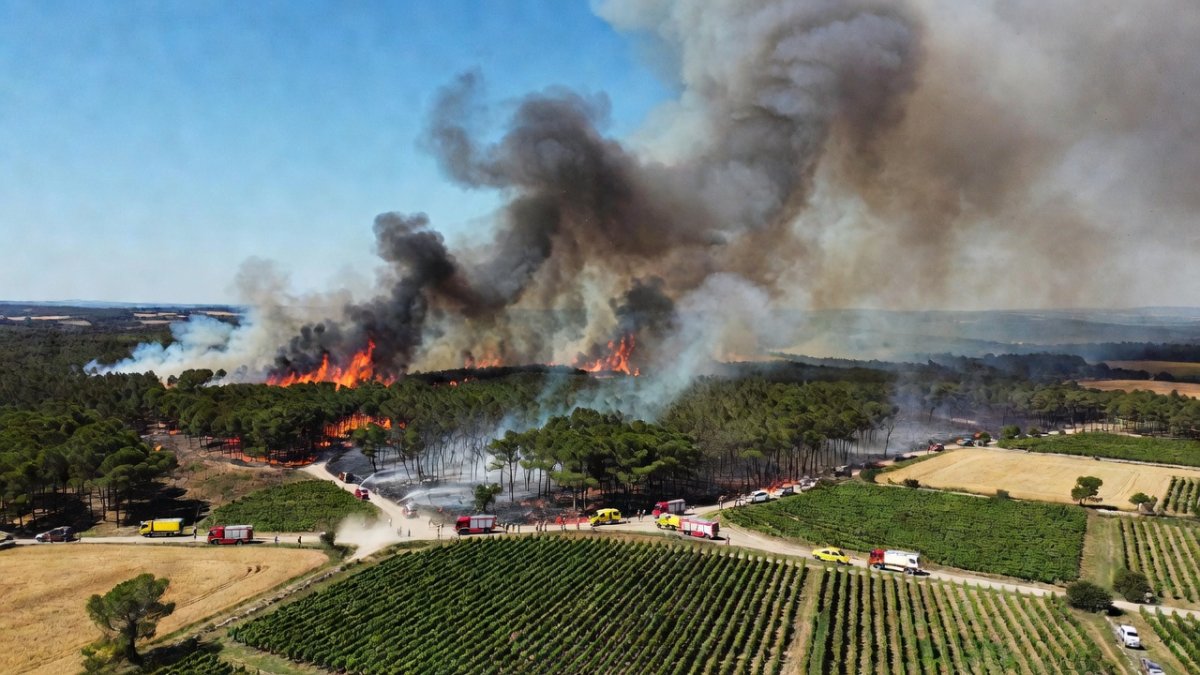
Spain Declares State of Emergency Amid Record Burned Land
Spain has declared a state of emergency after 152,678 hectares burned since the beginning of the year, compared with 24,133 hectares in the same period of 2025. The six-fold increase reflects both drier conditions and stronger winds that have accelerated fire spread. Containment teams west of Madrid report incremental progress, yet the overall picture remains volatile.
Regional hospitals have activated surge protocols to treat smoke inhalation cases, with particular concern for elderly residents and those with pre-existing respiratory conditions. The economic burden on rural municipalities is expected to run into hundreds of millions of euros.
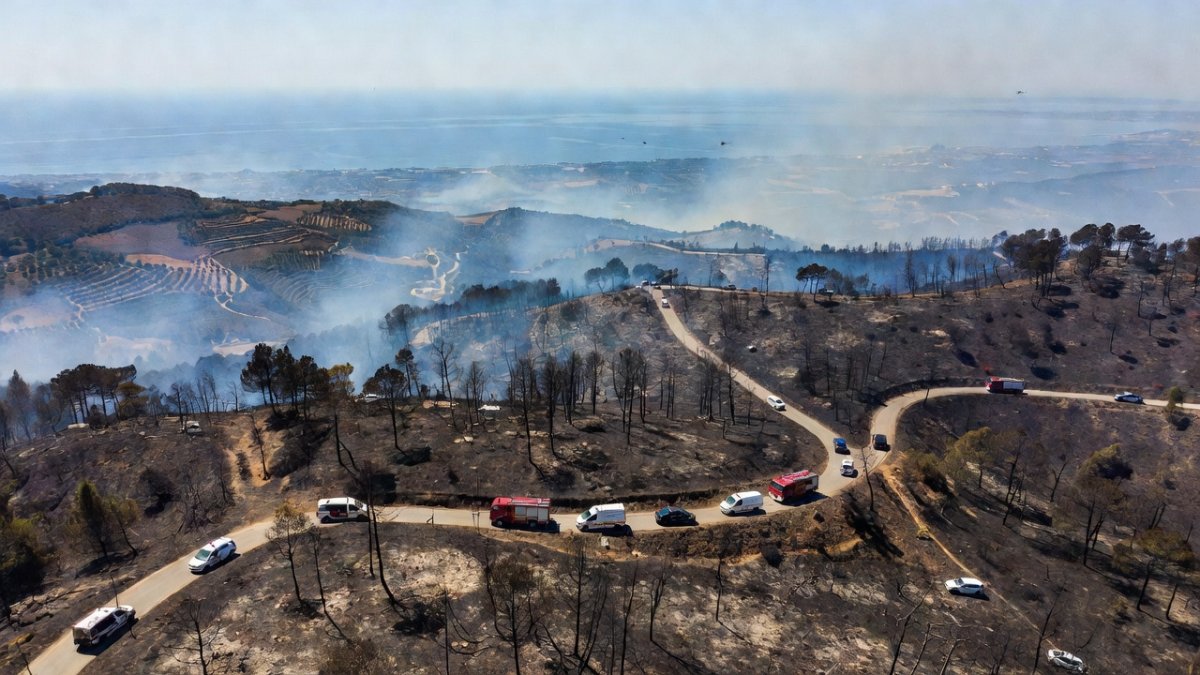
UK Military Support Requested for Cairngorms Blaze
In Scotland, a major fire in the Cairngorms National Park has prompted the Scottish government to request aerial support from UK military assets. This marks the first time British forces have been called upon to assist with domestic wildfire response at this scale. The move highlights how climate-driven fire risk now extends beyond southern Europe into northern latitudes.
Communities around Aviemore and Ballater have been placed on alert, with local schools and community centres prepared as potential evacuation points. The UK Ministry of Defence has confirmed that helicopters and specialist crews are being readied for deployment.
Impact on British Holidaymakers and FCO Travel Advice
British tourists in France and Spain have faced cancelled flights, closed roads and sudden hotel evacuations. The Foreign, Commonwealth and Development Office has updated its travel advice for multiple regions, urging travellers to monitor local alerts and register with the Locate platform. Many families now weigh whether to cut short holidays or remain in temporary shelters.
Travel insurance claims are expected to rise sharply, while tour operators have begun offering full refunds or alternative destinations. The disruption coincides with peak summer holiday season, affecting an estimated 150,000 British nationals currently in the affected zones.
Climate Implications and UK Wildfire Preparedness
Hotter European summers are increasing fire risk significantly, a pattern now evident in the United Kingdom. The Cairngorms incident follows several smaller blazes in England and Wales this summer, prompting the National Fire Chiefs Council to review national readiness. Experts note that the UK lacks the large-scale aerial firefighting fleet maintained by France and Spain, relying instead on mutual aid agreements and limited helicopter resources.
Professor Malcolm Reid of the University of Edinburgh’s School of Geosciences emphasised that “the UK’s temperate climate has historically masked vulnerability, yet recent temperature anomalies suggest we must treat wildfire as a recurring national hazard rather than an occasional southern European problem.”
Local authorities in high-risk areas such as the Peak District and Scottish Highlands have begun public awareness campaigns, yet funding for dedicated wildfire units remains modest compared with continental counterparts. The current crisis serves as a stark reminder that climate adaptation must extend to domestic emergency planning. By Erica Thornton, Staff Writer
This article was produced with AI-assisted research and editorial support. Reporting is based on sources cited in the article.
What's Your Reaction?
 Like
0
Like
0
 Dislike
0
Dislike
0
 Love
0
Love
0
 Funny
0
Funny
0
 Wow
0
Wow
0
 Sad
0
Sad
0
 Angry
0
Angry
0

US Politics and Policy Correspondent at Global1.News. Based in Washington DC, covering American politics, policy, elections, and the courts. Knows how the system works and tells you what it actually means.














Comments (0)