
Myanmar's Myitsone Dam Revival and China's Energy Leverage
Myanmar's Myitsone Dam Revival: China's Regional Leverage and the Geopolitics of Energy The Origins of the Myitsone Dam Agreement The Myitsone dam project originated in a 2006 agreement between Myanmar's previous military junta and Chinese state-linked entities, establishing a framework for a $3.6 billion hydropower facility at the confluence of the Mali and N'Mai rivers. This
The Origins of the Myitsone Dam Agreement
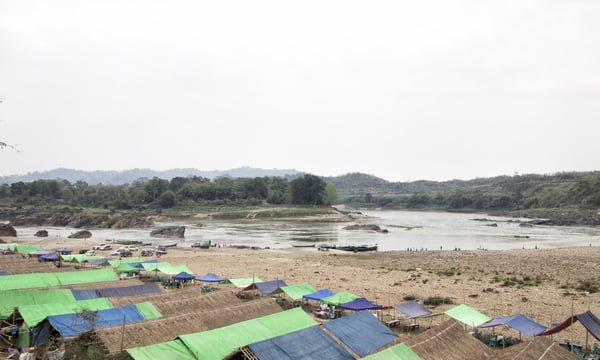
The Myitsone dam project originated in a 2006 agreement between Myanmar's previous military junta and Chinese state-linked entities, establishing a framework for a $3.6 billion hydropower facility at the confluence of the Mali and N'Mai rivers. This location holds particular hydrological significance as the point where these tributaries merge to form the Irrawaddy River, Myanmar's principal waterway. The arrangement stipulated that approximately 90 percent of the generated electricity would be exported directly to China, reflecting Beijing's broader strategy of securing energy resources through cross-border infrastructure investments.
Scholarly examinations of such projects often highlight how early 2000s agreements between Myanmar's isolated regime and Chinese developers prioritized rapid resource extraction over local consultation. The involvement of the SPIC Yunnan International Power Investment Company as the primary developer underscored China's willingness to finance large-scale endeavors in politically unstable environments. These pacts frequently bypassed rigorous environmental impact assessments, setting the stage for later controversies over displacement and ecological disruption.
From an analytical standpoint, the 2006 framework exemplified China's early Belt and Road Initiative precursors, wherein energy infrastructure served as a tool for extending influence into Southeast Asia. Myanmar's junta at the time viewed the project as a means to generate revenue and consolidate power, yet the export-oriented design immediately raised questions about equitable benefit distribution within Myanmar itself.
Suspension in 2011 and the Dawn of Reforms
In 2011, President Thein Sein, leading a military-backed transitional government, announced the suspension of the Myitsone project, explicitly citing the "wishes of the people" amid widespread protests over environmental and social impacts. This decision marked a pivotal departure from prior junta policies and helped catalyze a series of economic and political reforms that opened Myanmar to greater international engagement. The suspension surprised observers, given the project's advanced preparatory stages and the significant Chinese investment already committed.
Academic analyses of this period emphasize how the Myitsone halt functioned as a catalyst for broader liberalization, including eased media restrictions and initial steps toward democratic elections. By responding to public opposition, Thein Sein's administration signaled a tentative shift away from purely extractive governance models. However, the move also strained relations with Beijing, which had anticipated steady progress on the dam as part of its regional energy security architecture.
The 2011 suspension illustrated the complex interplay between domestic political calculations and external pressures in Myanmar's transition. While it temporarily empowered civil society voices, it also exposed the fragility of reform processes dependent on military acquiescence. Subsequent events would demonstrate how such pauses in major projects could be reversed under altered power structures.
China's Persistent Advocacy for Resumption
Following the 2011 suspension, China actively lobbied for the project's revival, viewing the Myitsone dam as integral to its energy import diversification and influence along the Myanmar-China border. Beijing's diplomatic efforts intensified after the 2021 coup, as the military junta grew increasingly reliant on Chinese support to counter advances by ethnic armed groups. Reports indicate that discussions during Min Aung Hlaing's recent state visit to China explicitly addressed restarting construction.
Analysts note that China's leverage stems from its capacity to provide both economic lifelines and security cooperation, particularly in stabilizing border regions where ethnic armies have gained ground since 2023. The junta's dependence has compelled it to treat Chinese concerns with heightened seriousness, transforming the dam into a potential quid pro quo for continued diplomatic and material backing. This dynamic reveals the asymmetric power relations inherent in Myanmar's post-coup foreign policy.
Chinese state media and officials have framed resumption as mutually beneficial, yet the original export terms continue to fuel skepticism regarding long-term sovereignty implications for Myanmar. The formation of a new leadership team in April 2024, tasked with research, technical solutions, and public relations in collaboration with SPIC Yunnan, represents a concrete institutional step toward addressing these concerns while advancing Beijing's agenda.
The Post-Coup Junta's Strategic Calculations
Since the 2021 coup, the military-backed government has signaled strong intent to revive the Myitsone project, with Chief Minister Khet Htein Nan leading public outreach efforts across Kachin State, including meetings in Myitkyina and Mohnyin township. At a June 23 gathering, the chief minister, who previously opposed the dam, expressed regret over his earlier stance and projected completion within just over eight years, citing existing groundwork. These statements align with presidential assertions that the project will restart, accompanied by promises of an official announcement.
Min Aung Hlaing has reportedly argued in cabinet meetings that earlier implementation would have already delivered nationwide electricity access, framing delays as a policy failure of previous administrations. Presidential spokesperson Khaing Khaing Soe has acknowledged the need to balance benefits against negative impacts through detailed analysis and public consent-seeking measures. Such rhetoric suggests an attempt to legitimize resumption while navigating domestic sensitivities.
The junta's calculations reflect a broader pattern of prioritizing short-term regime survival over long-term public trust. By tying the dam's revival to Chinese support for border security operations, the military leadership appears willing to absorb reputational costs in exchange for tangible assistance against ethnic armed organizations. This approach underscores the constrained policy space available to post-coup authorities.
Public Sentiment and Kachin State Dynamics
Local opposition in Kachin State remains a significant variable, rooted in concerns over environmental degradation, community displacement, and the inequitable allocation of electricity generated by the dam. The chief minister's series of public meetings since January represents an explicit campaign to shift sentiment, yet the absence of revised contract details on ownership rights and operational frameworks continues to breed distrust. Historical grievances from the 2011 protests have not dissipated despite the passage of time.
Academic literature on resource governance in Myanmar highlights how large infrastructure projects often exacerbate center-periphery tensions, particularly in ethnic minority regions like Kachin. The project's location at the Irrawaddy's headwaters amplifies fears of downstream ecological consequences affecting agriculture and fisheries. Without transparent mechanisms for local benefit-sharing, efforts to secure consent appear superficial at best.
Khet Htein Nan's changed position exemplifies the pressures faced by regional officials under military rule, where alignment with central directives can override prior convictions. The Kachin State parliament's involvement, including statements from member Htet Paing Htoo that work will begin shortly, indicates coordinated messaging but does little to address underlying legitimacy deficits.
Security Challenges Posed by Ethnic Armed Organizations
The Kachin Independence Army (KIA) has maintained consistent opposition to the Myitsone project and has achieved notable territorial gains in Kachin State since the 2021 coup. Although the KIA does not currently control the immediate area around the dam site, the potential for renewed conflict in the vicinity poses a direct threat to construction timelines and worker safety. Resumed fighting could replicate the disruptions that originally halted progress in 2011.
Strategic assessments of Myanmar's northern borderlands emphasize how Chinese diplomatic interventions since 2023 have sought to manage these conflicts in ways that protect infrastructure investments. The junta's reliance on Beijing for assistance against ethnic armies creates a feedback loop wherein dam resumption becomes intertwined with security cooperation. This linkage complicates any independent decision-making by Naypyidaw.
Conflict dynamics in Kachin State thus serve as both a constraint and a catalyst for the project. While instability deters full-scale implementation, the junta's need for Chinese backing to stabilize the region incentivizes movement toward revival. The resulting uncertainty leaves the eight-year completion estimate highly contingent on battlefield developments.
Energy Geopolitics and Broader Regional Implications
The Myitsone revival encapsulates wider patterns of Chinese energy diplomacy in Southeast Asia, where hydropower exports reinforce economic interdependence and political influence. With 90 percent of output slated for China under original terms, the project exemplifies how infrastructure can function as an instrument of regional leverage rather than purely domestic development. Myanmar's post-coup isolation has amplified this asymmetry.
Comparative studies of similar Chinese-backed initiatives reveal recurring tensions between host-country sovereignty and creditor influence, particularly when contracts remain opaque. The lack of disclosed revisions to the Myitsone agreement leaves open questions about revenue sharing, operational control, and environmental safeguards. These gaps hinder credible assessments of net benefits for Myanmar's population.
Regional observers note that successful resumption could embolden parallel projects along the Irrawaddy basin, further entrenching Chinese strategic footholds. Conversely, renewed local resistance or security setbacks might prompt Beijing to recalibrate its approach, illustrating the contingent nature of such geopolitical investments.
South Korea's Stake in Myanmar's Energy Landscape
South Korea maintains longstanding development cooperation ties with Myanmar, including infrastructure and energy sector engagements that predate the 2021 coup. The Myitsone revival carries indirect implications for Seoul's efforts to promote diversified energy partnerships across ASEAN, where Chinese dominance in large-scale hydropower risks crowding out alternative models emphasizing transparency and local ownership. Korean policymakers have historically advocated for balanced regional connectivity that avoids over-reliance on any single external actor.
Academic perspectives from Korean institutions often draw parallels between Myanmar's experience and South Korea's own history of navigating great-power infrastructure competition during its industrialization period. Concerns over public consent and environmental governance in Kachin State resonate with domestic debates on sustainable development, prompting Seoul to monitor how the junta balances Chinese demands against internal stability. Such monitoring informs Korea's broader ASEAN strategy of supporting rule-based economic integration.
Furthermore, South Korea's energy security calculus benefits from stable Myanmar governance that could facilitate diversified supply chains beyond Chinese-controlled projects. Should the Myitsone dam proceed under revised terms that incorporate greater local input, it might create openings for Korean technical expertise in complementary sectors such as grid modernization or renewable integration. Yet the current trajectory suggests limited space for such multilateral participation amid heightened Sino-Myanmar alignment.
By Prof. David Park, Staff WriterThis article was produced with AI-assisted research and editorial support. Reporting is based on sources cited in the article.
What's Your Reaction?
 Like
0
Like
0
 Dislike
0
Dislike
0
 Love
0
Love
0
 Funny
0
Funny
0
 Wow
0
Wow
0
 Sad
0
Sad
0
 Angry
0
Angry
0

East Asia/Technology Correspondent at Global1.News. Seoul-based voice covering Korean politics, technology, business, and culture. Analyzes how technology and geopolitics intersect across East Asia.













Comments (0)