
'Most Massive' Russian Attack on Kyiv Kills at Least 18
In a recent BBC News report, the extent of Russia's latest assault on Kyiv was laid bare — a coordinated wave of missiles and drones that killed at least 18 people and wounded approximately 90 more, in what the mayor called the most massive attack on the Ukrainian capital since the war began. 'Most Massive' Russian Attack on Kyiv Kills at Least 18 — Residents Trapped Under Rubb
In a recent BBC News report, the extent of Russia's latest assault on Kyiv was laid bare — a coordinated wave of missiles and drones that killed at least 18 people and wounded approximately 90 more, in what the mayor called the most massive attack on the Ukrainian capital since the war began.
'Most Massive' Russian Attack on Kyiv Kills at Least 18 — Residents Trapped Under Rubble as 74 Missiles and 496 Drones Pound the Capital
Kyiv, Ukraine – 2 July 2026 — Russian forces launched one of the most intense combined air assaults on Kyiv since the full-scale invasion began, deploying 74 missiles and 496 drones in an attack that lasted more than 11 hours and struck residential buildings, an ambulance station, and a hotel in the city's historic quarter. Mayor Vitaly Klitschko declared Friday a day of mourning and said approximately 90 people were wounded. Rescue workers continued digging through rubble on Friday morning, searching for a 15-year-old girl and her family who were believed trapped inside a collapsed apartment building in the Darnitskyi district of south-east Kyiv.
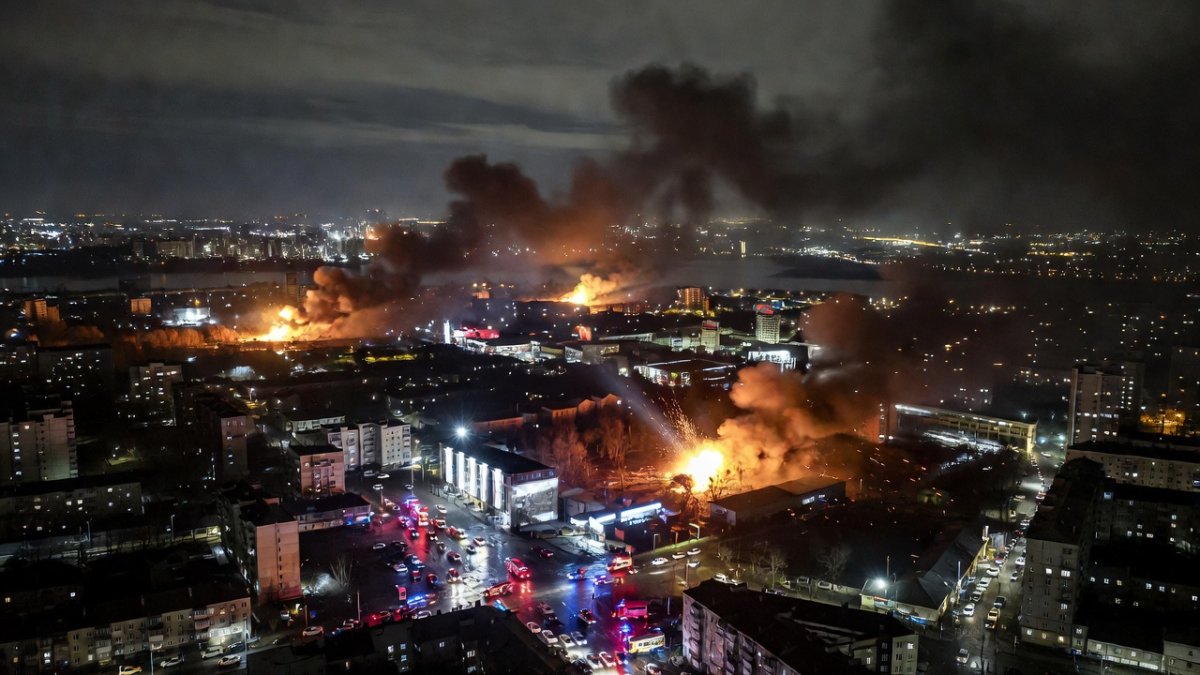
The Attack — 11 Hours Across Four Waves
The assault began shortly after midnight with a drone strike on Kyiv's historic Podil district, setting a hotel ablaze and sending residents scrambling for shelter. At approximately 01:00, dozens of ballistic and cruise missiles struck across the city in a coordinated salvo designed to overwhelm Ukraine's air defense networks. A brief lull followed, and then at 03:00 a second wave of cruise missiles hit, followed by a sustained drone barrage that continued until dawn. The BBC's Sarah Rainsford, reporting from Kyiv, said she had counted at least ten significant explosions overnight, with one major fire visible from the city centre. Ukraine's Air Force confirmed that Russian forces had launched 74 missiles of various types and 496 drones, primarily targeting the capital. Of those, 25 ballistic missiles and 12 drones successfully evaded air defenses and struck 33 separate locations across the city. Aviation expert Bohdan Dolintsev told Ukrainian media that Russia's technique of mixing weapon types within the same time window — ballistic missiles, cruise missiles, and loitering drones fired simultaneously — created an exceptionally complex challenge for Ukraine's air defense systems, which must track and intercept multiple incoming threats with very different speed and altitude profiles. The prolonged nature of the barrage, stretching beyond eleven hours in successive waves, placed sustained pressure on Kyiv's defenders and emergency services alike. Ordinary residents across multiple districts reported repeated alerts that forced families into basements and metro stations for extended periods, disrupting sleep and daily routines in a city already strained by years of conflict. This pattern reflects broader Kremlin decision-making structures, where President Vladimir Putin retains ultimate authority over strategic strikes, often coordinated through the Russian Ministry of Defence and security council advisors who weigh both military objectives and political signaling. For Ukrainians in the capital, such extended assaults compound the psychological toll, as the intervals between waves leave little certainty about when the next impact might occur. Meanwhile, the involvement of nearly five hundred drones illustrates Russia's capacity to draw on mass-produced, lower-cost munitions alongside its more advanced missile stocks, a resource allocation that affects both battlefield sustainability and the daily lives of civilians on both sides of the border.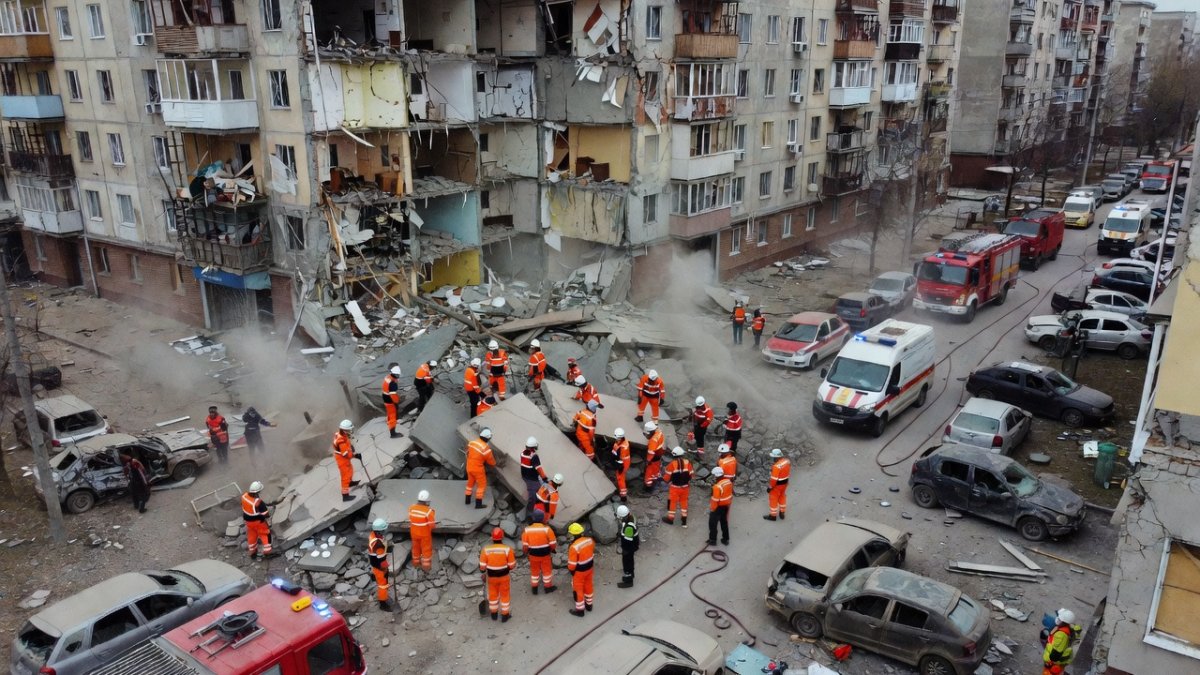
Residential Areas Targeted — Scenes of Devastation in Darnitskyi
In the Darnitskyi district on Kyiv's left bank, the scale of destruction was particularly severe. Two missiles struck a residential area directly, leaving a giant crater next to a kindergarten playground. The second missile hit the end of a 9-storey block of flats, causing an entire section of the building to collapse into a heap of concrete and twisted metal. Residents told the BBC that several people were believed missing and may have been sheltering in the basement when the strike hit. Rescue workers, accompanied by relatives watching in tears, spent the night attempting to dig through the rubble. Svitlana, a resident of the neighbouring building, told the BBC she was hiding in her corridor when she heard the explosions. "It wasn't scary," she said with a shrug. "Because I've been through it all before." She then revealed that she had been badly injured in an earlier Russian strike on another town — a strike that had killed her mother. Two years later, her son was killed in action fighting for Ukraine. Another resident, Oleksiy, his face covered in cuts and blood, told reporters he had stepped outside to smoke after hearing the first missile strike, unaware that a second was already inbound. The blast wave sent glass fragments into his face. "This is not retaliation by Russia for Ukrainian strikes," he said, dismissing Moscow's official explanation. "They started this war. This is a residential area. And they targeted it." Tymur Tkachenko, head of Kyiv's military administration, confirmed that children were among the casualties, underscoring the direct impact on families in the targeted zone. Mayor Vitaly Klitschko noted that search operations continued for the missing 15-year-old girl and her relatives, highlighting how such strikes disrupt entire communities and leave lasting scars on survivors. From the Ukrainian perspective, these residential hits represent deliberate terror against civilians, while Russian officials maintain that strikes focus on military-related sites. The reality for ordinary Ukrainians involves navigating rubble-strewn streets and supporting neighbors amid ongoing uncertainty, a daily existence shaped by the Kremlin's centralized control over escalation decisions.Official Response — Moscow's Justification and Kyiv's Condemnation
Kremlin spokesman Dmitry Peskov told reporters on Thursday that Russian forces had struck what they described as military production plants in retaliation for Ukrainian attacks on Russian civilian infrastructure. "We will continue to increase pressure on the Kyiv regime in order to achieve our set goals," Peskov said. The Russian Ministry of Defence claimed its forces had also struck military bases in central and eastern Ukraine, targeting defence and energy infrastructure in response to what it called "terrorist attacks launched by the Kyiv regime against civilian infrastructure" inside Russia. Ukraine rejected the justification outright. Foreign Minister Andriy Sybiha described it as "immoral" to equate the actions of the aggressor and a defending nation, calling on Ukraine's international partners to provide more air defence systems. "In this war, there is an aggressor and a country defending itself," Sybiha said. "We need not only words of condemnation but concrete action to stop Russian terror." President Volodymyr Zelensky, who had warned just hours before the attack that Russia was preparing a massive strike, urged the United States to grant licences for Ukrainian manufacture of Patriot air defence missiles, describing the supplies as "an absolute and critical priority." This exchange of statements reveals the entrenched positions: Moscow frames its actions as necessary pressure within a broader strategic framework controlled by Putin, while Kyiv emphasizes self-defense and appeals for tangible Western support. For civilians in both nations, these official narratives translate into continued hardship, with Russian citizens facing indirect effects from fuel constraints and Ukrainians enduring repeated threats to their homes and infrastructure.Kyiv's Changing Battlefield
Residents of Kyiv who have lived through more than four years of war say they have perceived a marked shift in the pattern of Russian attacks over the last two months. Although assaults on the capital may now occur less frequently — still every few days — they last significantly longer and appear more powerful and geographically widespread than previous barrages. The latest attack also coincided with a rare admission by Russian President Vladimir Putin that his country was facing fuel shortages as a result of Ukraine's long-range strikes on Russian energy infrastructure. Kyiv has recently intensified its own deep-strike campaign, targeting power stations from Moscow to the Black Sea. The juxtaposition of Putin's rare public acknowledgment of economic pressure with Moscow's largest-ever single attack on the Ukrainian capital underscores the escalatory dynamic both sides appear locked into. Russia continues to occupy approximately one-fifth of Ukrainian territory, primarily seized in the first months of the full-scale invasion launched in February 2022 — territory that neither side appears willing to concede in any foreseeable negotiation. This territorial reality shapes daily life for millions, as Ukrainian communities in occupied areas navigate administration under Russian control while those in government-held regions adapt to evolving air threat patterns. The Kremlin's power structure, centered on Putin's personal oversight of military operations, allows for such calibrated escalations that aim to influence both battlefield outcomes and international perceptions.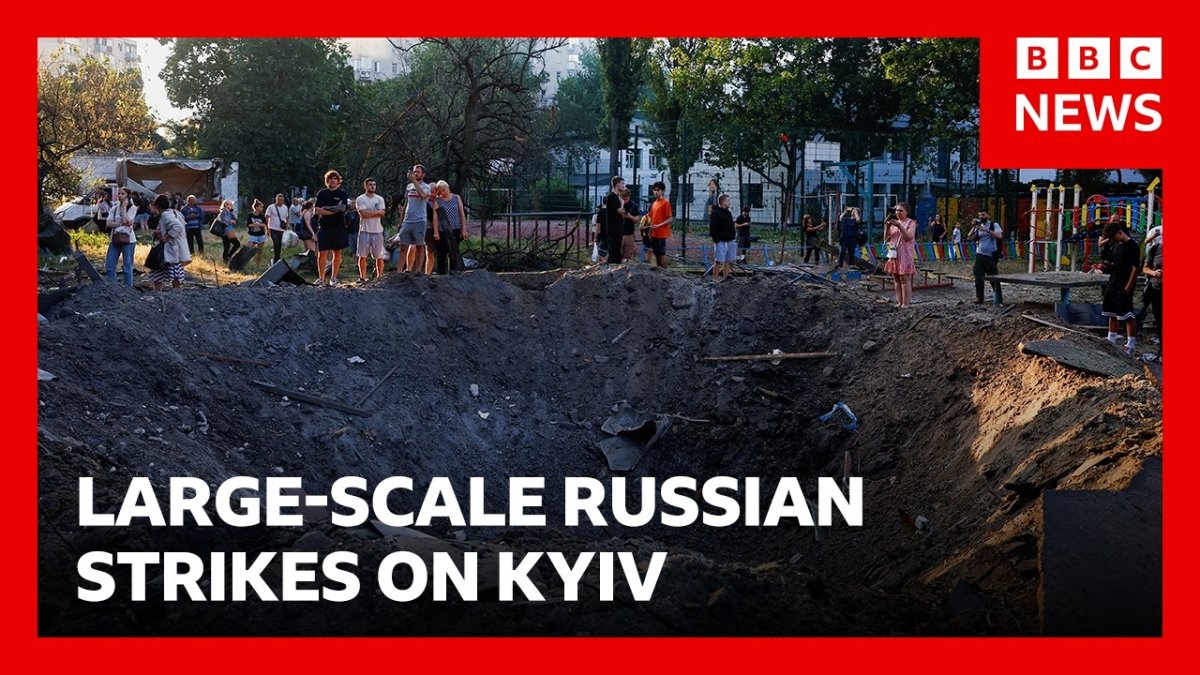
Analysis — The Strategic Calculus Behind Moscow's Escalation
The sheer scale of this attack — 74 missiles and nearly 500 drones in a single night — suggests a deliberate Kremlin strategy of overwhelming Ukraine's finite air defence resources rather than a tactical battlefield decision. By mixing ballistic missiles (which are difficult to intercept due to their high speed and steep trajectory) with large numbers of slower drones (which consume expensive interceptor missiles), Russian forces are effectively forcing Ukraine to choose between defending the capital and preserving munitions for front-line operations. This approach carries risks for Moscow as well. Each large-scale attack consumes substantial stocks of precision missiles that Russia has been rebuilding since the early months of the war. Western analysts suggest that sustained attrition at this tempo could deplete Russia's most capable munitions within months. However, the political calculus appears clear — demonstrating to the Ukrainian public and its Western backers that no city is safe, no matter how well defended. For President Zelensky, the demand for Patriot missile manufacturing licences has become the central test of Western resolve. If granted, the licences would represent a significant shift in US policy — moving from supplying finished weapons to enabling domestic Ukrainian production — and would signal a long-term Western commitment that Moscow has been working to erode since 2022. Such dynamics affect ordinary citizens through prolonged uncertainty and resource strain on both sides.The attack on Kyiv on the night of 1-2 July 2026 was not merely another chapter in a grinding war of attrition. It was a deliberate escalation in scale and method — a signal from the Kremlin that it retains both the capability and the political will to strike at Ukraine's heart. For the families still waiting for news of those trapped in the rubble of Darnitskyi, the strategic calculus provides little comfort.
By Irina Volkov, Staff Writer
This article was produced with AI-assisted research and editorial support. Reporting is based on sources cited in the article.
What's Your Reaction?
 Like
0
Like
0
 Dislike
0
Dislike
0
 Love
0
Love
0
 Funny
0
Funny
0
 Wow
0
Wow
0
 Sad
0
Sad
0
 Angry
0
Angry
0
Russia/Eastern Europe Correspondent at Global1.News. Covering Russian politics, energy, security, and the shifting dynamics of the post-Soviet space. Provides clear-eyed analysis on one of the world's most opaque regions.














Comments (0)