
Moscow Signs Military Partnership With the Taliban
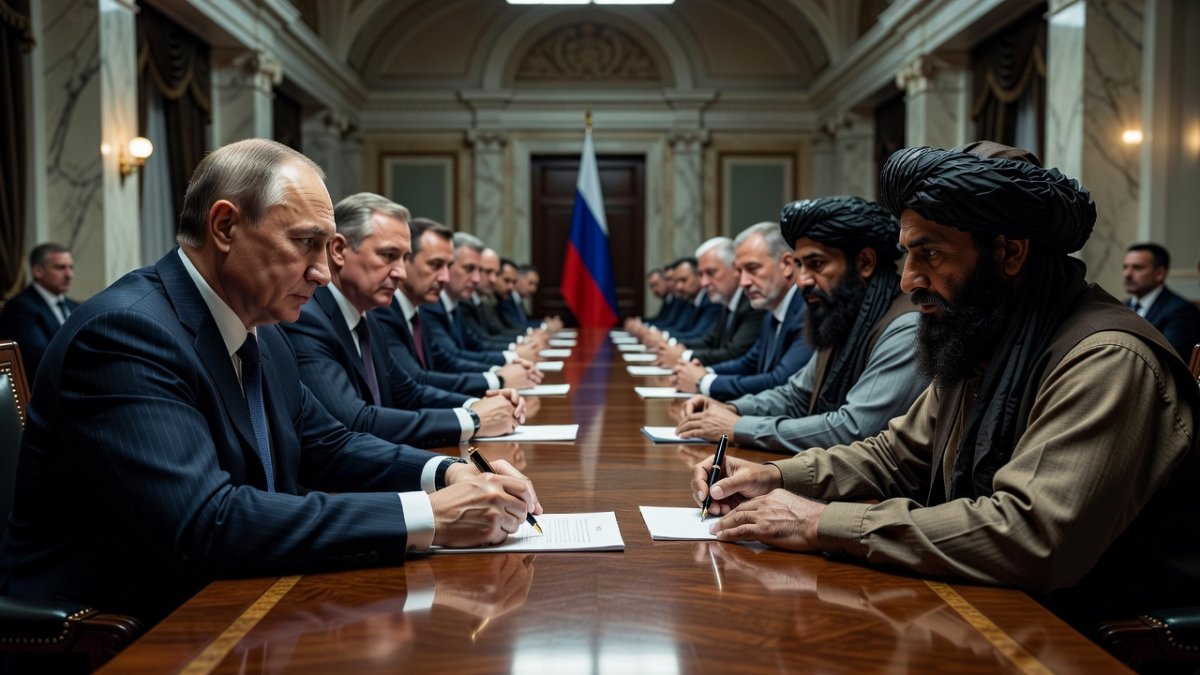
Moscow Formalizes Military Ties with Taliban in Symbolic Pact Amid Regional Shifts
In a development that underscores Russia's pragmatic approach to Central Asian security, the Kremlin has signed a military partnership agreement with Afghanistan's Taliban-led administration. The accord, finalized in Moscow on October 12, focuses on information sharing, joint counter-narcotics operations, and limited training exchanges rather than large-scale arms transfers or troop commitments. While Russian officials presented the deal as a step toward stabilizing the region, several independent analysts immediately characterized it as largely symbolic, aimed at formalizing existing contacts without committing substantial resources.
Details of the Agreement and Its Limited Scope
The partnership document, signed by Russian Defense Minister Sergei Shoigu and Taliban Deputy Prime Minister Abdul Salam Hanafi, outlines cooperation in border security along the Tajik-Afghan frontier and intelligence coordination against ISIS-Khorasan. No provisions for direct weapons deliveries or Russian military bases in Afghanistan appear in the text, according to diplomats briefed on the negotiations. Instead, the emphasis rests on annual consultations and technical assistance valued at roughly 50 million rubles annually—equivalent to under $550,000 at current exchange rates.
Russian sources indicate the agreement builds on years of quiet engagement. Since the Taliban's 2021 takeover, Moscow has maintained a small diplomatic presence in Kabul and hosted multiple Taliban delegations. This latest step formalizes those channels but stops short of recognition as a government, preserving Russia's flexibility with other Afghan factions and international partners.
Historical Context of Russia-Taliban Relations
Russia's posture toward the Taliban has evolved significantly since the 1990s, when Moscow supported the Northern Alliance against the original Taliban regime. Following the U.S. withdrawal in 2021, Russian policymakers pivoted toward engagement to protect Central Asian allies from spillover instability. Data from the Russian Foreign Ministry shows at least 14 high-level meetings between Russian and Taliban representatives between 2022 and 2024, focusing primarily on counter-terrorism rather than ideological alignment.
Analysts note parallels with Russia's earlier outreach to other non-state actors in conflict zones, where formal agreements served diplomatic signaling more than operational integration. The current pact echoes similar low-commitment frameworks Moscow has used with groups in Syria and Libya.
Analyst Perspectives: Symbolism Over Substance
Independent experts in Moscow and beyond quickly downplayed the agreement's immediate strategic weight. Dr. Elena Kasyanova of the Institute of World Economy and International Relations observed that "this document codifies conversations already underway without introducing new capabilities or obligations." She pointed to the absence of any joint military exercises scheduled for 2025 and the modest financial allocation as evidence of caution on both sides.
Similarly, Kabul-based analyst Ahmad Wali Massoud argued the Taliban gains diplomatic legitimacy from the optics while Russia secures a channel for monitoring threats without entanglement. "Neither party appears ready for deeper integration given the Taliban's internal constraints and Russia's focus on Ukraine," Massoud stated in a written assessment shared with Global1 News.
These assessments align with patterns observed in prior Russian diplomatic moves, where public agreements often mask limited follow-through when core interests remain protected through other means.
Regional Implications and Security Data
The agreement arrives against a backdrop of heightened activity by ISIS-K, which claimed responsibility for attacks killing over 200 people in Afghanistan and neighboring states since 2022. Russian border guard statistics report a 17 percent increase in narcotics seizures along the Tajik frontier in the first nine months of 2024, underscoring mutual interest in containment.
Yet Central Asian states such as Uzbekistan and Kazakhstan have expressed measured concern, preferring multilateral formats like the Shanghai Cooperation Organization over bilateral Russian-Taliban arrangements. Tajik officials, in particular, have reiterated calls for stronger collective defenses, citing historical mistrust of Taliban governance.
Geopolitical Ripple Effects
Western governments have responded with caution. A U.S. State Department spokesperson noted that any cooperation must not undermine counter-terrorism efforts or Afghan human rights commitments. China, meanwhile, continues its own economic outreach to Kabul through Belt and Road projects, positioning itself as the primary investor rather than security partner.
For Russia, the move fits within a broader strategy of diversifying alliances while resources remain concentrated on the Ukrainian theater. Defense budget figures released in September show military spending at 6.7 percent of GDP, leaving little surplus for new Afghan commitments.
Over the longer term, observers expect the partnership to function mainly as a diplomatic tool, allowing Moscow to claim influence in post-American Afghanistan without the costs of deeper involvement.
This is Irina Volkov for Global1 News, reporting from Moscow. 🇷🇺
This article was produced with AI-assisted research and editorial support. Reporting is based on sources cited in the article.
What's Your Reaction?
 Like
0
Like
0
 Dislike
0
Dislike
0
 Love
0
Love
0
 Funny
0
Funny
0
 Wow
0
Wow
0
 Sad
0
Sad
0
 Angry
0
Angry
0
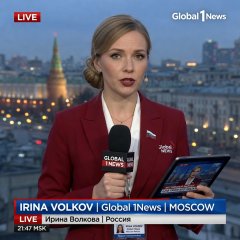
Russia/Eastern Europe Correspondent at Global1.News. Covering Russian politics, energy, security, and the shifting dynamics of the post-Soviet space. Provides clear-eyed analysis on one of the world's most opaque regions.












Comments (0)