
PH consumers urged to monitor meters closely as complaints of high power bills surge
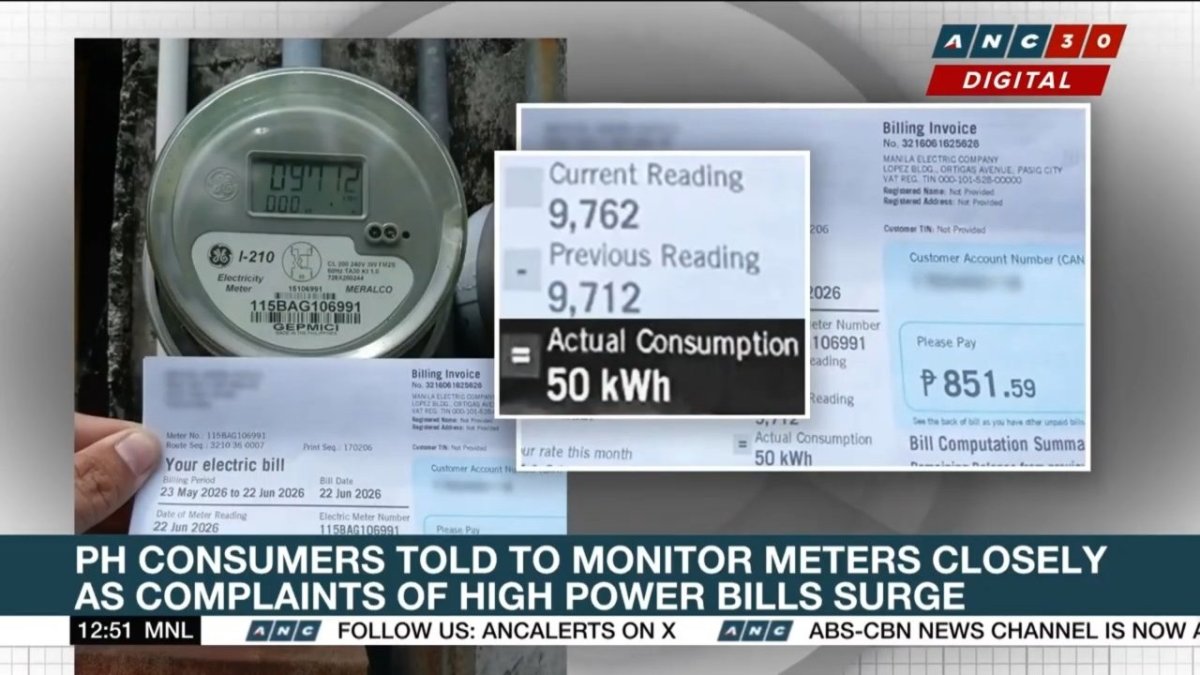
The ANC 24/7 report this week captured the growing frustration of households across Metro Manila and beyond as families opened their latest Meralco bills and saw costs climb once more. Ordinary Filipinos in places like Quezon City and Cebu now face the daily choice between keeping lights on for children doing homework or cutting back on meals to cover power expenses. The surge
The ANC 24/7 report this week captured the growing frustration of households across Metro Manila and beyond as families opened their latest Meralco bills and saw costs climb once more. Ordinary Filipinos in places like Quezon City and Cebu now face the daily choice between keeping lights on for children doing homework or cutting back on meals to cover power expenses. The surge has pushed many to check their meters more closely, just as the report urged.
Electricity Bills Surge Across Philippines as Families Face Record Meralco Hikes and Urged to Track Meters Daily
Manila, Philippines – June 2026 — Meralco residential rates climbed to P14.4833 per kilowatt-hour in June, up from P14.3345 per kilowatt-hour in May, leaving households in Manila, Quezon City, and surrounding provinces to absorb another increase on top of the April peak of P14.3496 per kilowatt-hour. The generation charge, which makes up more than half of every bill, passes through costs from the Wholesale Electricity Spot Market and independent power producers under the EPIRA law, so Meralco itself does not generate the power it delivers. Families now watch their meters daily because the latest ANC 24/7 coverage showed how small daily changes in usage can reveal whether a bill reflects actual consumption or an error.
Meralco Rates Hit New Highs in 2026
The June rate of P14.4833 per kilowatt-hour marks the latest step in a steady climb that began earlier this year. April already set an all-time record at P14.3496 per kilowatt-hour before May brought a slight dip that proved temporary. More than 50 percent of the total bill comes from the generation charge, a pass-through item that Meralco collects and forwards to power producers under the EPIRA framework enacted in 2001. Higher prices at the Wholesale Electricity Spot Market and increased payments to independent power producers directly feed into these charges without any markup by the distribution utility.
Consumers in Luzon see these figures on every statement because the regulatory structure requires full recovery of generation costs. The Department of Energy has noted that supply conditions on the Luzon grid remain tight, which keeps spot market prices elevated. Families in barangays from Caloocan to Parañaque now compare monthly statements side by side to understand how the same appliances produce larger charges month after month.
Why Bills Keep Rising
Global fuel prices have climbed because of ongoing conflict in the Middle East, pushing oil and coal costs higher for power plants that supply the Philippine grid. The peso has depreciated against the dollar at the same time, making imported fuel and equipment more expensive in local currency. Tighter supply conditions across the Luzon grid add further pressure when demand spikes during extreme heat that forces air conditioners to run longer in offices, schools, and homes.
Meralco spokesperson Joe Zaldarriaga has explained these factors in recent briefings, pointing out that generation costs move with international markets and currency rates rather than local distribution decisions. Teachers in public schools in Davao and jeepney drivers who charge phones at home both feel the same pass-through effect. The combination leaves little room for households to absorb the increases without cutting other expenses.
Consumers Hit Hard
Social media platforms filled with posts from Manila households showing bills that jumped from P2,000 to P13,000 in a single month. One family in Quezon City reported a rise from P12,000 to P31,000 even after reducing air conditioner use, a pattern repeated in Cebu and Baguio where summer temperatures stayed high. Sari-sari store owners now keep fewer refrigerators running because the added cost eats into already thin margins.
OFW families who rely on remittances to cover household expenses find less money left for school supplies and medical needs after the power bill arrives. Jeepney drivers in terminal areas around EDSA describe turning off lights earlier at night to stay within budget. Teachers in DepEd schools report that lesson preparation at home now competes with the need to limit electricity use. These stories show how the rate increases reach every corner of daily life rather than staying confined to large commercial users.
ERC Steps In With Refunds and Protection
The Energy Regulatory Commission ordered Meralco to refund P0.4278 per kilowatt-hour as part of an ongoing process tied to P14.17 billion in previously unrefunded amounts. Disconnection of service for nonpayment has been suspended from May through July 2026 to give households breathing room. Consumers using 200 kilowatt-hours or less per month can spread payments over three months under the new guidelines.
These measures aim to prevent sudden service cuts that would affect students preparing for exams and small businesses that depend on refrigeration. The Commission continues to review generation cost calculations to ensure only verified expenses reach consumer bills. Families in affected areas now visit Meralco business centers with printed statements to confirm they qualify for the installment option.
Rooftop Solar Gains Momentum
Interest in rooftop solar has grown as households seek alternatives to rising grid rates. Recent rule changes removed the need for barangay permits on certain small installations, speeding up approvals in cities such as Manila and Cebu. Multi-site net metering now allows one meter to offset usage at another location owned by the same customer, a change that helps OFW families with properties in different provinces.
Financing remains the main barrier for many middle-income households even though simpler permitting has cut red tape. Cooperatives in rural areas have begun group purchasing programs to lower equipment costs. The shift toward solar shows how communities respond when grid prices stay high for consecutive months.
Practical Steps for Consumers
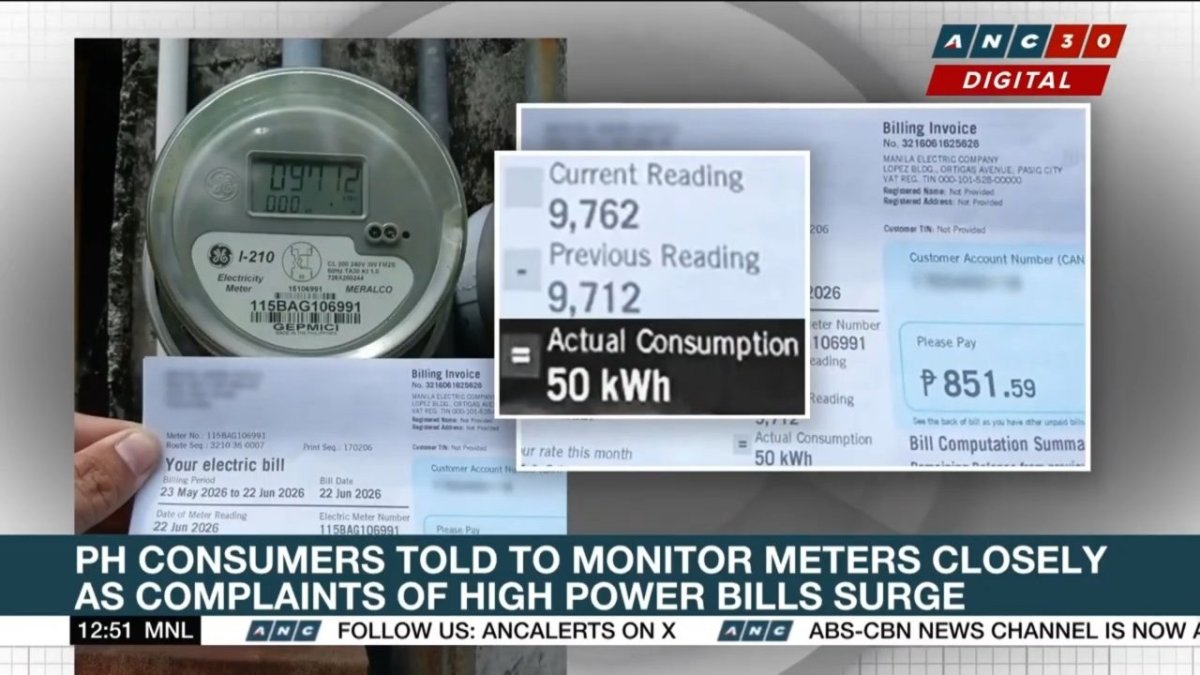
Meralco offers an online appliance calculator that lets users enter the wattage and daily hours of use for each device to estimate monthly consumption. The utility also prints a historical consumption chart on every bill so customers can spot unusual spikes at a glance. The ANC 24/7 report advised reading the meter at the same time each day and recording the numbers to compare against the billed amount.
Residents who notice sudden jumps should contact Meralco through its hotline or local office with the daily readings in hand. Checking for appliances left on standby or leaks in older refrigerators can reveal hidden usage that adds hundreds of pesos. These steps give families in every barangay a way to verify charges and adjust habits before the next bill arrives.
Economic Context and What Lies Ahead
The Philippine economy recorded 2.8 percent GDP growth in the first quarter, a slowdown that sustained high power costs could worsen if consumer spending continues to weaken. Advocacy groups have pressed both Congress and the Senate to review generation contracts and the fuel-cost pass-through policy that leaves households exposed to global price swings. Lawmakers in recent hearings heard testimony from consumer groups representing teachers, drivers, and store owners who described how electricity now ranks among their top three monthly expenses.
Without changes to how generation costs are passed along, families in Luzon and the Visayas will continue to face the same pressure each billing cycle. The combination of refunds, installment plans, and growing solar adoption offers short-term relief, yet long-term stability depends on policy adjustments that protect ordinary consumers while maintaining reliable supply. Communities across the country now watch both their meters and legislative developments to see which path will ease the burden.
By Bella Reyes, Staff WriterThis article was produced with AI-assisted research and editorial support. Reporting is based on sources cited in the article.
What's Your Reaction?
 Like
0
Like
0
 Dislike
0
Dislike
0
 Love
0
Love
0
 Funny
0
Funny
0
 Wow
0
Wow
0
 Sad
0
Sad
0
 Angry
0
Angry
0

Philippines/Southeast Asia Correspondent at Global1.News. Manila-based journalist covering Philippine politics, environment, maritime security, and social issues. Passionate about marine conservation and the communities protecting the Philippines' natural heritage.














Comments (0)