
Minitonas Flooding Cleanup Tests Rural Manitoba Resilience as McKay Family Leads Recovery
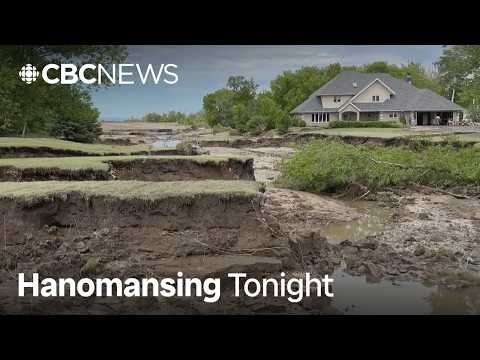
In the CBC News video from Hanomansing Tonight, Minitonas firefighter Mark McKay and his father Ian McKay, a local farmer, recounted how neighbours used farm equipment and personal resources to clear debris and restore access after the June 7-8, 2026 flash flooding devastated the Parkland region. The event left up to 150 residents displaced across Minitonas and Swan Valley West
In the CBC News video from Hanomansing Tonight, Minitonas firefighter Mark McKay and his father Ian McKay, a local farmer, recounted how neighbours used farm equipment and personal resources to clear debris and restore access after the June 7-8, 2026 flash flooding devastated the Parkland region. The event left up to 150 residents displaced across Minitonas and Swan Valley West, with Highway 10 severed by a 40-foot hole between Swan River and Minitonas. This disaster underscores the mounting pressures on rural Canadian infrastructure as extreme weather intensifies across the Prairies.
Minitonas Flooding Tests Rural Manitoba Resilience as McKay Family Leads Neighbour Recovery
Minitonas, Manitoba – June 10, 2026 — Catastrophic flash flooding struck western Manitoba's Parkland region on June 7 and 8, 2026, dumping 148 millimetres of rain on Minitonas in hours and overwhelming the Municipality of Minitonas-Bowsman, which declared a state of local emergency on June 8. The Town of Swan River followed with its own emergency declaration on June 9 after receiving 72 millimetres. Up to 150 people were displaced, homes filled with raw sewage, and a gas line rupture forced partial neighbourhood evacuations.

McKay Father-Son Account Details Volunteer Firefighter Efforts
Mark McKay, a volunteer firefighter in Minitonas, and his father Ian McKay, a local farmer, spoke directly to CBC News about the immediate response. They described how fire crews deployed Zodiac boats and farm equipment to rescue people stranded on rooftops after the East Favel River overtook the Second Avenue bridge. One truck carrying residents was swept away before firefighters reached the occupants.
The pair emphasised that volunteer firefighters maintained road access despite downed power lines and intermittent communications across the town of 465 residents. Mark McKay noted that crews worked through the night of June 8 to prevent further isolation of properties along Roaring River, where homes flooded for the first time in recorded local history.
Ian McKay highlighted the coordination among neighbours who arrived with tractors and loaders within hours of the rainfall ending. These private resources supplemented official efforts when Manitoba Hydro crews could not safely enter Minitonas due to severe damage and safety risks.
Provincial Emergency Response Mobilises Under Premier Kinew
Premier Wab Kinew confirmed that conservation officers sandbagged along the Swan River until 4 a.m. on June 9. He stated that all necessary provincial resources would be deployed to the region. The province's Emergency Management Organization established a command centre in Swan Valley to coordinate operations.
Infrastructure Minister Lisa Naylor reported that the EMO was actively monitoring food supplies for stranded residents and arranging medical deliveries. The province also addressed the boil water advisory triggered by power outages that caused loss of water pressure in Minitonas and surrounding areas.
Reeve Bill Gade of the Municipality of Minitonas-Bowsman described the collapse of Highway 10 as a critical break in regional connectivity. He noted that 100 or more power outages persisted, leaving parts of Swan Valley West without reliable service days after the initial rainfall.
Community-Led Cleanup Demonstrates Prairie Neighbour Resilience
Residents of Minitonas and Swan Valley West organised immediate recovery using personal farm equipment rather than waiting for external contractors. Ian McKay recounted how neighbours cleared mud and debris from basements filled with raw sewage after the overwhelmed sewer system backed up.
Volunteer groups maintained access routes even as Environment Canada recorded winds exceeding 110 kilometres per hour and golf-ball-sized hail in nearby Canupawakpa Dakota Nation. These efforts prevented additional isolation of properties along the Roaring River corridor.
The McKay family stressed that such neighbour coordination reflects longstanding rural Canadian practices of mutual aid during agricultural emergencies. This approach proved essential when official crews faced access restrictions due to the 40-foot highway breach.
Climate Change Intensifies Pressure on Rural Infrastructure
Environment Canada meteorologist Keane Kokolsky warned that the June 7-8 event occurred under extreme risk conditions that included potential tornadoes, large hail, and winds of 100 to 130 kilometres per hour. Additional rainfall exceeding 100 millimetres remained possible in the days following.
The flooding exposed vulnerabilities in aging rural infrastructure across the Parkland region, where bridges and highways were not designed for the increased intensity of Prairie storms. Similar events have tested communities from Alberta to Ontario in recent years.
Provincial officials acknowledged that repeated extreme weather is straining municipal budgets and emergency planning in small centres like Minitonas, population 465, located 355 kilometres northwest of Winnipeg. Long-term adaptation measures are now under review.
Economic Fallout Hits Local Businesses and Summer Tourism
Wellman Lake Lodge owner Cam McIntyre reported that the property remained operational only through generator power while expecting a devastated summer season. The loss of reliable communications and intermittent water service directly affected bookings from regional visitors.
Swan Valley West, population 2,759, faces prolonged disruption to Highway 10, which severs direct links between Swan River and Minitonas. Local agricultural operations reported delays in equipment movement and livestock management.
Reeve Bill Gade stated that properties along the Roaring River, never previously flooded, now require extensive remediation. This damage compounds existing challenges for rural economies already managing thin margins in grain and livestock production.
Ongoing Weather Risks and Provincial Monitoring Continue
Wet weather patterns are forecast to persist across western Manitoba, raising concerns about further strain on saturated ground and remaining infrastructure. Manitoba Hydro crews continue to assess damage in areas previously deemed unsafe to access.
The province maintains active coordination of food and medical resources through the Swan Valley command centre. Officials continue to monitor the boil water advisory affecting Minitonas and adjacent communities.
Residents and first responders alike, including the McKay family, remain focused on restoring basic services while preparing for potential additional rainfall in the coming days.
By Alex Thompson, Staff Writer
This article was produced with AI-assisted research and editorial support. Reporting is based on sources cited in the article.
What's Your Reaction?
 Like
0
Like
0
 Dislike
0
Dislike
0
 Love
0
Love
0
 Funny
0
Funny
0
 Wow
0
Wow
0
 Sad
0
Sad
0
 Angry
0
Angry
0

Canada Correspondent at Global1.News. Based in Toronto, covering Canadian politics, energy, trade, and US-Canada relations. Provides the Canadian perspective on North American and global affairs.















Comments (0)