
Middle East Oil Exporters Pivot to AI Hubs in Gulf States
The Middle Eastern energy exporters are channeling substantial capital into artificial intelligence to build new economic pillars beyond hydrocarbons. Saudi Arabia, the United Arab Emirates, and Qatar have outlined coordinated national programs that target data infrastructure, specialist training, and startup ecosystems. Saudi Arabia Positions SDAIA as Central Coordinator Saudi
The Middle Eastern energy exporters are channeling substantial capital into artificial intelligence to build new economic pillars beyond hydrocarbons. Saudi Arabia, the United Arab Emirates, and Qatar have outlined coordinated national programs that target data infrastructure, specialist training, and startup ecosystems.
Saudi Arabia Positions SDAIA as Central Coordinator
Saudi Arabia enters 2026 with the most capitalized AI program among Gulf Cooperation Council states. The Saudi Data and Artificial Intelligence Authority, established by royal decree in August 2019, functions as the primary coordinating body. Its National Strategy for Data and AI, approved in July 2020, sets targets of more than $20 billion in cumulative investment, 20,000 trained specialists, and 300 AI-driven startups by 2030.
PwC analysis projects that AI could contribute $135.2 billion to the Saudi economy by 2030. The Public Investment Fund, holding $913 billion in assets, has indicated plans to allocate a $40 billion vehicle specifically for AI technologies. In May 2025, HUMAIN, a PIF-backed entity, formed a partnership with Qualcomm focused on AI data-center development.
UAE Advances Through G42 and MGX Capital
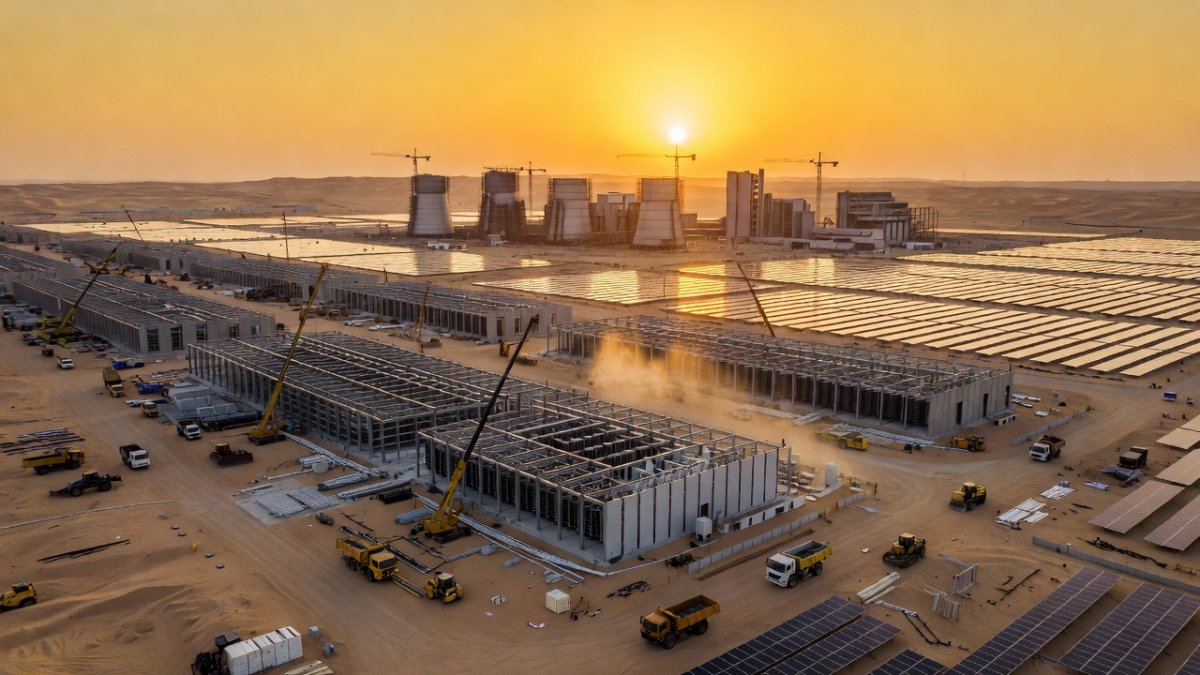
The United Arab Emirates has built a parallel track centered on G42, an Abu Dhabi-based AI holding company founded in 2018. MGX, with G42 as a founding partner, aims to raise $25 billion for AI-related investments. Microsoft has already committed more than $2 billion and is constructing three data centers in Saudi Arabia's Eastern Province, scheduled to open in 2026.
These projects illustrate how Gulf states are converting hydrocarbon revenues into compute capacity rather than relying solely on traditional export models.
Regional Compute Targets Reach 8-10 GW
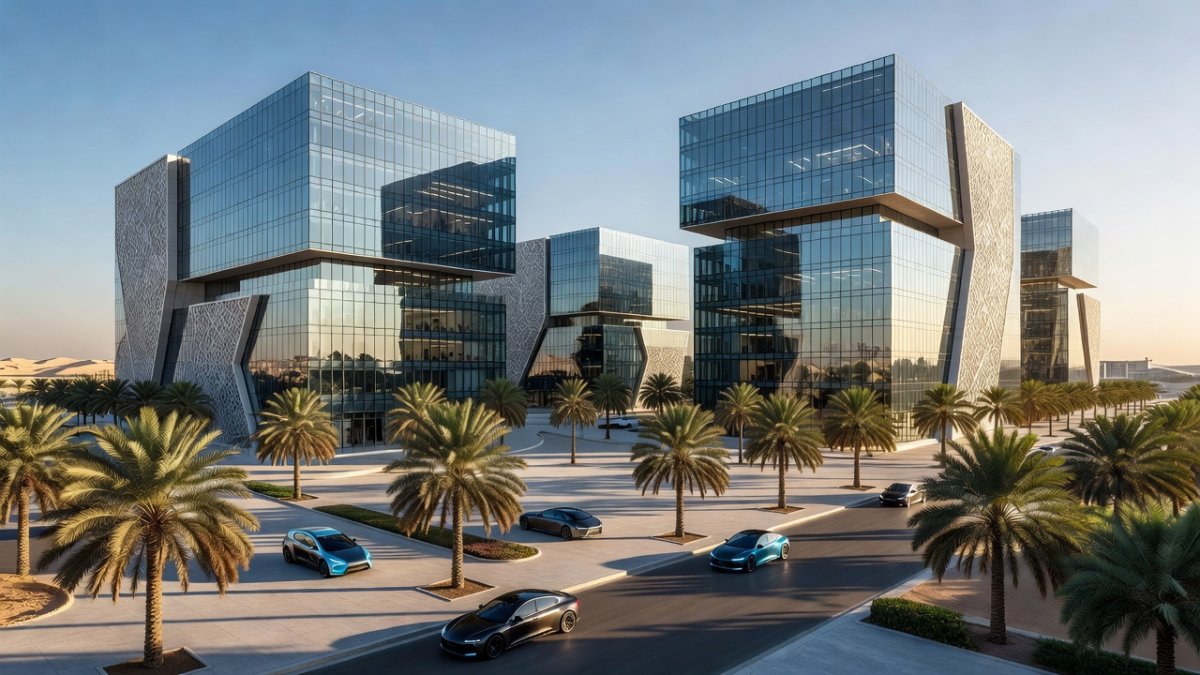
Collectively, Saudi Arabia, the UAE, and Qatar are planning 8-10 GW of AI-related compute capacity. Gartner forecasts that technology spending across the broader MENA region will reach $169 billion in 2026. The scale of these ambitions reflects a deliberate policy choice to capture value in the global AI supply chain.
Japanese Firms Explore Complementary Roles
Japanese technology companies are monitoring these developments closely. SoftBank, NTT, and NEC have expanded business development teams in the region, seeking opportunities in data-center construction, network infrastructure, and enterprise AI applications. Japan's Society 5.0 vision, which integrates cyber and physical systems, offers conceptual alignment with Gulf digital-transformation goals.
METI's AI strategy emphasizes international collaboration on standards and talent pipelines. While Chinese vendors remain active competitors for large-scale infrastructure contracts, Japanese firms position themselves through reliability in energy-efficient cooling systems and secure network architectures suited to high-temperature environments.
Policy Coordination and Talent Development
Success will depend on sustained policy coordination and human-capital formation. Saudi Arabia's target of 20,000 specialists requires accelerated university programs and international recruitment. The UAE has similarly expanded partnerships with global research institutions. These efforts run parallel to Japan's own initiatives under the Digital Agency to increase domestic AI expertise, creating potential for bilateral training exchanges.
Outlook for Diversification and Global Competition
The shift from energy exports to AI infrastructure is still in its early implementation phase. Timelines for full operational capacity of announced data centers extend into the late 2020s. Japanese stakeholders will continue to assess regulatory stability, energy pricing for compute loads, and opportunities to integrate Society 5.0 principles into regional projects.
Whether these investments ultimately reduce hydrocarbon dependence or simply add a new revenue stream remains to be measured against concrete economic outcomes over the coming decade.
By Kenji Tanaka, Staff Writer
This article was produced with AI-assisted research and editorial support. Reporting is based on sources cited in the article.
What's Your Reaction?
 Like
0
Like
0
 Dislike
0
Dislike
0
 Love
0
Love
0
 Funny
0
Funny
0
 Wow
0
Wow
0
 Sad
0
Sad
0
 Angry
0
Angry
0

Japan Correspondent at Global1.News. Tokyo-based voice covering Japanese politics, technology, economy, and culture. Tracks the intersection of tradition and innovation in one of the world's most dynamic societies.











Comments (0)