
Mexican-Americans Fill Los Angeles in Green for El Tri at World Cup
In a recent DW News report published June 21, 2026, the global broadcaster captured a striking scene unfolding across Los Angeles: Mexican-American families, small business owners, and students packing the streets in green jerseys, united in their support for Mexico's national team, El Tri, at the 2026 FIFA World Cup. The video documents a community choosing heritage over adopt
In a recent DW News report published June 21, 2026, the global broadcaster captured a striking scene unfolding across Los Angeles: Mexican-American families, small business owners, and students packing the streets in green jerseys, united in their support for Mexico's national team, El Tri, at the 2026 FIFA World Cup. The video documents a community choosing heritage over adopted nationality, raising profound questions about identity, belonging, and what it means to be Mexican-American in the United States today.
Mexican-Americans Fill Los Angeles Streets in Green as El Tri Captures Hearts at 2026 World Cup
Los Angeles, California – June 21, 2026 —
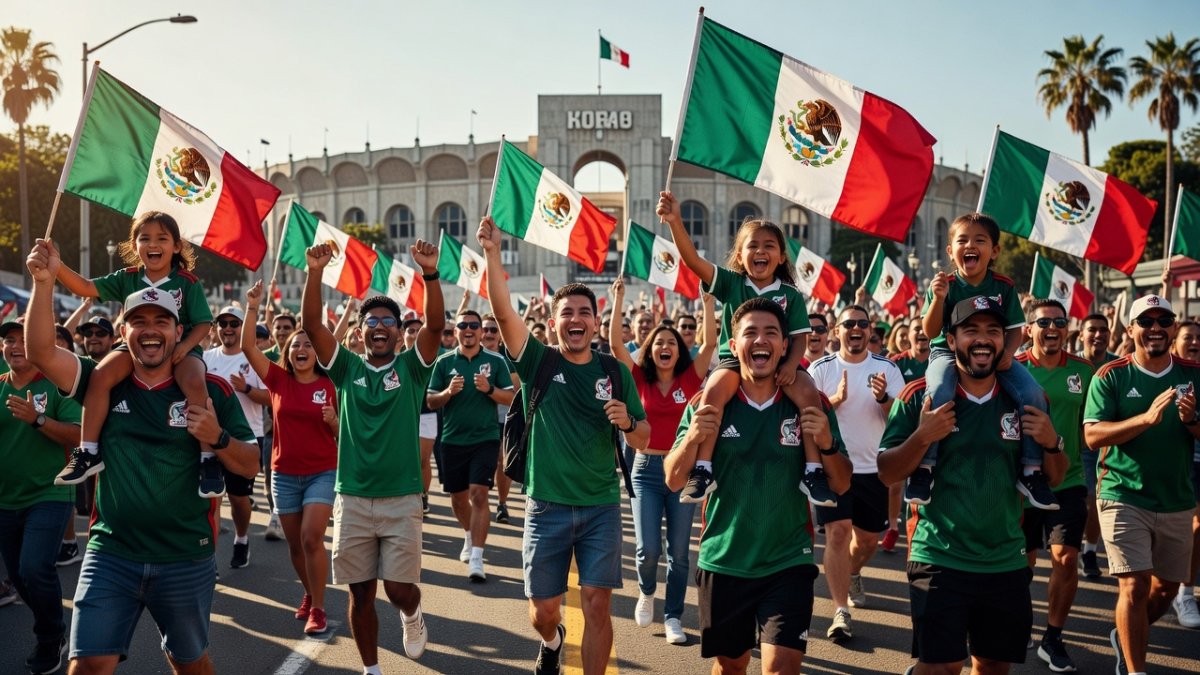
Mexican-American fans in Los Angeles fill the streets in green jerseys during the 2026 FIFA World Cup, showing overwhelming support for El Tri. (Global 1 News)
The DW News Video and the Scene in Los Angeles
The DW News video published on June 21, 2026, opens with scenes from Los Angeles where Mexican-American fans fill streets in green jerseys as Mexico advances in the 2026 FIFA World Cup. The short film shows supporters in Boyle Heights and East LA explaining why they back El Tri over the USMNT even though they live in the United States. After Mexico City, Los Angeles counts as the world's second-largest Mexican city with more than 1.8 million people of Mexican descent.
The video highlights packed gatherings at the FIFA Fan Festival inside LA Memorial Coliseum where green dominates the crowd. Fans wave flags and sing Cielito Lindo while watching Mexico's early group-stage wins. The report notes that soccer serves as a direct link to heritage for families whose roots trace to states such as Jalisco and Michoacán.
Viewers see interviews with residents of Pico-Union and MacArthur Park who describe the choice as natural rather than divided. The footage captures taquerías along Cesar Chavez Avenue displaying El Tri banners in their windows. Mexico opened the tournament on June 11 at Estadio Azteca with performances by Shakira and Burna Boy, and that energy carried across the border into Southern California neighborhoods.
Los Angeles as the Second-Largest Mexican City
Los Angeles holds the largest Mexican-origin population outside Mexico City with more than 1.8 million residents claiming Mexican ancestry according to recent census figures. Neighborhoods such as Boyle Heights, East LA, Lincoln Heights, and the San Gabriel Valley function as extensions of Mexican daily life. Taquerías on Cesar Chavez Avenue serve fresh tortillas made in the same style found in Mexico City tortillerías.
Local businesses stock pan dulce and elote prepared with the same recipes families brought north decades ago. The presence of the Federación Mexicana de Fútbol logo appears on community bulletin boards alongside notices from the Instituto de los Mexicanos en el Exterior. These institutions help maintain ties between Los Angeles residents and Mexican government programs that support cultural events.
President Claudia Sheinbaum's administration has continued outreach through the Secretaría de Relaciones Exteriores to Mexican communities in the United States. This connection strengthens during the World Cup when LA Memorial Coliseum and SoFi Stadium host eight matches. The demographic reality means that green jerseys outnumber other colors at public viewings across the city.
Heritage and Family Ties Driving Support for El Tri
Many Mexican-American families in Los Angeles trace their support for El Tri to grandparents who arrived in the 1970s and settled in East LA. Parents pass down the tradition of watching matches together while cooking pozole on weekends. The choice to cheer for Mexico reflects loyalty to the country where their parents or grandparents were born rather than rejection of the United States.
Students at schools near Olvera Street often wear Mexico jerseys to class on match days. Teachers report that conversations about the national team help students discuss their dual heritage openly. The connection runs through music as well, with mariachi bands playing the Himno Nacional Mexicano at community centers in Pico-Union before games.
Family members in Mexico send messages and videos during matches, creating real-time links across the border. This practice continues a pattern seen during previous tournaments when CONCACAF qualifiers drew crowds to MacArthur Park. The emotional pull remains strong because soccer represents one of the clearest expressions of Mexican identity available in Southern California.
The Fan Festival and Match-Day Experience
The FIFA Fan Festival at LA Memorial Coliseum has drawn thousands of green-clad supporters since the tournament began on June 11. Mexico's first two group-stage victories brought larger crowds each day, with fans arriving early to secure spots near the main screens. Food vendors sell tamales and aguas frescas alongside official merchandise.
Inside SoFi Stadium, which also hosts matches, the atmosphere mirrors the energy at Estadio Azteca. Supporters from Boyle Heights and the San Gabriel Valley travel together on buses organized by local soccer clubs. They sing Cielito Lindo in unison when goals are scored, creating a sound that carries through the stands.
Security staff at the Coliseum note that the gatherings remain peaceful and family-oriented. Parents bring children dressed in miniature El Tri kits, continuing a tradition that began with earlier World Cups. The experience reinforces community bonds that extend beyond the ninety minutes of each match.
Broader Questions of Identity and Belonging
The decision to support Mexico raises ongoing discussions about what it means to be Mexican-American in 2026. Residents of Lincoln Heights describe the choice as compatible with American life rather than contradictory. They attend USMNT matches when Mexico is not playing and celebrate American holidays while maintaining strong ties to Mexican culture.
Local leaders connected to the Instituto de los Mexicanos en el Exterior emphasize that dual loyalty strengthens rather than weakens community participation. Young people in East LA often speak of feeling fully at home in both countries. The World Cup simply makes visible a reality that exists year-round in neighborhoods where Spanish and English mix naturally.
President Claudia Sheinbaum's policies continue the approach begun under the AMLO administration of recognizing Mexican communities abroad as part of the national fabric. This recognition helps families in Los Angeles feel their support for El Tri receives official acknowledgment from Mexico rather than criticism.
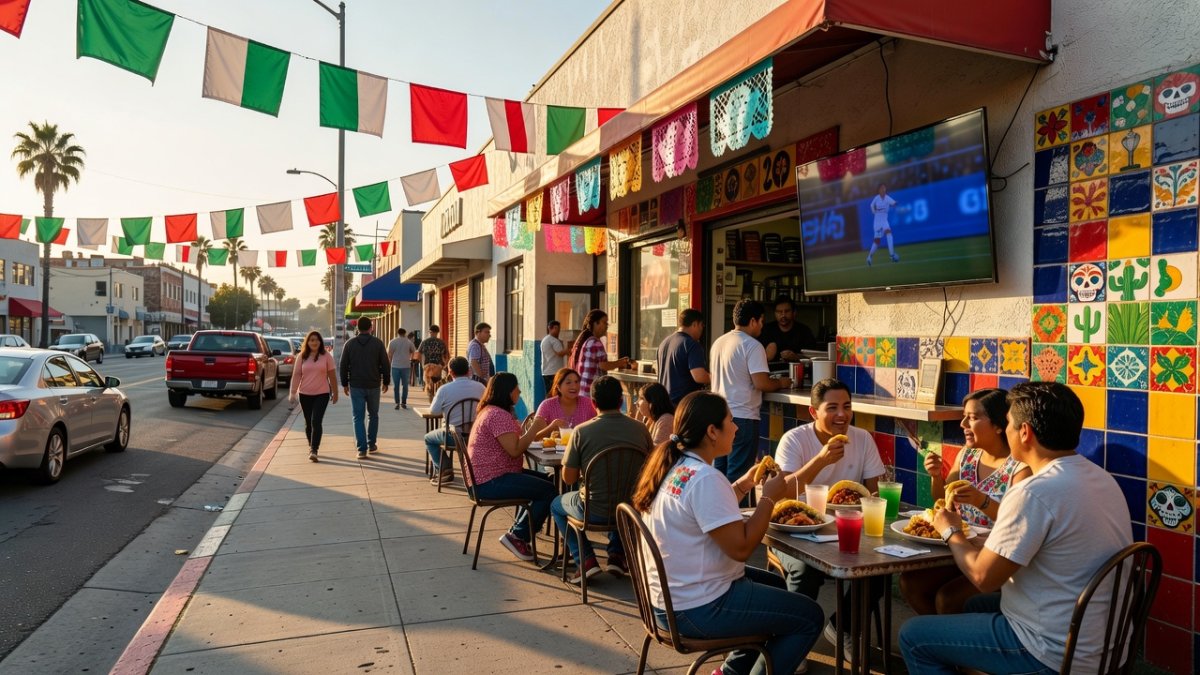
Taquerías and businesses along Cesar Chavez Avenue in Boyle Heights display El Tri colors as the community rallies behind Mexico during the World Cup. (Global 1 News)
Community Events Along Cesar Chavez Avenue
Watch parties organized by churches in Boyle Heights and businesses along Cesar Chavez Avenue have become daily fixtures during the tournament. Parish halls in East LA set up large screens and serve pozole after evening matches. Taquería owners report increased foot traffic as fans gather to celebrate victories.
Mariachi groups perform between games at venues near Olvera Street, drawing families from MacArthur Park and Pico-Union. These events mirror the quinceañera celebrations and Día de Muertos altars that mark other moments in the community calendar. The World Cup simply adds another occasion for collective gathering.
Local radio stations broadcast live commentary in Spanish while community centers distribute information about Mexican government services. The combination of sports, food, and music creates spaces where younger generations learn the cultural references that connect them to their grandparents' stories.
Economic Impact on Local Businesses and Cross-Border Ties
Jersey sales at stores in the San Gabriel Valley and East LA have risen sharply since Mexico's opening matches. Flag vendors near LA Memorial Coliseum report selling out of green, white, and red merchandise within hours of each game. Small business owners note that the tournament brings customers who also purchase pan dulce and groceries for post-match meals.
Remittance flows to Mexico often increase during major tournaments as families send extra support for relatives attending matches at Estadio Azteca. The economic link runs both directions when Mexican companies sponsor events at the FIFA Fan Festival. This activity supports jobs in both Los Angeles and Mexican states that export goods to Southern California.
Cross-border family businesses benefit when relatives in Mexico send team apparel that sells quickly in Boyle Heights shops. The pattern reflects the long-standing economic relationship between Los Angeles and Mexico that continues regardless of tournament schedules.
What to Watch for in Upcoming Matches
Mexico's next group-stage matches will determine whether El Tri advances further into the knockout rounds hosted across the United States, Canada, and Mexico. Fans in Los Angeles are already planning caravans to SoFi Stadium for any games involving the national team. The FIFA Fan Festival at LA Memorial Coliseum will remain open through July 19.
Community leaders expect continued high attendance at watch parties along Cesar Chavez Avenue as long as Mexico remains in the tournament. The visibility of green jerseys in neighborhoods from Pico-Union to the San Gabriel Valley will stay strong through the remainder of the competition. This sustained presence underscores the permanent role Mexican culture plays in Los Angeles life.
Upcoming fixtures will also test how families balance support for El Tri with interest in other co-host nations. The pattern established in the first weeks suggests that heritage connections will continue to guide choices for the majority of Mexican-American supporters in the city.
By Rosa Martinez, Staff WriterThis article was produced with AI-assisted research and editorial support. Reporting is based on sources cited in the article.
What's Your Reaction?
 Like
0
Like
0
 Dislike
0
Dislike
0
 Love
0
Love
0
 Funny
0
Funny
0
 Wow
0
Wow
0
 Sad
0
Sad
0
 Angry
0
Angry
0
Latin America/Andes Correspondent at Global1.News. Based in Bogota, covering politics, environment, energy, and social movements across the Andean region. Passionate about environmental journalism and communities protecting their land.















Comments (0)