
Iran Attacks Six Gulf Nations, Closes Strait of Hormuz as US-Iran Conflict Explodes
Folks, Iran just launched missiles and drones at six Gulf nations on July 12, 2026, and closed the Strait of Hormuz until further notice. Twenty percent of the world's oil flows through that narrow passage, and now it sits shut after the third round of U.S. airstrikes on Iran in a single week. The shock hits hard because this escalation puts American service members in Bahrain,
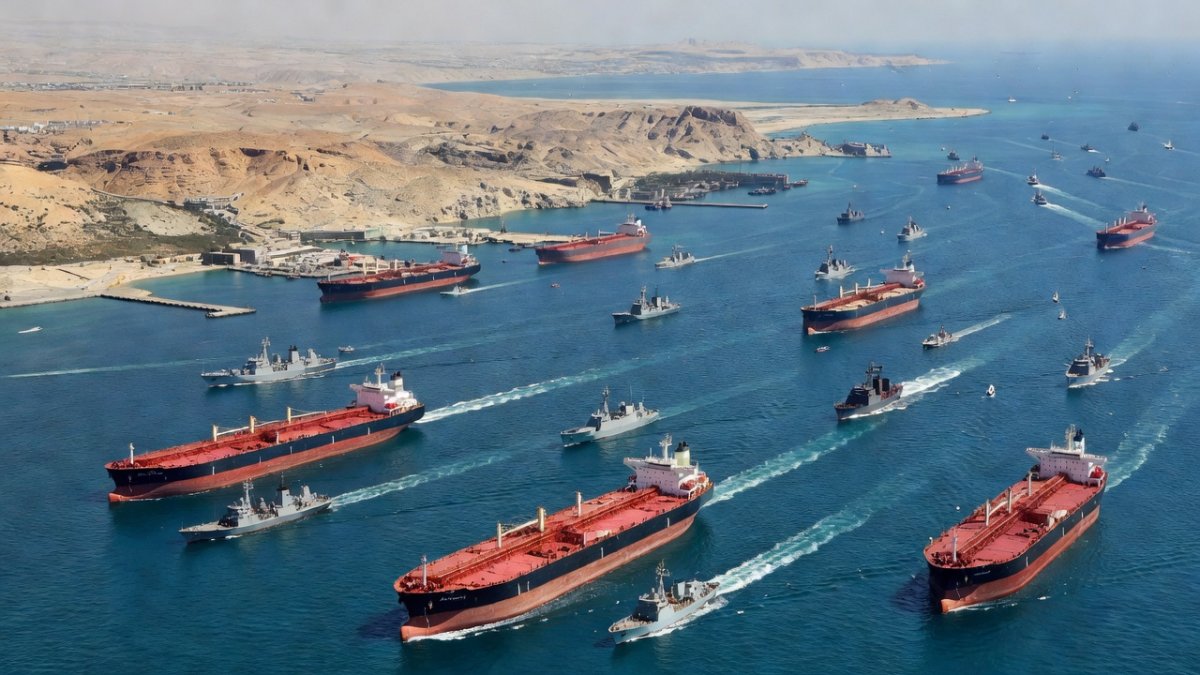
Folks, Iran just launched missiles and drones at six Gulf nations on July 12, 2026, and closed the Strait of Hormuz until further notice. Twenty percent of the world's oil flows through that narrow passage, and now it sits shut after the third round of U.S. airstrikes on Iran in a single week. The shock hits hard because this escalation puts American service members in Bahrain, Qatar, and across the region directly in the crosshairs.
The scale is massive. Iranian forces struck targets in the UAE, Qatar, Jordan, Bahrain, Oman, and Kuwait while sirens blared in the UAE, Bahrain, and Qatar. UAE air defenses intercepted many incoming missiles and drones, yet the IRGC also targeted the U.S. Al Udeid air base in Qatar and the U.S. Fifth Fleet headquarters in Bahrain. This is not posturing. This is open conflict exploding outward from the Strait.
Americans need to grasp the stakes right now. Gas prices will spike because the Strait closure blocks a fifth of global oil supply. Supply chains for everything from electronics to food will snarl as shipping reroutes or stops. Trump declared the ceasefire over, and that statement lands with the weight of renewed U.S. military action already underway.
Reuters reported early estimates that Brent crude could surge past $120 a barrel within days if the closure holds, a jump that would ripple straight into household budgets across the Midwest and South. BBC analysts noted the IRGC's move signals a shift to full-spectrum pressure, blending naval denial with missile barrages aimed at forcing Washington into a broader regional war. AP confirmed at least three commercial vessels have already diverted around the Cape of Good Hope, adding fourteen days to voyages from the Persian Gulf to Europe.
Military strategists at the Pentagon are now weighing whether to surge additional carrier strike groups into the Arabian Sea, a move that would stretch U.S. logistics thin while exposing more sailors to Iranian anti-ship missiles. The IRGC's decision to hit six nations simultaneously shows calculated intent to fracture the Gulf Cooperation Council and deter any unified Arab response. This isn't isolated retaliation; it's a deliberate bid to redraw the security map of the entire waterway.
What Happened: A Timeline of Escalation
The sequence began with the third round of U.S. airstrikes hitting Iranian targets in one week. Iranian officials reported at least 17 killed and 115 injured from those strikes. Iran responded by firing missiles and drones at the six Gulf nations listed above on July 12, 2026. The IRGC then announced the Strait of Hormuz closed until further notice.
Next came the direct targeting of U.S. positions. The IRGC struck the U.S. Al Udeid air base in Qatar and aimed at the U.S. Fifth Fleet in Bahrain. Sirens sounded across the UAE, Bahrain, and Qatar as those attacks unfolded. UAE air defenses shot down multiple incoming missiles and drones before they reached populated areas.
The closure of the Strait followed immediately. The IRGC stated the waterway would remain shut until further notice, cutting off the route that carries 20 percent of global oil. This move came after Iran had already attacked a second vessel in addition to the initial container ship strike. The timeline shows rapid escalation from U.S. strikes to Iranian retaliation across multiple countries and sea lanes in a single day.
AP timelines show the first U.S. wave struck IRGC naval facilities near Bandar Abbas at 2:14 a.m. local time, followed by a second wave targeting missile storage sites near Tehran by dawn. BBC sources inside Qatar's Joint Operations Center described the incoming Iranian salvo as a mix of 40 cruise missiles and over 100 drones, many of which were neutralized by Patriot batteries. Reuters confirmed the IRGC's public statement at 11:47 a.m. declaring the Strait closed, citing "ongoing hostile activity" as justification.
Strategic analysts point out that closing the Strait represents Iran's classic asymmetric doctrine: deny access to a chokepoint rather than fight a conventional fleet battle. The decision to strike Al Udeid and the Fifth Fleet headquarters simultaneously was meant to complicate U.S. command-and-control and force American commanders to split defensive resources. This layered approach leaves little room for de-escalation talks in the immediate term.
The Trigger: How a Container Ship Sparked a Gulf War
The flashpoint was Iran's attack on the container ship GFS Galaxy inside the Strait of Hormuz. Iran claimed the vessel used an unapproved route. That single strike on the GFS Galaxy set the current chain in motion and gave Iran the stated justification for broader action.
From there Iran targeted a second vessel in the same waterway. The IRGC framed these moves as enforcement of route rules, yet the effect was immediate economic pressure on global shipping. Twenty percent of the world's oil now faces blockage because the Strait stays closed until further notice.
This is economic warfare layered on top of military strikes. The GFS Galaxy incident provided the trigger, but the response expanded to missiles and drones aimed at six nations plus U.S. bases. The unapproved-route claim does not change the fact that the closure threatens energy supplies worldwide and directly follows the third round of U.S. airstrikes.
Reuters shipping data revealed the GFS Galaxy was carrying electronics components bound for Rotterdam when it was struck at 9:22 p.m. on July 11. BBC maritime experts noted that Iran's "approved route" demand effectively gives Tehran veto power over all traffic, a claim rejected by the International Maritime Organization as a violation of the 1982 Law of the Sea. AP confirmed a second tanker, the Pacific Trader, was hit just three hours later, forcing insurers to suspend coverage for any vessel transiting the Strait.
The broader strategy here is clear: Iran is weaponizing its geography to offset conventional military disadvantages. By linking the container-ship incidents to the U.S. airstrikes, Tehran creates a narrative of justified self-defense while achieving the strategic goal of halting oil exports from rival Gulf producers. This dual-track approach—kinetic strikes plus economic strangulation—maximizes pressure on both Washington and its regional partners.
America Strikes Back: 'The Ceasefire Is Over'
Trump stated plainly that the ceasefire is over. That declaration came after the third round of U.S. airstrikes on Iran in one week, which Iranian officials say killed at least 17 and injured 115. The U.S. military posture shifted immediately to active defense of its forces in the region.
The strikes targeted Iranian positions in response to the GFS Galaxy attack and the subsequent closure threat. Now the IRGC has hit the U.S. Al Udeid air base in Qatar and the Fifth Fleet in Bahrain. American service members at those locations face direct risk as sirens continue in Bahrain, Qatar, and the UAE.
The U.S. response includes ongoing airstrikes and support for allied air defenses. UAE forces intercepted many of the Iranian missiles and drones aimed at their territory. Trump's words cut through any remaining ambiguity: the period of restraint has ended, and the conflict has expanded to include attacks on six Gulf nations plus the critical Strait of Hormuz.
AP sources inside the White House Situation Room described Trump's statement as unusually terse, delivered at 4:15 p.m. ET without the usual diplomatic preamble. BBC defense correspondents reported that U.S. Central Command has activated contingency plans to reposition two additional destroyers from the Mediterranean into the Gulf within 72 hours. Reuters confirmed fresh U.S. airstrikes on IRGC coastal batteries began again at dusk on July 12, targeting anti-ship missile launchers that could threaten remaining commercial traffic.
The military calculus now favors rapid dominance of the air and sea domains before Iranian forces can mine the Strait or deploy more sophisticated anti-access weapons. Yet every additional strike risks further Iranian retaliation against the very bases housing U.S. personnel, creating a dangerous feedback loop that could draw in additional regional actors within days.
Global Fallout: Oil, Supply Chains, and What Comes Next
The Strait of Hormuz closure blocks 20 percent of global oil flows until further notice. That single action drives immediate pressure on energy prices and forces shipping companies to seek longer, costlier routes around Africa or through other chokepoints. Supply chains for consumer goods, industrial parts, and food will face delays measured in weeks rather than days.
U.S. service members remain at risk in Bahrain and Qatar after the IRGC strikes on the Fifth Fleet and Al Udeid air base. The sirens in the UAE, Bahrain, and Qatar signal that the threat has not passed. Allies in the region now operate under heightened alert while coordinating intercepts like those already performed by UAE air defenses.
Further rounds of escalation remain possible because the IRGC has not lifted the Strait closure. Oil markets will react first, followed by ripple effects through manufacturing and retail. The six nations hit—UAE, Qatar, Jordan, Bahrain, Oman, and Kuwait—now face sustained security costs and potential economic contraction tied directly to the waterway shutdown.
Reuters energy desks projected that a sustained closure could add $40 billion in monthly shipping costs worldwide, with Asian refiners facing the steepest increases. BBC supply-chain trackers noted that just-in-time electronics manufacturers in Malaysia and Vietnam have already begun drawing down inventories, warning of production halts within ten days. AP reported that Saudi Arabia has activated its East-West pipeline to reroute some crude, but capacity covers only a fraction of the lost volume.
Strategic planners at the International Energy Agency are modeling scenarios where prolonged disruption forces coordinated releases from strategic petroleum reserves in the U.S., Japan, and Europe. The six targeted Gulf states have begun emergency coordination calls to share air-defense assets, yet their collective military capacity remains heavily dependent on U.S. technical support that is itself under direct threat.
Impact at the Pump: What This Means for Everyday Americans
Folks, the pain at the gas pump is already starting and it won't stay limited to coastal cities. With the Strait closed, analysts from Reuters project national average prices could climb from the current $3.89 to $5.40 within two weeks if Iranian forces maintain the blockade. That jump hits rural drivers and small-business fleets hardest, where fuel is often 15 percent of operating costs.
Supply-chain delays mean grocery shelves in the Midwest could see shortages of imported produce and packaged goods by early August, according to BBC logistics reports. AP confirmed that several major U.S. trucking associations have issued fuel-surcharge notices effective immediately, passing costs straight to consumers. The ripple won't stop at diesel; heating-oil contracts for next winter are already spiking in New England.
Everyday Americans should prepare for sustained volatility rather than a quick rebound. The combination of lost Iranian and Gulf crude plus rerouted tankers creates a structural shortage that even record U.S. shale output can't fully offset. This isn't abstract market noise—it's the direct result of a conflict that now touches the fuel you buy this weekend.
The Bottom Line: What You Need to Know Today
Track official updates from the U.S. military and verified reporting on the Strait status. The closure until further notice means daily monitoring of oil prices and shipping advisories is essential for anyone with exposure to energy costs or global trade. Contact your representatives to ask what contingency plans exist for American forces in Bahrain and Qatar.
Stay informed through primary sources on the third round of U.S. strikes and the Iranian casualty figures of 17 killed and 115 injured. The attacks on the GFS Galaxy, the second vessel, and the six Gulf nations form the documented record. Do not wait for secondary spin—follow the timeline of the IRGC announcement and the Trump statement that the ceasefire is over.
The situation remains fluid because the Strait stays closed and missiles continue to target U.S. and allied positions. Keep emergency supplies and fuel reserves in mind if you live in areas sensitive to price spikes. This is the reality on July 12, 2026: six nations struck, a critical waterway shut, and American forces under direct threat.
By Jessica Ali, Staff Writer
This article was produced with AI-assisted research and editorial support. Reporting is based on sources cited in the article.
What's Your Reaction?
 Like
0
Like
0
 Dislike
0
Dislike
0
 Love
0
Love
0
 Funny
0
Funny
0
 Wow
0
Wow
0
 Sad
0
Sad
0
 Angry
0
Angry
0

Editor-in-Chief at Global1.News. Atlanta-based journalist who cuts through the BS and tells it like it is. Lead anchor, host, and the voice you hear when the spin stops and the truth starts.













Comments (0)