
Dermot Murnaghan Dies Aged 68 After Prostate Cancer Battle
Dermot Murnaghan, the veteran broadcaster whose career spanned Channel 4, ITV, the BBC and Sky News, has died at the age of 68 after a year-long battle with stage 4 prostate cancer. The former lead anchor, who presented Channel Four Daily, BBC Breakfast and later became one of the longest-serving faces of Sky News, passed away peacefully at his north London home on 11 July 2026
Dermot Murnaghan, the veteran broadcaster whose career spanned Channel 4, ITV, the BBC and Sky News, has died at the age of 68 after a year-long battle with stage 4 prostate cancer. The former lead anchor, who presented Channel Four Daily, BBC Breakfast and later became one of the longest-serving faces of Sky News, passed away peacefully at his north London home on 11 July 2026 surrounded by his family.
Dermot Murnaghan Dies Aged 68 After Prostate Cancer Battle
London, UK – 11 July 2026 — The veteran presenter leaves behind a legacy that touched every corner of British broadcasting.
The Passing of a Broadcasting Icon
Dermot Murnaghan died peacefully at his home in north London on 11 July 2026, surrounded by his family. The 68-year-old presenter had been diagnosed with stage 4 prostate cancer in June 2025 and fought the disease for just over a year. His family issued a short statement confirming the news and expressed gratitude to the NHS teams who cared for him, particularly staff at the Royal Free London NHS Foundation Trust. In keeping with his understated style, the announcement avoided spectacle and focused on the quiet dignity that marked his entire career.
Across the United Kingdom, viewers who had woken to his voice on breakfast television or followed his measured analysis during election nights received the news with genuine sadness. Murnaghan belonged to a generation of broadcasters who moved seamlessly between public service and commercial outlets, earning trust through consistency rather than personality. His death at 68 removes one of the few journalists to have presented at all four major British broadcasters over a 35-year span.
The timing, coming just weeks after the latest round of local elections, underscored how central he remained to the national conversation. Colleagues described a man who prepared meticulously and treated every bulletin as though it mattered to the people watching in kitchens and living rooms across the country. His family's thanks to the Royal Free highlighted the everyday reality of cancer treatment within the NHS, an institution he had often reported on with care.

From Devon to Channel 4
Born on 26 December 1957 in Barnstaple, Devon, Dermot Murnaghan grew up in a region where local stories rarely reached national airwaves. He began his career at the European Business Channel before moving to ITN. In April 1989 he joined Channel 4 to host the new breakfast programme Channel Four Daily, remaining until September 1992. The role placed him at the centre of the expanding commercial television landscape that challenged the BBC's morning dominance.
One of his most significant early moments came in 1997 when he broke the news of Princess Diana's death on Channel 4. The broadcast reached households still adjusting to rolling news and demonstrated his ability to deliver difficult information with clarity and restraint. Viewers in Devon and beyond recognised the measured Devon accent that never sought to mask its origins.
His move between outlets reflected the changing economics of British television in the late 1980s and early 1990s. Channel 4's remit to innovate gave him space to develop a style that combined authority with approachability. Families in rural south-west England saw one of their own reporting from Westminster and foreign capitals, narrowing the distance between national events and everyday life.
BBC Years
Murnaghan joined the BBC in 2002 and presented BBC Breakfast until 2007. He also anchored the Six O'Clock News and Ten O'Clock News, and fronted the relaunched Treasure Hunt. During this period he covered the 2005 general election and developed a reputation for forensic yet courteous interviewing of senior politicians. His calm delivery suited the BBC's emphasis on impartiality at a time when trust in public service broadcasting remained high.
Viewers in Scotland, Wales and the English regions relied on his bulletins for straightforward accounts of devolution debates and Westminster legislation that directly affected council tax, schools and hospitals. Colleagues noted his willingness to master complex policy briefs rather than rely on charisma alone. The BBC years cemented his status as a safe pair of hands during major national stories.
His departure in 2007 to join Sky News illustrated the growing competition for experienced presenters. The move did not diminish his standing within the BBC, where he continued to be regarded as one of the corporation's most versatile operators. Audiences accustomed to his face at 6am or 10pm felt the shift across the fragmented media landscape.
Sky News Legacy
In January 2008 Murnaghan became lead anchor for Sky News Today and later Sky News Tonight, remaining for more than 15 years. He covered the 2010, 2015, 2017 and 2019 UK general elections, the 2020 US election, the Brexit referendum and its aftermath, the COVID-19 pandemic and numerous royal events. His 16-year tenure ended at Easter 2023 when he announced his departure, describing the role as "a privilege".
At Sky he adapted to the demands of rolling news while maintaining the same measured tone that had defined his earlier work. Election-night coverage reached millions of households seeking clarity amid exit-poll swings and constituency results. During the pandemic his reporting on daily Downing Street briefings provided context for families managing lockdowns and vaccine rollouts.
His departure left a gap in Sky's evening schedule that colleagues struggled to fill with equivalent gravitas. The 16 years at Sky represented the longest single chapter of a career that had already spanned three other major broadcasters, underlining his rare adaptability within an increasingly competitive industry.
A Courageous Battle
Diagnosed with stage 4 prostate cancer in June 2025, Murnaghan kept his treatment largely private while continuing selective public work. He died on 11 July 2026 at home. His family thanked the medical teams at the Royal Free London NHS Foundation Trust and other NHS staff who supported his care. Prostate Cancer UK statistics show that one in eight men will be diagnosed in their lifetime, with approximately 52,000 new cases recorded annually in the UK.
The diagnosis placed him among the thousands of men navigating advanced prostate cancer within the NHS system each year. His decision to maintain dignity during treatment mirrored the restraint he brought to the studio. Colleagues observed that he continued to follow political developments closely even as his health declined.
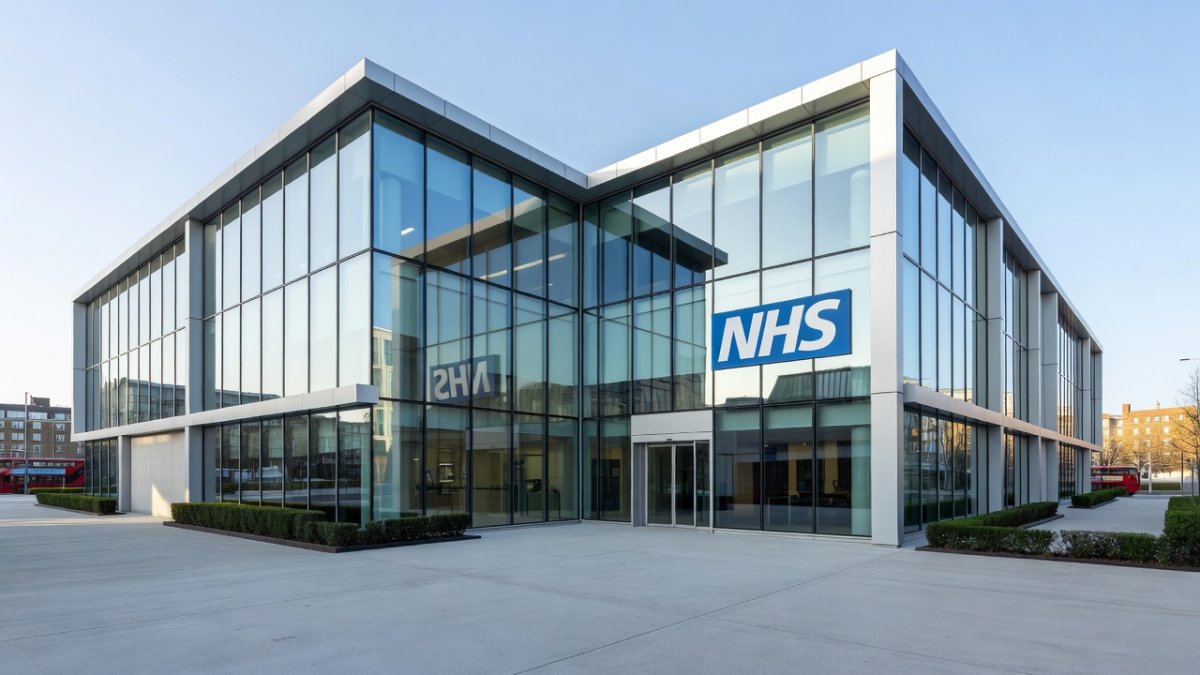
Public discussion of his illness has prompted renewed attention to prostate cancer screening and early detection programmes across the UK. Families in similar situations recognised the quiet courage required to balance private treatment with a lifetime spent in the public eye. The Royal Free's involvement highlighted the specialist urology and oncology services available through the NHS to patients across north London and beyond.
Tributes Across the Industry
Krishnan Guru-Murthy paid tribute, stating: "What a sad loss so young. Dermot was a very fine journalist and presenter whose career spanned all the main British broadcasters. He was also very kind." Other colleagues from Channel 4, the BBC and Sky News echoed the sentiment, recalling his professionalism and generosity toward younger journalists. Political figures across parties noted his fair but firm interviewing style during election campaigns.
Within the Royal Television Society and industry events, Murnaghan was remembered as one of the last presenters to have worked across the full spectrum of British broadcasting. His ability to move between public service and commercial environments without compromising standards earned quiet respect. Tributes emphasised his kindness off-screen, particularly toward production teams during long election nights.
The breadth of responses reflected the reach of his 35-year career. Viewers who had grown up with his voice on Channel Four Daily or BBC Breakfast joined journalists in marking the end of an era defined by steady, authoritative presentation rather than sensationalism.
The Bottom Line — What Comes Next
Murnaghan is survived by his wife Maria Keegan and children including son Jack. His career demonstrated that a single presenter could maintain credibility across Channel 4, ITV, the BBC and Sky News while covering the defining political events of three decades. The loss arrives at a moment when broadcast journalism faces questions over funding, impartiality and audience fragmentation.
Younger journalists now entering the industry will study his archive of election coverage and royal reporting as examples of clarity under pressure. The family's emphasis on NHS care during his final year has already contributed to conversations about prostate cancer services in hospitals from Barnstaple to London. His measured presence on screen offered reassurance during moments of national uncertainty.
The industry will continue without one of its most experienced anchors, yet the standards he set remain embedded in the expectations of millions of viewers who still turn to traditional broadcasters for reliable information. His legacy rests in the quiet professionalism that shaped British news presentation for more than three decades.
By Erica Thornton, Staff Writer
This article was produced with AI-assisted research and editorial support. Reporting is based on sources cited in the article.
What's Your Reaction?
 Like
0
Like
0
 Dislike
0
Dislike
0
 Love
0
Love
0
 Funny
0
Funny
0
 Wow
0
Wow
0
 Sad
0
Sad
0
 Angry
0
Angry
0

US Politics and Policy Correspondent at Global1.News. Based in Washington DC, covering American politics, policy, elections, and the courts. Knows how the system works and tells you what it actually means.












Comments (0)