
Mekong River Pollution: China Responds as Thai Activists Rally
Protests Unfold Outside the Chinese Embassy in Bangkok This week, members of the NGO Coordinating Committee gathered outside the Chinese Embassy in Bangkok to submit formal demands about heavy metal contamination in the Kok, Sai, Ruak and Mekong river basins. Lertsak Kamkongsak, chairman of NGO-COD, led the group in reading a statement that called on the Chinese government to a
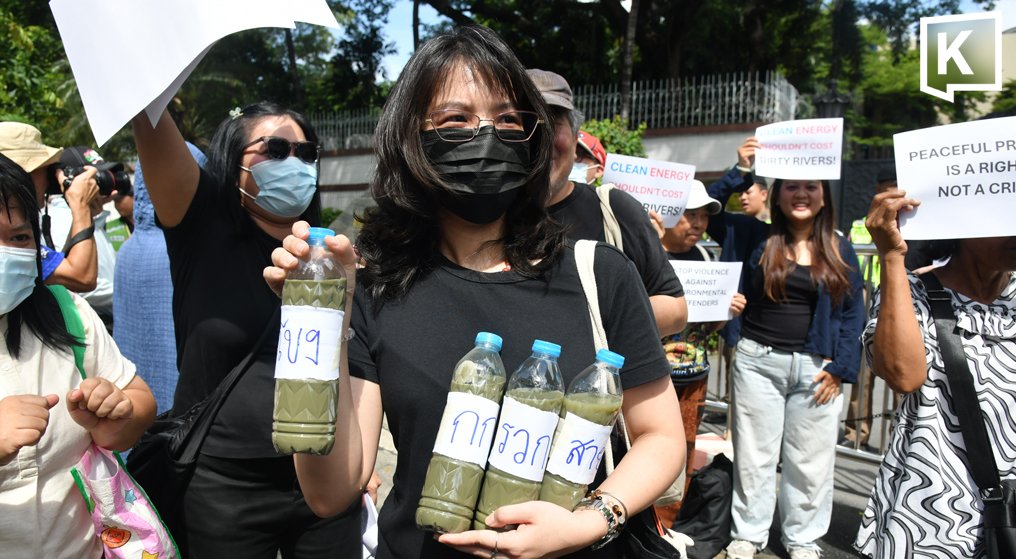
Protests Unfold Outside the Chinese Embassy in Bangkok
This week, members of the NGO Coordinating Committee gathered outside the Chinese Embassy in Bangkok to submit formal demands about heavy metal contamination in the Kok, Sai, Ruak and Mekong river basins. Lertsak Kamkongsak, chairman of NGO-COD, led the group in reading a statement that called on the Chinese government to address cross-border pollution linked to mining projects in Myanmar's Shan State. The delegation included representatives from 12 northern Thai provinces and carried petitions signed by over 4,500 residents who rely on these waterways.
Participants poured water collected from the affected waterways onto a map showing Thailand and Myanmar, highlighting the flow of contaminants across the shared borders. The demonstration remained peaceful throughout the morning, with activists wearing masks depicting Wisarut Srichan to draw attention to injuries sustained during an earlier protest at the Chinese Consulate-General in Chiang Mai. Thai police from the Metropolitan Police Bureau maintained a calm presence while community elders from Chiang Rai offered lotus flowers as symbols of peaceful intent.
Local groups also displayed photographs of dried fish catches from the Kok River near Chiang Saen district, where villagers reported a 60 percent drop in yields since late 2023. The action coincided with the annual meeting of the Thai-Myanmar Friendship Association, underscoring how ordinary citizens seek dialogue rather than confrontation when addressing shared environmental challenges.
Wisarut Srichan, a 34-year-old activist from Chiang Rai, became a symbol of the movement after sustaining a fractured arm and facial lacerations during the March confrontation at the Chiang Mai consulate. Eyewitness accounts described police using batons and water cannons against demonstrators who had chained themselves to the consulate gates, prompting widespread condemnation from human-rights groups. His image now appears on protest banners across northern Thailand, reminding participants of the personal costs of environmental advocacy.
The symbolic water-pouring ceremony drew on ancient Lanna traditions of offering river water to ancestors and spirits, but this year the act carried a sharper political message. Activists collected samples from visibly discolored stretches of the Kok River and poured them slowly over the map to illustrate how toxins travel downstream from Myanmar’s mining zones into Thai territory. Elders chanted protective mantras while younger protesters documented the ritual on social media, turning a private cultural practice into a public call for accountability.
Chinese Embassy Issues Formal Response on Contamination
The Chinese Embassy in Thailand released a statement confirming it has closely monitored reports of heavy metal contamination in Mekong River tributaries. The spokesperson emphasized that China attaches great importance to the issue and recognizes the concerns of communities living along the river basin regarding environmental and public health risks. Embassy staff noted that monitoring stations along the Lancang River section have recorded elevated arsenic and lead levels since March 2024.
The statement noted that the rivers in question are transboundary waterways shared by Thailand and Myanmar. It called for any investigation into the source of the contamination to rely on facts, scientific evidence and clear responsibility, while expressing support for Thailand and Myanmar to conduct a joint investigation as soon as possible. The embassy offered to share data from its own hydrological stations located near the Myanmar border.
Chinese diplomats further referenced ongoing cooperation under the Lancang-Mekong Cooperation mechanism, which has funded 47 environmental projects across the basin since 2016. They expressed willingness to participate in technical working groups coordinated by Thailand's Pollution Control Department and Myanmar's Ministry of Natural Resources and Environmental Conservation.
China’s diplomatic phrasing of “shared responsibility” deliberately frames pollution as a collective basin-wide issue rather than attributing blame to any single upstream actor. This language echoes Beijing’s broader Mekong strategy, which emphasizes mutual benefit and non-interference while avoiding direct acknowledgment of mining operations in Shan State. Analysts note that such wording allows China to appear cooperative without conceding regulatory oversight of its companies operating across the border.
The Mekong River Commission, established in 1995, provides the institutional backdrop for these exchanges, yet China remains only a dialogue partner rather than a full member. Embassy references to the commission therefore signal willingness to engage within existing multilateral structures while sidestepping calls for binding legal commitments. Observers in Vientiane suggest this approach may limit the commission’s ability to enforce stricter pollution standards along the upper Mekong corridor.
Communities Along Northern Thai Rivers Voice Daily Concerns
Residents in the Kok and Sai river areas of northern Thailand depend on these waterways for fishing, irrigation and household use. The presence of heavy metals has already altered daily routines for families who have long maintained small-scale agriculture and river-based livelihoods in provinces bordering Myanmar. In Mae Ai district of Chiang Mai, rice farmers now test irrigation water twice monthly using portable kits provided by the Department of Water Resources.
Buddhist temples along the Mekong in Thailand often host Loy Krathong ceremonies where communities float krathong offerings on the water. Elders in these villages now express worry that pollution could affect the spiritual and practical relationship local people maintain with the river system each November. At Wat Phra That Doi Tung in Chiang Rai, monks have begun incorporating river-cleaning rituals into their morning alms rounds to raise awareness among younger villagers.
Women’s weaving groups in Ban Sop Ruak have reported that traditional indigo dyeing processes, which rely on river water, now produce inconsistent colors due to changing mineral content. Community health volunteers from the Ministry of Public Health have started recording cases of skin irritation among children who swim in the Sai River during the hot season, adding local data to the broader scientific picture.
In the riverside village of Ban Huay Luk near the Kok River, fishing families have watched their daily catches shrink from 15 kilograms to barely three kilograms per boat. Grandmothers who once taught grandchildren to cast nets now spend afternoons testing water with pH strips instead, while fathers travel farther upstream in search of cleaner stretches. Children’s school attendance has dropped as families prioritize helping with alternative income activities such as vegetable gardening away from the riverbanks.
At dawn along the Sai River, villagers in Ban Pang Kham still perform the ritual offering of rice and flowers to the river spirit before casting lines, yet many now wear gloves when handling the water. Monks at nearby Wat Ban Pang have added a new verse to their morning chants that explicitly asks for protection from “poisoned currents,” reflecting how spiritual life adapts to environmental anxiety. These quiet changes reveal the deep cultural disruption caused by contamination that official reports often overlook.
Regional Trade and Tourism Face Direct Pressure
Thailand's tourism sector in Chiang Mai and the broader northern region attracts millions of visitors annually who enjoy river cruises and cultural experiences tied to the Mekong basin. Any prolonged perception of contamination risks reducing arrivals and affecting income for boat operators, guesthouse owners and local markets. The Tourism Authority of Thailand recorded 2.8 million visitors to Chiang Rai province in 2023, many of whom joined Golden Triangle boat tours.
Within ASEAN, the Mekong River serves as a vital corridor for trade between Thailand, Myanmar, Laos and Cambodia. Disruptions to water quality can influence cross-border commerce, agricultural exports and the stability of supply chains that Thai businesses rely upon for regional growth. The Mekong River Commission’s 2023 economic assessment valued annual fisheries and irrigation benefits at US$2.3 billion for Thailand alone.
Traders at the Chiang Saen border checkpoint have noted a 15 percent decline in fresh produce shipments to Myanmar since contamination concerns intensified. Meanwhile, the Thai Chamber of Commerce in Chiang Mai has begun discussing contingency plans with counterparts in Laos to reroute certain agricultural goods through alternative transport corridors if river conditions worsen.
Chiang Mai’s white-water rafting companies, which normally host 180,000 visitors each rainy season, have seen cancellations rise by nearly 40 percent since April. Hotel occupancy rates along the Kok River corridor have fallen from 78 percent to 51 percent compared with the same period last year, forcing many small operators to lay off seasonal staff. Tourism Authority of Thailand officials in Bangkok are now considering a targeted marketing campaign that emphasizes inland cultural sites rather than river-based activities.
ASEAN trade statistics show that Thailand exports over US$1.1 billion worth of agricultural goods annually through Mekong river ports. A sustained decline in water quality could push exporters to rely more heavily on costly overland routes through Laos, increasing prices for rice, vegetables and flowers in southern Chinese markets. Business associations warn that prolonged uncertainty may erode Thailand’s competitive edge within the regional supply chain.
Calls for Thai Institutional Oversight and Joint Action
Protest leaders requested a fact-finding inquiry through mechanisms of the House of Representatives to examine both the pollution sources and allegations of excessive force by police during the Chiang Mai demonstration. The NGO Coordinating Committee stressed that corporate responsibility must accompany any cross-border investment projects. They specifically asked the House Committee on Natural Resources and Environment to summon representatives from mining companies operating in Shan State.
The Chinese Embassy statement supported strengthened communication between Thailand and Myanmar, along with coordinated environmental conservation efforts across the entire Mekong basin. This approach aligns with Thailand's existing diplomatic engagement through regional water management forums. Thailand’s Ministry of Foreign Affairs has already proposed a trilateral technical meeting involving Myanmar, China and the Mekong River Commission secretariat in Vientiane.
Local academics from Chiang Mai University’s Faculty of Social Sciences have offered to assist with community-based monitoring programs that combine traditional ecological knowledge with laboratory testing. Such initiatives could provide the transparent data needed to reassure both Thai citizens and international partners about the health of the shared river system.
The House Committee on Natural Resources and Environment has scheduled its first hearing for late June, with invitations extended to the Pollution Control Department, the Ministry of Natural Resources and Environment, and representatives from the Mekong River Commission. Lawmakers are expected to request detailed maps of mining concessions in Shan State and copies of environmental impact assessments submitted by Chinese-backed companies. Civil-society groups have also petitioned for live-streamed sessions to ensure public access to the proceedings.
Thailand’s Ministry of Natural Resources and Environment has deployed additional field teams to collect sediment samples along the Kok and Sai rivers, with results expected within six weeks. The ministry’s director-general stated that any evidence of transboundary pollution will trigger formal diplomatic notes to both Myanmar and China under existing bilateral environmental agreements. This measured institutional response reflects Bangkok’s attempt to balance domestic pressure with regional diplomatic sensitivities.
Shared Responsibility for the Mekong Ecosystem
Protecting the Mekong River ecosystem remains a shared responsibility among all basin countries, as stated by the Chinese Embassy. Thai authorities continue to monitor developments while communities in the Isaan region and northern provinces await clear scientific findings on the contamination's origin. The Pollution Control Department has deployed additional automatic water-quality sensors at 14 locations along the Kok and Sai rivers since April.
Cooperation on water resource management offers Thailand an opportunity to reinforce its role in ASEAN environmental initiatives. Successful joint investigations could set precedents for handling similar transboundary challenges that affect daily life, food security and cultural practices across Southeast Asia. The upcoming ASEAN Ministerial Meeting on the Environment, scheduled for October in Bangkok, is expected to include a dedicated session on Mekong water quality.
Villagers in Nong Khai province along the Isaan stretch of the Mekong have begun exchanging experiences with communities in Chiang Rai through online forums organized by the Thai Network of River Basin Communities. These quiet exchanges of stories and practical advice reflect the gentle determination of ordinary people to safeguard the river that has sustained generations of Thai, Lao, Myanmar and Chinese families alike.
Looking ahead, Thailand’s leadership within ASEAN positions it to champion a binding water-quality protocol that includes mandatory disclosure of upstream mining activities. Long-term modeling by regional hydrologists suggests that without coordinated action, heavy-metal concentrations could rise another 25 percent by 2030, threatening both biodiversity and the 60 million people who depend on the basin. Thai diplomats are quietly preparing draft language for the October ministerial meeting that would establish an independent verification mechanism funded jointly by all six Mekong nations.
Thailand’s role in ASEAN water security will ultimately be measured not by statements but by its willingness to host transparent data platforms and support affected communities with compensation schemes. If successful, these efforts could transform the current crisis into a model for managing shared resources across Southeast Asia, ensuring the Mekong remains a lifeline rather than a source of conflict for future generations.
By Ann Srisawat, Staff WriterThis article was produced with AI-assisted research and editorial support. Reporting is based on sources cited in the article.
What's Your Reaction?
 Like
0
Like
0
 Dislike
0
Dislike
0
 Love
0
Love
0
 Funny
0
Funny
0
 Wow
0
Wow
0
 Sad
0
Sad
0
 Angry
0
Angry
0

Southeast Asia Correspondent at Global1.News. Based in Bangkok, covering Thai and Southeast Asian politics, economy, technology, and culture. Deep regional perspective on one of the world's most dynamic regions.












Comments (0)