
Meet the Japanese mayor seeking to normalize maternity leave in public office
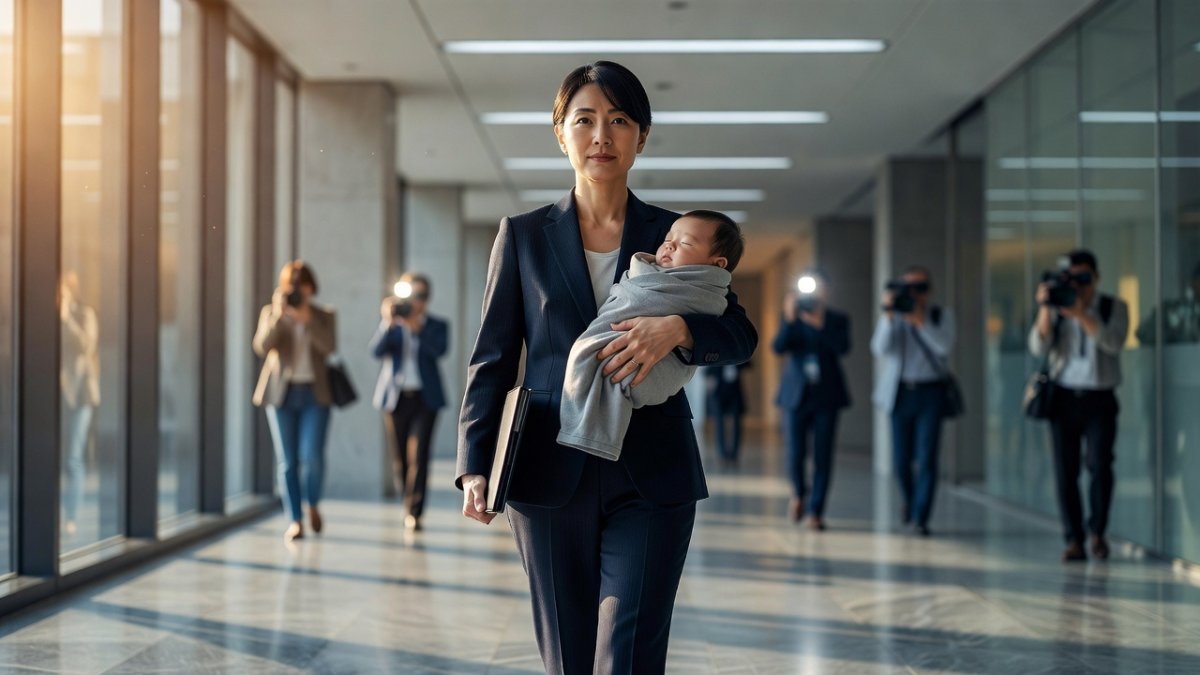
Shoko Kawata: The Mayor Pushing to Normalize Maternity Leave in Japanese Public Office
Breaking Tradition in Local Governance
Shoko Kawata, mayor of the mid-sized city of Fujisawa in Kanagawa Prefecture, announced in late September that she would take eight weeks of maternity leave before and after the birth of her first child, expected in early 2025. At 38, Kawata is the first sitting mayor in Japan to formally request such leave under the country’s Local Public Service Act provisions for elected officials. Her decision has ignited a national debate on whether pregnancy should remain a career-ending event for women in public office.
“Public service should not demand that women choose between leadership and family,” Kawata stated during a press conference at Fujisawa City Hall on October 2. She emphasized that her deputy mayor would handle routine duties while she remains available for critical decisions via secure video links. This hybrid approach, she noted, draws on lessons from pandemic-era remote governance that many municipalities adopted but rarely applied to childbirth.
Japan’s Persistent Gender Gap in Leadership
Japan ranks 118th out of 146 countries in the World Economic Forum’s 2024 Global Gender Gap Report, with women holding just 10.2 percent of seats in the House of Representatives. At the local level, only 14.8 percent of mayors and 18.3 percent of local assembly members are women, according to the Ministry of Internal Affairs and Communications. These figures have improved by less than two percentage points since 2015, despite the 2018 Act on Promotion of Gender Equality in Politics.
Kawata’s case highlights how maternity stigma compounds these numbers. A 2023 survey by the Japan Association of City Mayors found that 67 percent of female local politicians who gave birth during their term resigned or did not seek re-election, citing “impossible scheduling conflicts” and pressure from male-dominated councils. Kawata aims to change that precedent.
The Announcement and Immediate Backlash
When Kawata first disclosed her pregnancy in August, conservative commentators questioned her fitness for office. A segment on a major evening news program featured analysts arguing that “voters elected a full-time mayor, not a part-time one.” Online discourse included accusations that she was “prioritizing personal life over public duty.”
Yet support quickly mobilized. The Japan Federation of Women’s Organizations issued a statement praising the move as “long overdue,” while the Kanagawa Prefectural Assembly passed a non-binding resolution encouraging other municipalities to adopt similar leave protocols. Kawata received more than 4,200 messages of encouragement through the city’s official portal within the first week.
Legal and Practical Framework
Under Japan’s current rules, elected officials are not automatically entitled to paid maternity leave like civil servants. Kawata worked with the city’s legal department to structure her absence as a temporary delegation of authority rather than a formal leave, preserving her salary and title. The arrangement requires her to attend at least one in-person cabinet meeting per month and respond to emergencies within 24 hours.
Fujisawa has invested in digital infrastructure to make this feasible. The city upgraded its secure conferencing system last year using a ¥120 million grant from the national Digital Agency, allowing encrypted sessions with real-time translation for non-Japanese residents. Kawata noted that these tools, originally procured for disaster response, now serve dual purposes in work-life integration.
Expert Perspectives on Cultural Shift
Professor Akiko Sato of Keio University’s Graduate School of Media and Governance argues that Kawata’s visibility could accelerate change. “When a mayor models this behavior, it sends a signal to private-sector employers and younger women that leadership tracks need not end at pregnancy,” Sato said in an interview. She points to data from Sweden, where 87 percent of female municipal leaders took parental leave between 2018 and 2022 without electoral penalty.
Critics remain. Former Tokyo assemblyman Hiroshi Tanaka warned that “frequent delegation risks diluting accountability,” though he acknowledged the arrangement’s transparency. Labor economist Mika Nakamura of the Japan Institute for Labour Policy and Training added that normalizing leave for politicians could indirectly pressure companies to improve their own policies, citing a 2022 study showing correlation between public-sector role models and private-sector retention of mothers.
Implications for National Policy and Demographics
Japan’s fertility rate stood at 1.20 in 2023, the lowest on record. Government projections estimate the population will shrink by 30 percent by 2070 without drastic increases in female labor participation and family support. Kawata’s initiative intersects directly with Prime Minister Shigeru Ishiba’s “New Form of Capitalism” agenda, which includes expanded childcare and flexible work mandates.
If successful, her model could influence revisions to the Public Offices Election Act, currently silent on parental leave. Several opposition parties have already drafted bills requiring municipalities above 50,000 residents to provide paid leave equivalents. Early polling by Asahi Shimbun shows 58 percent of respondents support the concept for mayors, though support drops to 41 percent for national Diet members.
Looking Ahead: A Test Case for 2025
Kawata plans to document her experience in a public report after returning to full duties in March 2025, including metrics on decision turnaround times and resident satisfaction surveys. She hopes the data will serve as a template rather than an exception. “This is not about one mayor,” she said. “It is about whether Japanese institutions can evolve to reflect the lives of half their population.”
The coming months will reveal whether Kawata’s experiment reduces or reinforces skepticism. What is already clear is that her decision has forced a long-avoided conversation into the open, one that extends far beyond Fujisawa’s city limits.
This is Kenji Tanaka for Global1 News, reporting from Tokyo. 🇯🇵
This article was produced with AI-assisted research and editorial support. Reporting is based on sources cited in the article.
What's Your Reaction?
 Like
0
Like
0
 Dislike
0
Dislike
0
 Love
0
Love
0
 Funny
0
Funny
0
 Wow
0
Wow
0
 Sad
0
Sad
0
 Angry
0
Angry
0
Japan Correspondent at Global1.News. Tokyo-based voice covering Japanese politics, technology, economy, and culture. Tracks the intersection of tradition and innovation in one of the world's most dynamic societies.













Comments (0)