
MASA 2026 Brings Abidjan's Rue Princesse and Senegalese Voices to Continental Stage
The streets of Yopougon in Abidjan pulsed with new energy this April as Ivorian choreographer Massidi Adiatou brought the legendary Rue Princesse to the stage at MASA 2026. His work captured the essence of coupé-décalé nightlife and carried it across borders to audiences from Dakar to Rabat. This moment highlighted how local African expressions continue to shape the continent's
The streets of Yopougon in Abidjan pulsed with new energy this April as Ivorian choreographer Massidi Adiatou brought the legendary Rue Princesse to the stage at MASA 2026. His work captured the essence of coupé-décalé nightlife and carried it across borders to audiences from Dakar to Rabat. This moment highlighted how local African expressions continue to shape the continent's performing arts landscape.
MASA 2026 Brings Abidjan's Rue Princesse and Senegalese Voices to Continental Stage
[Dakar, Senegal] — From April 11 to 18, 2026, the Palais de la Culture de Treichville hosted the 14th edition of the Marché des Arts du Spectacle Africain, drawing over 2,000 artists and 500,000 spectators. The event placed Ivorian street culture alongside Senegalese choreography, creating direct links between Abidjan's urban rhythms and Dakar's dance traditions. For African readers, these exchanges demonstrate how cultural markets can generate touring opportunities and professional networks that extend beyond national borders.
A Choreographer's Vision: Rue Princesse Comes to Life
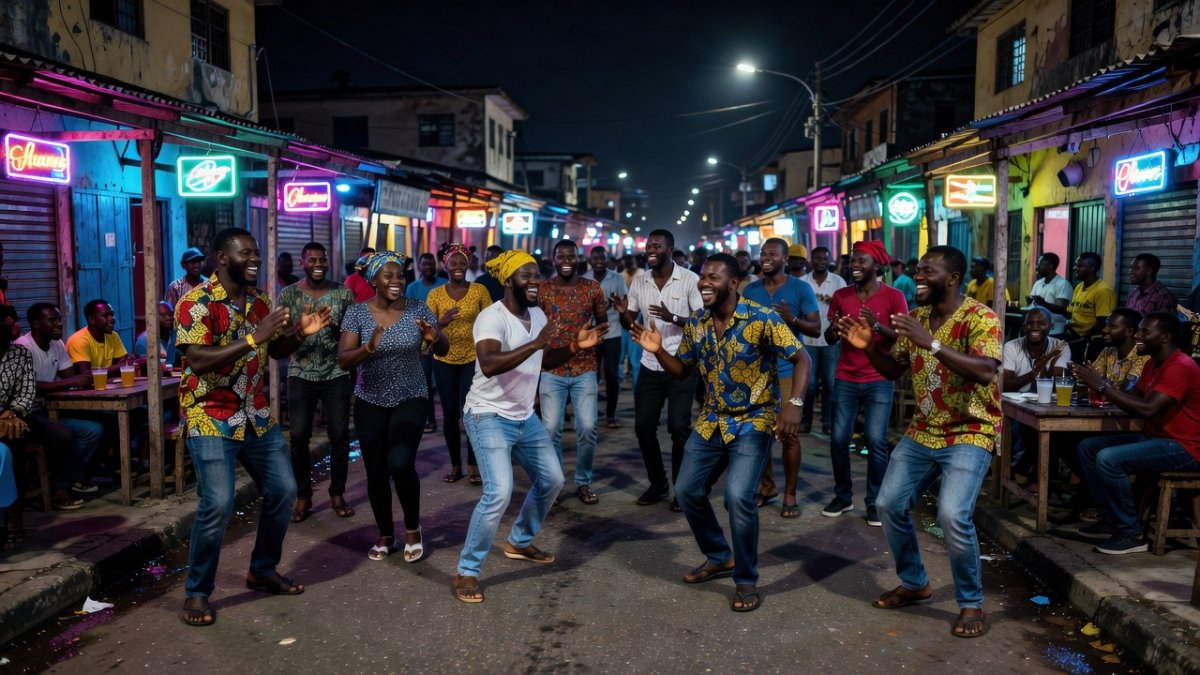
Massidi Adiatou, the Ivorian choreographer based in Abidjan, developed his piece "On descend sur la Rue Princesse" specifically for the 2026 market. The work recreates the atmosphere of Rue Princesse in Yopougon through sequences that move dancers past open-air maquis bars and into spaces filled with coupé-décalé rhythms. Adiatou drew on the classic Ivorian slang phrase that signals the start of an evening out, turning everyday gestures into structured movement.
Dancers performed shoulder isolations and rapid footwork that directly reference the coupé-décalé style popular in Abidjan clubs. Adiatou translated sensory details such as neon lights along the avenue and the aromas of street food into precise choreographic cues. These elements allowed audiences at the Palais de la Culture de Treichville to experience the avenue's energy without leaving the theater.
The piece stood out as the most shared performance from MASA 2026 across digital platforms. Programmers from South Africa, Kenya, and Senegal requested recordings for possible tours in 2027. This response showed how Abidjan street culture can travel to stages across the continent when presented through professional platforms.
Adiatou incorporated live music elements that echoed the sounds of Yopougon maquis, giving the choreography an immediate connection to its source. Dancers interacted with projected images of the avenue during key sections, reinforcing the link between the performance and its physical location. The work demonstrated that urban Ivorian experiences hold value for programmers seeking authentic contemporary pieces.
By grounding the choreography in specific gestures of descent down the avenue, Adiatou preserved the social meaning of the original phrase. The piece reached audiences who may never visit Rue Princesse yet could recognize its rhythms. This approach matters for African artists who seek to present local realities on larger stages without dilution.
Recordings of the work now circulate among festivals in Morocco and Brazil, the guest countries at this edition. Adiatou's success illustrates how one choreographer's focus on a single Abidjan street can open doors for similar urban narratives from other cities.
MASA 2026: Africa's Premier Performing Arts Market
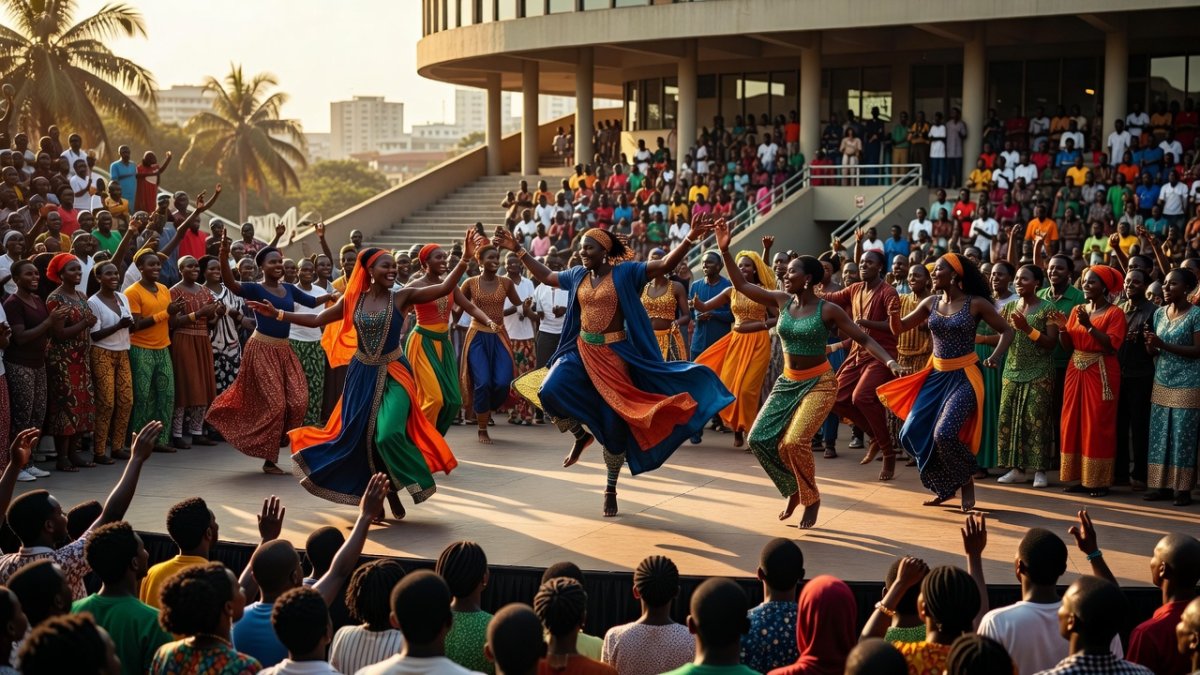
The Marché des Arts du Spectacle Africain, known as MASA, held its 14th edition from April 11 to 18, 2026, at the Palais de la Culture de Treichville in Abidjan. Director General Abou Kamaté set the theme as "Arts du spectacle en Afrique : outils d'intégration économique et sociale." The biennial event welcomed over 2,000 artists from 103 countries and attracted more than 500,000 spectators with support from 300 volunteers.
Morocco served as Guest of Honour while Brazil attended as special guest, bringing delegations that participated in daily showcases and structured networking sessions. These sessions produced touring agreements between African companies and international programmers. Free public access allowed local residents to attend performances alongside industry professionals.
The market functions as a meeting point where creators connect directly with presenters from across the continent. Daily programming combined performances with workshops that addressed practical topics such as contracts and touring logistics. This structure has helped previous editions generate ongoing collaborations that extend well beyond the eight-day period.
The next edition is scheduled for 2028, maintaining the biennial rhythm that allows artists time to develop new work. MASA's scale distinguishes it from smaller national festivals by offering concentrated access to decision-makers in one location. For artists from Senegal and other West African countries, the market reduces the cost of individual travel to seek opportunities.
Attendance figures from the 2026 edition exceeded those of 2024, reflecting renewed interest after earlier disruptions. The presence of 103 countries underscored the event's reach beyond Francophone Africa. Organizers reported multiple co-production deals signed during the networking sessions.
Abou Kamaté emphasized that MASA serves both artistic and economic goals by linking creators with markets. The free public component ensured that Abidjan residents could participate, strengthening local engagement with the continental gathering.
Voices from the Continent: Khoudia Touré and the Senegalese Presence
Senegalese choreographer Khoudia Touré presented her work "Ouro" at the 2026 market, drawing on Wolof movement vocabularies blended with contemporary forms. From a Dakar perspective, her participation reinforced existing ties between Senegal's dance community and the broader African market. Touré's piece connected with audiences familiar with the legacies of Youssou N'Dour and Baaba Maal, who carried Senegalese rhythms to international stages decades earlier.
The performance highlighted how Senegalese artists continue to adapt traditional movement languages for new contexts. Touré worked with dancers who trained in both Dakar studios and regional centers, creating a vocabulary that resonated with programmers from multiple countries. Her presence at MASA provided concrete examples of how Senegal's dance scene contributes to continental conversations.
Eugênia Labuhn, working with the German company Teatro 4Garoupas, presented "Bloom," a sensory and choreographic exploration of childhood memories. The piece featured mixed artists from Africa and the diaspora, demonstrating cross-pollination that strengthens professional networks. Labuhn's collaboration model offered Senegalese participants new approaches to integrating personal narratives into group choreography.
Khoudia Touré's participation built on earlier Senegalese successes at MASA editions, where artists secured touring contracts that later reached festivals in Europe and South America. Her work at the Palais de la Culture de Treichville allowed direct dialogue with Ivorian and Moroccan programmers. These exchanges matter for Dakar-based artists who seek sustainable touring routes without relying solely on European intermediaries.
The Senegalese delegation used the market to discuss plans for future exchanges with Ivorian companies. Touré noted that MASA provides a space where Wolof-based choreography can meet other African forms on equal terms. This environment supports the development of new works that reflect shared continental experiences.
Attendance by Senegalese artists at the 2026 edition exceeded previous years, signaling renewed investment in the market as a key professional platform. The connections formed during networking sessions are expected to yield joint projects ahead of the 2028 edition.
A Festival of Economic and Social Integration
Professional meetings and workshops at MASA 2026 focused on practical pathways from creation to market access. Panels examined the role of artificial intelligence in the cultural value chain, from talent identification to distribution platforms. These discussions gave African artists tools to navigate emerging technologies while protecting their intellectual property.
The Prix d'excellence Henriette Dagri Diabaté recognized the best female group, highlighting achievements by women-led companies from across the continent. Winners received support for future touring, reinforcing the market's commitment to gender equity in the performing arts sector. The award ceremony took place during the final days of the event at the Palais de la Culture de Treichville.
Plans for a "Maison du Sénégal" cultural center in Côte d'Ivoire advanced during bilateral meetings. The proposed permanent space would provide Senegalese artists with a base for residencies and collaborations in Abidjan. This initiative builds on existing cultural agreements between the two countries.
MASA operates as more than a performance platform by contributing to job creation within the creative economy. Structured networking sessions produced concrete touring agreements that translate into paid work for dancers, musicians, and technicians. The economic dimension matters for African governments seeking to expand employment in the arts sector.
Workshops on production and marketing gave participants from smaller countries access to expertise usually concentrated in larger capitals. The presence of 300 volunteers ensured smooth operations while providing training opportunities for young professionals. These elements combine to strengthen social cohesion across the creative community.
The theme of economic and social integration guided programming choices throughout the eight days. Organizers reported that several new companies formed during the market, extending the event's impact beyond immediate performances.
Cultural Diplomacy Through the Arts
Morocco's role as Guest of Honour and Brazil's status as special guest shaped the diplomatic tone of MASA 2026. Delegations from both countries participated in showcases and roundtables that explored shared artistic histories with West Africa. These exchanges built on long-standing cultural ties that predate the current festival format.
The closing ceremony was presided over by Senate President Kandia Camara and Minister Nialé Kaba. Ivorian reggae star Tiken Jah Fakoly performed a free concert on the esplanade of the Palais de la Culture de Treichville, drawing large crowds from Abidjan neighborhoods. The event extended the market's reach beyond ticketed audiences.
MASA TV provided post-event coverage that reached viewers across the continent and in the diaspora. Officials described the edition as a multidimensional success that combined artistic excellence with diplomatic outcomes. The presence of high-level Ivorian leadership signaled government support for the market's continued growth.
Cultural diplomacy at MASA creates opportunities for African countries to present unified positions on issues such as artist mobility and funding. Morocco's participation highlighted North-West African connections that benefit Senegalese artists seeking routes through North Africa. Brazil's involvement opened discussions on South-South touring circuits.
The free public concert by Tiken Jah Fakoly reinforced the market's commitment to accessibility. Local residents who could not attend daytime professional sessions joined the evening event, strengthening community ties to the continental gathering. This model has become a signature element of recent MASA editions.
Diplomatic outcomes from the 2026 edition include renewed agreements between cultural ministries that will facilitate artist exchanges through 2028. These formal ties complement the informal networks formed during daily showcases and meetings.
The Future of African Performing Arts
The creative economy's potential for job creation and social cohesion formed a central thread throughout MASA 2026 discussions. Educational workshops and children's shows ran alongside the main program, introducing young audiences to professional performance practices. A competition for young African content creators highlighted emerging voices who blend traditional forms with digital platforms.
Festivals such as MASA, FESPACO in Ouagadougou, and the Saint-Louis Jazz Festival in Senegal together form a pan-African cultural ecosystem. Artists increasingly move between these events, building careers that span multiple countries and languages. This interconnected calendar supports sustained professional development across the continent.
Discussions on artificial intelligence and the cultural value chain signaled that African artists are actively shaping new technologies rather than simply adopting them. Participants examined how AI tools can assist with choreography documentation while raising questions about authorship. These conversations position the continent's creators at the forefront of global debates.
MASA organizers have already begun preparations for the 2028 edition, incorporating feedback from the 2026 market. Local stories such as Massidi Adiatou's recreation of Rue Princesse demonstrate that specific urban experiences can travel beyond their original streets when supported by professional platforms. This pattern encourages artists from Dakar to Lagos to develop work rooted in their immediate environments.
The success of Senegalese and Ivorian participants at the 2026 edition points to continued growth in West African representation. Cross-border collaborations formed during the market are expected to yield new productions that reflect shared regional histories. These developments strengthen the overall resilience of African performing arts.
As the 2028 edition approaches, MASA remains a key site where continental connections translate into concrete opportunities. The integration of economic, diplomatic, and artistic goals ensures that the market continues to serve both creators and audiences across Africa.
By Amara Diop, Staff Writer
This article was produced with AI-assisted research and editorial support. Reporting is based on sources cited in the article.
What's Your Reaction?
 Like
0
Like
0
 Dislike
0
Dislike
0
 Love
0
Love
0
 Funny
0
Funny
0
 Wow
0
Wow
0
 Sad
0
Sad
0
 Angry
0
Angry
0

West Africa/Sahel Correspondent at Global1.News. Dakar-based journalist covering politics, security, climate, and development across Francophone and Anglophone West Africa. Tells the stories of a region undergoing profound transformation.











Comments (0)