
Iran Closes the Strait of Hormuz: US Launches Third Wave of Strikes as Ceasefire Collapses
In a recent BBC News report, the United States has launched a fresh wave of strikes against Iranian military positions after Tehran's Islamic Revolutionary Guard Corps (IRGC) Navy declared the Strait of Hormuz closed "until further notice," marking a dramatic escalation in the conflict that threatens to unravel last month's fragile ceasefire agreement. The IRGC said it fired a
In a recent BBC News report, the United States has launched a fresh wave of strikes against Iranian military positions after Tehran's Islamic Revolutionary Guard Corps (IRGC) Navy declared the Strait of Hormuz closed "until further notice," marking a dramatic escalation in the conflict that threatens to unravel last month's fragile ceasefire agreement. The IRGC said it fired a naval cruise missile at the Cyprus-flagged container ship MV GFS Galaxy, which it accused of attempting to transit along an unapproved route through the strategic waterway, leaving a crew member missing and forcing the crew to abandon ship into lifeboats. Washington responded with what it described as powerful strikes hitting more than 140 Iranian military targets, including missile and drone sites, communication networks, and coastal surveillance locations across southern Iran.
Iran Closes the Strait of Hormuz: US Launches Third Wave of Strikes as Ceasefire Collapses
London - 12 July 2026 — The Strait of Hormuz, through which approximately one-fifth of the world's oil supply transits daily, has become the epicentre of the most dangerous US-Iran confrontation since the conflict began in late February. The IRGC's decision to close the waterway "until further notice" represents a direct challenge to both American military power and the global energy order.
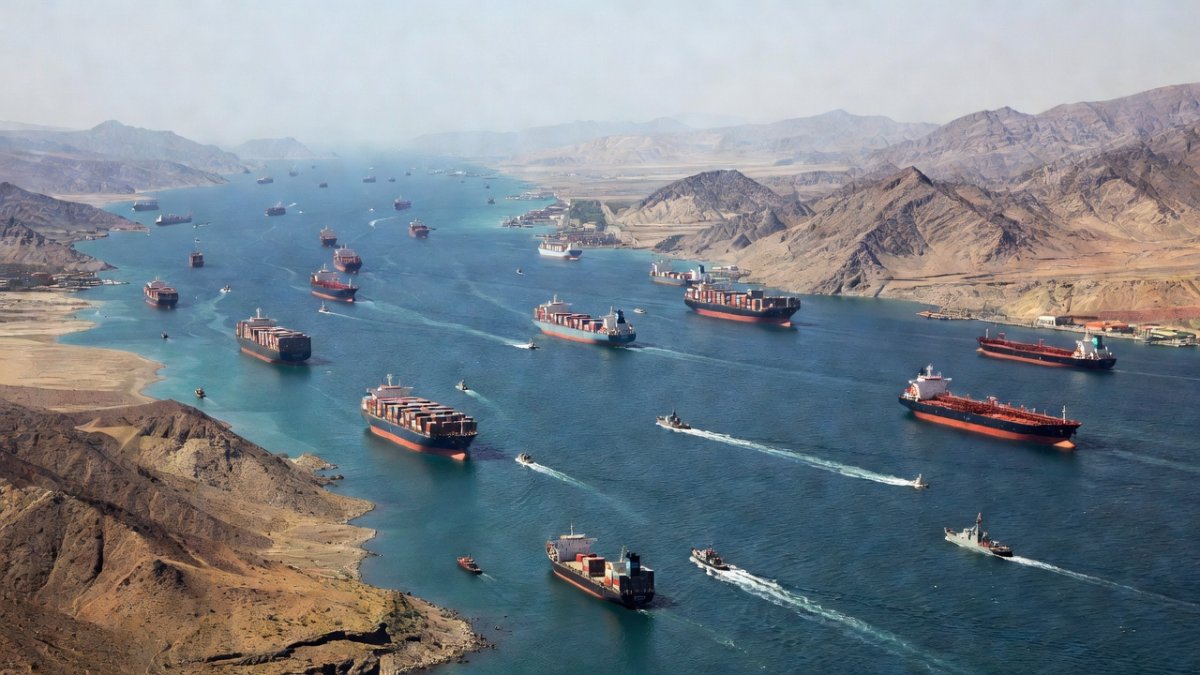
The Closure of the World's Most Strategic Waterway
The IRGC Navy announced early on Sunday that the Strait of Hormuz was closed "until further notice" and would remain so "until the end of US interference in this region," according to Iranian state television. The declaration came hours after IRGC forces fired a naval cruise missile at the MV GFS Galaxy, a Cyprus-flagged container ship that Tehran accused of attempting to sail through the strait using an unapproved route.
US Central Command confirmed that the vessel was "blatantly attacked" and was left "unable to continue its journey" due to damage to the engine room. The UK Maritime Trade Operations reported that the crew had been forced to abandon ship and were located in a lifeboat. One crew member remains missing, Centcom added.
The closure represents the most aggressive assertion of Iranian sovereignty over the waterway since the conflict erupted. Iran has been attempting to enforce its own designated shipping routes through the strait, which it says vessels must use under the authority of the "Persian Gulf Strait Authority" established by Tehran during the conflict.
Washington Responds: 140 Targets and Counting
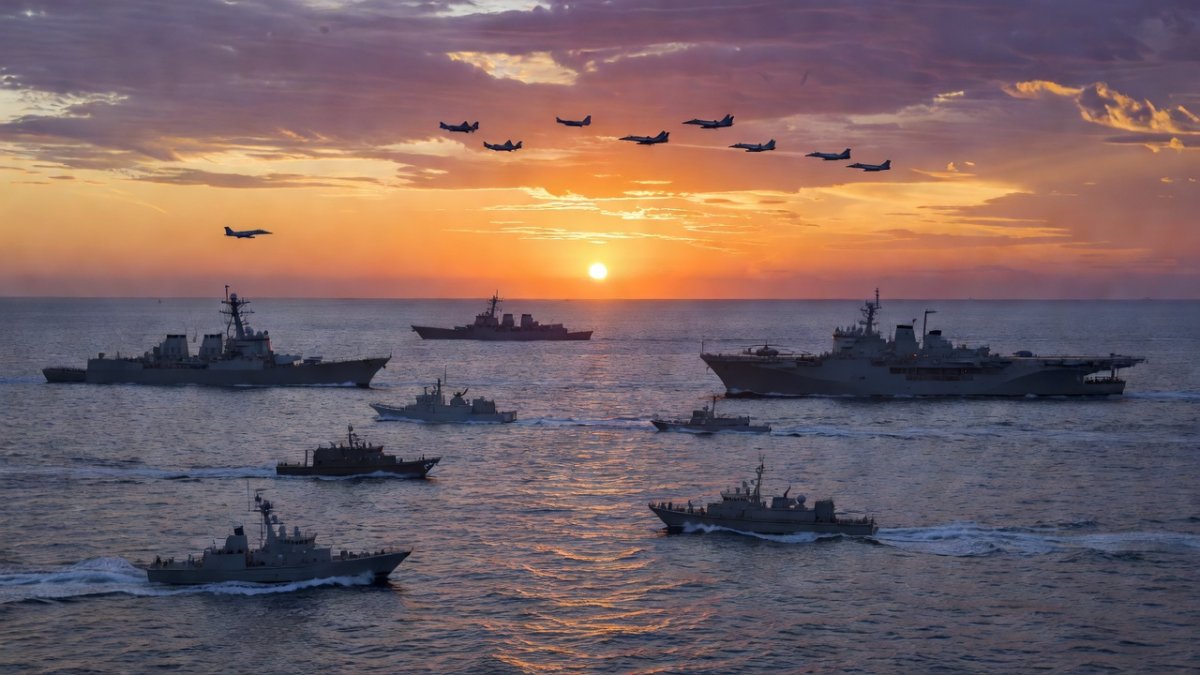
The United States military responded with what it described as a comprehensive strike package targeting more than 140 Iranian military positions across southern Iran. According to Centcom, the strikes hit missile and drone launch sites, communication networks, coastal radar installations, and surveillance facilities. The attacks were concentrated near the port city of Bandar Abbas, home to a major Iranian naval base that sits at the narrowest point of the strait.
US Secretary of Defense Pete Hegseth issued a stark warning following the strikes: "Iran made a poor choice. Now they pay." The statement was posted on social media alongside Centcom's operational announcement, reflecting the administration's increasingly confrontational posture toward Tehran.
This is the third wave of American strikes this week alone. Earlier rounds had targeted more than 80 Iranian positions after attacks on three oil tankers in the strait, followed by further strikes on missile sites and fast boats. The sustained tempo of operations suggests a shift from targeted retaliation to a broader campaign aimed at degrading Iran's coastal defence capabilities.
Iran's Retaliation: Regional Escalation
Iran responded not only in the immediate vicinity of the strait but across the broader Middle East. The IRGC announced it had launched its "first phase" of retaliation, which included strikes on the Prince Hassan Air Base in Jordan. Tehran claimed its missiles destroyed the base's command and control centre and MQ-9 Reaper drone hangars. The BBC has approached US Central Command for comment on the attack in Jordan.
Further afield, the United Arab Emirates, Qatar, Kuwait, Oman, and Bahrain all confirmed they had responded to incoming missiles and drones from Iran. Qatar had not been attacked since April, and the UAE had not been targeted since May, indicating that Tehran is widening its theatre of operations. Qeshm Island, a strategically vital island in the Gulf that hosts a major IRGC base, also came under what Iranian state media described as "enemy" missile fire on Sunday afternoon.
The broader geographic spread of Iran's retaliation marks a significant escalation. Previous exchanges had been largely confined to the Strait of Hormuz and its immediate approaches. By striking targets in Jordan and across the Gulf states, Tehran is signalling that any conflict will not remain contained to the waterway itself.
The Ceasefire Collapses
Renewed hostilities have placed last month's 14-point Memorandum of Understanding between the United States and Iran in grave jeopardy. The interim deal, signed in June, had aimed to extend the ceasefire, reopen the Strait of Hormuz, and create a framework for further negotiations over Iran's nuclear programme. It was the first diplomatic breakthrough since the conflict erupted in late February.
US President Donald Trump declared the ceasefire effectively dead after the Iranian attacks on commercial shipping this week, accusing Tehran of a "foolish violation" of the truce. Iran's Foreign Minister Abbas Araghchi responded by accusing Washington of violating the deal through its continued strikes on Iranian territory.
However, Trump has indicated that diplomatic channels remain open, and mediators — particularly Qatar — are continuing efforts to revive the negotiation process. Iran's parliamentary speaker and chief negotiator Mohammad Bagher Ghalibaf struck a defiant tone on social media: "The era of one-sided deals is OVER. We told you: keep your word or pay the price. Reality is knocking."
Complicating the diplomatic picture, US media have reported that Iran privately told American officials that the attacks on oil tankers earlier this week were a mistake and blamed a rogue internal group for the operation. The contradictory messaging — public defiance paired with private backtracking — underscores the internal tensions within Iran's dual-power structure between the IRGC and the civilian government.
Global Energy Markets Under Pressure
The Strait of Hormuz carries approximately 20 million barrels of oil and petroleum products daily — roughly one-fifth of global consumption. Its closure, even partial, sends shockwaves through energy markets. Oil prices have already ticked up significantly, with Brent crude rising by more than 3 percent in previous rounds of escalation this week. The current closure threatens far more severe disruptions.
The impact on global energy security cannot be overstated. Russia, as the world's second-largest oil exporter, faces a complex calculus. Higher oil prices benefit Moscow's budget, which has been strained by Western sanctions and the costs of the Ukraine war. However, a prolonged closure of the Strait of Hormuz would disrupt global supply chains in ways that could ultimately harm Russian economic interests as well, particularly if it triggers a broader recession that reduces overall energy demand.
For Europe, already grappling with energy price volatility following the loss of Russian pipeline gas, the closure represents yet another supply shock. NATO Secretary General Mark Rutte, speaking at the alliance's summit in Ankara, described earlier US strikes on Iran as "absolutely necessary," arguing that Iran was "basically violating the ceasefire." The alliance's support for American military action underscores the extent to which European security depends on the free flow of energy through the Gulf.
Russian Perspectives and Domestic Implications
From the Kremlin perspective, the closure of the Strait of Hormuz presents both opportunities and risks within Russia's tightly controlled energy politics. President Vladimir Putin and his inner circle have long viewed fluctuations in global oil prices as a tool to sustain state revenues amid ongoing sanctions. Ordinary Russians, however, face the prospect of higher fuel costs at home if supply chains tighten further, potentially straining household budgets already pressured by inflation and the prolonged Ukraine conflict. Energy analysts in Moscow note that while state-controlled firms like Rosneft and Gazprom may see short-term gains, a wider regional war could invite additional Western restrictions on Russian exports.
The Russian Foreign Ministry has called for restraint from all parties, emphasising the need to protect maritime trade routes that also serve Russian interests in the region. This stance reflects the Kremlin's balancing act between supporting traditional partners like Iran and avoiding direct entanglement that might escalate tensions with Washington.
Diplomatic Channels and Future Risks
Despite the collapse of the June agreement, backchannel communications reportedly continue through Qatari and Omani intermediaries. Both US and Iranian officials have signalled willingness to discuss de-escalation measures, though public statements remain uncompromising. The risk of miscalculation grows as each side interprets the other's actions through the lens of domestic political pressures. For now, the world's attention remains fixed on whether the Strait of Hormuz reopens or whether further military exchanges follow in the coming days.
By Irina Volkov, Staff Writer
This article was produced with AI-assisted research and editorial support. Reporting is based on sources cited in the article.
What's Your Reaction?
 Like
0
Like
0
 Dislike
0
Dislike
0
 Love
0
Love
0
 Funny
0
Funny
0
 Wow
0
Wow
0
 Sad
0
Sad
0
 Angry
0
Angry
0
Russia/Eastern Europe Correspondent at Global1.News. Covering Russian politics, energy, security, and the shifting dynamics of the post-Soviet space. Provides clear-eyed analysis on one of the world's most opaque regions.









Comments (0)