
Kuwait Hits Out at 'Criminal Iranian Aggression' After Airport Drone Strike
Kuwait's condemnation of the June 3, 2026 Iranian drone strike on Kuwait International Airport has laid bare the mounting tensions between Iran and the Gulf Arab states. The attack, which killed one Indian national and injured over 63 people, marks a significant escalation in a conflict that increasingly threatens civilian infrastructure across the GCC. For states that have lon
Kuwait's condemnation of the June 3, 2026 Iranian drone strike on Kuwait International Airport has laid bare the mounting tensions between Iran and the Gulf Arab states. The attack, which killed one Indian national and injured over 63 people, marks a significant escalation in a conflict that increasingly threatens civilian infrastructure across the GCC. For states that have long attempted to balance security ties with Washington against diplomatic engagement with Tehran, the strike on a major civilian aviation hub represents an unwelcome turning point.
The June 3 Attack and Kuwait's Condemnation
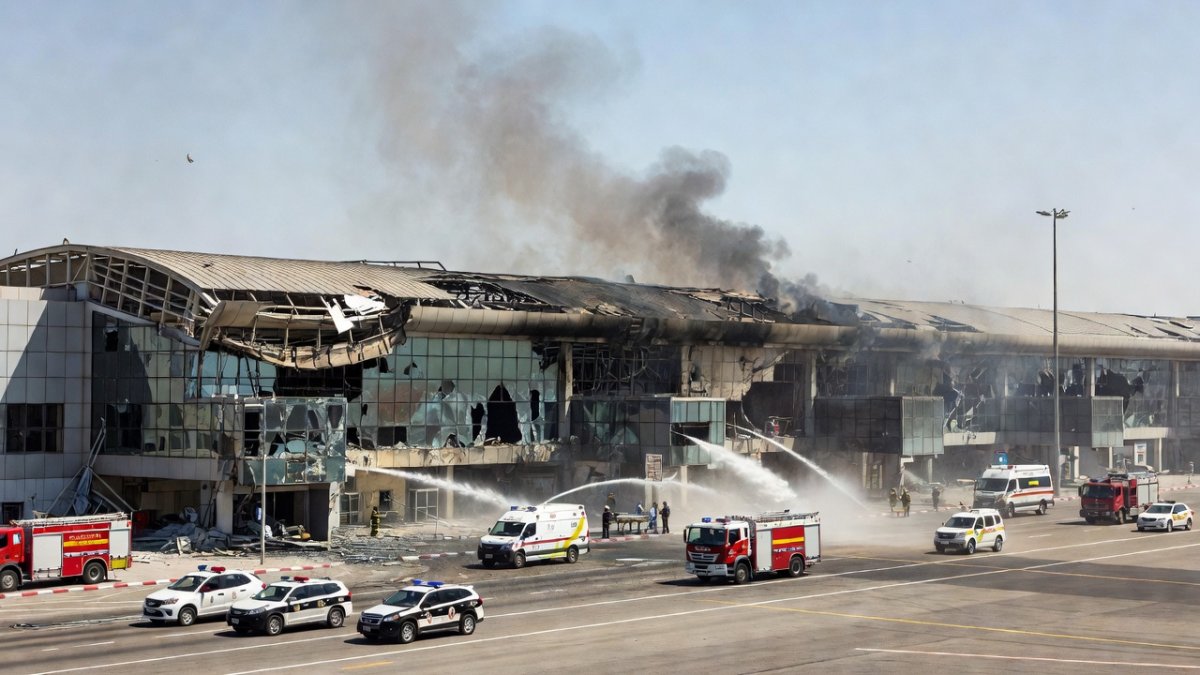
On June 3, 2026, an Iranian drone struck the roof of Terminal 1 at Kuwait International Airport, triggering a fireball and partial structural collapse. CCTV footage released by the Kuwait Directorate General of Civil Aviation captured the moment of impact, showing the projectile descending rapidly before detonation. One Indian national, a 55-year-old man from Ujjain, was killed, while more than 63 people sustained injuries, including 13 Indian nationals. The footage was widely circulated, leaving little room for ambiguity about the attack's origin.
Kuwait's Foreign Ministry issued a formal statement on June 6 describing the incident as a "dangerous escalation" and a "flagrant violation of the sovereignty of the state." The language reflected deep concern over the direct targeting of civilian infrastructure in a country that hosts more than 13,000 US troops. Officials emphasized that the attack crossed a threshold previously avoided in the long-running shadow conflict between Iran and Gulf Arab states. Neighboring Bahrain simultaneously reported Iranian missile barrages targeting its territory during the same period, with Bahrain's defense ministry confirming it had intercepted three missiles and multiple drones.
The incident immediately prompted emergency coordination between Kuwaiti authorities and Indian diplomatic missions. Medical facilities in Kuwait City treated the wounded, while investigators began tracing the drone's origin through debris analysis. The Foreign Ministry's measured yet firm wording signaled that Kuwait, traditionally cautious in its Iran policy, now viewed the strike as an unacceptable breach of sovereignty.
A Pattern of Iranian Aggression Against the Gulf
The June 3 airport attack fits into a broader sequence of Iranian-linked operations against Gulf targets that have escalated since the outbreak of the US-Israel war with Iran on February 28, 2026. On March 1, Iranian drones struck Camp Arifjan and Port Shuaiba in Kuwait, killing six US soldiers and wounding more than 30 others. These facilities form critical nodes in the US military presence that Kuwait has hosted since the 1990-1991 Gulf War. Beyond Kuwait, Iran has also struck port facilities and energy infrastructure across the region.
Bahrain faced coordinated Iranian missile barrages on June 6, further illustrating the widening scope of operations. The Bahraini defense ministry reported that its military had intercepted and destroyed three missiles and a number of drones fired by Iran at the Gulf island nation. Iranian officials claimed the systems were defensive responses to alleged false-flag activities, with Iran's Foreign Ministry alleging that the United States orchestrated the Kuwait airport attack to create a pretext for selling nearly US$2 billion in American counter-drone systems to Kuwait. Both Kuwait and Washington rejected these assertions outright as baseless propaganda.
Sunni-Shia dynamics amplify the strategic friction. Kuwait's Sunni ruling family maintains a delicate balance with its Shia population while aligning security policy with fellow GCC members. The pattern of strikes suggests Iran seeks to pressure multiple Gulf capitals simultaneously, testing the limits of collective deterrence without triggering full-scale war.
The Fragile Ceasefire and Escalation Cycles
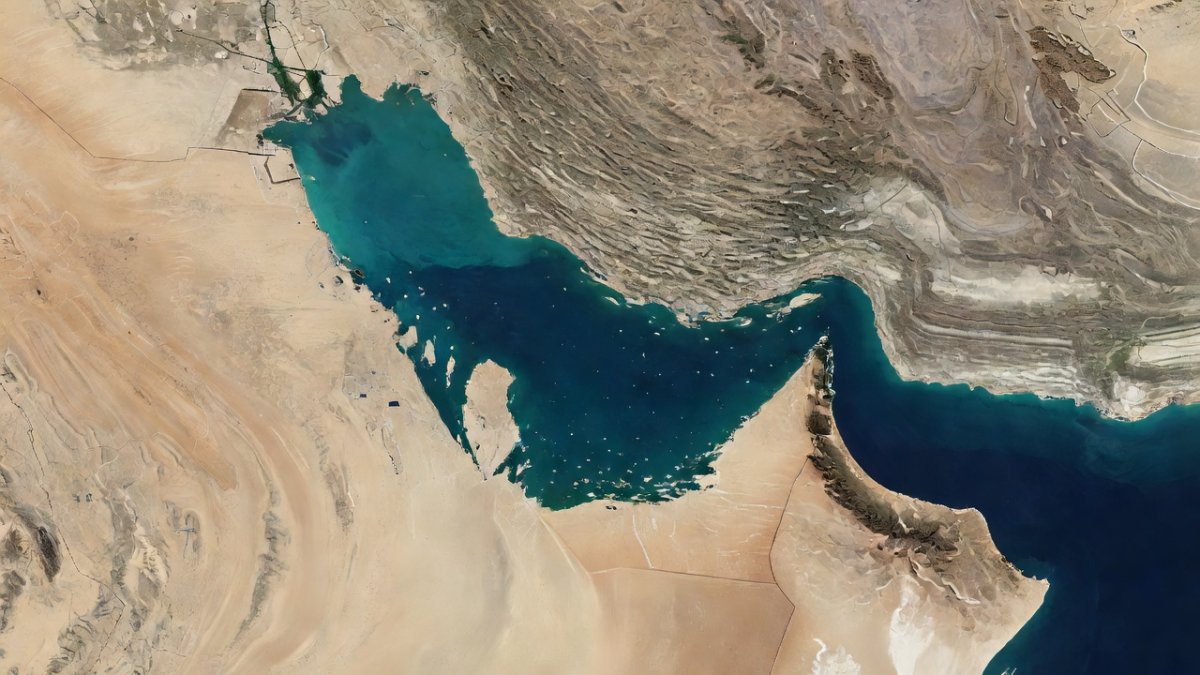
The US-Israel war with Iran that began on February 28 produced a fragile ceasefire on April 8, following extensive Pakistani-mediated negotiations. That truce proved short-lived. On June 8-9, a US Army Apache helicopter was shot down near the Strait of Hormuz by an Iranian drone, according to US Central Command. The two pilots were rescued safely. President Donald Trump blamed Iran and vowed the United States "must, of necessity, respond to this attack." The US military subsequently launched what it termed "proportional" strikes against Iranian positions, a move that threatened to collapse the already tenuous ceasefire entirely.
Each cycle of action and reaction has narrowed the space for de-escalation. Iranian Foreign Ministry statements continue to frame Gulf states as extensions of American power, while Saudi Arabia's Ministry of Foreign Affairs and the Kuwait Foreign Ministry coordinate closely on threat assessments. The April ceasefire was intended to allow diplomatic channels to reopen; instead, it created a pause during which both sides replenished capabilities and prepared for the next round. A senior Iranian military commander announced on June 9 that the IRGC's Khatam al-Anbiya Central Headquarters had suspended military operations against Israel at Trump's request — but warned that operations would resume if Israel continued attacks on Hezbollah in Lebanon.
Second-order effects include accelerated arms purchases by GCC states and heightened vigilance around critical infrastructure. Energy markets have priced in elevated risk premiums, particularly for shipping through the Strait of Hormuz, where even limited disruptions carry global consequences for oil and LNG prices.
GCC States Caught in the Crossfire
GCC capitals now confront a strategic dilemma: how to maintain distance from direct US-Iran confrontation while protecting sovereign territory. Kuwait's hosting of 13,000 American troops makes it an obvious target, yet its leadership has historically sought to preserve limited economic and consular ties with Tehran. This delicate balance has been shattered by the airport attack, which leaves Kuwait little room to avoid choosing sides.
Bahrain's experience with missile barrages on June 6 demonstrates that geographic proximity to Saudi Arabia offers no automatic shield. The UAE, meanwhile, has accelerated diversification of its energy export routes and deepened security cooperation with the United States without fully severing commercial links to Iran. Saudi Arabia, the dominant GCC power, has condemned the attacks and reiterated its commitment to collective Gulf security. However, Riyadh is wary of being drawn into a direct confrontation with Iran while its Vision 2030 economic transformation program is still underway.
Al Arabiya analysis published on June 8 argued that "true strategic wisdom for Iran is restraint toward the Gulf states." This assessment reflects a shared GCC view that Iranian decision-makers risk miscalculating the collective response if civilian infrastructure continues to be targeted. Coordinated statements from the GCC Secretariat have grown more pointed since the airport attack, signaling a potential shift toward more assertive regional coordination.
Iran's Strategic Calculus: Proxies, Leverage, and Miscalculation
Iran's leadership appears to calculate that calibrated pressure on Gulf states can extract concessions in nuclear negotiations and sanctions relief. By employing drones and missiles rather than ground forces, Tehran maintains a measure of deniability while imposing measurable costs on US allies. The direct attribution of the Kuwait airport strike to Iranian forces — rather than to a proxy militia — represents a departure from earlier approaches, suggesting that internal political pressures or battlefield setbacks have altered Iran's risk tolerance.
The claim that Kuwait's counter-drone procurement represents a US-engineered false-flag fits Tehran's narrative of external provocation but has found little traction among Gulf policymakers. Iran's strategic calculus also involves linkage between different theaters: Tehran has demanded that any comprehensive ceasefire with Washington include a halt to Israeli operations against Hezbollah in Lebanon, where cross-border fire has escalated dramatically since late May.
Regional analysts note that Iranian Foreign Ministry rhetoric has hardened since the February outbreak of open conflict with Israel and the United States. The risk of miscalculation grows as each side interprets restraint by the other as weakness rather than prudence. If Iran continues to strike GCC civilian infrastructure, it risks unifying the Gulf states behind Washington at a time when the region was moving toward greater diplomatic independence.
Regional Implications: Energy, Stability, and Alliances
Energy security stands at the center of the unfolding crisis. Any sustained threat to Kuwaiti or Bahraini infrastructure could affect global oil and gas flows, particularly the liquefied natural gas exports from Qatar that transit nearby waters. Brent crude prices have already registered higher volatility since the June incidents, and maritime insurance premiums for Gulf shipping have risen accordingly. The Strait of Hormuz — through which approximately 20% of global oil supply transits — remains the most significant chokepoint, and any disruption there would have immediate global economic repercussions.
Alliance structures are also under strain. The United States must balance support for its Gulf partners with the desire to avoid wider war with Iran. Kuwait's measured diplomatic response, echoed by the Kuwait Foreign Ministry's carefully calibrated language, suggests GCC states prefer calibrated international pressure over immediate military escalation. However, patience has limits, and further attacks on civilian infrastructure could trigger collective GCC action.
Over the longer term, the attacks may accelerate intra-GCC security integration and further diversification away from reliance on any single external guarantor. Sunni-Shia tensions within several member states could intensify if Iranian operations are perceived as exploiting sectarian fault lines. The coming months will test whether diplomatic off-ramps remain viable or whether the region has entered a more dangerous phase of direct confrontation — one in which Kuwait's airport attack becomes the reference point for a new, more dangerous status quo.
By Malik Hassan, Staff Writer
This article was produced with AI-assisted research and editorial support. Reporting is based on sources cited in the article.
What's Your Reaction?
 Like
0
Like
0
 Dislike
0
Dislike
0
 Love
0
Love
0
 Funny
0
Funny
0
 Wow
0
Wow
0
 Sad
0
Sad
0
 Angry
0
Angry
0

Middle East Correspondent at Global1.News. Based in Beirut, covering politics, conflict, energy, and society across the Middle East. Brings context and depth to a region often reduced to headlines.













Comments (0)