
France Condemns Violence Against Christians in Holy Land
France Reaffirms Commitment to Christian Communities in the Holy Land Diplomatic Engagement Between Paris and the Latin Patriarchate French Foreign Minister Jean-Noel Barrot hosted Cardinal Pierbattista Pizzaballa on Tuesday to discuss mounting attacks on Christian communities in occupied East Jerusalem and Israel. The meeting preceded the June 12 conference in Paris that will
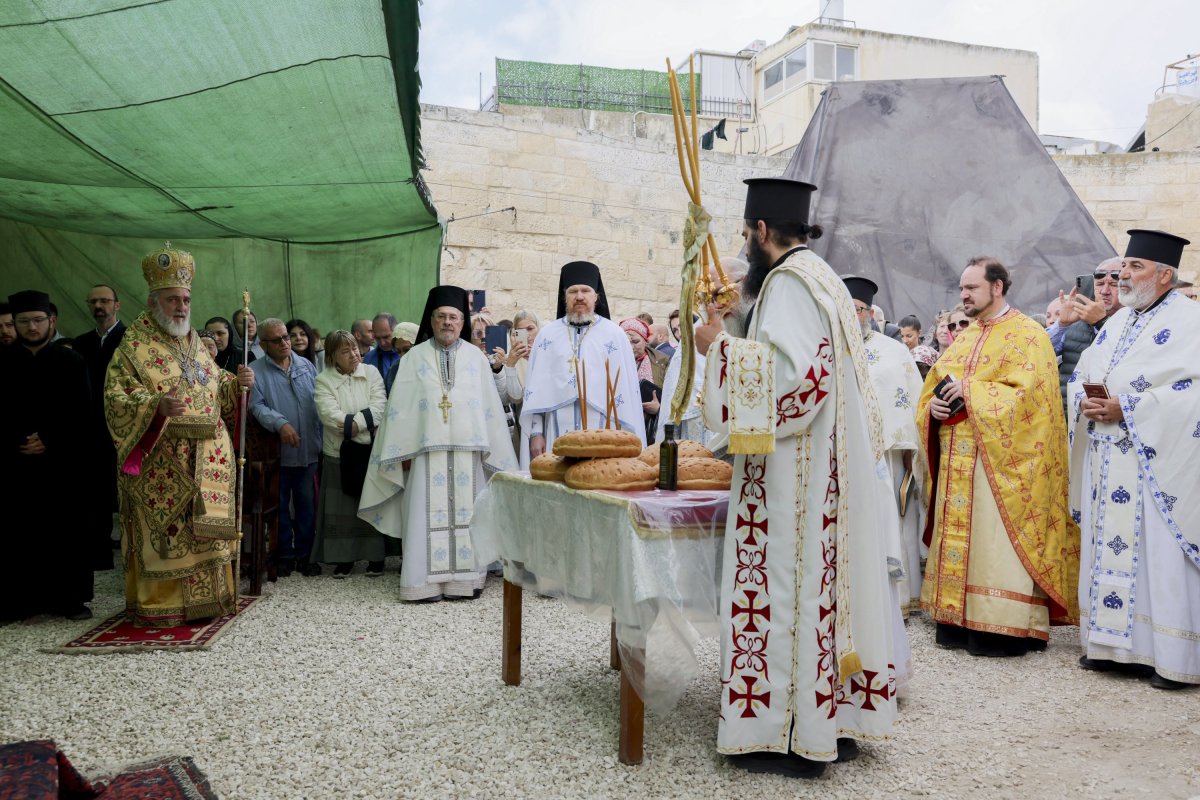
Diplomatic Engagement Between Paris and the Latin Patriarchate
French Foreign Minister Jean-Noel Barrot hosted Cardinal Pierbattista Pizzaballa on Tuesday to discuss mounting attacks on Christian communities in occupied East Jerusalem and Israel. The meeting preceded the June 12 conference in Paris that will convene Israeli and Palestinian civil society representatives to explore pathways toward a two-state solution. Barrot used the occasion to restate France's long-standing policy of preserving Christian presence in the Holy Land and promoting religious pluralism across the Middle East.
The minister condemned acts of intimidation and violence targeting churches and religious institutions. He also highlighted France's material support for Christian schools, hospitals, and heritage sites. Separate statements on social media underscored plans to revive Christian educational activities in Gaza through cooperation with the Latin Patriarchate.
Historical Roots of French Protection for Levantine Christians
France's engagement with Christian communities in the Levant traces back to the Ottoman Capitulations of 1535 and 1740, when Paris secured rights to protect Catholic interests in the region. This role evolved through the nineteenth and twentieth centuries as French diplomats mediated disputes over holy sites and supported educational institutions run by orders such as the Franciscans and Salesians. The current statements by Barrot continue this pattern of diplomatic advocacy rather than introduce a new policy framework.
Christian communities in the Holy Land maintain continuous presence dating back two millennia, with institutions that predate modern state boundaries. French assistance today focuses on sustaining these communities amid demographic pressures, including emigration driven by economic hardship and periodic insecurity.
Preserving the Status Quo at Jerusalem's Holy Sites
Barrot stressed the importance of maintaining the historical status quo governing access and administration at Jerusalem's holy sites. These arrangements, rooted in nineteenth-century agreements among Ottoman authorities and European powers, allocate responsibilities among Christian denominations, Muslim waqfs, and Jewish authorities at locations such as the Church of the Holy Sepulchre and the Temple Mount/Haram al-Sharif. Any unilateral alteration risks escalating tensions that extend beyond the city to regional stability.
France views preservation of these arrangements as essential for preventing localized incidents from triggering wider confrontations involving Israel, Jordan, and Palestinian actors. The status quo functions as a practical mechanism that balances competing claims without requiring immediate resolution of underlying sovereignty disputes.
Rising Violence and Its Impact on Religious Pluralism
Reports of increased attacks on Christian properties in East Jerusalem and parts of Israel have drawn attention from European capitals. Barrot described the trend as a growing wave requiring coordinated international response. Such incidents affect not only worshippers but also schools and charitable institutions that serve mixed populations.
Christian emigration from the region has accelerated over recent decades, reducing the demographic weight of communities that once formed larger shares of Jerusalem's population. This outflow carries second-order effects on interfaith relations and on the viability of institutions that rely on local congregations for staffing and funding. France's announced material support aims to slow this trend through targeted projects rather than broad political restructuring.
Humanitarian Challenges in Gaza and Reconstruction Efforts
The discussion also covered the humanitarian situation in Gaza, including conditions facing the enclave's small Christian community. Barrot reiterated France's commitment to channeling assistance through the Latin Patriarchate and underlined the need for effective ceasefire arrangements, sustained humanitarian access, and eventual reconstruction planning. These elements remain interdependent, as prolonged restrictions on movement and materials hinder both immediate relief and longer-term recovery.
Reconstruction in Gaza faces multiple constraints, including damage to infrastructure, limited local capacity, and coordination requirements among international donors. French support for Christian educational activities represents one narrow but concrete channel for engagement amid broader uncertainties over funding and security guarantees.
The Upcoming Paris Conference and the Two-State Horizon
The June 12 gathering in Paris will bring together Israeli and Palestinian civil society voices rather than official negotiators. Barrot reaffirmed France's position that a two-state solution remains the only framework capable of delivering lasting security for both populations. The conference format reflects an effort to sustain dialogue at a time when formal talks have stalled.
France's leverage in this setting derives from its diplomatic network, historical ties, and capacity to mobilize European Union resources. Success will depend on whether participating representatives can identify practical confidence-building measures that address immediate concerns such as access to holy sites and protection of minority institutions.
Broader Regional Implications for Interfaith Dynamics and Emigration
Developments in Jerusalem and Gaza intersect with wider patterns of religious pluralism across the Middle East. The Abraham Accords normalized relations between Israel and several Arab states, creating new channels for economic cooperation but leaving the Palestinian question unresolved. Christian communities often function as intermediaries in interfaith initiatives; their continued presence can facilitate dialogue even when official relations remain limited.
Emigration trends among Christians carry implications for regional alliances and for external actors seeking influence. Reduced numbers weaken institutional networks that have historically bridged Sunni, Shia, and other communities. France's approach combines political statements with targeted material aid, aiming to preserve these networks without direct involvement in bilateral security arrangements.
Strategic Calculus in the Context of Abraham Accords and Great Power Interests
Each actor pursues distinct objectives. France seeks to maintain relevance in Middle East diplomacy while advancing values of religious freedom and pluralism. Israel balances security priorities with international pressure over incidents in Jerusalem. Palestinian authorities and civil society groups emphasize protection of holy sites and humanitarian relief in Gaza. The United States, under the current administration, continues to shape the broader environment through its bilateral relationships and approach to the Abraham Accords framework.
Second-order effects include potential shifts in European Union funding priorities, changes in Jordanian and Egyptian roles as custodians of holy sites, and evolving calculations by Gulf states regarding normalization timelines. Energy markets and great-power competition between the United States, China, and Russia add further layers, as regional stability influences investment decisions and proxy alignments. Sustained attention to Christian institutions forms one element within this larger strategic landscape rather than an isolated humanitarian concern.
By Malik Hassan, Staff WriterThis article was produced with AI-assisted research and editorial support. Reporting is based on sources cited in the article.
What's Your Reaction?
 Like
0
Like
0
 Dislike
0
Dislike
0
 Love
0
Love
0
 Funny
0
Funny
0
 Wow
0
Wow
0
 Sad
0
Sad
0
 Angry
0
Angry
0

Middle East Correspondent at Global1.News. Based in Beirut, covering politics, conflict, energy, and society across the Middle East. Brings context and depth to a region often reduced to headlines.











Comments (0)