
Justice Department launches criminal investigation into Trump sex assault accuser E Jean Carroll, says report
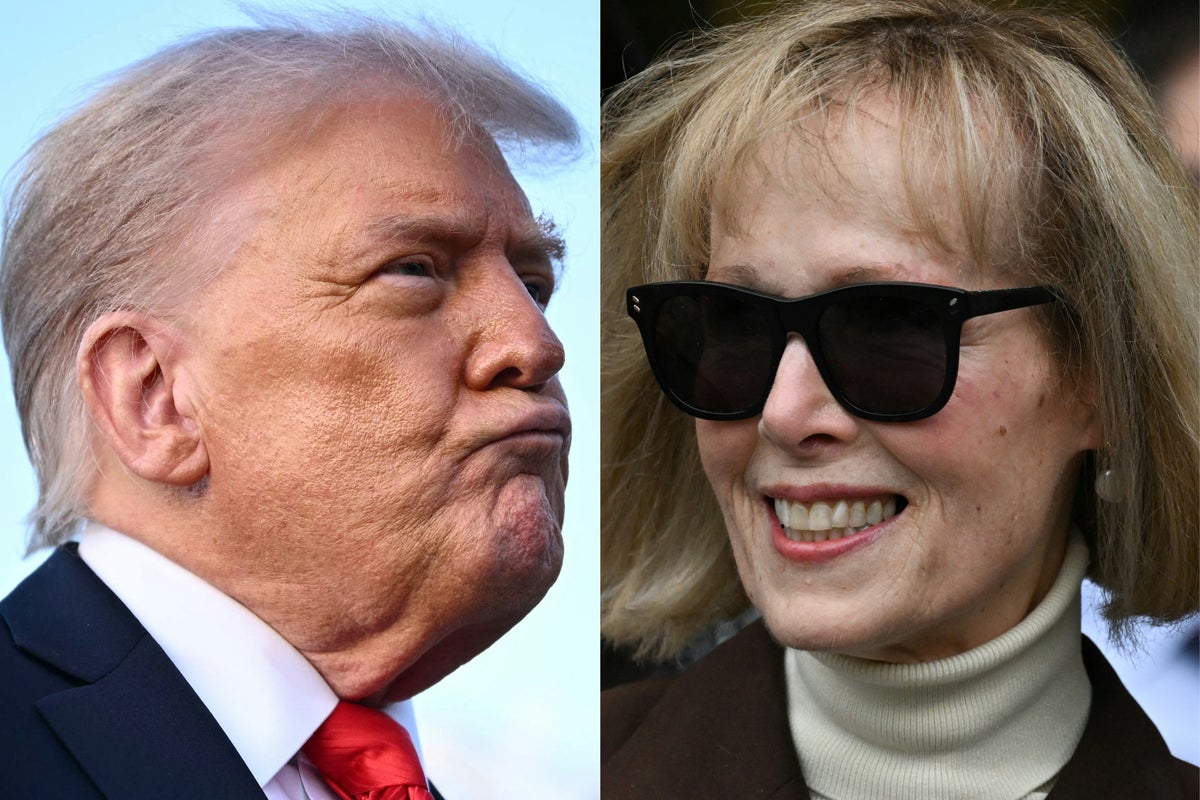
DOJ Opens Criminal Probe into E Jean Carroll Over Alleged Perjury in Trump Lawsuits, Report Claims
In a development that has sent ripples through American legal and political circles, the US Justice Department has reportedly launched a criminal investigation into writer E Jean Carroll, focusing on whether she committed perjury during her civil lawsuits against former president Donald Trump. The probe, according to sources cited in initial reports, centres on statements made under oath regarding the alleged sexual assault from the mid-1990s.
Details of the Reported Investigation
The inquiry is said to examine inconsistencies in Carroll's testimony and related evidence presented in two separate civil actions. One resulted in a 2023 jury finding Trump liable for sexual abuse and defamation, awarding Carroll £4.1 million in damages. A subsequent defamation trial in 2024 added another £65 million to the total. Legal observers note that perjury charges in civil matters are rare, requiring clear proof of wilful falsehood on a material point.
Insiders suggest the DOJ's interest stems from newly surfaced materials, including witness statements and communications that allegedly contradict aspects of Carroll's account. No formal charges have been filed, and the investigation remains at an early stage. Trump, who has long denied the allegations and labelled them politically motivated, welcomed the news on social media, calling it "long overdue justice for a hoax".
Background to the Carroll v Trump Litigation
E Jean Carroll first went public with her account in a 2019 excerpt from her memoir, "What Do We Need Men For?". She described an encounter in a New York department store fitting room where, she claimed, Trump forcibly kissed and assaulted her. Trump responded by insisting he had never met Carroll and that she was "not my type".
The civil suits proceeded after a change in New York law temporarily lifted the statute of limitations for certain sexual offence claims. Carroll's legal team presented testimony from two friends she confided in shortly after the alleged incident, alongside a photograph of the pair at a social event years earlier. Trump's defence rested on denial and attacks on Carroll's credibility, including references to her prior writings and political donations.
Jurors in the first trial found Trump liable on the sexual abuse claim but not rape, a distinction that hinged on precise legal definitions under New York law. The defamation component arose from Trump's continued public statements dismissing the account as fabricated.
Legal Experts Weigh In on Perjury Thresholds
Perjury under US federal law demands proof beyond reasonable doubt that a witness knowingly made a false statement about a material fact while under oath. Professor Eleanor Whitfield of University College London, an expert in comparative US-UK criminal procedure, observes that "the bar remains exceptionally high. Mere inconsistencies or later recantations rarely suffice without corroborative evidence of intent."
Washington attorney Michael Reyes, who has handled federal perjury cases, added that DOJ involvement in a matter originating from private civil litigation would require "substantial new evidence suggesting the original testimony was not merely mistaken but deliberately deceptive". He noted the political sensitivities, with any action likely to face accusations of weaponisation from one side or accountability from the other.
Data from the US Sentencing Commission shows perjury convictions average fewer than 80 annually nationwide, underscoring their infrequency even in criminal proceedings, let alone civil ones.
Political and Institutional Implications
The reported investigation arrives amid heightened scrutiny of the DOJ's independence following years of claims from Trump allies that federal agencies targeted conservatives. Critics of the probe argue it risks chilling future sexual assault complainants, particularly high-profile ones challenging powerful figures. Supporters counter that equal application of perjury statutes strengthens public confidence in the justice system.
Carroll's representatives have not yet issued a formal response but previously described Trump's attacks as part of a pattern of intimidation. Advocacy groups focused on survivors' rights have expressed concern that the move could deter reporting, citing studies from the US Department of Justice indicating that fewer than one-third of sexual assaults are reported to authorities.
Contextually, the case intersects with broader debates on defamation standards post the 2024 presidential election cycle, where Trump secured victory. Legal analysts suggest the probe could influence ongoing appeals in Carroll's damages awards, though any criminal finding would require separate due process.
Analysis: Credibility, Evidence, and Public Trust
At its core, this development tests the resilience of civil verdicts when subjected to subsequent criminal scrutiny. Carroll's account relied heavily on her credibility and contemporaneous disclosures to friends. Any perjury case would need to dismantle those elements with precision, perhaps through digital records or third-party contradictions not aired at trial.
From a journalistic standpoint, the episode highlights the challenges of litigating historical allegations in a polarised media environment. Both sides have leveraged the narrative for political gain, with Carroll's book sales surging after the verdicts and Trump framing the suits as election interference.
Independent verification remains difficult given the private nature of the alleged incident. Court records show no physical evidence such as DNA was presented, consistent with the decades-long delay in reporting. This absence, while not dispositive, forms part of the evidentiary matrix now under DOJ review.
Public opinion polls from reputable firms like Gallup indicate deep partisan divides on the original allegations, with approval of the civil verdicts tracking closely along party lines. A criminal investigation into the accuser adds another layer to these fractures.
Should the probe yield charges, it would mark an unusual reversal in a case already defined by its precedent-setting aspects, including the first civil liability finding against a former president for sexual misconduct. Observers will watch closely for signs of prosecutorial discretion influenced by the current administration.
This is Erica Thornton for Global1 News, reporting from London. 🇬🇧
This is Erica Thornton for Global1 News, reporting from London. 🇬🇧
This article was produced with AI-assisted research and editorial support. Reporting is based on sources cited in the article.
What's Your Reaction?
 Like
0
Like
0
 Dislike
0
Dislike
0
 Love
0
Love
0
 Funny
0
Funny
0
 Wow
0
Wow
0
 Sad
0
Sad
0
 Angry
0
Angry
0

US Politics and Policy Correspondent at Global1.News. Based in Washington DC, covering American politics, policy, elections, and the courts. Knows how the system works and tells you what it actually means.












Comments (0)