
Kenya's Female Surname Revolution: Men, Motherhood and the Meaning of Identity Across Africa
The Rise of Female Surnames in Kenya The practice of Kenyan men adopting their mothers' surnames has become increasingly visible in public life, particularly within Kikuyu communities where single-mother households have grown more common. Figures such as MP John Njuguna Wanjiku, known by the nickname Ka-Wanjiku meaning child of Wanjiku, and broadcaster Evans Kibe Waceke demonst
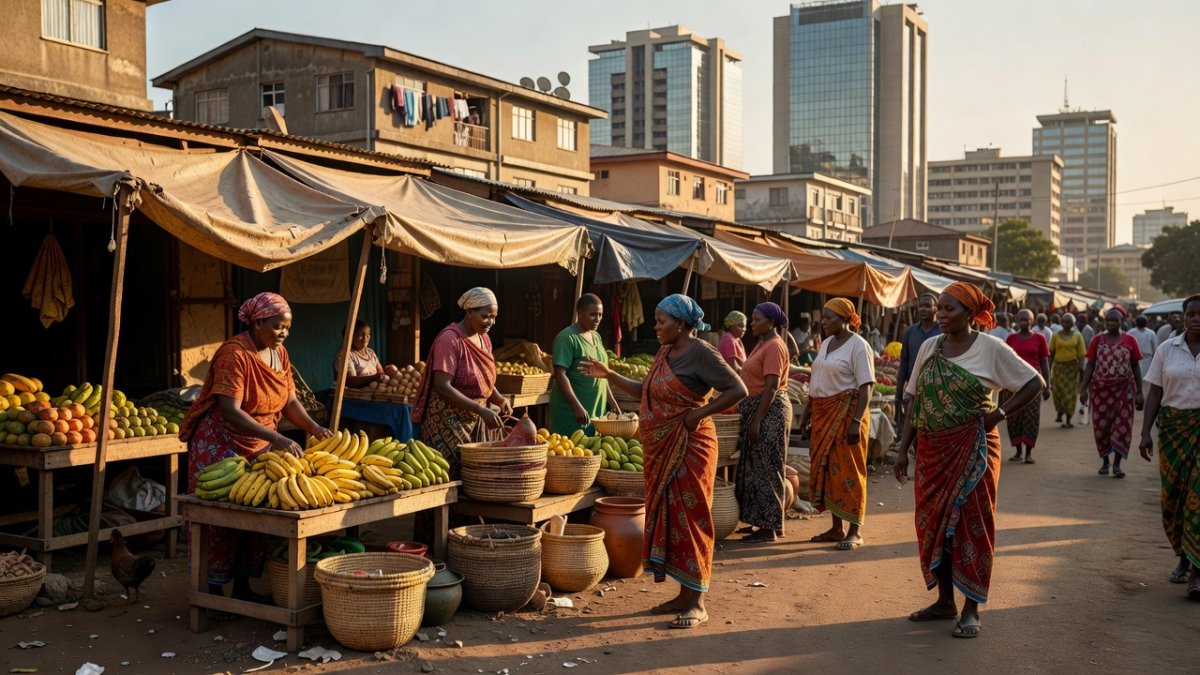
The Rise of Female Surnames in Kenya
The practice of Kenyan men adopting their mothers' surnames has become increasingly visible in public life, particularly within Kikuyu communities where single-mother households have grown more common. Figures such as MP John Njuguna Wanjiku, known by the nickname Ka-Wanjiku meaning child of Wanjiku, and broadcaster Evans Kibe Waceke demonstrate how these choices appear in politics and media. Musicians like Peter Kigia, who styles himself Kigia wa Esther, further embed the trend in popular culture through company names such as Wa Esther Productions and posters across Nairobi featuring artists like Waithaka wa Jane and 90K Ka Msoh. This shift reflects broader changes in family structures rather than isolated personal decisions.
Academic George Gathigi notes that the trend signals evolving family dynamics across Kenya. In urban centers, men who carry female surnames often trace their upbringing to mothers who raised them alone after fathers departed. The visibility of these names on hoardings and in parliamentary records challenges traditional expectations that surnames must come from paternal lines. Kikuyu cultural expert Wairimu Mukuru observes that single-mother families now appear regularly, prompting sons to honor the parent who provided daily care and stability.
Analysis of these examples reveals a quiet redefinition of identity that prioritizes lived experience over formal lineage. When politicians and entertainers normalize female surnames, they create space for others to follow without apology. The pattern appears most clearly among Kikuyu people, yet it resonates with anyone who has navigated absent fathers and strong maternal figures. Public acceptance grows as these names circulate in everyday spaces from music stages to legislative chambers.
Why Choose a Mother's Name?
Simon Macharia Wangui decided to take his mother's surname after years without one, applying for a birth certificate only in his final year of high school. With his father absent, he questioned the logic of crediting someone who played no role in his life. His mother passed when he was twelve, leaving him largely in the care of his grandmother. This personal history shaped a deliberate choice to recognize the woman who shaped his early years rather than an absent figure. The decision carries emotional weight because it rejects the automatic transfer of a father's name when no relationship exists.
Veteran benga musician Peter Kigia, known as Kigia wa Esther or son of Esther, registered his company as Wa Esther Productions to express love and respect for his mother. Younger artists such as Waithaka wa Jane and 90K Ka Msoh follow the same pattern, placing maternal names on posters throughout Nairobi. Their music careers turn these surnames into public statements that reach wide audiences. The connection between benga music and maternal surnames suggests that artistic expression can serve as a vehicle for honoring the parent who remained present.
These choices gain strength when viewed against the backdrop of single-parent realities. Men who select their mothers' names often describe the decision as an act of gratitude rather than rebellion. The music scene amplifies the message because performances and recordings keep the names circulating. Over time, such visibility normalizes the practice and reduces the sense that it deviates from expected norms. The stories of Simon Macharia Wangui and the musicians illustrate how individual circumstances translate into lasting public identity.
The Backlash: Masculinity, Stigma and Depression
Motivational speaker Robert Burale has argued that female surnames undermine men's masculinity, framing the choice as a threat to traditional male identity. This perspective highlights the social pressure men face when they depart from paternal naming conventions. Broadcaster Evans Kibe Waceke adds that society often perceives individuals raised by single mothers as undisciplined, layering stigma onto the surname decision itself. Such comments reveal how deeply cultural expectations about fatherhood and discipline remain tied to naming practices.
TV personality Fred Muitiriri dropped his mother's name after experiencing teasing that contributed to depression at age twenty-three. The emotional toll demonstrates the real cost of public judgment when men carry female surnames. Teasing in social and professional circles can erode self-worth, pushing some to abandon the name despite its personal significance. These experiences show that the revolution in surnames does not unfold without resistance or personal sacrifice.
The backlash functions as a reminder that changing naming customs challenges entrenched ideas about manhood and family authority. When single-mother households become more visible, the stigma attached to them extends to the surnames that represent those households. Men who persist with maternal names despite criticism help shift the conversation, yet the depression and ridicule reported by some indicate that acceptance remains uneven. The tension between personal truth and societal expectation continues to shape how these identities are received.
The House of Mumbi: A Matrilineal Foundation
Kikuyu cultural narratives trace lineage from the ten daughters of Gikuyu and Mumbi, establishing a foundational connection to female ancestors. Mugwe wa Njhii of the Kiama Kia Ma cultural group emphasizes that the community has always aligned itself with women from the very beginning. The Kikuyu are known as the House of Mumbi, a designation that embeds maternal identity at the core of collective belonging. This historical framing provides cultural precedent for men who now choose their mothers' surnames.
The late Ngugi wa Thiong'o carried identification through his mother's name, illustrating how the practice appears even among prominent literary figures. Wairimu Mukuru notes that even sons of unmarried women traditionally received male surnames through the mother's eldest brother, yet contemporary choices often bypass this mediation. The creation myth centered on ten daughters offers a matrilineal thread that supports current decisions without requiring external justification.
Analysis of these traditions shows that the House of Mumbi supplies a deep reservoir of legitimacy for maternal surnames. When men invoke this heritage, they root their choices in longstanding cultural logic rather than modern invention. The continuity between ancient narratives and present-day naming practices strengthens the case that honoring mothers aligns with Kikuyu identity at its foundation. This connection transforms what might appear as innovation into an extension of ancestral patterns.
Inheritance, Uncles and Property
Male relatives sometimes deny names to avoid inheritance disputes, according to Mugwe wa Njhii. The concern arises because property claims can become entangled with surname choices, prompting caution from uncles or other kin. Wairimu Mukuru explains that traditional routes through the mother's eldest brother once provided male surnames for sons of unmarried women, yet these pathways can be blocked when inheritance questions surface. The tension between cultural mediation and practical avoidance shapes how names are granted or withheld.
Academic George Gathigi links the trend of maternal surnames to changing family structures that reduce reliance on extended male networks. As single-mother households increase, the role of uncles in naming diminishes, allowing direct maternal connections to stand. This shift alters the balance of authority within families and highlights how economic considerations influence identity decisions. The practice therefore intersects with material realities as much as emotional ones.
Across the Continent: Senegal's Own Naming Traditions
In Senegal, Wolof communities maintain paternal surnames while still acknowledging strong maternal influence in daily life and family decisions. This balance allows men to carry their father's name publicly yet draw emotional and social grounding from their mother's lineage. The arrangement reflects a pragmatic recognition that both parents shape identity even when formal naming follows one line. Such flexibility offers a model for how African societies can honor maternal contributions without discarding established customs.
Sereer matrilineal clans provide a contrasting tradition where descent and belonging pass through the mother's line, giving women central authority in matters of inheritance and identity. Lebou communities similarly integrate maternal ties into their social organization, demonstrating that matrilineal elements have long existed alongside other systems across the region. Names such as Diop and Ndiaye appear in both paternal and maternal contexts, illustrating how Senegalese families have historically balanced the two lines rather than privileging one exclusively.
These Senegalese patterns reveal a broader African capacity to adapt naming practices to lived realities. When single motherhood rises due to urban migration or economic pressures, communities already accustomed to recognizing maternal influence can accommodate new surname choices more readily. The Senegalese example shows that honoring mothers does not require rejecting fathers but instead expands the circle of recognized ancestors. Other nations can draw lessons from this equilibrium as family structures continue to evolve.
What This Means for Modern Africa
Urban migration and rising single motherhood across the continent are prompting fresh conversations about how names reflect actual caregiving rather than formal lineage. The Kenyan examples of men choosing maternal surnames illustrate one response to these shifts, while Senegal's blended traditions suggest alternative paths that preserve multiple lines of connection. Changing gender roles mean that fathers who remain absent lose automatic claim to their children's public identity.
Countries observing these developments can learn that naming customs are not fixed but respond to social conditions. When men publicly carry their mothers' names, they signal respect for the parent who sustained them and challenge assumptions that masculinity requires paternal validation. The result is a more honest mapping of family realities onto official records and cultural expression. This evolution supports healthier identities grounded in presence rather than absence.
By Amara Diop, Staff WriterThis article was produced with AI-assisted research and editorial support. Reporting is based on sources cited in the article.
What's Your Reaction?
 Like
0
Like
0
 Dislike
0
Dislike
0
 Love
0
Love
0
 Funny
0
Funny
0
 Wow
0
Wow
0
 Sad
0
Sad
0
 Angry
0
Angry
0

Canada Correspondent at Global1.News. Based in Toronto, covering Canadian politics, energy, trade, and US-Canada relations. Provides the Canadian perspective on North American and global affairs.










Comments (0)