
New ‘euro-visa’ will be rolled out this year despite EU entry-exit chaos, predicts expert
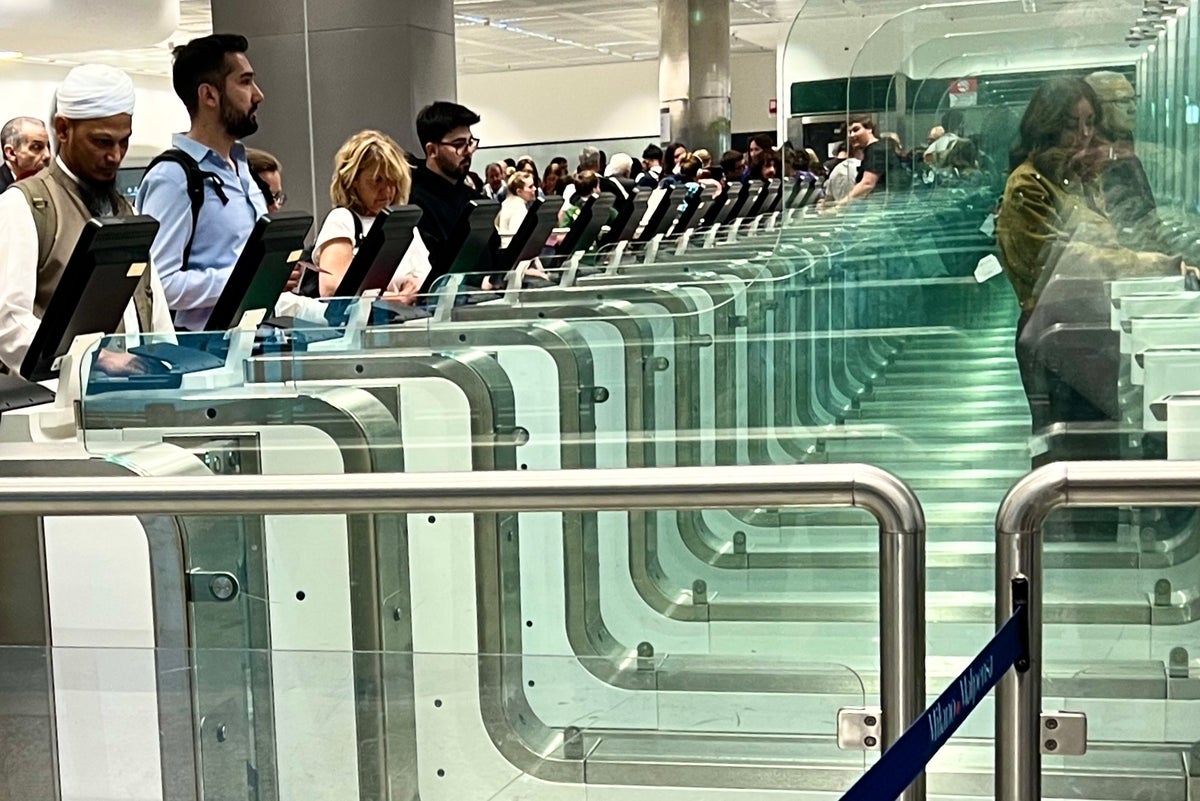
New ‘Euro-Visa’ Will Be Rolled Out This Year Despite EU Entry-Exit Chaos, Predicts Expert
The European Union’s much-delayed Entry/Exit System may still be mired in technical disarray, but the companion ETIAS authorisation scheme will launch before the end of 2024, according to one of the continent’s leading border-technology specialists. Dr Nick Brown, whose consultancy has advised multiple Schengen states on biometric infrastructure, told Global1 News that the EU’s new pre-travel screening programme—widely dubbed the “euro-visa”—is on track even if the accompanying fingerprint and facial-recognition regime continues to stumble.
ETIAS explained: a €7 gatekeeper for 1.4 billion journeys
Unlike a traditional visa, ETIAS is an online travel authorisation required for citizens of more than 60 visa-exempt countries, including the United Kingdom, the United States, Canada and Australia. Applicants will pay a one-off €7 fee for a permit valid three years or until passport expiry. The system is designed to flag security, irregular-migration or public-health risks before travellers board flights, trains or ferries bound for the Schengen area.
EU interior ministers approved the legal framework in 2018, yet implementation has slipped repeatedly. The European Commission now insists the platform will open for applications in the final quarter of this year, with mandatory checks beginning shortly afterwards. Roughly 1.4 billion journeys into the Schengen zone occur annually; even a modest 0.3 % refusal rate would still affect more than four million travellers.
Entry/Exit System remains the weak link
The chaos Dr Brown references centres on the parallel Entry/Exit System (EES), which will record biometric data—fingerprints and facial images—of every non-EU traveller at external borders. Originally slated for 2022, EES has been postponed at least five times. National databases in France, Spain and Italy are still not fully interoperable, and several member states have warned that queues at busy airports could stretch to four hours during the first weeks of operation.
“It doesn’t matter if you don’t get your biometrics done on one or other occasion—we’re not running a nuclear programme here,” Dr Brown said in an exclusive interview. “The important thing is that the authorisation decision itself is taken centrally and in advance. ETIAS can function even while EES is still bedding in.”
Why the UK should pay attention now
British passport holders lost visa-free access to the Schengen area on 1 January 2021. Since then they have relied on the 90-in-180-day rule enforced by stamp alone. ETIAS adds a digital layer that will require every UK traveller to complete an online form at least 72 hours before departure. Those who forget risk being turned away at check-in by airlines liable for fines up to €5,000 per passenger.
Official Home Office figures show 12.4 million visits from the UK to Schengen countries in 2023. The Department for Transport estimates that figure will rise to 14.8 million by 2027. A smooth ETIAS rollout could therefore affect more British holidaymakers and business travellers than any single post-Brexit border change to date.
Technical reassurance amid bureaucratic scepticism
Critics point to the EU’s patchy record on large-scale IT projects. The Schengen Information System II upgrade ran three years late and €50 million over budget. Dr Brown, however, argues that ETIAS benefits from lessons learned. The central unit will sit in Tallinn, Estonia, with fallback capacity in Austria, and the application uses the same secure cloud architecture already proven by the EU’s visa-information system.
“We have seen the Commission deliberately decouple the authorisation engine from the biometric capture layer,” he explained. “That means a traveller can receive ETIAS approval even if their fingerprints are not yet enrolled in EES. The two systems talk, but they do not depend on each other for every transaction.”
Data protection and the risk of mission creep
Privacy campaigners have raised concerns that ETIAS will create a new repository of travel patterns for 1.4 billion non-EU citizens. The European Data Protection Supervisor has demanded strict purpose limitation and automatic deletion of records after five years. Dr Brown acknowledges the risk but notes that refusal rates are expected to stay below 0.5 %—far lower than the US ESTA programme’s 2–3 % refusal band.
“The algorithm is tuned to avoid false positives,” he said. “If the system starts rejecting too many low-risk travellers, political pressure will force recalibration within months. That is how these schemes evolve.”
What British travellers should do this autumn
The UK government has yet to publish official guidance. Travel associations are urging passengers to budget an extra £6–£8 for the fee and to allow 15–20 minutes to complete the form. Those with criminal convictions, previous immigration violations or travel to conflict zones in the past decade should expect longer processing times—up to 30 days in complex cases.
Airlines have already begun updating their departure-control systems. British Airways, easyJet and Ryanair are expected to integrate ETIAS checks into their online check-in portals by October. Passengers who hold multiple passports are advised to use the document that matches the nationality declared on the ETIAS application to avoid mismatches at the border.
Broader geopolitical ripple effects
The launch also carries diplomatic weight. The EU has signalled that reciprocal arrangements may be sought with the UK for a future British “ETIAS-style” scheme. Downing Street has so far resisted, citing sovereignty concerns. Yet industry analysts predict that pressure from European carriers and holiday companies will intensify once ETIAS is live and visible on every booking platform.
Dr Brown’s prediction that the scheme proceeds this year rests on one simple metric: political will. With the European Parliament elections due in 2024, the Commission is determined to demonstrate delivery on long-promised security tools. “They need a win,” he observed. “ETIAS is the one they can still control.”
For the millions of British citizens who treat continental Europe as their nearest holiday destination, the euro-visa therefore marks the moment when post-Brexit travel formally ceases to be frictionless. Whether the system proves a minor administrative hurdle or a source of repeated headaches will depend on the very interoperability that has so far eluded the Entry/Exit System. Dr Brown, at least, is betting that the authorisation half of the equation will work on schedule—even if the biometric half continues to lag.
This is Erica Thornton for Global1 News, reporting from London. 🇬🇧
This article was produced with AI-assisted research and editorial support. Reporting is based on sources cited in the article.
What's Your Reaction?
 Like
0
Like
0
 Dislike
0
Dislike
0
 Love
0
Love
0
 Funny
0
Funny
0
 Wow
0
Wow
0
 Sad
0
Sad
0
 Angry
0
Angry
0

US Politics and Policy Correspondent at Global1.News. Based in Washington DC, covering American politics, policy, elections, and the courts. Knows how the system works and tells you what it actually means.















Comments (0)