
Japan and Philippines agree to elevate ties to new level amid China concerns
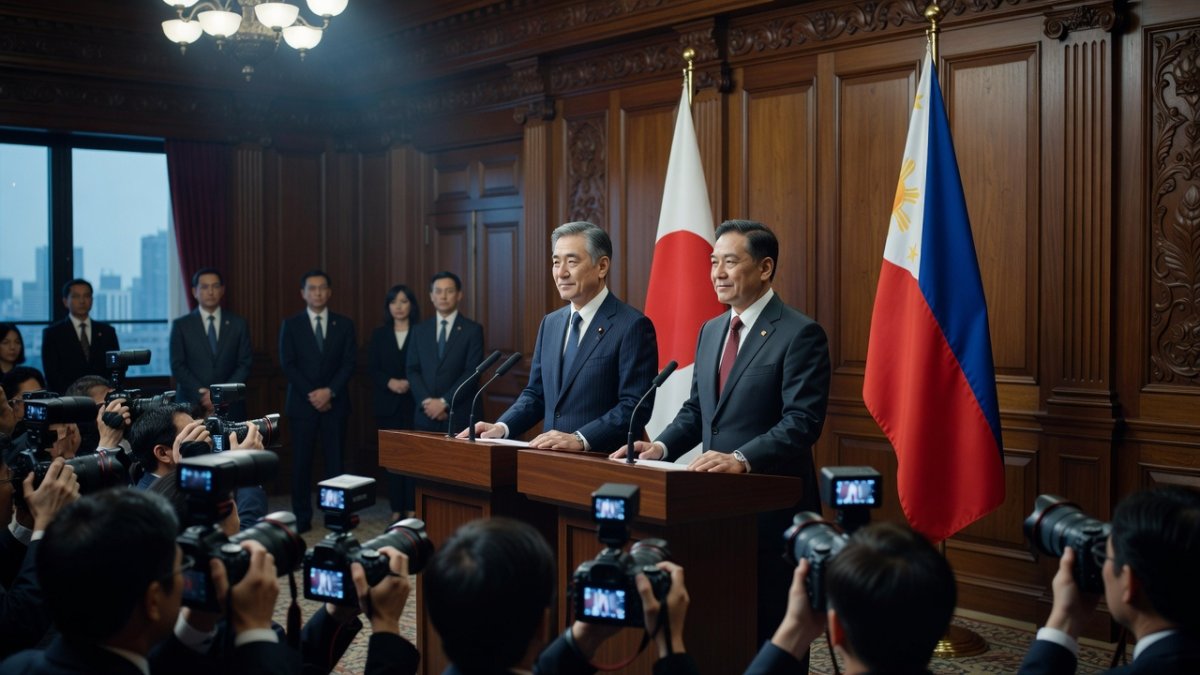
Japan and Philippines Forge Elevated Strategic Partnership with Intelligence-Sharing Talks, Eyeing Tech-Enabled Security Amid China Tensions
TOKYO — In a move signaling deeper bilateral coordination on regional security, Japanese Prime Minister Sanae Takaichi and Philippine President Ferdinand Marcos Jr. announced on October 15 that their nations would elevate ties to a "new strategic level." The leaders also committed to launching formal negotiations on a comprehensive intelligence-sharing agreement, focusing on real-time data exchange in maritime surveillance, cybersecurity threats, and emerging technologies. The pact aims to bolster defenses against hybrid challenges in the South China Sea without directly naming any single actor.
Details of the Elevated Framework
The agreement builds on existing defense cooperation, including a 2024 Reciprocal Access Agreement that allows joint military exercises. Under the new framework, Japan will increase technology transfers in areas such as unmanned aerial systems, satellite imagery analysis, and AI-driven threat detection. Philippine officials confirmed that initial working groups will convene in Manila by November, targeting operational protocols for secure data links by mid-2026.
Prime Minister Takaichi stated during the joint press conference in Tokyo, "Our two democracies share a commitment to a free and open Indo-Pacific. Intelligence cooperation will harness Japan's precision engineering in sensors and the Philippines' strategic geography to enhance collective awareness." President Marcos Jr. added, "This is not about confrontation but about preserving our sovereign rights through modern tools, including digital resilience."
Background on Bilateral Relations
Japan-Philippines ties date to post-World War II economic aid, evolving into robust trade valued at $22.8 billion in 2024, with Japanese firms like Mitsubishi and NEC playing key roles in Philippine infrastructure. Defense links accelerated after 2016, when the Permanent Court of Arbitration ruled in Manila's favor on South China Sea claims. Japan has since provided patrol vessels and radar systems worth over $300 million, emphasizing non-lethal but high-tech assets.
Under former Prime Minister Fumio Kishida's administration, the partnership incorporated cybersecurity dialogues. Takaichi's leadership, with her background in economic security policy, accelerates this by prioritizing supply-chain resilience in semiconductors—a sector where the Philippines hosts assembly hubs for Japanese electronics giants, producing components critical to global 5G networks.
China Concerns Driving the Agenda
Regional tensions form the explicit backdrop. Chinese coast guard vessels have conducted over 200 documented incursions near Philippine outposts in the Spratly Islands since 2023, including water-cannon incidents against resupply missions. Japan faces parallel pressure in the East China Sea around the Senkaku Islands, with PLA Navy activity rising 40% year-over-year per Japanese Ministry of Defense data.
Analysts note the intelligence pact could integrate Japan's JAXA satellite capabilities with Philippine naval sensors, creating a shared maritime domain awareness network. This addresses gaps in detecting gray-zone tactics, such as militia fishing fleets equipped with encrypted comms. "The elevation reflects a pragmatic response to capability asymmetries," observed Dr. Hiroshi Tanaka of the Institute for International Strategic Studies in Tokyo, who highlighted how AI analytics could process multi-source feeds to predict escalation patterns within hours rather than days.
Technology Dimensions and Cyber Focus
As a technology journalist, the pact's emphasis on digital infrastructure stands out. Negotiations will cover secure 5G/6G testbeds for military-civilian dual-use networks, countering risks from foreign vendors with opaque data practices. Japan commits to sharing expertise in quantum-resistant encryption, vital as both nations expand digital economies—the Philippines' BPO sector alone generates $32 billion annually and relies on resilient connectivity.
Further, the agreement envisions joint R&D in drone swarms for disaster response and border monitoring, leveraging Japan's robotics leadership and Philippine terrain testing grounds. Data from the ASEAN-Japan Cybersecurity Capacity Building Centre indicates regional cyber incidents surged 65% in 2024, many traced to state-linked actors targeting critical infrastructure. This pact positions the duo to pilot AI anomaly detection systems, potentially reducing response times by 70% based on Japanese Self-Defense Forces simulations.
Expert Perspectives and Regional Implications
Dr. Maria Santos, a Manila-based security analyst at the Center for Strategic and International Studies, remarked, "For the Philippines, this diversifies partnerships beyond traditional U.S. reliance, injecting Japanese precision into our intelligence apparatus. It could deter coercion by raising the cost of miscalculation through transparent, tech-verified monitoring." U.S. officials have welcomed the development, viewing it as complementary to the Quad and AUKUS frameworks.
Broader ramifications include strengthened ASEAN centrality. Indonesia and Vietnam, facing similar maritime pressures, may observe for scalable models. Economically, enhanced trust could unlock $15 billion in additional Japanese FDI into Philippine tech parks by 2030, focusing on electric vehicle batteries and renewable microgrids—sectors where supply security intersects with defense needs.
Forward Outlook and Challenges
Implementation faces hurdles, including Philippine legislative ratification and alignment on data sovereignty standards. Yet the forward trajectory points to integrated exercises incorporating cyber wargames by 2027. Takaichi's administration has allocated an extra ¥45 billion ($300 million) in ODA for Southeast Asian digital security, signaling sustained commitment.
This partnership exemplifies how middle powers leverage complementary strengths—Japan's technological edge and the Philippines' geographic vantage—to navigate multipolar dynamics. As hybrid threats evolve from kinetic to algorithmic, such pacts redefine deterrence through information superiority rather than sheer hardware accumulation.
This is Kenji Tanaka for Global1 News, reporting from Tokyo. 🇯🇵
This article was produced with AI-assisted research and editorial support. Reporting is based on sources cited in the article.
What's Your Reaction?
 Like
1
Like
1
 Dislike
0
Dislike
0
 Love
0
Love
0
 Funny
0
Funny
0
 Wow
0
Wow
0
 Sad
0
Sad
0
 Angry
0
Angry
0

Japan Correspondent at Global1.News. Tokyo-based voice covering Japanese politics, technology, economy, and culture. Tracks the intersection of tradition and innovation in one of the world's most dynamic societies.














Comments (0)