
India's AI Diplomacy Under the Act East Policy: Strategic Openings for South Korea
India's AI Diplomacy Under the Act East Policy: Strategic Openings for South Korea The Strategic Evolution of India's Act East Policy India's Act East Policy, formally articulated by Prime Minister Narendra Modi in 2014, marked a deliberate expansion of the earlier Look East Policy that originated in the early 1990s. The original framework prioritized economic linkages with Sou
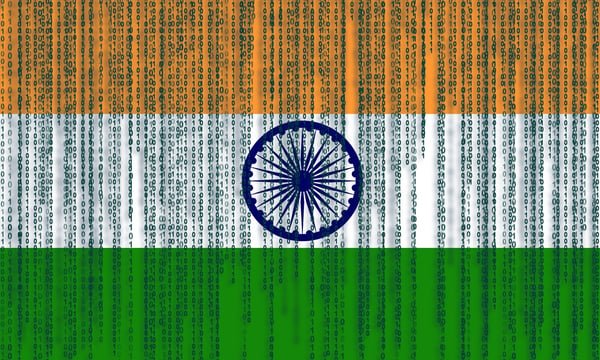
The Strategic Evolution of India's Act East Policy
India's Act East Policy, formally articulated by Prime Minister Narendra Modi in 2014, marked a deliberate expansion of the earlier Look East Policy that originated in the early 1990s. The original framework prioritized economic linkages with Southeast and East Asia, yet successive governments recognized the necessity of incorporating defense and security dimensions as regional power dynamics shifted. This transition reflected New Delhi's assessment that economic engagement alone could not secure its extended eastern neighborhood amid rising geopolitical competition.
Over the first decade of the Act East Policy, India concluded defense technology agreements such as BrahMos missile deals with Indonesia, the Philippines, and Vietnam. These arrangements demonstrated the policy's capacity to translate strategic intent into concrete capability transfers. The current phase now centers on critical and emerging technologies, particularly artificial intelligence, as India seeks to embed AI cooperation within the same eastward orientation that once emphasized trade and conventional defense.
India's Pursuit of AI Sovereignty Across Five Layers
Indian policymakers have identified five interdependent layers of the AI stack—application, model, semiconductor, infrastructure, and energy—as essential to achieving technological sovereignty. Realizing progress across these layers requires Indian talent, research institutions, and startups to diversify supply chains and partnerships beyond traditional reliance on Western Europe and North America. Visa restrictions, export controls on advanced chips, and the economic costs of one-way talent flows have exposed structural vulnerabilities in this dependence.
Strategic value-chain diversification therefore constitutes a core rationale for India's renewed engagement with East Asian partners. By cultivating alternative sources of semiconductors, compute infrastructure, and collaborative research, India aims to reduce single-point dependencies while accelerating domestic AI capabilities. This imperative directly informs the technological dimension of the Act East Policy.
Existing Avenues of Technological Cooperation with East Asia
India already maintains active digital and cybersecurity dialogues with ASEAN as well as with Japan, Taiwan, South Korea, and Singapore. These channels have facilitated information-sharing and capacity-building in cyberspace. The 2026-2030 Plan of Action implementing the ASEAN-India Comprehensive Strategic Partnership explicitly mandates joint capacity-building and knowledge exchange in information and communication technologies, providing an institutional platform for deeper AI collaboration.
Bilateral digital partnership frameworks further designate AI as a priority pillar. India and Japan, for instance, are examining cooperation across the entire AI stack, from foundational models to energy-efficient hardware. These existing mechanisms illustrate that the infrastructure for AI diplomacy is already partially in place; the challenge lies in scaling these arrangements to address governance standards, joint research, and commercial deployment.
The India-Japan AI Strategic Dialogue and Broader Regional Momentum
The First India-Japan AI Strategic Dialogue convened on 21 April 2026, operationalizing the Japan-India AI Cooperation Initiative launched during Prime Minister Modi's visit to Japan in August 2025. Japanese media conglomerates, fast-moving consumer goods firms, and technology laboratories have shown renewed interest in the Indian market as part of efforts to diversify away from excessive exposure to the United States and China. This corporate-level reorientation complements governmental initiatives and signals durable commercial foundations for AI collaboration.
Parallel developments with ASEAN under the same 2026-2030 Plan of Action include joint studies on AI governance frameworks, technical standards, and evaluation tools. These activities underscore a regional consensus that AI cooperation must encompass regulatory alignment alongside technical exchange.
The India-Korea Digital Bridge and South Korea's Tech Diplomacy
The launch of the India-Korea Digital Bridge in April 2026 represents the most direct institutional expression of AI-focused cooperation between the two countries. The initiative targets deep collaboration in artificial intelligence, semiconductors, electronics, and the broader information technology sector. For South Korea, the Digital Bridge offers a structured channel to engage India's rapidly expanding digital economy while leveraging its own strengths in memory semiconductors and advanced manufacturing.
South Korea's technology diplomacy has historically balanced alliance commitments with the United States against economic interdependence with China. The India-Korea Digital Bridge provides an additional vector for diversification, allowing Korean chaebols such as Samsung Electronics and SK Hynix to explore joint AI hardware and foundry projects with Indian partners. This engagement also aligns with Seoul's longstanding New Southern Policy, which elevated India and ASEAN as priority partners for economic and technological outreach.
By anchoring AI cooperation in a bilateral digital framework, South Korea can position itself as a reliable alternative supplier of semiconductor technologies and AI infrastructure at a moment when global value chains are fragmenting. The arrangement further enables Korean research institutions to participate in co-creation efforts that explore energy-efficient AI architectures, an area where Korean expertise in low-power electronics offers comparative advantage.
Strategic Implications for Regional AI Governance and Inter-Korean Context
India-Korea AI cooperation carries implications that extend beyond bilateral commerce. Joint work on governance standards and evaluation tools under the ASEAN-India framework can help shape regional norms that accommodate diverse national approaches rather than defaulting to transatlantic or Chinese models. South Korea's participation in such trilateral or multilateral processes strengthens its voice in standard-setting bodies where semiconductor and AI rules are increasingly contested.
From a Korean peninsula perspective, successful tech diplomacy with India reinforces Seoul's strategy of expanding strategic space beyond the immediate Northeast Asian theater. Historical precedents, including Korea's post-1990s efforts to build technology ties with Southeast Asia, demonstrate that economic and technological engagement can serve as a buffer against peninsula-specific tensions. The India-Korea Digital Bridge thus contributes to a broader hedging posture that preserves autonomy amid great-power technological competition.
By Prof. David Park, Staff WriterThis article was produced with AI-assisted research and editorial support. Reporting is based on sources cited in the article.
What's Your Reaction?
 Like
0
Like
0
 Dislike
0
Dislike
0
 Love
0
Love
0
 Funny
0
Funny
0
 Wow
0
Wow
0
 Sad
0
Sad
0
 Angry
0
Angry
0

East Asia/Technology Correspondent at Global1.News. Seoul-based voice covering Korean politics, technology, business, and culture. Analyzes how technology and geopolitics intersect across East Asia.














Comments (0)