
Haiti Gang Violence Surges as UN Chief Visits Haiti Base
Haiti Gang Violence Surges as UN Chief Visits Haiti Base **Meta Description:** UN chief Guterres toured Haiti's Gang Suppression Force base amid 2,300 deaths in 2026 as parallels emerge with Mexico's cartel fight in Ciudad Juárez and Michoacán. **Keywords:** Haiti gang violence, UN Guterres Haiti, Gang Suppression Force, Mexico cartels, Sheinbaum security, Haitian displacement,
DW News video footage captured the tense arrival of UN Secretary-General António Guterres in Port-au-Prince on Tuesday, June 16, 2026, as he inspected the new Gang Suppression Force base at Camp Vertières amid a fresh surge in violence following days of relative calm. The report highlighted 2,300 killed this year, 1,100 injured and 100 kidnapped, with gangs controlling 70-90 percent of the capital and 1.5 million people displaced nationwide.
Haiti Gang Violence Escalates as UN Chief Guterres Inspects New Suppression Force Base in Port-au-Prince
Port-au-Prince, Haiti – June 17, 2026 — UN Secretary-General António Guterres arrived in the Haitian capital on Tuesday, June 16, 2026, to assess the Gang Suppression Force deployment at Camp Vertières while violence claimed 2,300 lives this year alone. The DW News report documented how gangs now dominate 70-90 percent of Port-au-Prince, displacing 1.5 million people nationwide and leaving 1,100 injured plus 100 kidnapped in recent months.
Guterres Meets Haitian Leadership
UN Secretary-General António Guterres held direct talks with Haitian Prime Minister Alix Didier Fils-Aimé at the National Palace in Port-au-Prince on June 16, 2026, discussing the stalled transition after the July 2021 assassination of President Jovenel Moïse left Haiti without an elected head of state. Fils-Aimé emphasized that scheduled elections must proceed by February 2027 despite security shortfalls, echoing Mexico’s own transitional security handoff from Andrés Manuel López Obrador to President Claudia Sheinbaum in October 2024. Guterres then visited a shelter school in the Delmas district that currently houses more than 1,200 displaced residents, many of them children who lost parents to gang attacks in the preceding weeks.
Inside the crowded facility, Guterres spoke with families who fled gang-controlled neighborhoods and described the scene as one that “will not leave me,” according to UN spokespersons traveling with him. The shelter, operated with support from the International Organization for Migration, provides basic literacy classes and meals funded partly through contributions from the Mexican Agency for International Development Cooperation. Prime Minister Fils-Aimé later told reporters that Haiti’s transitional council needs accelerated international backing to restore order before the 2027 vote, drawing explicit comparisons to how Mexico’s Morena government managed security vacuums during state-level transitions in Michoacán and Guerrero.
Observers noted that the absence of a sitting president since July 2021 has complicated every security decision, much as Mexico’s state governors in PAN-led Baja California and PRI-controlled regions have sometimes clashed with federal SEDENA deployments. Guterres pledged continued UN coordination with Haiti’s Council of Ministers while urging rapid formation of an electoral commission modeled partly on Mexico’s Instituto Nacional Electoral processes.
Gang Suppression Force Deployment Realities
The Gang Suppression Force, authorized by the UN Security Council for 5,550 total personnel, had fewer than 1,000 troops on the ground in Port-au-Prince by mid-June 2026. Chadian soldiers formed the first contingent to arrive at Camp Vertières, where they began joint training with Haitian National Police units on June 14. Forward operating bases and foot patrols are scheduled to expand into Cité Soleil and Martissant within three weeks under UNSOS logistics support from Nairobi.
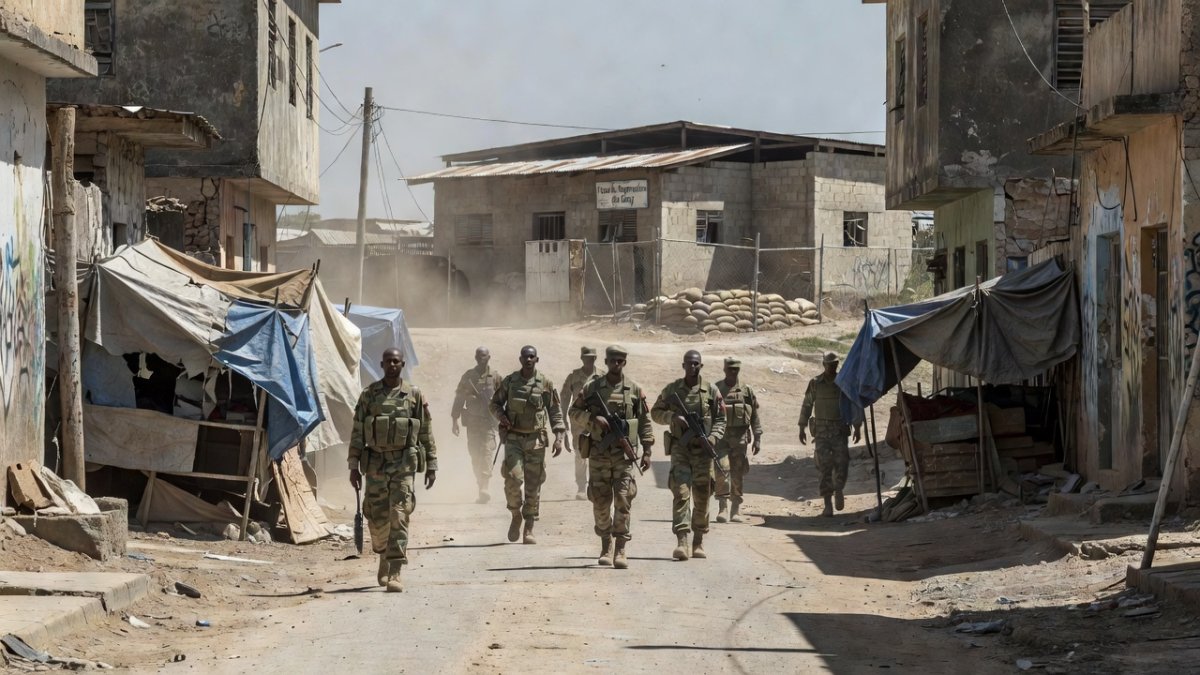
Human Rights Watch sent an open letter on June 12 warning that insufficient troop numbers risk repeating past failures if the force cannot protect civilians during operations. Mexican security analysts have drawn direct comparisons to the 2019 rollout of Mexico’s Guardia Nacional, which initially deployed only 60,000 officers against an authorized strength of 80,000 before scaling up in Michoacán and Guerrero. SEDENA commanders in those states similarly faced delays in establishing permanent bases amid cartel resistance.
Unlike Mexico’s centralized command under the Defense Ministry, the Gang Suppression Force operates under a hybrid UN-Haitian structure that requires daily coordination with Prime Minister Fils-Aimé’s office. UNSOS has already airlifted 40 tons of equipment from Santo Domingo to Port-au-Prince, mirroring the Mérida Initiative supply routes that once moved armored vehicles from the United States into Tijuana and Ciudad Juárez for Mexican federal forces.
Cité Soleil and the Displacement Emergency
More than 18,000 residents fled Cité Soleil during May 2026 alone after Viv Ansanm gangs intensified attacks on market areas and schools. The U.S. State Department designated Viv Ansanm a foreign terrorist organization in April, freezing assets linked to its leaders and complicating humanitarian deliveries. Families now shelter under tarpaulin tents along Route Nationale 1, where Médecins Sans Frontières teams recorded 47 cases of acute malnutrition in children under five during the first week of June.
With more than one in ten Haitians currently displaced, the scale rivals the forced migrations seen when Jalisco New Generation Cartel factions emptied villages in Michoacán’s Tierra Caliente region between 2022 and 2024. In both countries, small farmers and street vendors have lost generational land and customer bases, forcing moves to overcrowded urban peripheries such as Monterrey or Port-au-Prince’s Canaan settlement.
Personal accounts collected by the UN Office for the Coordination of Humanitarian Affairs include that of 34-year-old teacher Marie Lourdes Jean, who walked 11 kilometers with her two children after gunmen torched her home on May 19. Similar stories emerged from Guerrero communities where SEDENA operations displaced 12,000 people in 2023, many later registering with Mexico’s Comisión Mexicana de Ayuda a Refugiados in Tapachula.
Parallels Between Haiti's Gangs and Mexico's Cartels
President Claudia Sheinbaum’s security strategy, unveiled in December 2024, emphasizes intelligence-led operations by SEDENA and Guardia Nacional units stationed in Ciudad Juárez, Tijuana and Culiacán. Both Haiti and Mexico confront non-state armed groups whose fighters outnumber available state security personnel in key zones, prompting debates over whether the UN-backed Gang Suppression Force model could inform future Mexican deployments.
Mexico’s enfoque territorial, refined under the AMLO legacy and continued by Sheinbaum, relies on permanent military presence rather than temporary international missions. The Mérida Initiative, renewed in 2023, continues to channel U.S. equipment and training to Mexican forces in ways that differ sharply from the multinational composition of the Gang Suppression Force. SRE officials have quietly studied the UN mission’s rules of engagement for possible application along Mexico’s southern border with Guatemala.
Cartel violence in Culiacán and gang control in Port-au-Prince both produce daily extortion rackets that drive small businesses into bankruptcy, yet Mexico’s federal prosecutors under FGR have achieved higher conviction rates through specialized financial task forces than Haiti’s judiciary currently manages. Analysts at Mexico’s Centro de Investigación y Seguridad Nacional note that sustained funding and local police vetting remain decisive factors in either context.
Regional Ripple Effects to DR and Mexico
António Guterres is scheduled to continue his trip with meetings in Santo Domingo on June 18, 2026, where Dominican Republic authorities report a 34 percent rise in Haitian arrivals by sea since January. Mexico’s Secretaría de Relaciones Exteriores and Secretaría de Gobernación have increased monitoring of Caribbean migration routes that funnel through Central America toward the southern border at Tapachula, Chiapas.
FGR financial intelligence units are already tracking wire transfers connected to Haitian gang networks that may intersect with Mexican cartel money-laundering corridors in Guadalajara and Mérida. Asylum claims at the Tapachula COMAR office rose to 4,800 in May, many from Haitian nationals who transited Panama and Costa Rica after fleeing gang-controlled neighborhoods.
SEGOB contingency plans now include expanded shelter capacity in Tuxtla Gutiérrez to handle potential secondary flows if the Gang Suppression Force operations displace additional populations toward Mexico’s southern states. These developments echo earlier Caribbean instability episodes that indirectly boosted Central American migrant caravans reaching Tijuana in 2018 and 2023.
Human Cost for Families and Communities
More than 140 schools remain shuttered across gang-controlled sections of Port-au-Prince, mirroring the 87 schools closed in Michoacán’s Apatzingán municipality during peak cartel clashes in 2023. Teachers’ unions in both countries report that displaced educators have lost months of wages while students fall behind national curriculum standards.
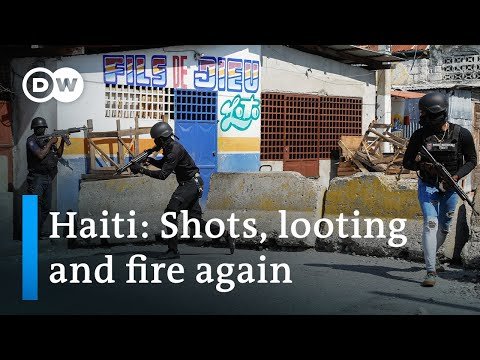
IMSS-equivalent trauma centers in Port-au-Prince and ISSSTE facilities in Mexico’s northern border cities have recorded sharp increases in gunshot wound admissions, with Haitian hospitals logging 310 cases in May alone. Small business owners who relocated from Culiacán to Monterrey after 2024 extortion waves describe parallel losses of inventory and customer networks now faced by Haitian market vendors sheltering in Gonaïves.
Healthcare access gaps have widened as medical staff flee insecure zones, leaving rural clinics understaffed in both Haiti’s Artibonite department and Mexico’s Costa Chica region of Guerrero. Community leaders in Port-au-Prince’s Grand Ravine neighborhood report that families have sold remaining assets to pay for bus fares to safer provinces, a pattern repeated by displaced avocado farmers from Uruapan, Michoacán.
Outlook for International and Mexican Response
Gang Suppression Force commanders expect to activate three forward operating bases in greater Port-au-Prince within the next three weeks, supported by additional Kenyan and Beninese contingents still in transit. Mexico’s SRE has expressed interest in providing specialized logistics and human-rights training modules developed during Guardia Nacional operations in Tijuana.
CONEVAL poverty metrics released in May 2026 show multidimensional poverty affecting 41.3 percent of Haiti’s population, figures that parallel INEGI data for Mexico’s most violent southern states where displacement has deepened economic exclusion. UN Security Council members continue monthly reviews of the mission mandate, with potential expansion discussions scheduled for July.
Sheinbaum administration officials have signaled willingness to share non-lethal equipment and forensic expertise through existing bilateral channels, provided Haitian authorities request assistance via the Organization of American States. Sustained international funding and coordinated regional diplomacy remain essential if either country hopes to reverse entrenched cycles of armed-group dominance and mass displacement.
By Rosa Martinez, Staff Writer
This article was produced with AI-assisted research and editorial support. Reporting is based on sources cited in the article.
What's Your Reaction?
 Like
0
Like
0
 Dislike
0
Dislike
0
 Love
0
Love
0
 Funny
0
Funny
0
 Wow
0
Wow
0
 Sad
0
Sad
0
 Angry
0
Angry
0
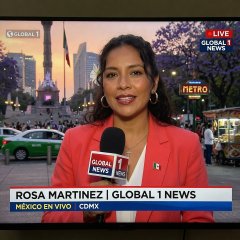
Latin America/Andes Correspondent at Global1.News. Based in Bogota, covering politics, environment, energy, and social movements across the Andean region. Passionate about environmental journalism and communities protecting their land.












Comments (0)